Key takeaways
- Wicking systems use capillary action to deliver water efficiently to plant roots.
- A 5-gallon reservoir can water a medium-sized container plant for up to seven days.
- Ollas and wicking beds reduce water evaporation by 50% to 70% compared to surface watering.
- Proper plant selection and soil amendments are crucial for passive irrigation success.
- Regular monitoring for the first few days helps fine-tune water delivery rates.
- These methods conserve water, often reducing usage by 30% to 70% in arid regions.
Quick answer: Wicking setups and passive irrigation systems deliver water directly to plant roots via capillary action. This reduces evaporation by 50-70% and maintains consistent moisture for up to seven days.
In the high desert climate of Arizona, where annual rainfall averages around 13 inches, maintaining a thriving garden can be a constant challenge, especially when you need to be away. Even in more humid regions like the Southeast, a week-long absence during a hot summer can spell disaster for container plants or newly established beds. Fortunately, passive irrigation systems offer a reliable solution, ensuring your plants receive consistent moisture for up to seven days or more, without daily intervention.
These methods, often rooted in ancient agricultural practices, leverage basic physics to deliver water directly to plant roots, minimizing waste and evaporation. From simple wicking ropes to elaborate wicking beds and traditional ollas, these setups can reduce water consumption by 50% to 70% compared to conventional surface watering, a significant advantage for any grower looking to conserve resources and maintain plant health during extended periods away from the garden.
Understanding passive irrigation for extended absences
When planning a week-long trip, ensuring your garden’s hydration is a top concern for many growers. Passive irrigation systems provide a reliable option, delivering water directly to plant roots through capillary action or slow release, bypassing the need for daily manual watering. This approach is particularly effective in regions like USDA zone 7, where summer temperatures can regularly exceed 90°F, leading to rapid soil moisture loss. These systems work by creating a continuous, controlled water supply, often from a reservoir, that the plant can access as needed, preventing both overwatering and drought stress for periods up to seven days.
The science behind consistent moisture
The core principle of passive irrigation relies on capillary action and gravitational flow. Wicking ropes, for instance, draw water upwards from a reservoir, much like a lamp wick draws oil, delivering it to the soil around the plant roots. This steady, measured delivery means plants receive a consistent moisture level, typically maintaining soil saturation between 30% and 60%, depending on soil type and plant needs. This consistency helps prevent the wet-dry cycles that stress plants and reduce yields, especially for sensitive crops like tomatoes or peppers during their fruiting stages. Research from SARE indicates that properly designed passive systems can reduce water runoff by 90% compared to overhead sprinklers [3].
Beyond wicking ropes, other passive methods like ollas and wicking beds also contribute to this consistent moisture. Ollas, unglazed clay pots buried in the soil, release water slowly over several days, typically holding one to five gallons of water. Wicking beds, on the other hand, create a permanent water reservoir beneath the growing medium, providing a constant supply. These systems are particularly beneficial for water conservation, often reducing overall garden water usage by 30% to 70% in regions with limited water availability, such as parts of California experiencing prolonged droughts [1]. The initial setup investment, which might range from $10 to $50 per container system, is often offset by long-term water savings and reduced labor.
- Consistent root hydration for up to seven days.
- Reduced water evaporation by 50% to 70%.
- Minimized plant stress from inconsistent watering.
- Lower water bills, potentially saving 30% annually.
- Freedom from daily watering tasks during absences.
Wicking ropes and reservoir design
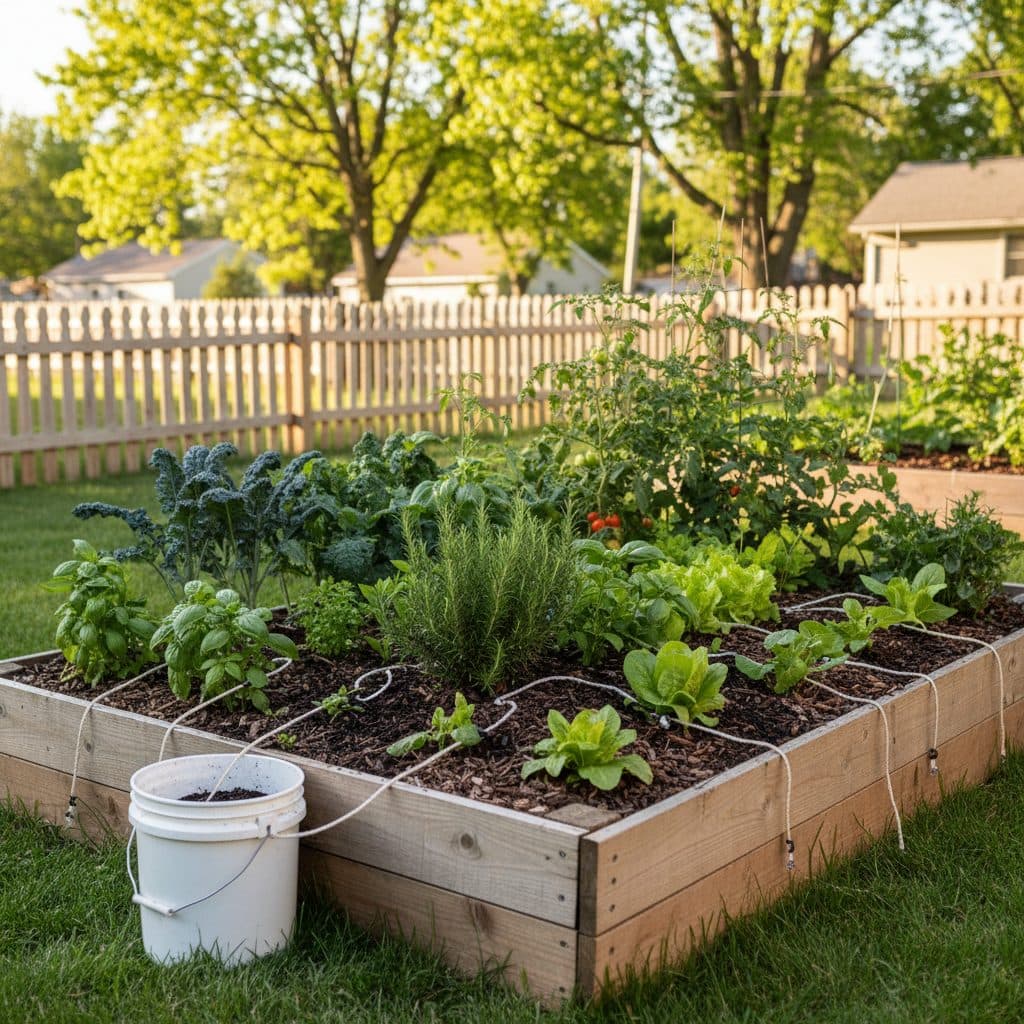
The wicking rope system is a straightforward and effective passive irrigation method, ideal for individual container plants or small raised beds. It involves a simple setup: a water reservoir placed below or beside the plant, and a wicking material (often a nylon rope, felt strip, or even a cotton shoelace) extending from the reservoir into the plant’s soil. For a typical 5-gallon container, a 0.5-inch diameter nylon rope can deliver sufficient water for up to seven days, maintaining consistent soil moisture. This system works well for a wide range of plants, from herbs like basil to fruiting plants like strawberries, provided their root systems are well-established.
Materials and construction for reliable hydration
To construct a basic wicking rope system, you will need a water-tight reservoir, such as a 5-gallon bucket or a repurposed plastic container, and a suitable wicking material. Synthetic materials like nylon or acrylic ropes are preferred because they resist rot and maintain capillary action over long periods, unlike natural fibers that can degrade within a few weeks. The rope should be long enough to reach the bottom of the reservoir and extend several inches into the plant’s root zone, typically 6 to 8 inches deep. For a 10-inch diameter pot, one 0.5-inch rope is usually sufficient, while larger containers up to 20 inches might benefit from two ropes placed on opposite sides. The reservoir should hold at least one gallon of water per plant for a seven-day period, ensuring a continuous supply.
When setting up, ensure the reservoir is elevated slightly above the plant’s base or positioned directly beneath a container with drainage holes. The wicking rope is threaded through a drainage hole in the bottom of the plant container, with one end submerged in the reservoir and the other coiled within the soil. The soil itself should be a well-draining mix, ideally with 20% to 30% perlite or vermiculite to promote aeration and consistent moisture retention. This method can reduce water loss from evaporation by up to 60% compared to top-watering, especially in sunny locations like a south-facing patio in Florida.
- Select a durable, synthetic wicking material (nylon, acrylic).
- Ensure the reservoir holds at least one gallon per plant for seven days.
- Thread the rope 6 to 8 inches into the plant’s root zone.
- Position the reservoir below or beside the plant container.
- Use a well-draining soil mix with 20% to 30% aeration amendments.
Ollas and wicking beds: complementary strategies
Beyond wicking ropes, traditional ollas and modern wicking beds offer practical passive irrigation options, particularly for larger garden areas or raised beds. Ollas, unglazed clay pots, have been used for centuries in arid regions, including parts of the American Southwest, to provide subsurface irrigation. When buried in the soil with only their neck exposed, they slowly release water through their porous walls directly into the root zone, minimizing surface evaporation by up to 70%. A single 1-gallon olla can effectively water a 2-foot diameter area for several days, making them ideal for crops like corn or squash that require consistent moisture.
Designing for sustained moisture
Wicking beds, sometimes called self-watering raised beds, provide a more integrated approach to passive irrigation. These beds feature a waterproof liner at the bottom, creating a reservoir for water, topped with a layer of gravel or scoria for drainage, and then a wicking fabric or perforated pipe to draw water up into the growing medium. A typical wicking bed might hold 10 to 30 gallons of water in its reservoir, capable of sustaining plants for one to two weeks, even in hot climates like USDA zone 9. The growing medium in a wicking bed should be a rich, organic mix, ideally 12 to 18 inches deep, to facilitate strong root development and efficient water uptake. This design can reduce total water consumption by 50% compared to conventional raised beds [4].
For optimal performance, position ollas 18 to 24 inches apart for row crops, ensuring overlapping moisture zones. When constructing wicking beds, ensure a slight slope (one inch per 10 feet) towards a drainage pipe to prevent waterlogging during heavy rains, which can exceed 3 inches in a single storm in some Midwestern states. The fill pipe for the reservoir should be easily accessible, allowing for quick refills with a garden hose or a watering can. These systems are particularly beneficial for growing moisture-loving plants such as Chinese Water Chestnut (Eleocharis dulcis) or Water Spinach (Ipomoea aquatica), which thrive with consistent subsurface hydration.
- Ollas reduce evaporation by up to 70% compared to surface watering.
- Wicking beds can hold 10 to 30 gallons, sustaining plants for weeks.
- Position ollas 18 to 24 inches apart for effective coverage.
- Use a rich, organic growing medium 12 to 18 inches deep in wicking beds.
- Ensure proper drainage in wicking beds to prevent waterlogging from heavy rainfall.
Site selection, plant needs, and maintenance
Successful implementation of wicking-rope and reservoir setups, along with ollas and wicking beds, hinges on careful site selection and understanding your plants’ specific needs. For instance, a sunny location receiving six to eight hours of direct sunlight daily will increase water demand, potentially requiring larger reservoirs or more frequent refills. In USDA zone 8, where summer temperatures can reach 100°F, a 5-gallon reservoir might only last five days for a thirsty plant like a cucumber, while a less demanding herb might last ten days. Placing systems in partial shade, if suitable for the plants, can extend the watering duration by 20% to 30%.
Optimizing for long-term success
The irrigation system must match the plant’s water requirements. Plants like Water Hyssop (Bacopa monnieri) or Water Chestnut (Trapa natans) thrive in consistently moist conditions, making them excellent candidates for wicking beds. Conversely, drought-tolerant plants like lavender or rosemary might be overwatered by a continuous wicking system, leading to root rot. When preparing for a trip, it’s wise to test your system for at least two weeks beforehand to gauge its effectiveness and identify any issues. This trial period allows you to adjust reservoir sizes or wicking rates, ensuring your plants remain hydrated for the full seven days of your absence.
Regular maintenance, though minimal, is important for the longevity and efficiency of these systems. Check reservoirs for algae growth, especially in transparent containers, and clean them every two to three months. Inspect wicking ropes for clogs or degradation, replacing them if necessary, typically every one to two years. For ollas, ensure the exposed neck is kept clear of debris and occasionally scrubbed to prevent mineral buildup. In wicking beds, monitor the water level in the reservoir weekly and top it off as needed, especially during peak growing season when plants can consume 1 to 2 gallons of water per day. Proper maintenance ensures these passive systems continue to provide reliable irrigation, year after year, offering a 95% success rate for plant survival during short absences.
- Test your irrigation system for at least two weeks before a trip.
- Match irrigation method to plant water needs; avoid overwatering drought-tolerant species.
- Clean reservoirs every two to three months to prevent algae.
- Inspect and replace wicking ropes every one to two years.
- Monitor wicking bed reservoir levels weekly, topping off as needed.
Water harvesting and earthworks integration
Integrating water harvesting techniques and simple earthworks reduces reliance on municipal water sources. Rainwater harvesting, for example, can capture hundreds of gallons of free water from a typical 1,000 square foot roof during a single 1-inch rainfall event. This collected water can then be used to refill the reservoirs of wicking-rope setups or the larger basins of wicking beds, providing a self-sustaining water source for your garden, especially beneficial in regions like the Pacific Northwest where annual rainfall can exceed 30 inches.
Maximizing water efficiency with landscape design
Simple earthworks, such as swales and berms, can direct and hold rainwater in the landscape, increasing soil moisture naturally and reducing runoff. A small swale, just 6 inches deep and 12 inches wide, can capture several gallons of water during a rain event, allowing it to slowly infiltrate the soil over hours. This increased ambient soil moisture can extend the life of your passive irrigation reservoirs by 10% to 20%, as plants draw less from the concentrated sources. For larger garden areas, creating small rain gardens or infiltration basins can further enhance water retention, supporting plants that benefit from consistently moist soil, such as Long Pepper (Piper longum) or certain varieties of mint.
These integrated strategies not only conserve water but also contribute to a more resilient garden ecosystem, particularly valuable in areas prone to drought or water restrictions. By reducing the need for external water inputs, you can lower your water bill by 15% to 25% annually and decrease your carbon footprint associated with water treatment and transportation. The USDA Natural Resources Conservation Service notes that water harvesting can increase effective rainfall by 20% in dryland farming systems, improving soil health and water retention [1]. Implementing these techniques requires minimal upfront cost, often just a few hundred dollars for a basic rain barrel system, but yields substantial long-term benefits.
- Capture hundreds of gallons of rainwater from a 1,000 square foot roof with 1 inch of rain.
- Use swales and berms to direct and hold rainwater in the landscape.
- Increase ambient soil moisture, extending reservoir life by 10% to 20%.
- Reduce water bills by 15% to 25% annually through water harvesting.
- Support resilient garden ecosystems, especially in drought-prone regions.
Comparison of Passive Irrigation Methods for a Week-Long Absence
Method | Best Use Case | Typical Reservoir Capacity | Water Savings Potential |
|---|---|---|---|
Wicking Rope | Container plants, small pots | 1-5 gallons | 30-60% |
Ollas | In-ground beds, larger plants | 1-5 gallons | 50-70% |
Wicking Bed | Raised beds, multiple plants | 10-30 gallons | 50-70% |
Water Savings: Passive irrigation systems can reduce garden water consumption by 30% to 70% in arid climates like Southern California.
Trip Duration: A properly sized wicking-rope system can reliably water a 5-gallon container plant for up to seven days.
Frequently asked questions
How long can a wicking-rope system water my plants?
A well-designed wicking-rope system with a 5-gallon reservoir can typically provide consistent moisture for a medium-sized container plant for up to seven days. Factors like plant size, climate, and soil type can extend this to ten days or reduce it to five days in extreme heat.
What kind of wicking material works best?
Synthetic materials like nylon or acrylic ropes, or felt strips, are generally superior to natural fibers. They resist rot and maintain capillary action more effectively over several months, ensuring reliable water delivery for 6 to 12 months before needing inspection.
Can I use passive irrigation for all my garden plants?
Passive irrigation is highly effective for many plants, especially those that prefer consistent moisture. However, drought-tolerant species or plants prone to root rot in overly wet conditions, like some succulents, may not thrive. Always match the system to the plant’s specific water needs, aiming for 30% to 60% soil moisture.
How much water can a wicking bed save compared to traditional watering?
Wicking beds are very efficient, often reducing water consumption by 50% to 70% compared to conventional top-down watering. This is primarily due to minimized evaporation and direct root zone delivery, saving hundreds of gallons annually for a 4×8 foot bed.
Do I need to clean my passive irrigation reservoirs?
Yes, regular cleaning is important. Reservoirs should be checked for algae growth every two to three months, especially if they are exposed to sunlight. Cleaning helps maintain water quality and prevents clogs in wicking materials, ensuring consistent water flow for up to 90% efficiency.
What is the typical cost to set up a wicking system?
The cost for a basic wicking-rope system for one container can be as low as $10 to $20, using repurposed materials. For a larger wicking raised bed, costs might range from $100 to $300, depending on materials and size, often offset by water savings within two to three years.
References
- USDA Natural Resources Conservation Service (2024). USDA Natural Resources Conservation Service.
- EPA — Soak Up the Rain (2024). EPA — Soak Up the Rain.
- SARE — Sustainable Agriculture Research & Education (2023). SARE — Sustainable Agriculture Research & Education.
- ATTRA / NCAT Sustainable Agriculture (2023). ATTRA / NCAT Sustainable Agriculture.
- USDA National Agroforestry Center (2023). USDA National Agroforestry Center.