Key takeaways
- Australian winter spans June to August, requiring distinct crop choices based on climate zones from the tropical north to the frosty southern tablelands.
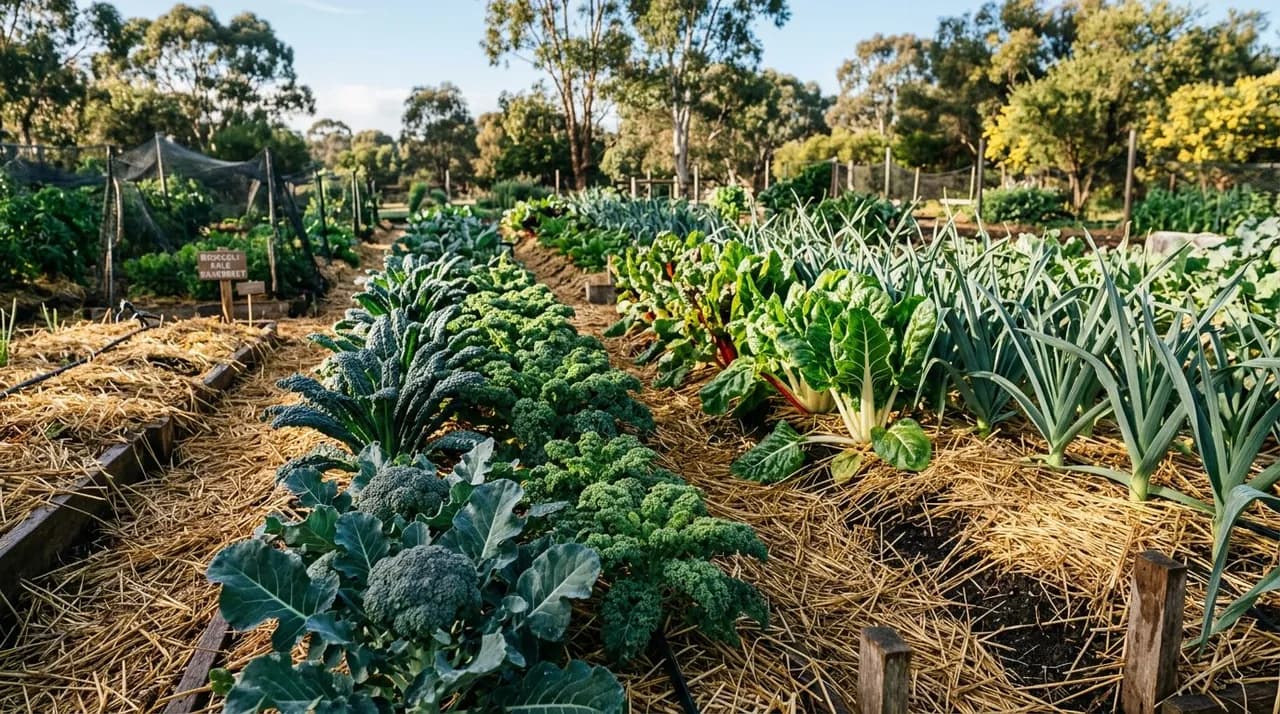
- Temperate and cool regions excel with frost-tolerant brassicas, alliums, root vegetables, and leafy greens that sweeten with light frost.
- Tropical and subtropical zones enter their prime vegetable growing season during winter, escaping intense summer humidity, pests, and monsoonal rains.
- Prepare beds in mid to late autumn with generous additions of compost and well-rotted manure to fuel heavy winter feeders.
- Protect emerging seedlings from winter pests like snails, slugs, and cabbage white butterfly caterpillars using physical exclusion netting.
Quick answer: Successful winter vegetables in Australia depend on your regional climate descriptor. Cool and temperate zones focus on frost-tolerant crops like garlic, broccoli, kale, silverbeet, broad beans, and carrots, while tropical and subtropical gardeners plant warm-season crops like tomatoes, capsicums, and beans during the dry winter window.
Knowing which winter vegetables australia gardeners can successfully plant and harvest transforms the cooler months (June through August) into a highly productive growing window. In the Southern Hemisphere, winter brings crisp mornings, reliable rainfall across southern states, and a much-needed break from the scorching summer heatwaves that stress delicate crops.
However, Australia encompasses vastly diverse growing environments. While growers in Tasmania, the Victorian highlands, and the New South Wales tablelands experience sub-zero nights, heavy frosts, and occasional snow, gardeners in Brisbane, coastal Queensland, and Darwin experience mild, sunny days with minimal rainfall. Choosing the right vegetables to grow in winter australia requires matching your sowing calendar directly to your specific climate descriptor.
Whether you manage an expansive suburban garden or a compact backyard winter veggie patch, understanding regional seasonal shifts ensures a continuous harvest of fresh, nutrient-dense produce right through until spring.
Understanding Australian climate zones for winter crops
Australia does not rely on North American hardiness numbers. Instead, horticultural planning is structured around five primary climate zones:
1. Cool and cold mountain zones
Covering Tasmania, the ACT, the Snowy Mountains, and high-altitude areas of NSW and Victoria:
- Winter conditions: Regular severe frosts, freezing winds, and damp, cold soils with daytime temperatures often below 12°C.
- Growing strategy: Focus entirely on rugged, frost tolerant vegetables sown in late summer or autumn to establish strong root systems before deep winter dormancy.
2. Temperate zones
Encompassing Melbourne, Adelaide, Sydney, Perth, and coastal southern areas:
- Winter conditions: Mild to cool days (12°C to 18°C), occasional light morning frosts inland, and reliable winter rainfall.
- Growing strategy: Prime territory for brassicas, leafy greens, root crops, and legumes sown throughout late autumn and midwinter.
3. Subtropical zones
Covering coastal northern NSW, Brisbane, the Sunshine Coast, and coastal Western Australia north of Perth:
- Winter conditions: Warm, sunny days (18°C to 24°C), cool, crisp nights that are frost-free on the coast but frosty in inland valleys, and low humidity.
- Growing strategy: Winter is the premier vegetable growing season. Subtropical gardeners can grow both cool-season greens and warm-season solanaceous crops that struggle during humid summers.
4. Tropical zones
Covering Darwin, Cairns, the Kimberleys, and far north Queensland:
- Winter conditions: The famous dry season (May to October), characterised by warm days (28°C to 32°C), zero frost, and virtually no rainfall.
- Growing strategy: The main harvest window for standard garden vegetables, including tomatoes, cucumbers, capsicums, and sweetcorn.
5. Arid and inland desert zones
Covering Alice Springs, inland South Australia, and western NSW:
- Winter conditions: High diurnal temperature shifts with sunny, dry days followed by sharp, frosty nights.
- Growing strategy: Hardy root vegetables, onions, and sheltered leafy greens that can withstand night chills.
For complete foundations on setting up Australian beds, consult our complete guide to starting a veggie patch.
What to plant in winter Australia: region-by-region crop selection
Knowing what to plant in winter australia depends directly on whether you are planting in the frosty south or the sunny north:
+-------------------+-------------------------------------------------------------------+
| Climate Zone      | Recommended Winter Plantings and Standing Crops (June to August)  |
+-------------------+-------------------------------------------------------------------+
| Cool / Alpine     | Broad beans, garlic, English spinach, kale, leeks, winter         |
|                   | cabbage, overwintering onions (parsnips and swedes go in during   |
|                   | late summer for winter lifting)                                   |
+-------------------+-------------------------------------------------------------------+
| Temperate         | Broccoli, cauliflower, silverbeet, rocket, carrots,               |
|                   | beetroot, peas, broad beans, garlic, spring onions                |
+-------------------+-------------------------------------------------------------------+
| Subtropical       | Tomatoes, capsicums, bush beans, zucchini, beetroot,              |
|                   | lettuce, broccoli, carrots, Asian greens (pak choy)               |
+-------------------+-------------------------------------------------------------------+
| Tropical (Dry)    | Tomatoes, chillies, sweetcorn, pumpkin, cucumbers,                |
|                   | eggplant, green beans, basil, coriander, watermelon               |
+-------------------+-------------------------------------------------------------------+
Cool and temperate zone selections
- Garlic (Allium sativum): Planted around the autumn equinox or early winter, garlic cloves require winter cold (vernalisation) to divide into distinct bulbs for summer harvest.
- Broad beans (Vicia faba): A hardy cool-season legume. They germinate in cold soils, withstand hard frosts, and fix atmospheric nitrogen into the soil.
- Brassicas (Broccoli, Cabbage, Cauliflower, Kale): These crops thrive in cool weather. Mild frost triggers the conversion of starches into natural plant sugars, making winter-harvested kale and Brussels sprouts notably sweeter than spring harvests. Learn about preventing premature flowering in cabbage and brassica heading and bolting.
- Silverbeet and English Spinach: Reliable cut-and-come-again greens that produce heavily through cold, wet conditions.
- Root Crops (Carrots, Beetroot, Parsnips, Turnips): Sow carrots, beetroot, parsnips and turnips in late summer to early autumn for winter harvesting; sowings made in late autumn and early winter sit slowly in cold soil and mature in spring.
Subtropical and tropical zone selections
In northern regions, winter is the ideal window for crops that succumb to fungal leaf rot and fruit fly in summer:
- Tomatoes and Capsicums: Produce heavy trusses of unblemished fruit under dry, sunny winter skies.
- Bush Beans and Snow Peas: Grow rapidly without extreme heat stress.
- Coriander and Rocket: Resist premature bolting in mild winter temperatures compared to blazing summer heat.
For gardeners in Western Australia managing unique coastal conditions, see our dedicated Perth vegetable planting guide.
Soil preparation and nutrition for winter crops
Cool-season vegetables, particularly heavy-feeding brassicas, require rich, biologically active soil to maintain steady growth as daylight hours shorten.
Amending beds in autumn
- Compost and manure: Fork in 5 cm to 8 cm of well-rotted cow or sheep manure and mature compost two weeks before planting.
- Lime and pH adjustment: Brassicas prefer a neutral to slightly alkaline soil pH between 6.5 and 7.5 to discourage clubroot disease. If your soil is naturally acidic, apply a light dusting of agricultural lime or dolomite.
- Slow-release minerals: Incorporate blood and bone or organic pelletised poultry manure to provide steady phosphorus and nitrogen throughout the damp months.
Mulching and soil warmth
While summer mulching aims to cool the soil, winter mulching in cool temperate zones must balance moisture conservation with soil warmth:
- Apply a moderate 3 cm to 5 cm layer of clean lucerne or pea straw around established plants.
- Keep mulch pulled back a few centimetres from the crowns and stems of brassicas and lettuces to prevent collar rot in damp weather.
- To understand how organic sheet mulching conditions winter soil biology, review sheet mulching for soil moisture across seasons.
Protecting the winter veggie patch from frost, damp, and pests
Winter gardening presents fewer insect pests than summer, but specific seasonal challenges require proactive management:
Frost management
Light frosts improve the flavour of brassicas and parsnips, but tender seedlings need protection:
- Frost cloth and cloches: Drape breathable horticultural fleece or frost cloth over lightweight poly-pipe hoops on clear, still nights when temperatures threaten to dip below 0°C.
- Morning watering: On frosty mornings, gently spray frozen foliage with cold water from a hose before direct sunlight hits the leaves. This thaws plant tissue gradually, preventing cellular rupture.
Snail and slug control
Damp winter weather creates optimal breeding conditions for common garden snails and slugs:
- Hand-collect pests at dusk or after rain showers around the base of vulnerable seedlings.
- Install beer traps or place inverted citrus rinds around bed perimeters as natural attractants.
- Avoid broad-scale synthetic baiting that can endanger domestic pets and native wildlife, choosing iron EDTA-based alternatives only where necessary.
Cabbage white butterfly management
Even in midwinter across temperate and coastal areas, cabbage white butterflies (Pieris rapae) remain active during sunny afternoons:
- Install fine 5 mm insect exclusion netting over entire brassica beds immediately after transplanting.
- Netting eliminates caterpillar damage without requiring chemical pesticide sprays.
As the cool season winds down and soil begins to warm in late August, prepare your spring sowing schedule with our guide on what to plant in September in Australia.