Key takeaways
- September marks the official arrival of spring in the Southern Hemisphere, initiating the main warm-season planting calendar across Australia.
- Temperate and cool climate zones focus on starting summer crops indoors on heat mats while direct-sowing hardy spring vegetables outdoors.
- Subtropical and tropical regions transition rapidly toward high humidity, prioritising heat-tolerant greens, climbing beans, and sweetcorn.
- Warm soil temperature (above 16°C to 18°C) is the primary trigger for direct-sowing beans, sweetcorn, and cucurbits into outdoor beds.
- Harden off indoor-started tomato, capsicum, and eggplant seedlings gradually before transplanting into the open veggie patch.
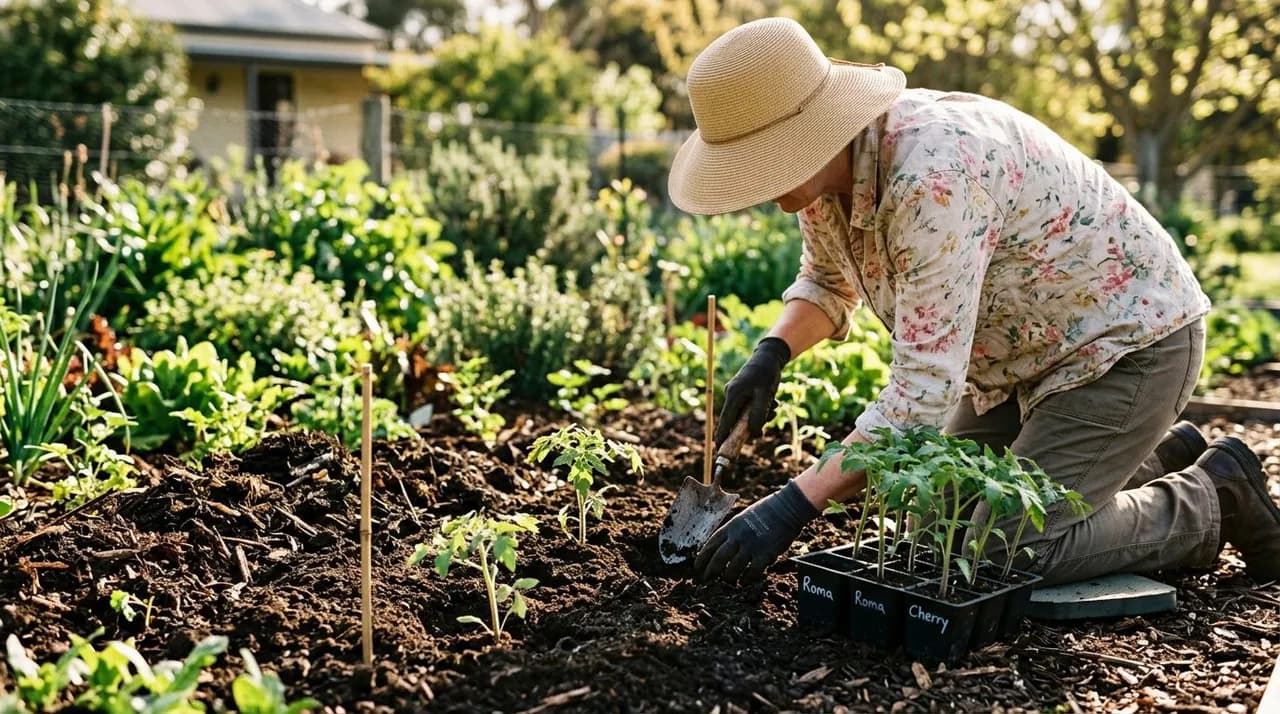
Quick answer: In Australia, knowing what to plant in September depends on your regional climate zone. Temperate and cool zones direct-sow carrots, beetroot, silverbeet, and peas while starting tomato seedlings in warm shelters. Subtropical zones plant sweetcorn, beans, cucumbers, capsicums, and melons directly into garden beds, while tropical gardeners switch to heat-tolerant crops like snake beans, okra, sweet potato, and amaranth ahead of the wet.
September is an active planting month in the Australian gardening calendar. In the Southern Hemisphere, September brings the official onset of spring, lengthening daylight hours, and the steady warming of garden soil after winter chill. For home growers, this seasonal transition signals the start of the high-energy warm-season planting cycle.
However, deciding what to plant in september australia requires matching your sowing list to your local climate conditions. While gardeners in Brisbane and coastal northern NSW enjoy balmy, frost-free spring days, growers in Melbourne, Adelaide, Canberra, and regional Victoria still face unpredictable cold snaps, wet soils, and late spring frosts that can destroy tender summer seedlings.
Using a structured september planting guide australia ensures you plant warm-season staples at the exact moment soil temperatures support vigorous root growth, avoiding stunted crops and seed rot.
Understanding climate timing for spring planting in September
Australia does not use American hardiness zones. Instead, your spring planting september plan should follow Australia's major climate zones:
1. Cool and alpine zones
Encompassing Canberra, the ACT, the Snowy Mountains, high-altitude NSW tablelands, and most of Tasmania:
- September conditions: Cold nights with frequent late frosts (often extending through October or November), cold soils (below 12°C), and damp ground.
- Strategy: Focus on direct-sowing cool-tolerant spring crops (peas, radishes, spinach, carrots) while raising tender summer crops (tomatoes, capsicums, chillies) indoors on seedling heat mats or in a sunny greenhouse.
2. Temperate zones
Covering Melbourne, Sydney, Adelaide, Perth, and coastal southern regions:
- September conditions: Warming days (16°C to 22°C) with cool nights and occasional late light frosts in inland valleys. Soil temperatures range between 14°C and 18°C.
- Strategy: Transition month. Continue successional sowing of spring greens and root vegetables outdoors, while sowing summer vegetables in trays under sheltered conditions for mid-spring transplanting.
3. Subtropical zones
Encompassing coastal northern NSW, Brisbane, the Sunshine Coast, and the Gold Coast:
- September conditions: Warm, dry, sunny days (22°C to 26°C) with mild nights and rapidly warming soils.
- Strategy: Full swing into summer crops. Direct-sow bush and climbing beans, sweetcorn, zucchini, cucumbers, rockmelons, and Asian greens.
4. Tropical zones
Covering Darwin, Cairns, Townsville, and the northern parts of Western Australia:
- September conditions: The tail end of the dry season, shifting into building heat and pre-monsoon humidity (temperatures regularly exceeding 30°C).
- Strategy: Plant heat-tolerant crops like snake beans, sweet potato, okra, cassava, Ceylon spinach, and amaranth before monsoonal rains begin.
5. Arid and semi-arid zones
Covering regional South Australia, the red centre, and inland western plains:
- September conditions: Rapidly rising daytime temperatures with cool, clear nights.
- Strategy: Quick-maturing spring crops, pumpkins, melons, and bush beans established before extreme summer heat sets in.
For a full breakdown of winter crop succession leading into spring, review our guide to winter vegetables in Australia.
What to plant by climate zone in September
Review the consolidated planting recommendations for your area:
+-------------------+---------------------------------------------------------+
| Climate Zone      | Recommended September Sowing and Planting               |
+-------------------+---------------------------------------------------------+
| Cool / Cold       | Direct sow: Carrots, beetroot, peas, parsnips, spinach  |
|                   | Seed trays indoors: Tomatoes, capsicums, eggplants      |
+-------------------+---------------------------------------------------------+
| Temperate         | Direct sow: Silverbeet, carrots, beetroot, leeks, peas  |
|                   | Seed trays/shelter: Tomatoes, zucchini, basil, cucumber |
+-------------------+---------------------------------------------------------+
| Subtropical       | Direct sow: Beans, sweetcorn, zucchini, cucumber,       |
|                   | capsicum, tomato, pumpkin, watermelon, rockmelon, basil |
+-------------------+---------------------------------------------------------+
| Tropical          | Direct sow: Snake beans, sweetcorn, okra, sweet potato, |
|                   | amaranth, roselle, capsicum, basil, Ceylon spinach      |
+-------------------+---------------------------------------------------------+
Direct-sowing root vegetables and leafy greens
In temperate and cool areas, September is prime time for direct-sowing reliable spring vegetables:
- Carrots and Beetroot: Sow directly into finely raked, loose soil. Keep the seedbed evenly moist with a fine mist sprayer until fine green cotyledons emerge.
- Silverbeet and English Spinach: Vigorous spring producers that thrive in moderate temperatures.
- Rocket and Asian Greens: Fast-growing salad crops ready to harvest within 3 to 4 weeks. Sowing every fortnight ensures a continuous harvest.
- Snow Peas and Sugar Snap Peas: Sown in early September across cooler districts to catch the final stretch of mild spring weather before summer heat arrives.
Planting warm-season solanaceous crops
Tomatoes, capsicums, and eggplants demand warm soil (consistently above 18°C) to absorb phosphorus and grow actively:
- In subtropical gardens, transplant tomato seedlings september directly into well-composted beds, staking firmly at planting time.
- In temperate and cool gardens, keep young seedlings in pots inside a cold frame, greenhouse, or sunny windowsill, potting them up into larger 10 cm containers to develop thick, sturdy stems before planting out in October.
For growers on Western Australia's sandy coastal plains, see our specialised Perth vegetable planting guide.
Preparing soil and fertilising beds for spring growth
Rapid spring vegetative growth demands nutrient-rich, biologically active soil:
1. Clearing winter crops and amending beds
As spent winter brassicas and broad beans finish producing:
- Cut broad bean stalks at ground level, leaving the nitrogen-nodulated roots in the soil to decompose naturally.
- Fork 5 cm of rich organic compost and well-rotted cow manure into the top 15 cm of the bed.
- Learn broader whole-patch setup principles in our guide to starting a veggie patch.
2. Spring fertilising for fruit trees and beds
September is a primary month to feed deciduous fruit trees, citrus, and hungry fruiting vegetables as bud break occurs:
- Apply organic pelletised poultry manure, blood and bone, and sulphate of potash around the drip line of fruit trees and across garden beds.
- For detailed timing on orchard nutrition, consult our comprehensive guide on when to fertilise fruit trees in Australia.
Spring pest patrol: fruit fly prevention and weed control
Rising spring temperatures wake up garden pests alongside plants:
1. Queensland fruit fly preparation
As stone fruit and spring tomatoes begin forming flowers and miniature fruit, adult fruit flies that have overwintered in sheltered evergreen foliage become active again as temperatures climb past 16°C to 18°C:
- Hang male monitoring lure traps in early September to detect early fly activity around orchard perimeters.
- Install fine 2 mm insect exclusion netting over fruit trees and tomato cages as soon as fruit sets to prevent female egg-laying.
- Read our complete organic management strategy in Queensland fruit fly.
2. Spring weed management
Warm sunshine stimulates rapid weed germination across unmulched garden paths and empty beds:
- Hand-weed or hoe young weed seedlings on sunny mornings while they are small.
- Mulch beds with 5 cm of clean pea straw, sugar cane mulch, or lucerne to suppress weeds and retain spring moisture.
- Check surrounding garden areas for useful wild greens with our identification guide on edible weeds in Australia.