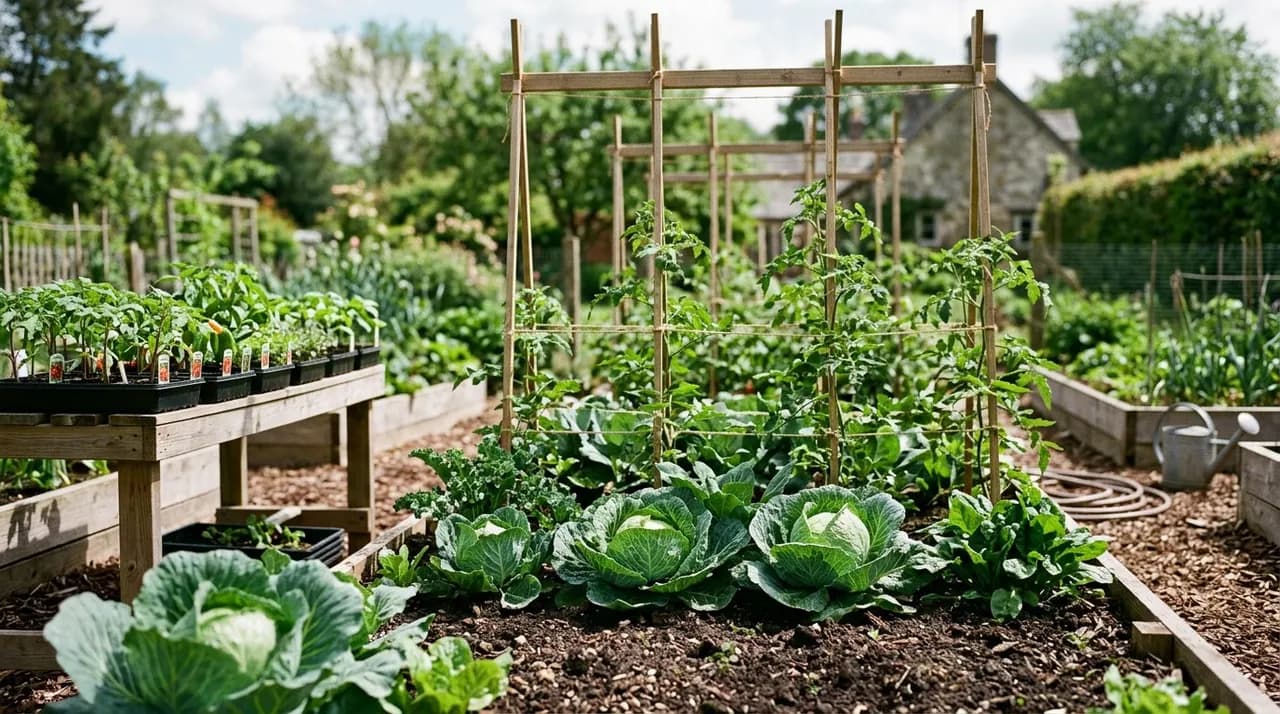
Key takeaways
- Zone 6 experiences an average frost-free growing season running from mid-April or early May through mid-to-late October.
- Indoor seed starting begins in February and March for cool-season brassicas and warm-season nightshades.
- Direct-sow cold-hardy root crops and leafy greens outdoors as soon as garden soil can be worked in early spring.
- Warm-season crops like tomatoes, peppers, and squash should only be transplanted after soil temperatures reach 60°F (15°C).
- Mid-summer succession sowing in July and August yields dependable autumn and early winter harvests of hardy vegetables.
Quick answer: A Zone 6 planting schedule revolves around average last spring frost dates in mid-April to early May and first autumn frost dates in mid-to-late October. Start cool-season crops indoors in February, transplant outdoors in April, plant warm-season nightshades in late May, and start fall succession vegetables in July and August.
USDA Hardiness Zone 6 is one of the most balanced gardening climates in North America, covering vast portions of the Mid-Atlantic, Midwest, Pacific Northwest, and central mountain valleys. With minimum winter temperatures averaging between -10°F and 0°F (-23°C to -18°C), Zone 6 gardeners enjoy four distinct seasons and approximately 150 to 180 frost-free growing days.
However, maximizing garden yields in this climate requires disciplined seasonal timing. Starting seeds too early indoors results in weak, leggy transplants, while sowing too late leaves warm-season vegetables vulnerable to early autumn frosts.
Following a structured zone 6 vegetable planting calendar ensures you know exactly when to plant in zone 6, transition seedlings safely outdoors, and capitalize on second-season autumn harvests before winter arrives. This comprehensive zone 6 planting guide walks through each season step by step.
When are the zone 6 frost dates for vegetable gardening?
All planting schedules are anchored to regional zone 6 frost dates:
- Average last spring frost: Typically occurs between April 15 and May 1 in Zone 6b, extending to May 10 in colder Zone 6a microclimates.
- Average first autumn frost: Typically occurs between October 15 and October 31.
- Total growing season window: Approximately 160 to 175 days of active frost-free growth.
Because localized microclimates (such as low-lying frost pockets, river valleys, or elevated slopes) can shift frost dates by up to two weeks, observe local conditions and monitor soil temperature before transplanting delicate crops. To compare seasonal timelines across surrounding zones, consult our comprehensive USDA zone vegetable calendar.
What is the month-by-month Zone 6 planting schedule?
This seasonal zone 6 gardening calendar organizes planting tasks from late winter through autumn:
February (late winter planning and early starts)
- Start indoors: Sow slow-growing cold-hardy crops indoors under grow lights, including onions, leeks, shallots, celery, and perennial culinary herbs.
- Garden prep: Clean and sharpen hand tools, review seed inventories, and order bare-root fruit trees and berry bushes.
March (early spring seed starting and cold crops)
- Start indoors: Sow cool-season brassicas indoors 6 to 8 weeks before the last frost date, including broccoli, cabbage, cauliflower, kale, and kohlrabi. In late March, start warm-season tomatoes, eggplants, and peppers.
- Direct sow outdoors: As soon as soil can be worked without clumping, direct-sow cold-tolerant seeds: sugar snap peas, English peas, spinach, radishes, and turnip greens.
- Install season extenders: Place unheated cold frames or low plastic tunnels over early garden beds to warm soil. Learn construction and management techniques in our guide to cold frame gardening.
April (spring transplants and direct sowing)
- Transplant outdoors: Harden off and transplant broccoli, cabbage, kale, Swiss chard, and lettuce into outdoor beds around mid-April.
- Direct sow outdoors: Sow carrots, beets, parsnips, Swiss chard, and lettuce directly into garden beds. Plant seed potatoes and onion sets.
- Indoor seed starts: Sow fast-growing warm crops like cucumbers, melons, zucchini, and winter squash indoors 3 to 4 weeks before the last frost.
May (warm-season planting and nightshade transplants)
- Direct sow outdoors: After all danger of frost has passed in mid-to-late May, direct-sow bush beans, pole beans, sweet corn, okra, and sunflowers directly into warm garden soil.
- Transplant outdoors: Harden off and plant warm-season crops into beds once night temperatures consistently stay above 50°F (10°C): tomatoes, sweet and hot peppers, eggplants, basil, and sweet potato slips.
- Mulch beds: Apply a 3-inch (8 cm) layer of clean straw, shredded leaves, or woodchips to conserve moisture, as detailed in sheet mulching for soil moisture.
June (maintenance and succession sowing)
- Direct sow successions: Sow second batches of bush beans, sweet corn, and summer squash to ensure continuous mid-summer harvests.
- Pest and water management: Install drip irrigation lines and inspect foliage for early cucumber beetles, squash bugs, and tomato hornworms.
July (mid-summer care and fall seed starting)
- Start indoors for fall: In early-to-mid July, start seeds indoors for your autumn garden, including broccoli, cabbage, Brussels sprouts, cauliflower, and collard greens.
- Direct sow for fall: Direct-sow autumn carrots, beets, and parsnips. Keep seedbeds moist under burlap or shade cloth during hot July afternoons to ensure even germination.
August (fall transplants and cool-season sowing)
- Transplant fall brassicas: Move autumn broccoli, cabbage, and kale seedlings into open garden spaces cleared of spent spring crops.
- Direct sow greens: Direct-sow spinach, lettuce, arugula, Asian greens (bok choy, tatsoi), and winter radishes for late autumn and early winter harvesting.
September (harvest and cover cropping)
- Protect tender crops: Cover remaining pepper and tomato plants with floating row covers if early light frost threatens.
- Sow green manures: As summer crops finish, sow cold-hardy cover crops like winter rye, hairy vetch, or crimson clover to prevent erosion and fix nitrogen. Read cover crops for the home garden for species selection.
October (garlic planting and season wind-down)
- Plant garlic and shallots: Plant individual garlic cloves 2 inches (5 cm) deep in rich soil 4 to 6 weeks before ground freezes solid (typically mid-to-late October).
- Harvest root crops: Dig up carrots, parsnips, and beets after light frosts convert starches into sweet natural sugars.
How do you manage cool versus warm season crops in Zone 6?
Successful Zone 6 vegetable gardening relies on categorizing crops by their temperature preferences:
Cool-season vegetables
Crops such as peas, spinach, lettuce, radishes, kale, broccoli, and carrots thrive in temperatures between 55°F and 75°F (13°C to 24°C) and easily withstand light frosts down to 28°F (-2°C). In Zone 6, cool-season crops are planted twice: once in early spring for late spring harvests, and again in mid-summer for autumn harvests.
Warm-season vegetables
Crops including tomatoes, peppers, squash, cucumbers, beans, and corn require warm air (70°F to 85°F / 21°C to 29°C) and warm soil (above 60°F / 15°C). Planting warm crops too early into cold, wet spring soil stunts root development and increases susceptibility to seedling fungal root rots.
How do you extend the growing season in Zone 6?
Zone 6 gardeners can easily harvest fresh greens nine to ten months of the year using simple season-extension techniques:
- Floating row covers: Lightweight spun-bond fabric draped over garden hoops protects tender spring transplants from unexpected late frosts down to 28°F (-2°C).
- Unheated cold frames: Cold frames capture solar radiation during daytime, keeping hardy winter spinach, claytonia, and mache harvestable even when outside air temperatures drop below freezing.
- Heavy winter straw mulching: Covering overwintering root crops like carrots and parsnips with 6 to 8 inches (15 to 20 cm) of clean straw prevents soil from freezing solid, allowing you to dig sweet fresh roots all winter long.
To compare Zone 6 planting strategies with warmer southern climates, explore our guides on zone 7 planting schedule and zone 8 planting schedule.