Key takeaways
- Cold frames can extend the growing season by 6-8 weeks in zones 4-6, allowing winter harvests of hardy greens.
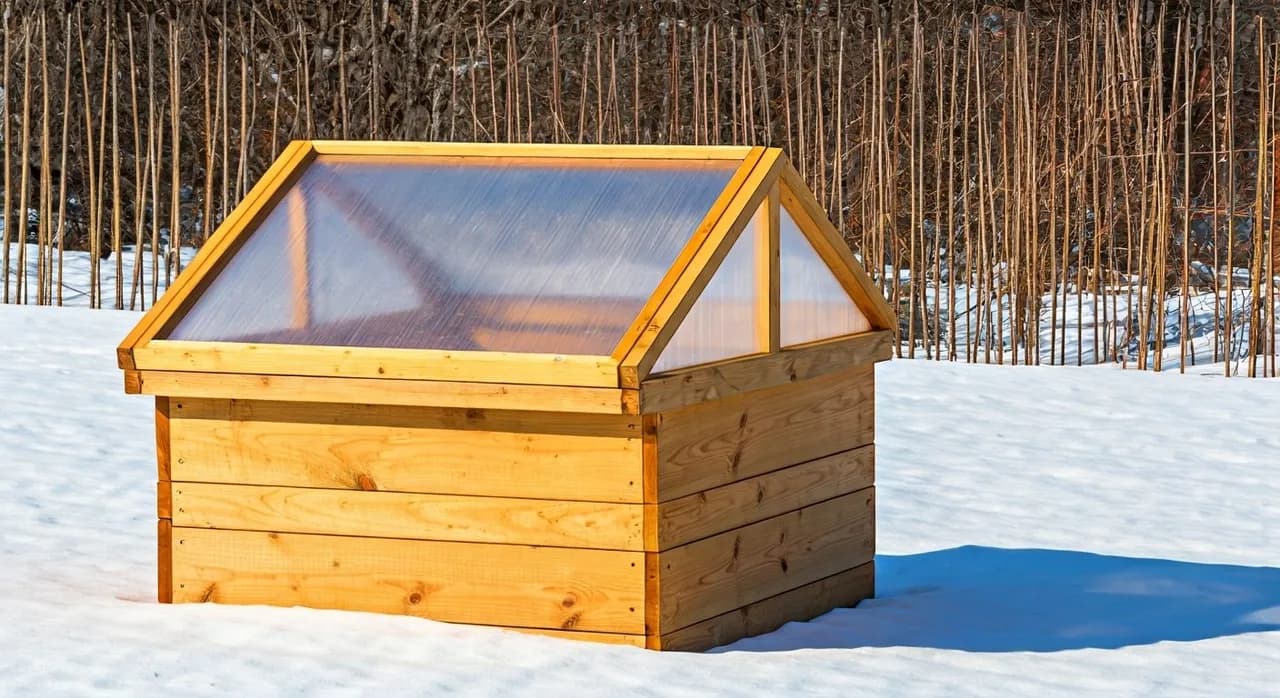
- Optimal cold frame design includes a south-facing slope, sturdy materials, and a transparent lid for maximum solar gain.
- Hardy greens like spinach, kale, and lettuce thrive in cold frames, tolerating temperatures down to 15°F with protection.
- Ventilation on sunny days and insulation on frigid nights keep internal temperatures stable.
- Integrating passive solar principles and off-grid monitoring can improve cold frame performance and extend its utility.
Quick answer: Cold frames extend the growing season by creating a microclimate that harnesses passive solar energy, increasing ambient temperatures by 10-20°F and protecting plants from harsh winter conditions. This allows for an additional 6-8 weeks of harvest for hardy greens in colder climates like USDA Zone 5.
In the northern reaches of New England, where winter temperatures routinely drop below 0°F, homesteaders often face a growing season limited to five or six months. This short window can make achieving year-round food self-sufficiency a significant challenge, especially for those pursuing an off-grid lifestyle that prioritizes local food production. Many growers in USDA zone 4, for example, see their last frost in late May and first frost in early October, leaving just over 150 days.
A well-built cold frame, though, can push that limit significantly, often adding weeks to the harvest window for hardy vegetables in USDA zones 4-6. This simple structure harnesses passive solar energy to create a microclimate, allowing you to cultivate fresh greens and root vegetables even when outside temperatures plummet to 10°F or lower. For those committed to off-grid living, a cold frame is a practical, low-energy solution to extend the bounty of the garden.
Why a cold frame is essential for winter growing
For homesteaders in colder climates, a cold frame is more than a garden accessory. It extends the harvest and improves food security. These low-tech structures create a protected environment that can increase ambient air temperature on a sunny winter day, even when outside temperatures hover around 20°F. This temperature boost is often enough to keep hardy plants actively growing or at least dormant and ready for harvest.
The benefits of season extension
Beyond temperature moderation, cold frames offer protection from harsh winter winds, heavy snow loads, and foraging animals, all of which can devastate an unprotected winter garden. In USDA zone 5, a cold frame can provide fresh spinach and lettuce through winter instead of a bare garden. This matches the principle of self-reliance, where communities aim to “Eat What We Grow, Grow What We Eat” [2]. Harvesting fresh produce in December or January significantly reduces reliance on store-bought alternatives.
- Extends harvest season by weeks.
- Protects plants from wind and snow.
- Increases soil temperature by several degrees.
- Reduces reliance on external food sources.
- Requires minimal daily management.
Building your cold frame for optimal performance
A successful cold frame starts with thoughtful construction, focusing on materials that retain heat and allow maximum sunlight penetration. For most off-grid homesteads, reclaimed or readily available materials are often preferred. Common choices include untreated lumber like cedar or redwood for the frame, which are rot-resistant, and old windows or polycarbonate panels for the lid. The ideal dimensions are typically 3-4 feet deep and 6-8 feet long, providing ample space for a variety of crops.
Design considerations for heat retention
Orientation is paramount: the cold frame should always face south to capture the maximum amount of low-angle winter sun. A slight tilt in the lid, typically 15-30 degrees, helps shed water and snow while directing sunlight into the growing area. For insulation, consider burying the frame 6-12 inches into the ground to take advantage of stable earth temperatures. Also, banking soil, straw, or wood chips around the exterior walls can add extra insulation. This passive approach to temperature regulation aligns well with off-grid building principles, minimizing reliance on external energy inputs.
- Orient the cold frame to face true south.
- Ensure a lid angle of 15-30 degrees for sun capture.
- Use sturdy, rot-resistant wood for the frame, such as cedar.
- Bury the frame 6-12 inches deep for geothermal insulation.
- Seal all joints to prevent heat loss.
Selecting and planting crops for winter success
The key to a productive winter cold frame lies in choosing the right plants and timing your planting correctly. Not all vegetables are suited for the chilly, low-light conditions of a winter cold frame. Focus on cold-hardy varieties that can tolerate temperatures down to 15°F, or even lower with additional protection. Spinach, kale, and various types of lettuce are excellent choices, as are root vegetables like carrots and radishes. For example, ‘Winterbor’ kale is known to withstand temperatures well below freezing, making it ideal for USDA zone 4. You can find more specific guidance on growing kale at How to grow kale.
Timing your winter plantings
In most USDA zones 4-6, the optimal planting window for winter harvest is typically 6-8 weeks before the first hard frost. For a zone 5 gardener, this often means planting in late August or early September. This allows plants to establish a sturdy root system and grow to a harvestable size before the short days and deep cold of winter set in. Once established, these plants will slow their growth significantly but remain alive, ready for periodic harvesting. Aim for at least 6 inches of soil depth for most greens, and 12 inches for longer root crops so adequate space for development.
- Plant 6-8 weeks before the first hard frost.
- Choose cold-hardy varieties like spinach, kale, and mache.
- Ensure soil depth of at least 6 inches for greens.
- Consider root crops like carrots and radishes for deeper frames.
- Space plants according to mature size, typically 4-6 inches apart.
Managing your cold frame through the winter months
Maintaining a cold frame through winter requires consistent, though not constant, attention to ventilation, watering, and insulation. The biggest threat to your plants is often not the cold, but overheating on sunny days. When outside temperatures are above 30°F and the sun is bright, the internal temperature can quickly soar to 70°F or higher, potentially cooking your plants. Proper cold frame ventilation is essential when internal temperatures exceed 45°F to prevent overheating. Opening the lid a few inches for several hours during the warmest part of the day is usually sufficient.
Off-grid tools for cold frame care
Watering needs are significantly reduced in winter. Plants grow slowly, and evaporation is minimal, so you might only need to water once every 2-3 weeks, depending on the moisture retention of your soil. Check the soil moisture by hand; it should feel slightly damp, not soggy or bone dry. For off-grid homesteads, a small solar-powered temperature sensor can be a useful addition, providing real-time data to help you decide when to vent. Such sensors can be powered by small solar panels, similar to those discussed for solar for tiny homes, or even a simple 5-watt panel dedicated to monitoring. On extremely cold nights, when temperatures are forecast to drop below 10°F, adding a layer of old blankets, straw bales, or a heavy tarp over the lid can provide extra protection.
- Ventilate daily when internal temperature reaches 45°F or higher.
- Water sparingly, typically once every 2-3 weeks, checking soil moisture first.
- Add extra insulation (blankets, straw) on nights below 10°F.
- Monitor for pests like slugs, which can thrive in damp, cool conditions.
- Harvest outer leaves to encourage continued production without stressing the plant.
Integrating cold frames with off-grid systems
For off-grid homesteaders, the cold frame fits naturally: it needs no electricity and uses minimal materials. Its passive solar design means it operates without electricity, reducing the energy footprint of food production. However, there are opportunities to improve its performance and convenience through thoughtful integration with existing off-grid systems. For example, a small, dedicated solar panel can power a low-voltage fan for automated ventilation or a data logger to track internal temperatures over time. This approach matches the practical applications of off-grid solar kits explained, even for small-scale needs.
Enhancing cold frames with solar power
Beyond monitoring, some homesteaders experiment with passive thermal mass within their cold frames. Dark-colored water containers, like 5-gallon jugs painted black, can absorb solar heat during the day and slowly release it at night, helping to raise nighttime temperatures. This method, while simple, adds another layer of frost protection for plants in USDA zone 4 during extended cold snaps. The goal is to get the most from the cold frame with the least external input.
- Use small solar panels (e.g., 10-watt) to power temperature sensors or small fans.
- Integrate thermal mass, such as black-painted water jugs, to store daytime heat.
- Consider a solar-powered automatic vent opener for consistent temperature regulation.
- Utilize rainwater harvesting systems to provide water for irrigation, reducing reliance on well pumps.
- Plan cold frame placement to optimize sun exposure, avoiding shadows from larger off-grid structures.
Cold-Hardy Vegetables for Winter Cold Frames (Zones 4-6)
Vegetable | Minimum Temperature Tolerance | Optimal Planting Time (Zone 5) |
|---|---|---|
Spinach | 15°F | Late August – Early September |
Kale | 10°F | Early September |
Lettuce (Romaine, Butterhead) | 20°F | Mid September |
Mache (Corn Salad) | 0°F | Late August |
Arugula | 15°F | Mid September |
Carrots (small varieties) | 15°F | Early October (for overwintering) |
Radishes (winter varieties) | 20°F | Mid September |
Temperature Gain: A well-built cold frame can increase the internal temperature by 10-20°F compared to outside ambient temperatures on a sunny winter day, even when outside it’s 20°F.
Extended Season: In USDA zones 4-6, a cold frame can extend the growing and harvesting season by weeks, significantly boosting winter food production.
References
- Curious Kids: What plants could grow in the Goldilocks zone of space? (2017).
- “Eat What We Grow, Grow What We Eat”: Creating a Self-Reliant Community Through Agricultural Programs (2018).
- “What do you want to be when you grow up?” Increasing Recruitment to Paediatrics through Undergraduate Simulation (2023).
- Grow Through What You Go Through (2023).
- A quasi-one-frame phase-unwrapping algorithm through zone-switching and zone-shifting hybrid implementation (2002).
- USDA Natural Resources Conservation Service (2024).