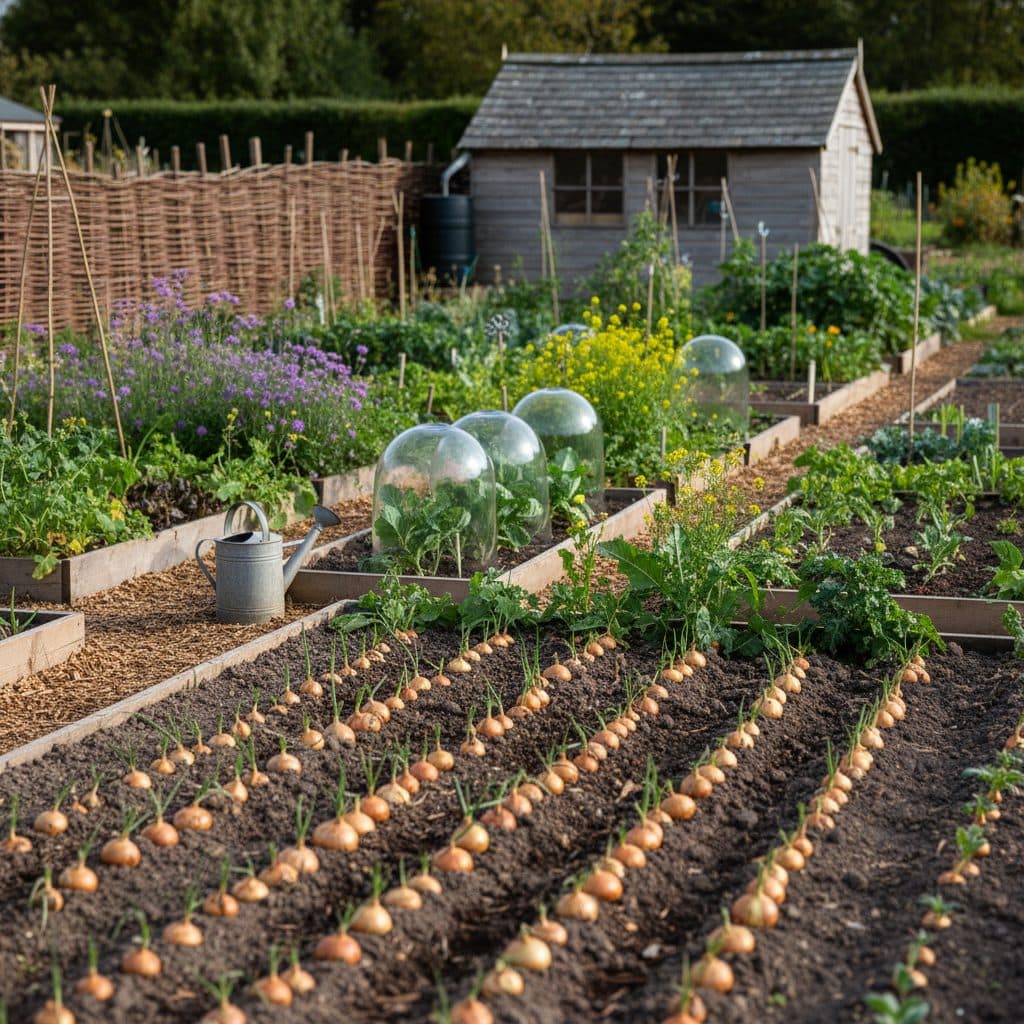
Key takeaways
- Biochar is a stable form of carbon, created through pyrolysis, that improves soil structure and fertility.
- Aim for a 5-10% biochar by volume in your garden beds, adjusting for existing soil organic matter.
- Incorporate biochar thoroughly into the top 6-8 inches of soil for optimal benefits.
- Charging biochar with nutrients before application increases its immediate impact on plant growth.
- Biochar significantly increases soil water retention, especially in sandy soils, by up to 18%.
- Its long-term stability means biochar can remain effective in soil for hundreds of years.
Quick answer: Applying biochar to garden beds significantly improves soil structure and fertility, increasing water retention by up to 18% in sandy soils and enhancing nutrient holding capacity. It is incorporated into the top 6-8 inches of soil, typically at 5-10% by volume, to provide long-term benefits for plant growth.
Gardening in the US presents a diverse set of soil challenges, from the heavy clays of the Midwest to the sandy loams of the Southeast. In coastal environments, for instance, gardeners often contend with rapid nutrient leaching and poor water retention, but studies show that raised garden beds can improve production by 20-30% [4]. One soil amendment that can further improve these beds, regardless of your region or soil type, is biochar. This stable form of carbon offers a long-term solution for improving soil health, boosting plant vigor, and making your gardening efforts more efficient.
Biochar is a centuries-old practice refined for modern gardening. Understanding how much to apply and the best methods for incorporating it into your garden beds is crucial for reaping its full benefits. From a small backyard plot in USDA zone 6 to a larger market garden, thoughtful application of biochar can transform your soil’s capacity to support robust plant life, potentially reducing the need for frequent watering and fertilization.
understanding biochar: what it is and how it works
Biochar is a charcoal-like material made from organic matter, such as wood chips or agricultural waste, that has been heated in a low-oxygen environment—a process called pyrolysis. This process creates a highly porous, stable carbon material that resists decomposition, unlike raw organic matter. Its unique structure provides an immense surface area, making it an ideal habitat for beneficial soil microbes and a sponge for water and nutrients. For example, biochar can increase soil water retention by up to 18% in sandy soils, which is a significant advantage in drier climates or during drought conditions [6].
the science behind biochar’s benefits
The benefits of biochar stem from its physical and chemical properties. Its porous nature improves soil aeration and drainage in heavy clay soils, while simultaneously increasing water holding capacity in sandy soils. Chemically, biochar has a high cation exchange capacity (CEC) once it’s ‘charged’ with nutrients, meaning it can hold onto positively charged nutrient ions like calcium, magnesium, and potassium, preventing them from leaching away. This nutrient retention can be substantial, with biochar reducing nutrient leaching by up to 60% in certain soil types [6].
- Improves soil structure in clay and sandy soils
- Increases water retention by up to 18% [6]
- Enhances nutrient holding capacity
- Provides habitat for beneficial microorganisms
- Reduces nutrient leaching by up to 60% [6]
determining the right amount of biochar for your garden
The optimal amount of biochar depends on your bed size. For a new raised garden bed measuring 4 feet by 8 feet, with soil depth of 12 inches, incorporating biochar into the top 6-8 inches would mean roughly 0.8 to 2.1 cubic feet of biochar.
calculating application rates
To calculate the amount needed, consider the volume of your garden bed. For example, if you have a 100 square foot bed and plan to incorporate biochar to a depth of 6 inches (0.5 feet), the total soil volume is 50 cubic feet. A 5% biochar application would require 2.5 cubic feet of biochar. It’s better to apply less and observe the results over a season or two, rather than over-applying. Over-application, though rare, can sometimes temporarily tie up nutrients if the biochar is not properly charged. Urban gardens, such as those documented in Beloit, often benefit from soil amendments, leading to observable increases in plant biomass of 15% [5].
- Assess existing soil organic matter levels
- Calculate garden bed volume accurately
- Start with 5% biochar by volume for new beds
- Consider a 2-3% application for established beds
- Measure biochar by cubic feet or pounds
how to work biochar into new and existing garden beds
Successfully integrating biochar into your garden soil involves more than just scattering it on top. For new garden beds, especially metal raised garden beds, thorough incorporation is key. Begin by spreading the calculated amount of biochar evenly over the surface of the prepared bed. Then, use a garden fork or shovel to mix it into the top 6-8 inches of soil [1]. This ensures the biochar is distributed where plant roots can access its benefits, improving the soil structure and nutrient availability throughout the root zone. A wooden-handle garden fork can be particularly effective for this task.
incorporating into established gardens
For existing garden beds, working in biochar requires a gentler approach to avoid disturbing established plants. You can apply biochar as a top dressing, especially in the fall or spring, and then lightly rake it in. Over time, earthworms and other soil organisms will help pull it deeper into the soil profile. Alternatively, if you’re planting new seedlings or annuals, you can mix a handful of biochar directly into the planting hole. For perennial beds or around established shrubs, consider digging small trenches or holes around the drip line and incorporating biochar there. Remember that biochar is most effective when it’s ‘charged’ or inoculated with nutrients, often by mixing it with compost or compost tea, which brings us to the next step.
- Spread biochar evenly over the soil surface
- Mix into the top 6-8 inches for new beds [1]
- Use a garden fork or broadfork for incorporation
- Apply as a top dressing for established beds
- Mix into planting holes for new plants
charging biochar for maximum impact
Applying raw, uncharged biochar directly to your garden can sometimes temporarily absorb nutrients from the soil, as its porous structure acts like a sponge. To prevent this, it’s highly recommended to ‘charge’ or inoculate your biochar before incorporation. This process involves saturating the biochar with nutrients and beneficial microbes, turning it into a rich, active soil amendment. The simplest method is to mix your biochar with finished compost or compost tea for a period of two to four weeks. For example, a ratio of 1 part biochar to 5-10 parts compost works well. The optimal C:N ratio for composting is typically between 25:1 and 30:1, and biochar can help balance this ratio in your compost pile [6].
vermicomposting and biochar integration
Another excellent way to charge biochar is by incorporating it into your vermicomposting system. Red wiggler worms, such as Eisenia fetida, will colonize the biochar, enriching it with their castings and beneficial microorganisms. Mix 5-10% biochar by volume into your worm bin bedding. This not only charges the biochar but also improves the aeration of the worm bin and helps manage odors. After a few months, the biochar will be thoroughly integrated with nutrient-rich worm castings, ready for application to your garden beds. This method creates a potent soil enhancer that can significantly boost the growth of plants like garden peas or garden sage.
- Mix biochar with finished compost for 2-4 weeks
- Use a 1:5 to 1:10 ratio of biochar to compost
- Incorporate into vermicomposting bins
- Charge with compost tea or liquid fertilizers
- Ensure biochar is moist during the charging process
long-term benefits and monitoring soil health
One of the most compelling aspects of biochar is its longevity. Unlike other organic amendments that break down relatively quickly, biochar is incredibly stable in the soil. It can remain effective for hundreds of years, sometimes over 1,000 years, continuously improving soil structure and nutrient cycling [6]. This means a single application can provide long-lasting benefits and reduce the need for repeated amendments. In a typical Tennessee vegetable garden, for instance, this long-term stability translates to consistently more productive soil year after year [1].
monitoring soil conditions
To truly understand the impact of biochar, regular monitoring of your soil health is essential. Use a 3-in-1 soil pH, moisture, and fertility meter to track changes in pH, moisture levels, and nutrient availability. You might observe a slight increase in soil pH, which can be beneficial for acidic soils. More importantly, you’ll likely see improved water infiltration and retention, meaning you might need to water 10-20% less frequently. Over time, plant growth will become more vigorous, and yields may increase by 15-25% as the soil food web thrives within the biochar’s porous structure.
- Biochar remains effective for hundreds of years [6]
- Reduces the need for frequent reapplication
- Improves soil structure and nutrient retention long-term
- Monitor soil pH and moisture regularly
- Observe increased plant vigor and yields by 15-25%
common mistakes to avoid with biochar
While biochar offers many advantages, avoiding common pitfalls ensures you get the most out of your application. One frequent mistake is applying uncharged biochar directly to the soil. As mentioned, this can temporarily absorb available nutrients, potentially causing a short-term nutrient deficiency for your plants. Always charge your biochar with compost or a nutrient solution for at least two weeks before mixing it into your garden beds. Another error is uneven distribution; simply sprinkling biochar on the surface without working it in means many plant roots won’t benefit. Aim for thorough incorporation into the top 6-8 inches of soil [1].
don’t overdo it
Another mistake is applying too much biochar. While it’s generally difficult to over-apply biochar to a harmful degree, exceeding the recommended 10% by volume can be wasteful and may not provide additional benefits. Stick to the 5-10% range, especially when starting out. Also, ensure your biochar is of good quality—look for products made from sustainable feedstocks and processed at appropriate temperatures (typically 400-700°F) to ensure high carbon content and stability. Poorly made biochar might have less porosity or contain contaminants. Finally, remember that biochar is an amendment, not a fertilizer; it improves the soil’s ability to hold nutrients, but those nutrients still need to be present, perhaps from your compost or other organic fertilizers.
- Applying uncharged biochar directly to soil
- Uneven distribution or surface application only
- Exceeding 10% biochar by volume
- Using poor quality or contaminated biochar
- Expecting biochar to act as a standalone fertilizer
Biochar vs. Other Soil Amendments for Garden Beds
Feature | Biochar | Compost | Peat Moss |
|---|---|---|---|
Longevity in Soil | Hundreds to 1,000+ years [6] | 1-5 years | 1-3 years |
Nutrient Retention | High (after charging) | Moderate to High | Low |
Water Retention | High (up to 18% increase in sandy soils) [6] | Moderate to High | High |
Soil Structure Improvement | Excellent (aeration, drainage) | Good | Moderate |
Microbial Habitat | Excellent | Excellent | Poor |
Application Rate (by volume) | 5-10% [6] | 20-50% | 10-30% |
Soil Water Retention: Biochar can increase soil water retention by up to 18% in sandy soils, significantly reducing watering needs [6].
Nutrient Leaching: Studies show biochar can reduce nutrient leaching by up to 60% in certain soil types, keeping nutrients available for plants [6].
Long-Term Stability: Once applied, biochar remains effective in soil for hundreds of years, sometimes over 1,000 years, providing lasting benefits [6].
Frequently asked questions
How often should I add biochar to my garden beds?
Due to its exceptional longevity, biochar typically needs to be applied only once every several decades, or even once in a lifetime, for a given garden bed. It can remain effective in soil for hundreds of years [6], so a single thorough application is usually sufficient to provide lasting benefits.
Can biochar burn my plants?
No, biochar itself will not burn your plants. It is a stable, inert form of carbon. However, if uncharged biochar is applied in very large quantities (e.g., over 15% by volume) directly to soil, it can temporarily absorb available nutrients, leading to nutrient deficiencies for plants, which might appear as stunted growth. Always charge your biochar before use.
Is biochar safe for organic gardening?
Yes, biochar is generally considered safe and beneficial for organic gardening. When sourced from clean, untreated organic materials, it is a natural soil amendment. Many organic certification standards allow for the use of biochar, especially when it’s produced from approved feedstocks and processed without synthetic additives, improving soil health and plant vigor by 10-20%.
What kind of biochar should I buy?
Look for biochar made from sustainable, untreated woody biomass or agricultural waste. Ensure it has a high carbon content (typically 80-90%) and a porous structure. Avoid biochar made from unknown sources or treated wood, as these may contain contaminants. Reputable suppliers often provide analysis reports for their products.
Can I make my own biochar?
Yes, it is possible to make biochar at home using methods like a ‘top-lit updraft’ (TLUD) gasifier or a simple retort kiln. However, achieving consistent quality and high carbon content can be challenging without proper equipment. If you choose to make your own, ensure you understand the process to produce a safe and effective product, aiming for temperatures between 400-700°F.
Does biochar affect soil pH?
Biochar can slightly increase soil pH, making it more alkaline. This effect is usually mild and can be beneficial for acidic soils, helping to bring the pH closer to the neutral range of 6.0-7.0, which is ideal for most garden vegetables. For soils that are already alkaline, this effect should be considered, but typically a 5-10% application causes only a minor shift of 0.1-0.5 pH units.
References
- Backyard Vegetables: The Tennessee Vegetable Garden – Building and Using Raised Beds (2016). Backyard Vegetables: The Tennessee Vegetable Garden – Building and Using Raised Beds.
- HARMONIZING COLOURS IN FURNISHING FLOWER-BEDS (2012). HARMONIZING COLOURS IN FURNISHING FLOWER-BEDS.
- Feature: How Much Does the World Work? (2023). Feature: How Much Does the World Work?.
- Improving Garden Production in Coastal Environments Using Raised Garden Beds (2025). Improving Garden Production in Coastal Environments Using Raised Garden Beds.
- Beloit Urban Garden Aerial Photos (2023). Beloit Urban Garden Aerial Photos.
- USDA Natural Resources Conservation Service (2024). USDA Natural Resources Conservation Service.