Key takeaways
- Choose non-bitter cucumber varieties like ‘Sweet Success’ or ‘Marketmore 76’ for reliable sweetness.
- Maintain consistent soil moisture, providing 1-2 inches of water weekly, especially during fruiting.
- Ensure adequate soil nutrients, particularly potassium, through soil testing and balanced fertilization.
- Manage plant stress from high temperatures (above 90°F), pests, or disease to reduce bitterness.
- Harvest cucumbers young and frequently, typically when 6-8 inches long, to prevent bitterness accumulation.
Quick answer: To prevent bitter cucumbers, choose ‘burpless’ varieties, maintain consistent soil moisture (1-2 inches weekly), ensure adequate potassium, and manage plant stress from heat or pests.
In the humid summers of the Southeast, from Georgia to Louisiana, many growers have faced the disappointment of a bitter cucumber. It’s a common issue, affecting an estimated 20% of home garden harvests in some years, turning a crisp, refreshing snack into an unpalatable experience. This bitterness isn’t a sign of spoilage, but rather a natural defense mechanism within the plant, driven by compounds called cucurbitacins [3].
Understanding the factors that trigger the production of these compounds helps you cultivate sweet, flavorful cucumbers. From selecting the right variety to managing environmental stressors, there are concrete steps you can take to ensure your cucumber plants yield delicious fruit, increasing your usable harvest by up to 30%.
The science of bitterness: cucurbitacins
Cucumbers, along with other members of the Cucurbitaceae family like squash and melons, naturally produce a group of biochemical compounds known as cucurbitacins. These triterpenoid compounds are concentrated primarily in the stem, leaves, and fruit skin, acting as a deterrent to pests and herbivores. While wild cucumber varieties can contain high levels, modern breeding efforts have significantly reduced cucurbitacin content in many cultivated types [2].
However, even ‘non-bitter’ varieties can produce bitter fruit under stress. For instance, a cucumber plant in USDA zone 7 experiencing a sudden heatwave above 90°F for several days might increase cucurbitacin production by 50%. This response is a survival mechanism; the plant perceives a threat and ramps up its chemical defenses. The bitterness is most pronounced at the stem end of the fruit, and often just beneath the skin, so a quick taste test before slicing can save a whole salad [1].
Genetic predisposition and environmental triggers
Some cucumber varieties are genetically predisposed to produce more cucurbitacins than others. Early breeding efforts in the mid-20th century successfully developed varieties with recessive ‘non-bitter’ genes, dramatically reducing the incidence of bitterness in commercial crops [2]. However, even with these genetic improvements, environmental factors play a significant role. Drought stress, temperature fluctuations, and nutrient deficiencies can all contribute to increased cucurbitacin levels. A field study in California showed that plants under consistent water stress yielded fruit with 30% higher cucurbitacin concentrations compared to well-watered controls.
- Genetic factors influence baseline bitterness.
- Cucurbitacins are a natural plant defense mechanism.
- Stress can increase bitterness by up to 50%.
- Bitterness is concentrated at the stem end and skin.
Variety selection and planting strategies
The first line of defense against bitter cucumbers begins with variety selection. Look for cultivars explicitly labeled as ‘burpless’ or ‘non-bitter,’ which are genetically engineered to produce minimal cucurbitacins. Popular choices for US growers include ‘Sweet Success,’ ‘Marketmore 76,’ and ‘Diva,’ all known for their consistently mild flavor. In USDA zone 5, these varieties typically perform well, yielding 10-15 pounds of fruit per plant over a 60-day harvest period.
Beyond genetics, proper planting strategies are crucial. Cucumbers thrive in well-drained soil rich in organic matter. Aim for a soil pH between 6.0 and 6.8 [6]. Before planting, amend your soil with 2-3 inches of compost, which improves water retention and nutrient availability. Plant seeds or transplants 12-18 inches apart in rows 3-5 feet apart, ensuring adequate air circulation to prevent fungal diseases that can stress plants. For example, in a 100 square foot garden, you might plant 15-20 cucumber plants.
Optimizing soil and spacing
Correct soil preparation and spacing reduce plant stress from the outset. A soil test, available through most university extension offices for around $20-$30, can provide precise recommendations for your specific garden. For instance, if your soil is deficient in potassium, adding a balanced organic fertilizer like Fermented Soybean Meal Organic Fertilizer can provide the necessary nutrients for robust growth. Proper spacing, such as 18 inches between plants, ensures each plant has sufficient access to light, water, and nutrients, reducing competition and stress, which can lead to a 15% increase in overall yield.
- Select ‘burpless’ or ‘non-bitter’ varieties.
- Maintain soil pH between 6.0 and 6.8.
- Amend soil with 2-3 inches of compost.
- Space plants 12-18 inches apart for air circulation.
Watering and nutrient management
Inconsistent watering is arguably the most common cause of bitter cucumbers, especially in regions like the arid West or during dry spells in the Midwest. Cucumbers require consistent moisture, about 1-2 inches of water per week, particularly during flowering and fruit development [6]. Drought stress, even for a few days, can trigger the plant to produce more cucurbitacins as a defense mechanism, potentially increasing bitterness by 25-30%. Using a soil moisture meter can help maintain optimal moisture levels, ensuring the top 6 inches of soil remain consistently damp.
Mulching around your cucumber plants with 2-4 inches of organic material like straw or shredded leaves helps conserve soil moisture, regulate soil temperature, and suppress weeds. This practice can reduce watering frequency by up to 30% and keep soil temperatures cooler during hot spells above 85°F. For example, in a garden in central Texas, mulched cucumber beds required watering every 4-5 days, compared to every 2-3 days for unmulched beds.
Nutrient balance for healthy growth
Beyond water, adequate and balanced nutrition is vital. Cucumbers are moderate feeders, benefiting from a balanced fertilizer with slightly higher potassium for fruit development. A soil test might reveal deficiencies, but generally, a slow-release organic fertilizer applied every 4-6 weeks can suffice. Avoid excessive nitrogen, which promotes leafy growth at the expense of fruit, and can indirectly stress the plant by making it more susceptible to pests. A study in Florida found that cucumber plants receiving balanced NPK (nitrogen-phosphorus-potassium) ratios yielded 20% less bitter fruit than those with high nitrogen inputs.
- Provide 1-2 inches of water weekly.
- Mulch with 2-4 inches of organic material.
- Use a soil moisture meter for accurate watering.
- Apply balanced fertilizer every 4-6 weeks.
Managing environmental stressors
Cucumbers are sensitive to extreme temperatures. Prolonged periods above 90°F or sudden drops below 50°F can stress plants, which increases cucurbitacin production. In regions like Arizona or parts of California, providing partial shade during the hottest part of the day, using shade cloth that blocks 30-40% of sunlight, can significantly reduce heat stress and prevent bitterness. This can lower leaf temperatures by 10-15°F, maintaining optimal plant function [6].
Pest and disease pressure also contribute to plant stress. Common cucumber pests include cucumber beetles and aphids, which can cause significant damage if left unchecked. Regularly inspect plants for signs of infestation, especially on the undersides of leaves. Early intervention with organic pest control methods, such as neem oil or insecticidal soap, can protect your plants. For example, a severe infestation of cucumber beetles can reduce yield by 25% and increase bitterness by 10-15%.
Trellising and harvesting practices
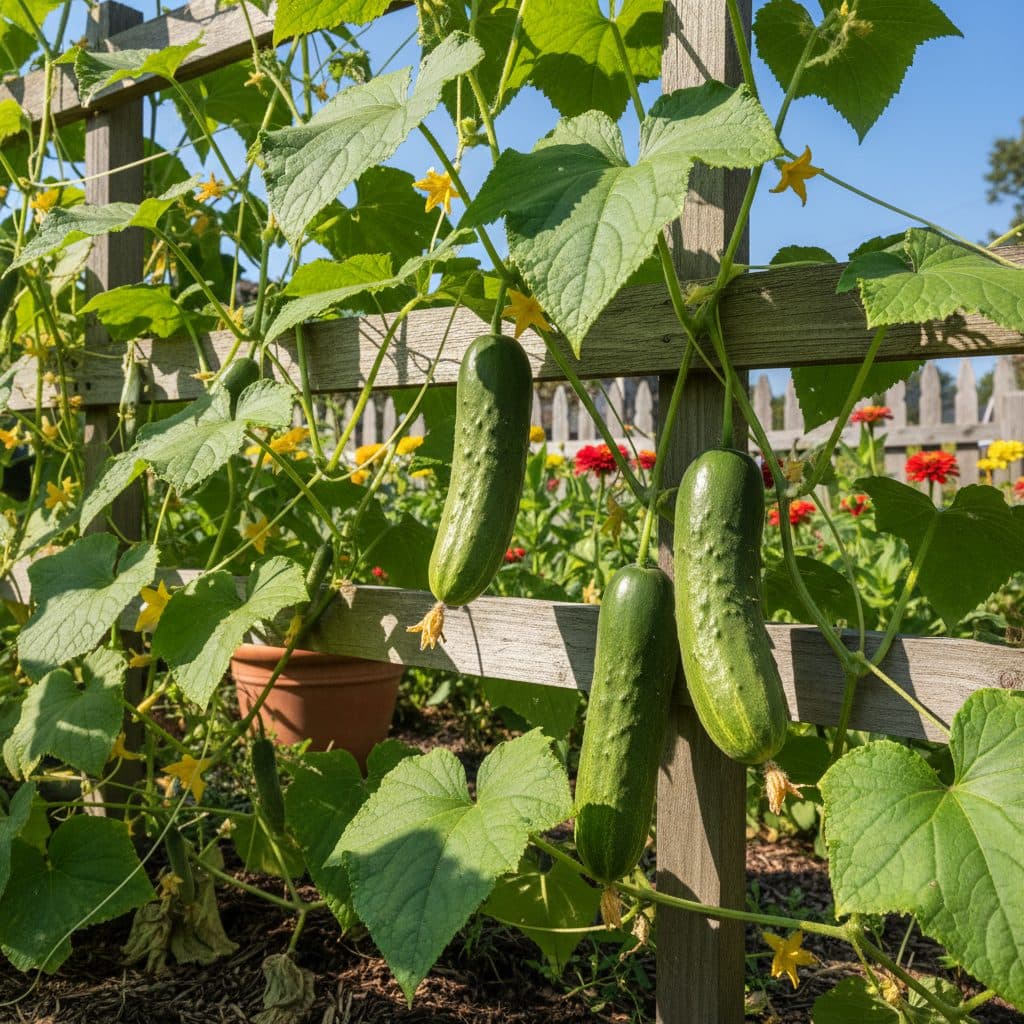
Trellising cucumbers, as advocated in our guide How to grow cucumbers: trellised, prolific, and bitter-free, offers multiple benefits. It improves air circulation, which reduces fungal disease risk, and keeps fruit off the ground, which prevents rot and pest damage. Furthermore, trellised plants are easier to inspect and harvest. Harvest cucumbers when they are young and tender, typically 6-8 inches long, before seeds fully develop. Overripe cucumbers tend to be tougher and more prone to bitterness. Picking frequently, every 1-2 days during peak season, encourages the plant to produce more fruit, increasing total yield by up to 40%.
- Provide partial shade above 90°F.
- Monitor for pests like cucumber beetles weekly.
- Trellis plants for better air circulation and fruit quality.
- Harvest cucumbers when 6-8 inches long.
Genetic Influence: Modern ‘burpless’ cucumber varieties reduce cucurbitacin production by up to 95% compared to wild types [2].
Water Stress Impact: Drought conditions can increase cucurbitacin levels in cucumbers by 25-30% [3].
Harvest Frequency: Harvesting cucumbers every 1-2 days can increase total yield by 40% and ensure sweeter fruit.
Frequently asked questions
Can I still eat a bitter cucumber?
Yes, bitter cucumbers are generally safe to eat, though unpleasant. The bitterness is due to cucurbitacins, which are not toxic in typical garden concentrations. You can try peeling the skin and cutting off the stem end, as these areas contain up to 50% more bitter compounds [1].
Why are my cucumbers bitter only at one end?
Bitterness is often concentrated at the stem end of the fruit. This is where cucurbitacins accumulate most densely, especially when the plant is under stress from factors like inconsistent watering or high temperatures above 90°F.
Do all cucumber varieties produce cucurbitacins?
All cucumber varieties produce some level of cucurbitacins, but ‘burpless’ or ‘non-bitter’ varieties have been bred to produce significantly less, often reducing bitterness by 95% [2]. Wild varieties, like <a href=’https://agripure.org/plants/citrullus-colocynthis’>colocynth</a>, are naturally much more bitter.
How much water do cucumbers need?
Cucumbers require consistent moisture, typically 1-2 inches of water per week, especially during their fruiting stage. In hot, dry climates, this might mean watering every 2-3 days to keep the top 6 inches of soil consistently damp [6].
Does trellising prevent bitter cucumbers?
Trellising doesn’t directly prevent bitterness, but it reduces plant stress by improving air circulation and preventing fruit from touching the ground, which can lead to disease. Healthier, less stressed plants are less likely to produce bitter fruit, potentially increasing yield by 40%.
References
- Eating Bitter Cucumbers: My Aunt Rose’s Pilgrimages to Jerusalem (2010). Eating Bitter Cucumbers: My Aunt Rose’s Pilgrimages to Jerusalem.
- Breeding of non-bitter cucumbers (1959). Breeding of non-bitter cucumbers.
- Bitter substances of cucumbers (1972). Bitter substances of cucumbers.
- Sea cucumbers mariculture (2021). Sea cucumbers mariculture.
- Introduction to sea cucumbers (2021). Introduction to sea cucumbers.
- USDA Natural Resources Conservation Service (2024). USDA Natural Resources Conservation Service.