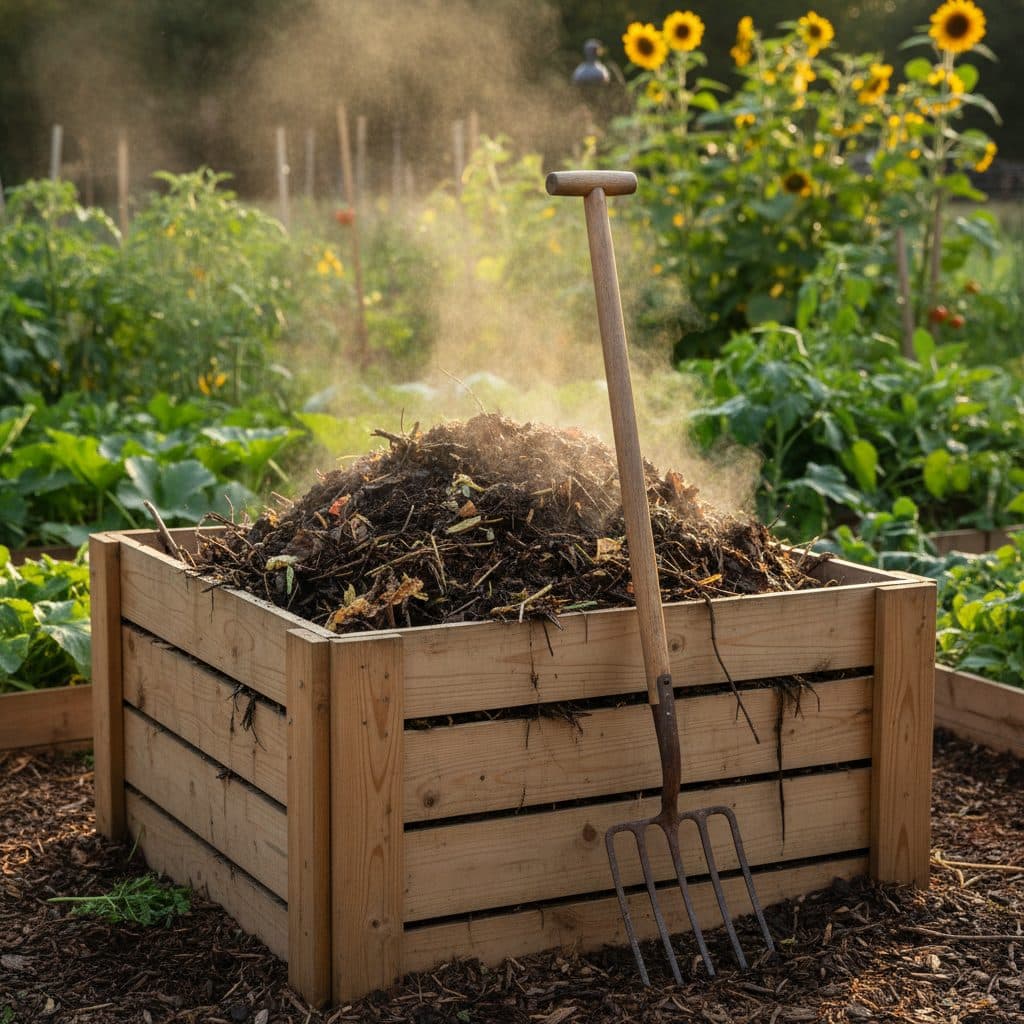
Key takeaways
- Ammonia smell signals too much nitrogen, fix by adding carbon-rich materials.
- Rotten egg odor indicates anaerobic conditions, improve by turning and aeration.
- Maintain a 30:1 carbon-to-nitrogen ratio for efficient decomposition.
- Keep compost moisture levels around 40-60%, like a damp sponge.
- Regularly turn your pile, at least once a week, to introduce oxygen.
- Finished compost should smell earthy, resembling forest soil.
Quick answer: Compost smells like ammonia due to excess nitrogen, requiring more carbon-rich materials. A rotten egg smell indicates anaerobic conditions, which can be fixed by turning the pile and improving aeration.
In many backyard gardens across the US, from the humid summers of USDA zone 8 in the Southeast to the cooler growing seasons of zone 5 in the Midwest, composting is a cornerstone of building healthy soil. However, the journey to nutrient-rich soil isn’t always fragrant. If your compost pile is emitting a foul odor, you’re not alone; it’s a common issue that signals an imbalance in the decomposition process, often fixable with a few adjustments. A properly managed compost pile should smell earthy, like a forest floor after a rain, not like a chemical factory or a landfill. Bad smells are a warning sign, telling us that the microbial community is struggling to do its job efficiently.
Understanding the specific type of bad smell can pinpoint the problem. Two of the most common and distinct odors are a sharp ammonia stench and a pungent rotten-egg smell. These indicate very different underlying issues in your pile’s chemistry and biology. For instance, a strong ammonia smell suggests an excess of nitrogen, while a rotten-egg odor points to a lack of oxygen, particularly prevalent in piles that are too wet or compacted. Addressing these issues eliminates odors and speeds up decomposition, producing finished compost within 3 to 6 months.
The sharp sting of ammonia
If your compost pile smells strongly of ammonia, like a cat litter box that hasn’t been cleaned in a week, you’re experiencing a common issue: too much nitrogen. This pungent odor is caused by an excess of nitrogen-rich materials (often called 'greens') breaking down rapidly without enough carbon-rich ‘browns’ to balance the process. Microorganisms, particularly bacteria, convert the surplus nitrogen into ammonia gas (NH3) which then escapes into the air. This imbalance means your pile’s carbon-to-nitrogen (C:N) ratio is likely too low, perhaps closer to 15:1 instead of the ideal 30:1 ratio needed for efficient decomposition [1]. In a typical backyard compost bin in USDA zone 6, this often happens when gardeners add large quantities of fresh grass clippings or food scraps without mixing in sufficient dry leaves or wood chips.
Balancing greens and browns
To fix an ammonia-smelling pile, the most effective strategy is to incorporate more carbon-rich materials. These ‘browns’ provide the necessary carbon structure for microbes to build their bodies and balance the nitrogen. Aim to add a volume of browns that is roughly two to three times the volume of the greens you’ve been adding. For example, if you’ve added 5 gallons of grass clippings, mix in 10-15 gallons of shredded leaves. After adding the browns, give the pile a thorough turn to mix everything and introduce oxygen. You should notice a reduction in the ammonia smell within 24 to 48 hours. Proper aeration also helps, as it allows trapped gases to escape and fresh air to enter, supporting aerobic bacteria. Consider using a sturdy pitchfork or a compost aerator tool to turn your pile at least once a week, especially if it’s a large pile over 3 cubic feet.
- Shredded dry leaves
- Wood chips or sawdust
- Straw or hay
- Cardboard or newspaper (shredded)
- Dried corn stalks
The rotten-egg warning
A smell reminiscent of rotten eggs, often described as sulfurous, is a clear indicator of anaerobic conditions within your compost pile. This odor, chemically identified as hydrogen sulfide (H2S), is produced by anaerobic bacteria (those that thrive without oxygen) as they break down organic matter [2]. This typically occurs when a pile becomes too wet and compacted, squeezing out all the air pockets and preventing oxygen from reaching the inner layers. For example, after a heavy rain season in the Pacific Northwest, where annual rainfall can exceed 40 inches, compost piles might easily become waterlogged. When oxygen levels drop below 5%, these anaerobic microbes take over, leading to a much slower and smellier decomposition process compared to their aerobic counterparts.
Aeration and moisture control
The primary solution for a rotten-egg smelling pile is to introduce oxygen and reduce excess moisture. Start by thoroughly turning the entire pile with a pitchfork, breaking up any compacted clumps. This action immediately provides the much-needed air for aerobic bacteria to resume their work. If the pile feels excessively wet (dripping rather than damp), add some dry, absorbent carbon materials like shredded newspaper, sawdust, or even a handful of dry soil to soak up the extra water. Aim for a moisture level similar to a wrung-out sponge, roughly 40-60% moisture content. For continuous improvement, consider building your pile with a central aeration pipe or turning it every few days, especially if you’re adding fresh, wet materials. A 3-in-1 soil pH, moisture, and light meter can help you monitor moisture levels accurately, ensuring it stays within the optimal 50% range. This tool can be particularly useful for Maintaining ideal conditions in larger compost systems, preventing future anaerobic pockets.
- Pile is visibly waterlogged or dripping
- Slime or mold appears on materials
- Materials are matted and difficult to separate
- Decomposition is extremely slow, taking over 9 months
- Flies and other pests are unusually abundant
Other unpleasant odors and general prevention
While ammonia and rotten eggs are the most common problematic compost smells, other odors can also arise, signaling different issues. A sour or vinegary smell often means the pile is too wet and is undergoing fermentation, similar to making sauerkraut. This happens when certain acids build up, and it’s usually accompanied by a lack of heat in the pile. A truly putrid or sewage-like smell, on the other hand, indicates the decomposition of meat, dairy, or oily foods, which should generally be avoided in backyard compost piles due to their tendency to attract pests and create strong, persistent odors. In USDA zone 4, where composting can slow significantly in winter, these issues might be less noticeable until warmer spring temperatures arrive, accelerating microbial activity and releasing trapped gases.
maintaining ideal conditions
Preventing bad smells starts with maintaining the right balance of ingredients and conditions. First, ensure a proper C:N ratio of around 30:1. This means roughly two parts browns to one part greens by volume. Second, manage moisture; the pile should feel like a damp sponge, not soaking wet or bone dry. A simple soil moisture meter can help you keep moisture levels between 40% and 60%. Third, particle size matters: chop or shred larger materials into pieces no bigger than 1-2 inches to increase surface area for microbes. Fourth, turn your pile regularly (at least once a week for an active, hot pile) to ensure adequate aeration. A well-managed pile in a 3x3x3 foot bin can reach temperatures of 140-160°F, effectively killing weed seeds and pathogens, and producing finished compost in as little as 6 weeks in optimal conditions.
- Maintain a 30:1 carbon-to-nitrogen ratio.
- Keep moisture at 40-60%, like a damp sponge.
- Shred materials to 1-2 inch pieces for faster breakdown.
- Turn the pile weekly for aeration and even decomposition.
- Avoid meat, dairy, and oily foods in backyard piles.
Beyond the smell: building long-term soil fertility
Once you’ve mastered odor control, your compost pile will efficiently transform organic waste into a dark, crumbly material that smells like fresh earth. This finished compost is a powerhouse for soil fertility, offering a wealth of benefits beyond just waste diversion. For growers in the arid regions of USDA zone 9, adding 2-3 inches of compost to garden beds annually can significantly improve water retention, reducing the need for irrigation by up to 30%. It also introduces a diverse microbial community, enhancing nutrient cycling and plant disease resistance. Proper composting converts yard and kitchen waste into organic matter that supports healthy plant growth.
Vermicomposting and biochar for enhanced fertility
To further boost your soil’s long-term health, consider integrating vermicomposting or biochar. Vermicomposting, using specific worm species like red wigglers (Eisenia fetida), can process food scraps into nutrient-rich worm castings much faster than traditional composting, often within 2-3 months in a small bin. These castings are particularly high in beneficial microbes and plant-available nutrients. Biochar, a charcoal-like material made from biomass through pyrolysis, offers incredible long-term benefits, improving soil structure, water retention, and nutrient availability for hundreds of years. Studies in the Midwest have shown that adding just 5% biochar to sandy soils can increase crop yields by 10-20% in the first year. Combining finished compost with biochar, applied at a rate of 1-2 pounds per square foot, creates a synergistic effect, building a resilient and productive soil ecosystem that can sustain healthy plants for many seasons.
- Improves soil structure and aeration.
- Increases water retention, reducing irrigation needs by 30%.
- Supplies a slow-release source of essential plant nutrients.
- Enhances beneficial microbial activity and disease suppression.
- Buffers soil pH, making nutrients more available to plants.
Comparing common compost odors and their solutions
Odor type | Primary cause | Key fix | Typical materials to add |
|---|---|---|---|
Ammonia (sharp, pungent) | Too much nitrogen (‘greens’) | Add carbon (‘browns’) | Dry leaves, wood chips, straw |
Rotten egg (sulfurous) | Lack of oxygen (anaerobic) | Aerate & reduce moisture | Coarse browns, dry soil, turn pile |
Sour/Vinegary | Too wet, fermentation | Aerate & add dry browns | Shredded paper, sawdust, dry leaves |
Putrid/sewage | Meat, dairy, oils | Remove offending items | Avoid these materials in backyard piles |
Ideal C:N Ratio: For optimal aerobic composting, maintain a carbon-to-nitrogen ratio of approximately 30:1, ensuring efficient breakdown of materials [1].
Moisture Level: Keep your compost pile moisture content between 40-60%, feeling like a damp, wrung-out sponge for active microbial life.
Aeration Frequency: Turn your active compost pile at least once a week to introduce oxygen and prevent anaerobic conditions, especially in piles larger than 3 cubic feet.
Frequently asked questions
What is the ideal carbon-to-nitrogen ratio for compost?
The ideal carbon-to-nitrogen (C:N) ratio for efficient composting is approximately 30:1. This balance ensures that microorganisms have enough carbon for energy and nitrogen for protein, leading to rapid decomposition within 3 to 6 months.
How often should I turn my compost pile?
For an active, hot compost pile, turning it at least once a week is recommended. This introduces oxygen, prevents anaerobic pockets, and helps maintain temperatures between 130-160°F for faster breakdown.
Can I compost meat and dairy products?
It’s generally advised to avoid composting meat, dairy, and oily foods in backyard piles, especially in residential areas. These materials can attract pests like rodents and flies, and their decomposition often produces strong, putrid odors that are difficult to manage in a small system.
What should finished compost look and smell like?
Finished compost should be dark brown or black, crumbly, and have an earthy smell, similar to forest soil after rain. It should be impossible to identify the original materials, and the temperature should have returned to ambient levels, typically below 80°F.
How does a soil moisture meter help with composting?
A soil moisture meter helps you maintain the optimal moisture level in your compost pile, which should be between 40% and 60%. This prevents the pile from becoming too wet and anaerobic, or too dry and inactive, ensuring consistent microbial activity and reducing odors. Many gardeners find that checking moisture every 2-3 days is sufficient.
What is the difference between composting and vermicomposting?
Traditional composting uses heat and microbes to break down organic matter, often in piles reaching 140°F. Vermicomposting, on the other hand, uses specific worm species, like red wigglers, to process food scraps into nutrient-rich castings at ambient temperatures, usually between 55-77°F, and can be done indoors or in smaller bins.
References
- Compost Rotten Politics (2013). Compost Rotten Politics.
- There’s Something Rotten in the State…’: Bad Smells in Antiquity (2003). There’s Something Rotten in the State…’: Bad Smells in Antiquity.
- Phew! My Hot Water Smells Like Rotten Eggs (1990). Phew! My Hot Water Smells Like Rotten Eggs.
- Predicting what your food smells like just got easier (2013). Predicting what your food smells like just got easier.
- ‘There’s Something Rotten in the State…’: Bad Smells Inantiquity (2003). ‘There’s Something Rotten in the State…’: Bad Smells Inantiquity.
- USDA Natural Resources Conservation Service (2024). USDA Natural Resources Conservation Service.