Key takeaways
- Container plants, like tomatoes in USDA zone 9b, can lose water five times faster than in-ground plants due to increased surface area exposure.
- The smaller soil volume in pots offers less thermal buffering, leading to higher soil temperatures and accelerated evaporation, often 10-15°F warmer than surrounding ground.
- Frequent, shallow watering in containers can lead to nutrient leaching, potentially reducing available nitrogen by 20-25% over a growing season.
- In-ground gardens benefit from capillary action and a larger soil reservoir, allowing for deeper root development and less frequent watering, sometimes only once every five-seven days.
- Effective compensation strategies for containers include using larger pots (15-20 gallon for tomatoes), mulching, selecting appropriate potting mixes, and employing drip irrigation systems.
- Monitoring soil moisture with a reliable sensor is crucial for both container and in-ground plants, helping prevent both underwatering and overwatering which can reduce fruit set by 15-20% in cucurbits.
Quick answer: Container tomatoes require more water than in-ground plants primarily due to increased surface area exposure, smaller soil volume, higher soil temperatures, and reduced capillary action, which collectively accelerate evaporation and transpiration.
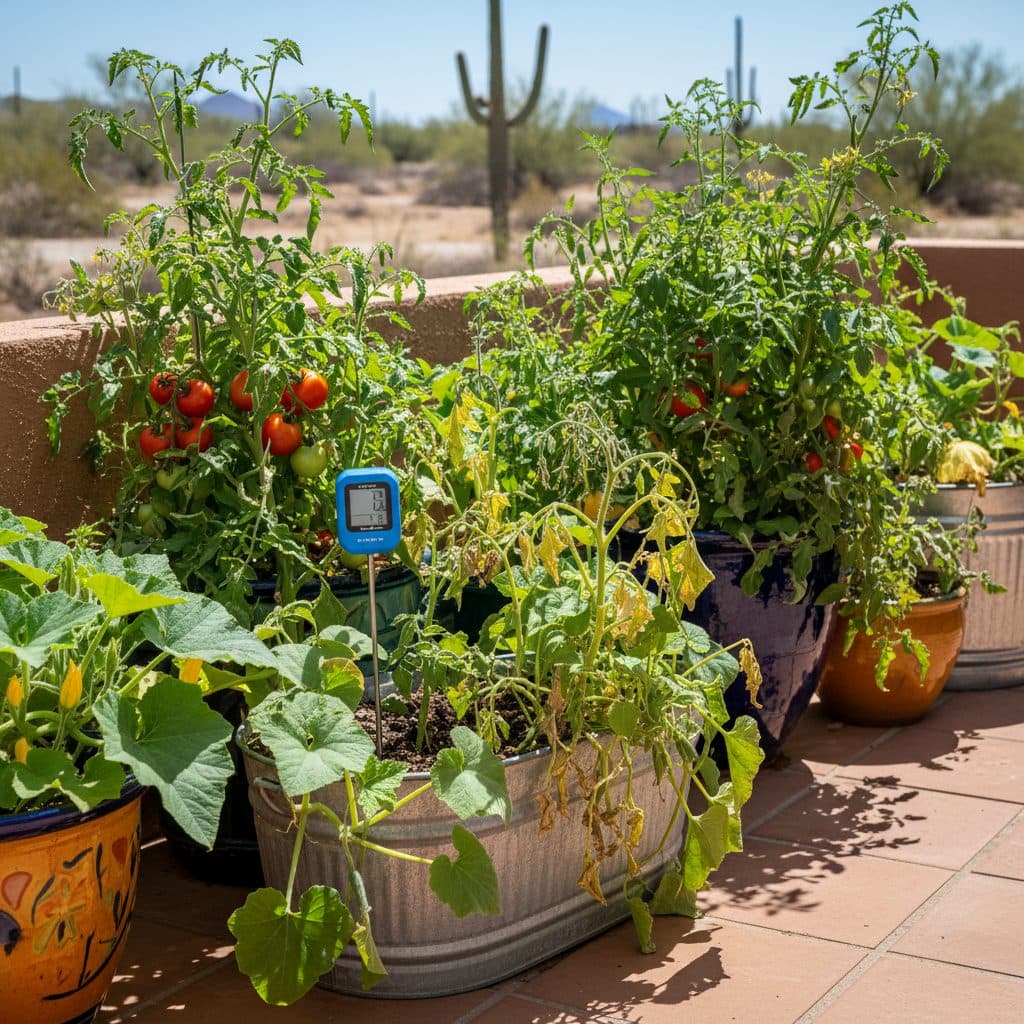
In the arid climate of Phoenix, Arizona, a 15-gallon container tomato plant might require watering twice a day during peak summer, while its in-ground counterpart, just a few feet away, could thrive on watering every other day. This stark difference, sometimes amounting to 30-40% more water for the potted plant, highlights a fundamental challenge for growers across the US: container plants dry out significantly faster than those rooted directly in the earth. Understanding the physics behind this rapid moisture loss is the first step toward cultivating healthy, productive plants, whether you are growing tomatoes in a backyard or a small patch of zucchini.
For growers in USDA zone 7, where summer temperatures regularly exceed 90°F, managing water for container-grown cucurbits can mean the difference between a bountiful harvest and stressed plants with poor fruit set. The confined root zone, increased exposure to air, and elevated soil temperatures in a pot all contribute to a higher rate of transpiration and evaporation. This article will explore the specific reasons why pots lose moisture so quickly and provide practical, data-backed strategies to keep your container plants — from bell peppers to bush beans — adequately hydrated and thriving throughout the growing season.
The exposed surface area and limited soil volume effect
Container plants, by their very nature, are isolated from the vast, buffered environment of the earth. In a typical 5-gallon container, the ratio of exposed surface area (sides and top) to soil volume is dramatically higher than for an in-ground plant. This increased exposure means more direct contact with ambient air, wind, and solar radiation, all of which accelerate moisture loss. For example, a container sitting on a concrete patio in USDA zone 8b, like much of central Texas, can experience soil temperatures 10-15°F higher than the surrounding ground, leading to significantly increased evaporation from the soil surface and transpiration from the plant’s leaves. Research indicates that container nurseries can face water losses up to five times greater than field-grown plants under similar conditions, often requiring 30-40% more water than their in-ground counterparts [1].
The limited soil volume in a pot also means a smaller reservoir of water. While an in-ground garden bed might hold hundreds of gallons of water in its root zone, a 10-gallon pot holds, at most, ten gallons of potting mix, which itself is often 50-70% air space when dry. This reduced capacity means that once the available water is depleted, there’s no deeper reserve for roots to tap into. This is particularly critical for thirsty plants like zucchini and cucumbers, which can transpire several gallons of water per day during peak fruiting in a hot, sunny climate. Without a consistent moisture supply, these plants quickly show signs of stress, such as wilting leaves and reduced fruit production, sometimes dropping 15-20% of their developing fruit due to water stress during critical growth stages.
understanding the thermal dynamics
The thermal properties of container soil differ substantially from native soil. In-ground soil benefits from the insulating properties of the surrounding earth, maintaining a more stable temperature, often staying within a 5°F range during the day. A black plastic container, however, absorbs solar radiation, heating the potting mix rapidly. This can elevate root zone temperatures to over 100°F on a 90°F day in places like central California, stressing roots and further increasing evaporation rates by an estimated 15-20%. The constant heating and cooling cycles also deplete soil moisture more quickly than in the stable environment of an in-ground bed, where temperatures fluctuate less dramatically.
- Increased surface area: Sides of the pot are exposed to air and sun, increasing evaporation by 20-30%.
- Limited soil volume: Smaller water reservoir, typically five-twenty gallons, offers less buffering capacity.
- Higher soil temperatures: Pots absorb heat, increasing evaporation by 15-20% and stressing roots.
- Reduced capillary action: No connection to deeper soil moisture, preventing natural water wicking.
- Wind exposure: Increased air movement around the pot accelerates drying, sometimes by 10-15%.
The role of soil composition and nutrient management
These exposed surface area points carry into this section, too.
The soil used in containers is fundamentally different from native garden soil. Potting mixes are designed to be lightweight, well-draining, and provide aeration, often containing components like peat moss, coir, perlite, and vermiculite. While excellent for root health and preventing compaction, these mixes typically have a lower water-holding capacity by volume compared to a rich, loamy garden soil. A high-quality garden loam in, for example, the fertile valleys of California, might hold 0.25-0.30 gallons of available water per cubic foot, whereas a standard potting mix might only hold 0.15-0.20 gallons per cubic foot after drainage, representing a 30-50% reduction in water storage. This difference means you simply have less water stored for plant use in a container, requiring more frequent replenishment.
Furthermore, the rapid drainage characteristic of potting mixes, while beneficial for preventing root rot, also means that water passes through quickly, potentially leaching out soluble nutrients. Research on container plants shows that significant nutrient loading can occur with initial watering, meaning essential elements like nitrogen and potassium are washed away before plants can fully absorb them [3]. This leaching can reduce the availability of nitrogen by 20-25% over a typical growing season for a heavy feeder like a tomato, necessitating more frequent fertilization, sometimes every one-two weeks. In contrast, in-ground soils, especially those with good organic matter content (e.g., 3-5% by weight), retain nutrients much more effectively, releasing them slowly over time and reducing the need for constant reapplication.
managing nutrients in a confined space
Because nutrients leach out more quickly from containers, a regular feeding schedule is crucial. Slow-release fertilizers or consistent applications of liquid feeds are often necessary to maintain optimal plant health and fruit production. For instance, applying a balanced liquid fertilizer at half strength every one-two weeks is a common practice for productive container plants in Florida’s humid climate, where heavy rains can exacerbate nutrient loss. Incorporating organic amendments like fermented soybean meal into the potting mix can also provide a steady, slow release of nitrogen and other micronutrients, reducing the frequency of liquid feeding by 20-30% and supporting robust growth for plants like bell peppers.
- Lower water retention: Potting mixes drain faster than native soil, holding 30-50% less water per volume.
- Nutrient leaching: Soluble nutrients wash out with drainage water, reducing available nitrogen by 20-25%.
- Frequent fertilization needed: Replenish lost nutrients regularly, often every one-two weeks for heavy feeders.
- Organic matter benefits: Native soil’s organic content (3-5%) holds water and nutrients better.
- pH stability: Potting mixes can fluctuate pH more easily, sometimes by 0.5-one pH unit, than buffered garden soil.
Strategic watering for container success
That work on role of soil sets up what follows here.
Compensating for the rapid drying of container plants requires a strategic approach to watering. The first step is to choose the right size container; a 15-20 gallon pot for a single tomato plant or a large cucurbit like a pumpkin can make a significant difference, as larger volumes of soil retain moisture longer. For instance, a 20-gallon container might only need watering once a day in peak summer in USDA zone 7, while a five-gallon pot might need it two or three times, a 50-100% increase in frequency. Secondly, mulching the surface of the potting mix with a two-inch layer of straw, wood chips, or even ground cover plants can reduce evaporation by 10-20%, keeping the soil cooler and moister, potentially extending the time between waterings by several hours.
Drip irrigation systems are highly effective for container gardens, delivering water directly to the root zone with minimal waste. A simple system using a Garden PE Irrigation Hose and emitters can provide consistent moisture, reducing daily effort and ensuring plants receive a steady supply. For a row of container peppers, setting up a drip line with 0.5 gallon per hour emitters running for 15-20 minutes twice a day can maintain optimal soil moisture, saving up to 50% of water compared to overhead watering. This precision watering also helps prevent the “feast or famine” cycle of hand watering, which can stress plants and reduce fruit set by up to 30% in sensitive crops like bell peppers and zucchini.
when and how much to water
The best way to determine when to water is to feel the soil. Stick your finger two inches deep into the potting mix; if it feels dry, it’s time to water. For more accuracy, a soil moisture meter can provide precise readings, helping you avoid both underwatering and overwatering, which can reduce yields by 15-20%. When you do water, water thoroughly until you see drainage from the bottom of the pot. This ensures the entire root ball is moistened and helps flush out accumulated salts. In Death Valley, Nevada, where temperatures can reach 120°F, even deep-rooted native plants rely on consistent access to groundwater [2].
- Choose larger pots: More soil volume (15-20 gallons) means longer moisture retention, reducing watering frequency by 50-100%.
- Mulch the surface: Reduces evaporation by 10-20% and keeps soil cooler by five-ten°F.
- Use drip irrigation: Delivers consistent, targeted water (e.g., 0.5 GPH emitters) efficiently, saving up to 50% water.
- Feel the soil: A simple, effective way to check moisture levels, inserting finger two inches deep.
- Water thoroughly: Ensure water drains from the bottom to hydrate the entire root ball and flush salts, preventing 15-20% yield reduction from stress.
In-ground advantages and efficient strategies
In-ground gardening provides several inherent advantages when it comes to water management. Native soil, especially those with a healthy organic matter content (e.g., 4-6% by weight), acts as a vast water reservoir, capable of holding significant moisture and releasing it slowly to plant roots. In regions like the Pacific Northwest, where annual rainfall can exceed 30 inches, well-drained loamy soils can sustain plants for days, even weeks, between watering events during drier periods. The extensive root systems of in-ground plants can delve deep into the soil, accessing moisture that is unavailable to container-bound roots, sometimes reaching depths of three-four feet for mature tomato plants, making them 20-30% more drought-tolerant. This deep rooting makes plants more resilient to short dry spells and fluctuating temperatures.
The soil itself provides thermal buffering, keeping root zones cooler in summer and warmer in winter. On a hot summer day in Oklahoma, the top six inches of in-ground soil might be 80°F, while a black container on the surface could easily reach 95°F or higher, a difference of 15°F or more. This temperature stability reduces plant stress and the rate of transpiration by an estimated 10-15%. Furthermore, in-ground plants benefit from capillary action, where water from deeper, wetter soil layers wicks upwards, continuously replenishing moisture in the root zone. This natural process is absent in containers, which are isolated systems, leading to a 40-50% faster depletion of available water.
efficient in-ground watering techniques
For in-ground gardens, deep and infrequent watering is generally preferred over shallow, frequent applications. Watering deeply encourages roots to grow downwards, establishing a more robust and drought-tolerant plant. For tomatoes in a garden bed in USDA zone 6, providing one-two inches of water per week, either from rain or irrigation, is typically sufficient for optimal growth and fruit set. This can be achieved with a soaker hose running for two-three hours, or by using a sprinkler for 30-45 minutes, depending on the flow rate of 0.5-one gallons per minute. Monitoring soil moisture at a depth of six inches can confirm adequate penetration and prevent overwatering, which can lead to a 10% reduction in yield.
- Large water reservoir: Native soil holds more water over a larger area, often 4-6% organic matter content.
- Thermal stability: Soil insulates roots from extreme temperature swings, keeping soil 10-15°F cooler than pots.
- Capillary action: Water wicks up from deeper soil layers, naturally replenishing moisture.
- Deep root development: Plants access moisture from greater depths (three-four feet), increasing drought tolerance by 20-30%.
- Reduced watering frequency: Less frequent but more thorough watering (one-two inches per week) is effective.
Container vs. In-Ground Watering: A Side-by-Side Look
Feature | Container Gardening | In-Ground Gardening |
|---|---|---|
Water Loss Rate | High (up to five times faster) | Lower (buffered by surrounding soil) |
Soil Volume | Limited (e.g., five-twenty gallons) | Extensive (hundreds of gallons) |
Soil Temperature | Fluctuates widely (10-15°F hotter) | More stable (insulated by earth) |
Nutrient Leaching | High (20-25% nitrogen loss) | Lower (nutrients retained better) |
Watering Frequency | Frequent (daily, sometimes twice daily) | Less frequent (every three-seven days) |
Root Development | Confined, shallower | Extensive, deeper (three-four feet) |
Best for | Small spaces, portability, specific soil needs | Large gardens, drought resilience, stable environment |
Water Loss: Container plants can lose water up to five times faster than in-ground plants due to increased exposure and limited soil volume [1].
Soil Temperature: Potted soil can be 10-15°F warmer than in-ground soil on a hot day, accelerating evaporation and stressing roots.
Frequently asked questions
Why do my container plants wilt so quickly in summer?
Container plants wilt quickly because their limited soil volume holds less water, and the pot’s exposed surfaces increase evaporation and heat absorption. On a 90°F day in Georgia, soil in a black pot can reach 100-105°F, causing rapid moisture loss from both the soil and the plant’s leaves.
How often should I water my container tomatoes?
The frequency depends on pot size, plant size, weather, and potting mix. In peak summer in USDA zone 9b, a 15-gallon container tomato might need watering daily, or even twice a day, while a smaller five-gallon pot could require even more frequent attention.
Can I use garden soil in my containers?
It’s generally not recommended to use native garden soil in containers because it can compact easily, leading to poor drainage and aeration. This can suffocate roots and cause waterlogging, often reducing plant vigor by 20-30% compared to plants in proper potting mix.
What is the best way to check if my container plant needs water?
The most reliable method is to feel the soil: stick your finger two inches deep into the potting mix. If it feels dry to the touch, it’s time to water. A <a href=”https://agripure.org/shop/soil-moisture-meter-plant-watering-test-soil-humidity-monitor-detector-hygrometer-flower-testing-home-gardening-measuring-tool”>soil moisture meter</a> can also provide a precise reading, indicating moisture levels on a scale of one to ten.
Do in-ground plants need less fertilizer than container plants?
Generally, yes. In-ground soils, especially those rich in organic matter, retain nutrients more effectively and release them slowly. Container plants often experience significant nutrient leaching, with up to 25% of applied nitrogen washing out, requiring more frequent fertilization, often every one-two weeks.
How can I prevent my container plants from getting too hot?
To keep container plants cooler, choose lighter-colored pots, use larger containers, and mulch the soil surface with a two-inch layer of organic material like straw. Placing pots in partial shade during the hottest part of the day, particularly from one PM to four PM, can also reduce soil temperatures by five-ten°F.
References
- Watering Station Best Management Practices for Container Nurseries (2020). Watering Station Best Management Practices for Container Nurseries.
- Ground Watering of the Death Valley Region, Nevada and California (2006). Ground Watering of the Death Valley Region, Nevada and California.
- Nutrient loading from initial watering of container plants (2018). Nutrient loading from initial watering of container plants.
- Aircraft ground support equipment. Specific requirements (2023). Aircraft ground support equipment. Specific requirements.
- Aircraft ground support equipment. Specific requirements (2023). Aircraft ground support equipment. Specific requirements.
- USDA Natural Resources Conservation Service (2024). USDA Natural Resources Conservation Service.