Key takeaways
- Mint is a vigorous rhizomatous spreader that needs a physical barrier; lemon balm is clump-forming and spreads mainly by seed, so deadheading matters more for it than root barriers do.
- Planting in containers or using root barriers 10-12 inches deep effectively limits spread.
- Regular harvesting and pruning, especially before flowering, helps manage plant size and prevents seed dispersal.
- Choose appropriate planting locations, considering sunlight and moisture, to reduce aggressive growth.
- Monitor soil moisture with a meter to ensure optimal conditions without encouraging excessive vigor.
- Harvest leaves regularly for culinary or medicinal use, encouraging bushier, more controlled growth.
Quick answer: To manage mint and lemon balm spread, plant them in containers or use root barriers 10-12 inches deep. Regular harvesting, pruning, and strategic placement also help control their vigorous growth.
In many US gardens, especially across USDA zones 4 through 9, lemon balm (Melissa officinalis) and various mint species (Mentha spp.) are celebrated for their aromatic leaves and medicinal properties. However, their enthusiastic growth habit can quickly transform a tidy herb patch into an unruly green carpet, often spreading 2-3 feet in a single season if left unchecked. This article will outline practical strategies for enjoying these beneficial herbs without letting them dominate your entire garden space.
From the humid Southeast to the temperate Pacific Northwest, growers often face the challenge of containing these vigorous plants. While a healthy mint patch will give you more leaf than most households can use, an uncontrolled spread can choke out less assertive neighbors. We will explore methods to cultivate these herbs responsibly, ensuring they remain productive assets rather than persistent problems.
Understanding the spreaders: rhizomes and seeds
Lemon balm (Melissa officinalis) and mint varieties like peppermint (Mentha piperita) and spearmint (Mentha spicata) are members of the Lamiaceae family, known for their square stems and aromatic foliage. Their primary method of spread is through underground rhizomes, which are modified stems that creep horizontally just beneath the soil surface, sending up new shoots every few inches. A single mint plant can extend its rhizome network 18-24 inches in a growing season, establishing new colonies rapidly. In addition to rhizomes, lemon balm can also spread via prolific seed production, especially if flowers are allowed to mature in late summer. A mature lemon balm plant can produce thousands of tiny seeds, which remain viable in the soil for several years. Understanding these two mechanisms is the first step in effective control. For more information on lemon balm, see our guide on Melissa officinalis.
The anatomy of spread
Mint rhizomes typically grow 2-4 inches deep, making them difficult to completely eradicate once established in a garden bed. These roots are incredibly resilient, and even a small fragment left behind during weeding can regenerate into a new plant. In regions like the Midwest, where soil moisture is consistent, mint can become particularly aggressive. Lemon balm, while also rhizomatous, relies more heavily on its self-seeding ability to colonize new areas, with seeds germinating best in moist, disturbed soil. Both plants thrive in USDA zones 4-9, showing vigorous growth in a wide range of climates.
- Rhizomes: underground stems that spread horizontally.
- New shoots: emerge from rhizome nodes, forming new plants.
- Seed dispersal: lemon balm produces numerous viable seeds.
- Vigorous growth: both can spread 18-24 inches annually.
- Resilience: small root fragments can regenerate.
Containment strategies: physical barriers
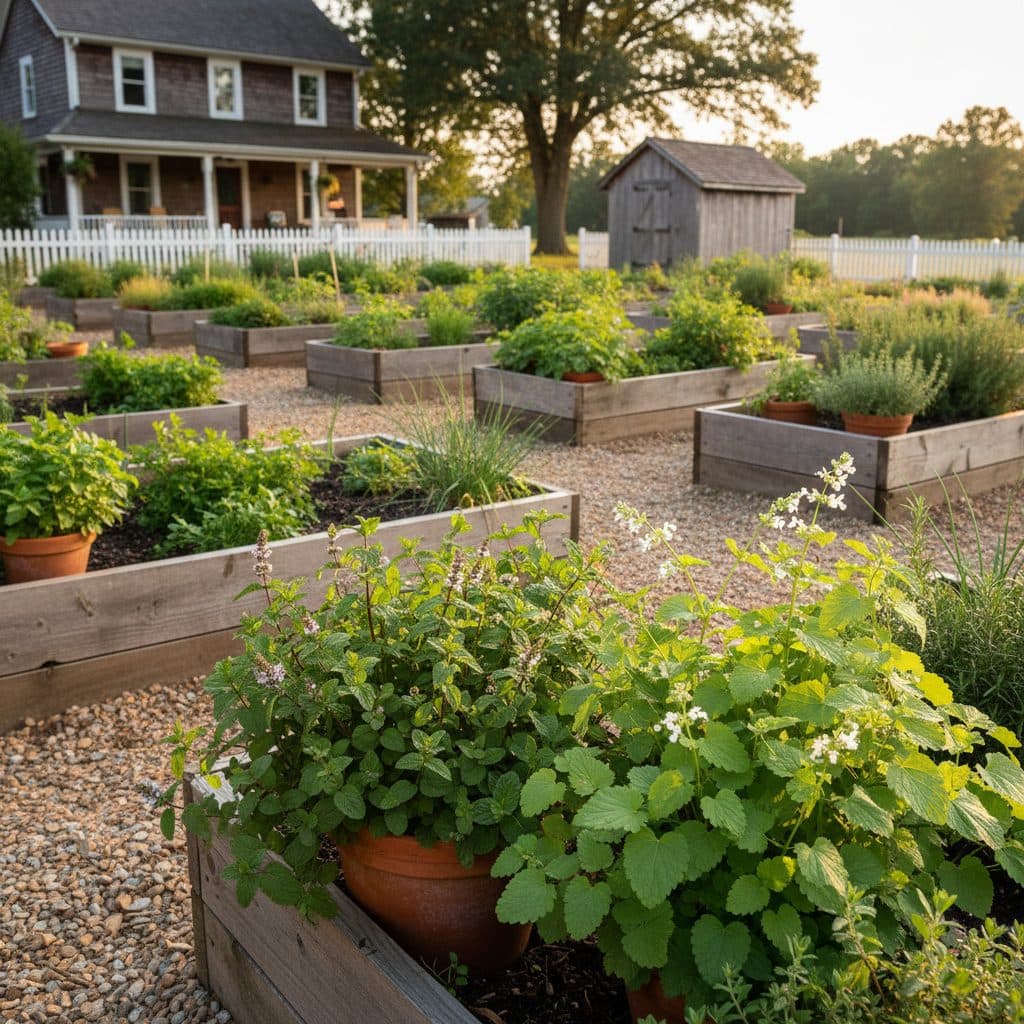
The most reliable method for preventing mint and lemon balm from taking over is to establish physical barriers around their root systems. Planting these herbs in containers is a highly effective strategy, particularly for gardeners in smaller spaces or those with mixed perennial beds. Choose pots that are at least 10-12 inches in diameter and 10 inches deep to allow for adequate root development and moisture retention. A 5-gallon container is often sufficient for a single mature plant. Ensure containers have drainage holes to prevent waterlogging, which can lead to root rot. In colder climates, like USDA zone 5, container plants may need winter protection or to be brought indoors.
Choosing the right container
When selecting containers, consider materials like terracotta, plastic, or glazed ceramic. Terracotta pots dry out more quickly, requiring more frequent watering, sometimes daily during hot summer months in areas like Arizona. For in-ground planting, root barriers made from heavy-duty plastic, rigid HDPE bamboo barrier, or galvanized steel edging can be installed. These barriers should extend at least 10-12 inches deep into the soil and protrude 1-2 inches above the soil line to prevent rhizomes from growing over the top. This method is particularly useful in larger gardens or dedicated herb beds, creating a defined boundary that limits horizontal spread.
- Container size: at least 10-12 inches in diameter and 10 inches deep.
- Drainage: essential to prevent root rot.
- Root barrier depth: 10-12 inches below ground, 1-2 inches above.
- Material options: plastic, metal, terracotta, glazed ceramic.
- Winter protection: needed for containers in USDA zone 5 and colder.
Containment strategies: placement and companion planting
Beyond physical barriers, strategic placement and companion planting can help manage the vigor of lemon balm and mint. Both plants prefer full sun to partial shade, ideally receiving 6 hours of direct sunlight daily, particularly in cooler regions like the Northeast. In hotter climates, such as USDA zone 8 in the Southeast, afternoon shade can prevent scorching and reduce the need for frequent watering. Avoid planting them directly adjacent to delicate, slow-growing herbs or vegetables, as their aggressive root systems will outcompete them for water and nutrients.
Strategic garden design
When planning your garden layout, think about the natural boundaries available. Planting mint or lemon balm near a paved path, a building foundation, or a raised bed wall can provide a natural barrier on one or more sides, reducing the area where rhizomes can spread. While true companion planting to suppress mint or lemon balm is limited, planting them near strong-smelling herbs like rosemary or thyme might slightly deter some pests, though it won’t stop their root spread. If you are starting a herb garden, it’s wise to isolate these plants from the outset. Ensure adequate spacing, allowing at least 24 inches between a contained mint plant and its nearest neighbor to prevent accidental root escape.
- Sunlight needs: 6 hours of sun, afternoon shade in hot climates.
- Avoid delicate neighbors: prevent competition for resources.
- Natural barriers: use paths or foundations to limit spread.
- Spacing: maintain 24 inches from other plants.
- Monitoring: regularly check for escaped rhizomes.
Pruning and harvesting for control
Regular pruning and harvesting are not only beneficial for encouraging bushier growth and maximizing yield but also crucial for controlling the spread of both lemon balm and mint. For lemon balm, pinching back flowers as they appear in early summer is vital to prevent seed formation. A single lemon balm plant can produce thousands of seeds, which contribute significantly to its spread. Aim to harvest leaves regularly, about 30% of the plant’s foliage at a time, every 2-3 weeks during the growing season. This encourages new growth and keeps the plant compact, rather than leggy and sprawling.
Seasonal maintenance schedule
Mint benefits from similar treatment. Cutting back stems by one-third to one-half their height in late spring and again in mid-summer promotes a fresh flush of leaves and prevents the plant from expending energy on flowering. If allowed to flower, mint can also produce viable seeds, though its rhizomatous spread is usually the more dominant concern. In regions like the Pacific Northwest, where growing seasons are long, you might perform 3-4 significant harvests per year. For especially rangy varieties like apple mint or chocolate mint, consistent trimming is key to maintaining a manageable size. At the end of the growing season, cut plants back to 2-3 inches above the ground to prepare them for winter dormancy and remove any spent flower stalks.
- Pinch flowers: prevent lemon balm seed production.
- Regular harvesting: remove 30% of foliage every 2-3 weeks.
- Cut back stems: reduce mint height by one-third to one-half.
- Seasonal cuts: 3-4 harvests per year in long growing seasons.
- End-of-season trim: cut plants to 2-3 inches for winter.
Harnessing their benefits: uses and yield
Despite their vigorous nature, lemon balm and mint are highly valued for their culinary and medicinal applications, making the effort to control them worthwhile. Lemon balm, known scientifically as Melissa officinalis, has been shown to contain essential oils with antioxidant activity and antibacterial properties [3, 4]. Its leaves are often used in calming teas, tinctures, and as a lemon-scented addition to salads or desserts. Lemon balm is mildly sedative, so it can compound the effect of sedative medication, and it is generally avoided by people with thyroid conditions or on thyroid medication. A healthy lemon balm plant supports several cuttings a season, with the heaviest flush just before it flowers. Mint, with its diverse species, offers a range of flavors from peppermint to spearmint, used in everything from refreshing beverages to savory dishes.
Drying and storage
To make the most of your controlled harvest, proper drying and storage are essential. Hang bundles of freshly cut stems in a cool, dark, well-ventilated area for 1-2 weeks until the leaves are brittle. Alternatively, use a food dehydrator at a low temperature, around 95-105°F, for 4-8 hours. Once dried, strip the leaves from the stems and store them in airtight containers away from direct sunlight. Dried herbs retain their potency for up to 12 months. For instance, a small patch of mint, roughly 2 square feet, can provide enough fresh leaves for daily tea consumption for a family of four throughout the summer in a temperate climate like Ohio. The essential oil content in mint can vary from 0.5% to 4% depending on species and growing conditions [1].
- Lemon balm: used in teas, tinctures, and culinary dishes.
- Mint: versatile for beverages, savory foods, and aromatherapy.
- Drying: hang in cool, dark place for 1-2 weeks or dehydrate at 95-105°F.
- Storage: airtight containers, away from light, for up to 12 months.
- Yield: several cuttings per season from an established plant.
Key characteristics of common mints and lemon balm
Characteristic | Peppermint (Mentha piperita) | Spearmint (Mentha spicata) | Lemon Balm (Melissa officinalis) |
|---|---|---|---|
Flavor Profile | Strong, cooling menthol | Sweet, mild mint | Citrusy, lemony, slightly minty |
Rhizome Spread | Very aggressive | Aggressive | Slow; clump-forming |
Seed Spread | Low to none | Low to none | High |
Mature Height | 18-36 inches | 18-30 inches | 24-36 inches |
USDA Hardiness | Zones 3-11 | Zones 3-11 | Zones 4-9 |
Rhizome Depth: Mint rhizomes typically grow 2-4 inches deep, making them persistent spreaders in garden beds.
Container Size: For effective containment, plant mint and lemon balm in containers at least 10 inches deep and 10-12 inches in diameter.
Seed Viability: Lemon balm seeds can remain viable in the soil for several years, contributing to its long-term spread.
Frequently asked questions
How deep do mint roots grow?
Mint rhizomes typically spread horizontally 2-4 inches below the soil surface, but can penetrate deeper in loose soil. This shallow but extensive root system allows them to colonize large areas quickly, sometimes spreading 18-24 inches in a single season.
Can mint and lemon balm be grown together?
While they have similar growing requirements, planting mint and lemon balm together in the same uncontained bed is not recommended due to their aggressive spreading habits. Both will compete intensely, and one or both may quickly dominate the space at the expense of anything planted nearby.
What is the best way to kill mint that has spread everywhere?
Eradicating widespread mint requires persistence. Digging out all rhizomes is the most effective mechanical method, often requiring sifting through soil 6-10 inches deep. For severe infestations, covering the area with thick black plastic for an entire growing season (6-8 months) will starve the rhizomes of light and exhaust them. This is occultation, not solarization — solarization uses clear plastic to bake the soil, and is a different technique with different timing.
How often should I water container-grown mint or lemon balm?
Container-grown mint and lemon balm require more frequent watering than in-ground plants, especially in hot, dry climates like those in the Southwest. During peak summer, they might need watering daily, while in cooler conditions, every 2-3 days may suffice. Use a soil moisture meter to check the top 2 inches of soil for dryness.
Do mint and lemon balm attract pollinators?
Yes, both mint and lemon balm produce small flowers that are highly attractive to various pollinators, including bees and butterflies. Allowing a small portion of your controlled plants, perhaps 10-15% of the total, to flower can support local pollinator populations, though remember to pinch off lemon balm flowers to prevent unwanted self-seeding.
What USDA zones are suitable for growing these herbs?
Both mint and lemon balm are remarkably hardy. Most mint varieties thrive in USDA zones 3-11, demonstrating resilience across a broad range of US climates. Lemon balm is typically hardy in USDA zones 4-9, tolerating winter temperatures down to -30°F with adequate mulch.
References
- IMPROVEMENT IN SUSTAINABLE PRODUCTION OF MEDICINAL HERBS – MINT, LEMON BALM AND MARSHMALLOW (2024). IMPROVEMENT IN SUSTAINABLE PRODUCTION OF MEDICINAL HERBS – MINT, LEMON BALM AND MARSHMALLOW.
- Balm or Lemon Balm (2022). Balm or Lemon Balm.
- Essential oils content, composition and antioxidant activity of lemon balm, mint and sweet basil from Serbia (2022). Essential oils content, composition and antioxidant activity of lemon balm, mint and sweet basil from Serbia.
- EVALUATION OF ANTIBACTERIAL ACTIVITY OF MACERATED OIL FROM Lemon Balm, Thyme (Thymus vulgaris L, Lamiaceae), Mint (Mentha longifolia L, Lamiaceae) and Marigold (2017). EVALUATION OF ANTIBACTERIAL ACTIVITY OF MACERATED OIL FROM Lemon Balm, Thyme (Thymus vulgaris L, Lamiaceae), Mint (Mentha longifolia L, Lamiaceae) and Marigold .
- USDA Natural Resources Conservation Service (2024). USDA Natural Resources Conservation Service.