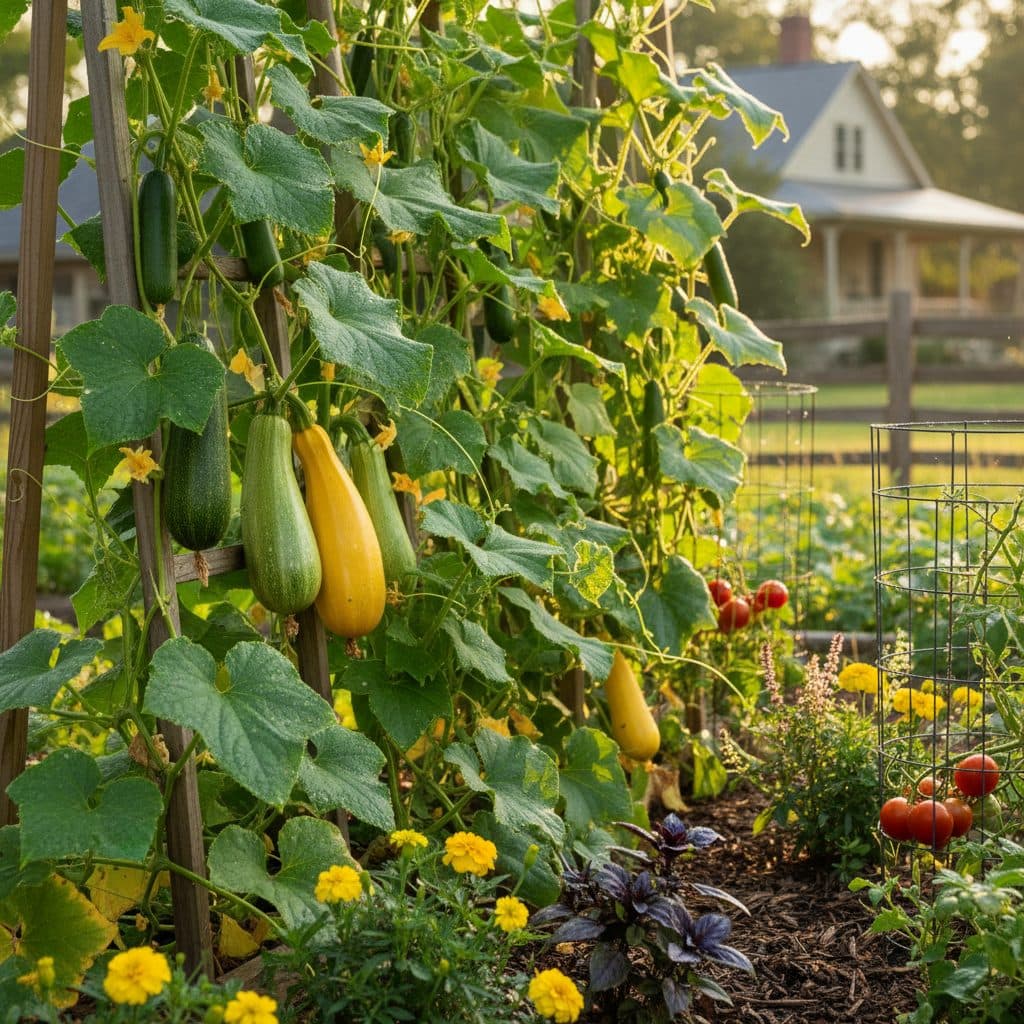
Key takeaways
- Plant cucumbers and zucchini when soil temperatures consistently reach 65°F (18°C) for optimal germination.
- Provide consistent moisture, about one inch of water per week, especially during the critical flowering and fruiting stages.
- Trellis vining varieties early to improve air circulation, reduce disease risk, and simplify harvesting efforts.
- Feed plants with balanced organic fertilizers, such as fermented soybean meal, at key growth stages to support vigorous growth.
- Harvest cucumbers when 6-8 inches long and zucchini when 6-10 inches long for best flavor and to encourage continuous fruit production.
Quick answer: To optimize cucumber and zucchini yields, plant when soil reaches 65°F, provide consistent moisture, trellis vining varieties early, feed with balanced organic fertilizers, and harvest at optimal sizes (6-8 inches for cucumbers, 6-10 inches for zucchini).
From the sunny fields of California to the humid gardens of Florida, cucumbers and zucchini are staples in countless US home gardens, prized for their versatility and prolific yields. However, maximizing their potential requires understanding their distinct growth stages and providing timely care. While both are members of the cucurbit family, sharing similar needs, subtle differences in their growth habits and optimal care can significantly impact your harvest.
This guide will walk you through the critical phases of cucumber and zucchini development, offering practical advice on when to feed, how to trellis effectively, and the best time to harvest. We will ground our recommendations in specific numbers, from planting depths to ideal soil temperatures, so you have the precise information needed for a successful growing season.
Starting strong: planting and early growth
Successful cucumber and zucchini cultivation begins with proper planting, which is heavily influenced by local climate and soil conditions. In most of the US, from USDA zone 4 up to zone 11, these warm-season crops should be planted after all danger of frost has passed, typically when soil temperatures consistently reach 65°F (18°C) or higher. Planting seeds one inch deep and two to three feet apart in well-draining soil ensures adequate space for root development and air circulation, which can prevent early fungal issues.
soil preparation for vigorous starts
Before planting, enriching your soil matters for these heavy feeders. Incorporate a generous amount of aged compost or well-rotted manure, aiming for a four-inch layer worked into the top six to eight inches of soil. This provides essential organic matter and a slow-release nutrient base. For an additional boost, consider a balanced organic fertilizer with an NPK ratio like 5-5-5, applied according to package directions, typically at a rate of one cup per 10 square feet. Consistent moisture, about one inch of water per week, is vital from germination through the first few weeks of growth, especially in arid regions like Arizona or New Mexico.
- Ensure soil temperature is at least 65°F (18°C) for planting.
- Plant seeds one inch deep and two to three feet apart.
- Amend soil with four inches of aged compost or manure.
- Apply a balanced organic fertilizer, such as a 5-5-5 blend.
- Provide one inch of water per week during early growth.
Vegetative growth and trellising for health
Once seedlings emerge and establish, typically within seven to ten days, cucumbers and zucchini enter a rapid vegetative growth phase. During this period, their vines can extend quickly, sometimes growing six to eight inches in a single day. Providing adequate support through trellising is not just about saving space; it significantly improves air circulation around the plants, which can reduce the incidence of fungal diseases like powdery mildew by up to 30%. For vining varieties, installing a sturdy trellis or cage, at least five to six feet tall, when plants are eight to twelve inches high is ideal. For more on managing vine crops, see our article on how to grow zucchini.
nutrient needs during rapid growth
As plants develop extensive foliage, their nutrient demands increase substantially. During this phase, often starting around week three or four after germination, a consistent supply of nitrogen matters for leaf and vine development. Applying a nitrogen-rich organic fertilizer, like Fermented Soybean Meal Organic Fertilizer, at a rate of one cup per 15 square feet every three to four weeks can support this vigorous growth. Ensure plants receive at least one to 1.5 inches of water per week, especially in warmer climates like those found in the Southeast US, to prevent stress. Research indicates that light interception by a cucumber crop reaches 90% at a leaf area index of 3.0; healthy foliage matters for photosynthesis [2].
- Install trellises when plants are 8-12 inches tall.
- Use supports that are at least five to six feet high.
- Apply nitrogen-rich fertilizer every three to four weeks.
- Ensure plants receive 1-1.5 inches of water weekly.
- Regularly check for pests and diseases on rapidly growing vines.
Flowering, fruit set, and common challenges
Around week five to seven, depending on the variety and growing conditions, cucumber and zucchini plants will begin to produce flowers. Both male and female flowers appear on the same plant, with female flowers identifiable by the tiny swelling (immature fruit) at their base. Pollination, often carried out by bees, is essential for fruit development. In areas with low pollinator activity, such as urban gardens in USDA zone 7, hand-pollination can significantly increase fruit set. This involves transferring pollen from a male flower to a female flower using a small brush, ideally in the morning when pollen is most viable.
managing pests and diseases during fruit set
The flowering and fruit-set stages are critical, and plants are particularly vulnerable to stress and disease. Zucchini yellow mosaic virus (ZYMV) and cucumber mosaic virus (CMV) are common threats, especially in regions like the Midwest and Southeast US. Research shows that CMV multiplication increases in cucumber plants also infected with ZYMV, leading to more severe symptoms [4]. While genetic resistance to ZYMV exists in some cucumber varieties [5], maintaining plant health through proper watering (one to 1.5 inches per week) and balanced nutrition can bolster natural defenses. Avoid overhead watering to reduce leaf wetness, which can promote fungal growth, and inspect plants daily for early signs of trouble.
- Identify female flowers by the small fruit swelling at their base.
- Hand-pollinate in areas with low bee activity for better fruit set.
- Monitor for signs of ZYMV or CMV, which can reduce yields by over 50%.
- Maintain consistent watering (1-1.5 inches weekly) to prevent plant stress.
- Avoid overhead irrigation to minimize fungal disease risk.
Harvesting for continuous production and quality
The final, and often most rewarding, stage is harvesting. Cucumbers typically mature and are ready for harvest 50 to 70 days after planting, while zucchini can be ready in as little as 40 to 50 days. For optimal flavor and tenderness, harvest cucumbers when they are six to eight inches long and zucchini when they are six to ten inches long. Picking regularly, sometimes daily or every other day during peak season in regions like the Great Lakes states, encourages the plant to produce more fruit, potentially extending the harvest for several weeks. Overripe fruit can signal the plant to slow production, so consistent harvesting is key to maximizing your yield.
post-harvest care and succession planting
Proper harvesting technique involves using a sharp knife or pruners to cut the stem about one inch above the fruit, avoiding damage to the vine. This minimizes stress on the plant and reduces the risk of disease entry. Up to 35% of harvested cucumbers and zucchini can be lost due to post-harvest issues before reaching consumers, which shows why careful handling and timely consumption matter [1]. For a continuous supply, consider succession planting every two to three weeks until about 60 days before your first anticipated frost date. This strategy ensures a steady stream of fresh produce throughout the growing season, from early summer into fall, even in USDA zone 5.
- Harvest cucumbers when 6-8 inches long for best quality.
- Pick zucchini when 6-10 inches long to maintain tenderness.
- Harvest daily or every other day during peak production.
- Use a sharp knife to cut the stem one inch above the fruit.
- Consider succession planting every 2-3 weeks for continuous yields.
Cucumber vs. Zucchini: Key Growth Differences
Feature | Cucumber (Cucumis sativus) | Zucchini (Cucurbita pepo) |
|---|---|---|
Typical Harvest Size | 6-8 inches long | 6-10 inches long |
Days to Maturity | 50-70 days | 40-50 days |
Vine Length (Vining Varieties) | Up to 6-8 feet | Up to 3-5 feet (bush varieties shorter) |
Water Needs (per week) | 1-1.5 inches | 1-1.5 inches |
Trellising Benefit | Highly recommended for most varieties | Beneficial for vining types, less critical for bush |
Soil Temperature: Plant cucumber and zucchini seeds when soil temperatures consistently reach 65°F (18°C) for optimal germination rates of over 80%.
Food Loss: Up to 35% of harvested cucumbers and zucchini can be lost due to post-harvest issues before reaching consumers [1].
Light Interception: A cucumber crop achieves 90% light interception at a leaf area index of 3.0, indicating efficient light use for growth [2].
Frequently asked questions
When is the best time to plant cucumbers and zucchini in the US?
The best time to plant these crops across most of the US, from USDA zone 4 to 11, is after the last frost date when soil temperatures consistently reach at least 65°F (18°C). This usually falls between late April and early June, depending on your specific region.
How much water do cucumbers and zucchini need per week?
Cucumbers and zucchini require consistent moisture, needing about one to 1.5 inches of water per week. This matters most during their flowering and fruiting stages, to prevent stress and support good fruit development, particularly in warmer climates with temperatures over 85°F (29°C).
Why are my cucumber and zucchini flowers dropping off?
Flower drop, especially of female flowers, can be due to poor pollination, often caused by a lack of bees. It can also be a sign of environmental stress, such as inconsistent watering (less than one inch per week), extreme temperatures (above 90°F or below 55°F), or nutrient deficiencies in the soil.
What is the ideal size to harvest cucumbers and zucchini?
For optimal flavor and tenderness, harvest cucumbers when they are six to eight inches long. Zucchini should be picked when they are six to ten inches long. Harvesting regularly, sometimes daily during peak season, encourages the plant to produce more fruit, potentially increasing your total yield by 20% or more.
Can I grow cucumbers and zucchini in containers?
Yes, you can grow cucumbers and zucchini in containers, especially bush varieties or compact vining types. Ensure the container is large enough, at least a 5-gallon capacity per plant, with good drainage. Provide consistent watering, as container plants dry out faster, often needing water twice a day in hot summer months.
How can I prevent powdery mildew on my plants?
To prevent powdery mildew, ensure good air circulation by spacing plants two to three feet apart and trellising vining varieties. Water at the base of the plant to keep foliage dry, and consider planting resistant varieties. Applying a preventative organic fungicide, like a baking soda solution (one tablespoon per gallon of water), every seven to ten days can also help.
References
- Analysis of food loss in the cucumber, zucchini and table grapes value chains in the West Bank, Palestine (2023). Analysis of food loss in the cucumber, zucchini and table grapes value chains in the West Bank, Palestine.
- LIGHT INTERCEPTION OF A CUCUMBER CROP AT DIFFERENT STAGES OF GROWTH (1984). LIGHT INTERCEPTION OF A CUCUMBER CROP AT DIFFERENT STAGES OF GROWTH.
- Review of “Management of Zucchini yellow mosaic virus in cucumber through genetic and salicylic acid induced resistance” (2017). Review of “Management of Zucchini yellow mosaic virus in cucumber through genetic and salicylic acid induced resistance”.
- Enhancement of cucumber mosaic virus multiplication by zucchini yellow mosaic virus in doubly infected cucumber plants. (1986). Enhancement of cucumber mosaic virus multiplication by zucchini yellow mosaic virus in doubly infected cucumber plants..
- Inheritance of Resistance to a Strain of Zucchini Yellow Mosaic Virus in Cucumber (1987). Inheritance of Resistance to a Strain of Zucchini Yellow Mosaic Virus in Cucumber.
- USDA Natural Resources Conservation Service (2024). USDA Natural Resources Conservation Service.