Key takeaways
- The humid US Southeast (70-90% RH) fosters fungal diseases like blight, while the arid West (10-30% RH) faces different pressures, including root rot from overwatering.
- IPM strategies, including crop rotation, resistant varieties, and proper spacing, are essential for disease prevention in all climates.
- Monitoring tools like soil moisture meters and hygrometers provide data for informed irrigation and humidity control decisions.
- Organic disease management relies on cultural practices, biological controls, and approved botanical sprays to protect crops.
- Understanding regional climate (such as 60 inches of rain in Florida versus 10 inches in Arizona) dictates specific disease prevention tactics.
- Good air circulation, achieved through spacing and pruning, can reduce disease incidence by 30% or more in susceptible plants.
Quick answer: Effective plant disease management varies by climate, focusing on cultural practices, resistant varieties, and smart irrigation. In humid regions, prioritize air circulation and fungal prevention, while arid areas require precise watering to prevent root issues.
Growing food across the United States means adapting to wildly different conditions. A grower in coastal USDA zone 9 in Florida, for instance, might contend with 60 inches of annual rainfall and average summer humidity hovering around 85%, creating a constant battle against fungal diseases. Meanwhile, a farmer in USDA zone 8 in central Arizona could see less than 10 inches of rain per year, with summer humidity often dropping below 20%, presenting an entirely different set of challenges for plant health.
Successful organic disease management depends on understanding the environmental conditions that encourage pathogens. Humidity plays a primary role in plant disease development. Examining conditions in the humid Southeast and the arid West helps identify practical strategies to keep crops productive.
Managing high humidity disease pressure in the Southeast
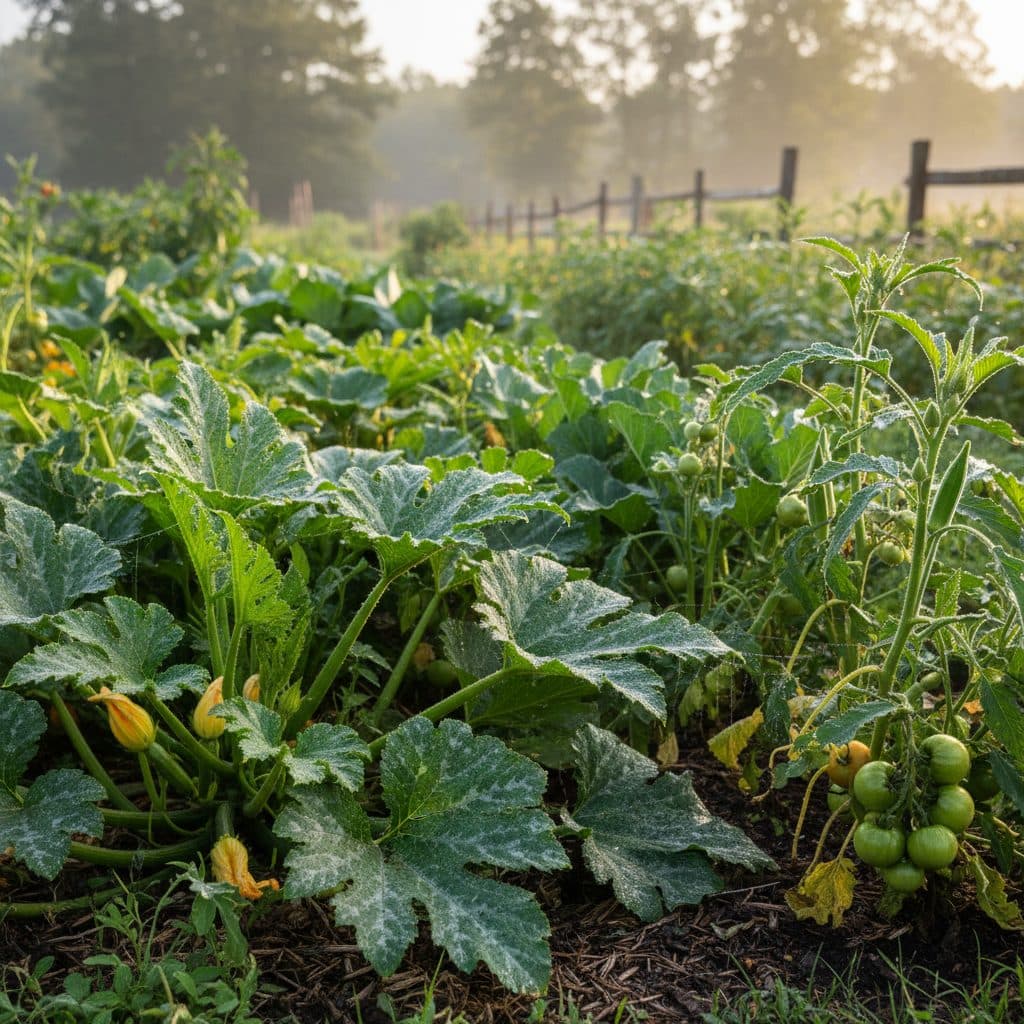
The US Southeast is a region defined by its warmth and significant moisture. States like Georgia, Alabama, and Florida, often within USDA zones 7-9, experience average summer relative humidity levels frequently exceeding 75%, sometimes reaching 90% during morning hours. This, combined with 50-60 inches of annual rainfall and average summer temperatures between 70-90°F, creates an ideal breeding ground for fungal and bacterial diseases. Common culprits include early blight and late blight on tomatoes and potatoes, powdery mildew and downy mildew on squash and cucumbers, and bacterial spot on peppers. These pathogens thrive when leaf surfaces remain wet for six to eight hours or more, leading to rapid disease spread across a field.
Cultural practices for humid environments
To combat these persistent threats, proactive cultural practices are essential. Proper plant spacing, such as maintaining 18-24 inches between tomato plants, significantly improves air circulation, allowing foliage to dry faster after rain or irrigation. Pruning lower leaves and suckers on plants like tomatoes can further enhance airflow and reduce disease incidence by up to 30%. Selecting disease-resistant varieties is an important first step, as some cultivars offer inherent protection against common blights or mildews. Avoiding overhead irrigation, especially in the late afternoon or evening, also helps minimize leaf wetness periods. For targeted applications of organic fungicides or biological controls, a Delixi Electric Garden Sprayer can ensure even coverage.
- Space plants 18-24 inches apart to improve airflow.
- Prune lower leaves and suckers to reduce humidity around plants.
- Choose disease-resistant plant varieties specific to your region.
- Avoid overhead watering in the late afternoon or evening.
- Sanitize tools and remove diseased plant material promptly.
Addressing disease challenges in the arid West
In contrast to the Southeast, the arid Western US, encompassing regions in California, Arizona, and Nevada (often within USDA zones 4-9 depending on elevation), experiences significantly lower humidity. Average summer relative humidity can drop to 10-30%, with annual rainfall often below 15 inches, and sometimes less than 5 inches in desert areas. While this dry air naturally suppresses many foliar fungal diseases, it introduces other challenges. The primary disease pressure often stems from irrigation practices, leading to root rots (like Phytophthora) from overwatering, or vascular wilts (such as Fusarium and Verticillium) that thrive in stressed plants. Powdery mildew can still appear in arid climates, particularly in microclimates with poor air circulation or from localized overhead watering.
Smart irrigation and soil health in dry climates
Effective disease management in the arid West hinges on precise water management and good soil structure. Drip irrigation systems are invaluable, delivering water directly to the root zone, reducing water waste by 30-50% compared to overhead sprinklers, and keeping foliage dry. Monitoring soil moisture with a soil moisture meter prevents overwatering, which is critical for preventing root diseases. Incorporating 3-5% organic matter into the soil improves water infiltration and retention, creating a healthier root zone and improving plant resilience. This also supports beneficial soil microbes that can suppress pathogens, reducing wilt diseases by 20-40%.
- Utilize drip irrigation to conserve water and keep foliage dry.
- Monitor soil moisture levels daily to prevent overwatering.
- Incorporate 3-5% organic matter into soil for improved structure.
- Ensure good drainage to avoid standing water around roots.
- Select drought-tolerant and disease-resistant crop varieties.
Foundational IPM strategies for all climates
While regional differences dictate specific tactics, core Integrated Pest Management (IPM) principles remain universal for organic growers. A proactive management approach prevents issues before they spread. Crop rotation on a three-to-five-year cycle can reduce the buildup of soil-borne pathogens and insect pests by 50% or more, breaking disease cycles. Planting non-host crops in a particular bed for two to three years starves out pathogens specific to previous crops. Regular sanitation (cleaning tools, removing plant debris, and controlling weeds) also reduces disease reservoirs.
Monitoring and early intervention
Regular scouting is essential in any growing environment. Walking through your fields at least three times a week allows for early detection of disease symptoms, enabling timely intervention before a minor issue escalates. Understanding the disease triangle (susceptible host, virulent pathogen, and favorable environment) helps growers identify weak points. For instance, knowing that powdery mildew thrives in temperatures between 60-80°F with high humidity can guide monitoring efforts. Prompt removal of infected leaves or plants can contain outbreaks, preventing them from spreading to healthy crops. Effective natural weed killer strategies also contribute to IPM by eliminating alternative host plants for pests and diseases, reducing overall pressure by 15-20%.
- Implement a three-to-five-year crop rotation plan.
- Sanitize gardening tools and equipment regularly.
- Remove and dispose of diseased plant material promptly.
- Scout fields at least three times a week for early symptoms.
- Control weeds that can harbor pests and diseases.
Essential tools and organic solutions for disease management
Beyond cultural practices, organic growers have a range of tools and treatments to support their disease management efforts. Environmental monitoring tools are particularly useful. A hygrometer provides real-time relative humidity readings, which are important for assessing disease risk, especially in enclosed spaces like greenhouses where humidity can quickly climb above 80%. A simple thermometer helps track temperature, as many fungal pathogens have optimal growth ranges, often between 60-80°F. For instance, maintaining greenhouse humidity below 60% can prevent over 70% of common fungal issues. Regular calibration of these tools ensures accurate data for informed decisions.
Organic treatment options
When disease pressure is high, organic-approved treatments can provide necessary intervention. Biological controls, such as sprays containing beneficial microbes like Bacillus subtilis, can colonize plant surfaces and outcompete or inhibit pathogens, reducing powdery mildew incidence by 50-70% when applied preventatively. Copper and sulfur-based fungicides are also approved for organic use and are effective against a range of fungal diseases, though they should be used judiciously and according to label instructions, typically at 7-10 day intervals. Boosting overall plant health with nutrient-rich amendments like Fermented Soybean Meal Organic Fertilizer can also enhance a plant’s natural resistance to pathogens by up to 25%.
- Use a hygrometer to monitor relative humidity, especially in greenhouses.
- Employ biological fungicides containing Bacillus subtilis for prevention.
- Apply organic-approved copper or sulfur sprays when necessary.
- Enhance soil fertility with organic amendments like compost.
- Utilize a 5 L Garden Pressure Sprayer for precise application of treatments.
Regional Disease Pressure and Management Approaches
Region | Typical Humidity | Common Disease Types | Key Management Focus |
|---|---|---|---|
Southeast US | High (70-90% RH) | Foliar fungal blights, mildews, bacterial spots | Air circulation, resistant varieties, timely organic sprays |
Arid West US | Low (10-30% RH) | Root rots, vascular wilts, occasional powdery mildew | Precise irrigation, soil health, drought-tolerant varieties |
Southeast Humidity: The US Southeast often experiences average relative humidity levels exceeding 75% during summer, creating ideal conditions for fungal pathogens.
Western Aridity: Parts of the arid Western US can see average relative humidity drop below 20% for extended periods, shifting disease focus to root issues from irrigation.
Frequently asked questions
What’s the main difference in disease pressure between the Southeast and the West?
The Southeast, with 70-90% relative humidity and 50-60 inches of annual rain, primarily battles foliar fungal diseases like blight. The arid West, with 10-30% humidity and 5-15 inches of rain, faces challenges like root rot from irrigation practices and some powdery mildew in specific microclimates.
Can powdery mildew be a problem in arid regions?
Yes, while less common than in humid areas, powdery mildew can still occur in arid regions, especially in shaded, poorly ventilated areas or with overhead irrigation that creates localized humidity. Maintaining good air circulation and avoiding overhead watering can reduce incidence by over 40%.
How much does proper plant spacing help reduce disease?
Proper plant spacing, such as giving tomato plants 18-24 inches of room, significantly improves air circulation around foliage. This can reduce the incidence of fungal diseases like early blight by up to 30% by allowing leaves to dry faster after rain or irrigation.
What’s a good target humidity level for a greenhouse to prevent disease?
For most crops, maintaining greenhouse relative humidity below 60% is ideal to prevent the proliferation of fungal pathogens. Using a hygrometer to monitor conditions and ensuring adequate ventilation can help achieve this target, especially when temperatures are between 60-80°F.
Are there any organic sprays effective against humidity-driven diseases?
Yes, organic growers often use approved copper or sulfur-based fungicides for diseases like powdery mildew or early blight, applied at recommended rates every 7-10 days. Biological controls, such as sprays containing Bacillus subtilis, can also reduce disease incidence by 50-70% when used preventatively.
How does soil health impact disease resistance in different climates?
Healthy soil, rich in organic matter (e.g., 3-5% by weight), improves drainage in humid climates and water retention in arid ones, producing stronger plants less susceptible to disease. It also supports beneficial microbes that can suppress soil-borne pathogens, reducing diseases like Fusarium wilt by 20-40%.
References
- Blood pressure and cardiovascular disease in the Asia Pacific region (2003). Blood pressure and cardiovascular disease in the Asia Pacific region.
- Will Liquid Flow From Low Pressure Region to High Pressure Region? (2021). Will Liquid Flow From Low Pressure Region to High Pressure Region?.
- PL 01-2 BLOOD PRESSURE AND CARDIOVASCULAR DISEASE MORTALITY IN THE ASIA PACIFIC REGION (2016). PL 01-2 BLOOD PRESSURE AND CARDIOVASCULAR DISEASE MORTALITY IN THE ASIA PACIFIC REGION.
- The high-pressure to ultrahigh-pressure eclogite transition in the Western Gneiss Region, Norway (2000). The high-pressure to ultrahigh-pressure eclogite transition in the Western Gneiss Region, Norway.
- Multicentre randomised controlled trial of high against low frequency positive pressure ventilation. Oxford Region Controlled Trial of Artificial Ventilation OC (1991). Multicentre randomised controlled trial of high against low frequency positive pressure ventilation. Oxford Region Controlled Trial of Artificial Ventilation OC.
- USDA Natural Resources Conservation Service (2024). USDA Natural Resources Conservation Service.