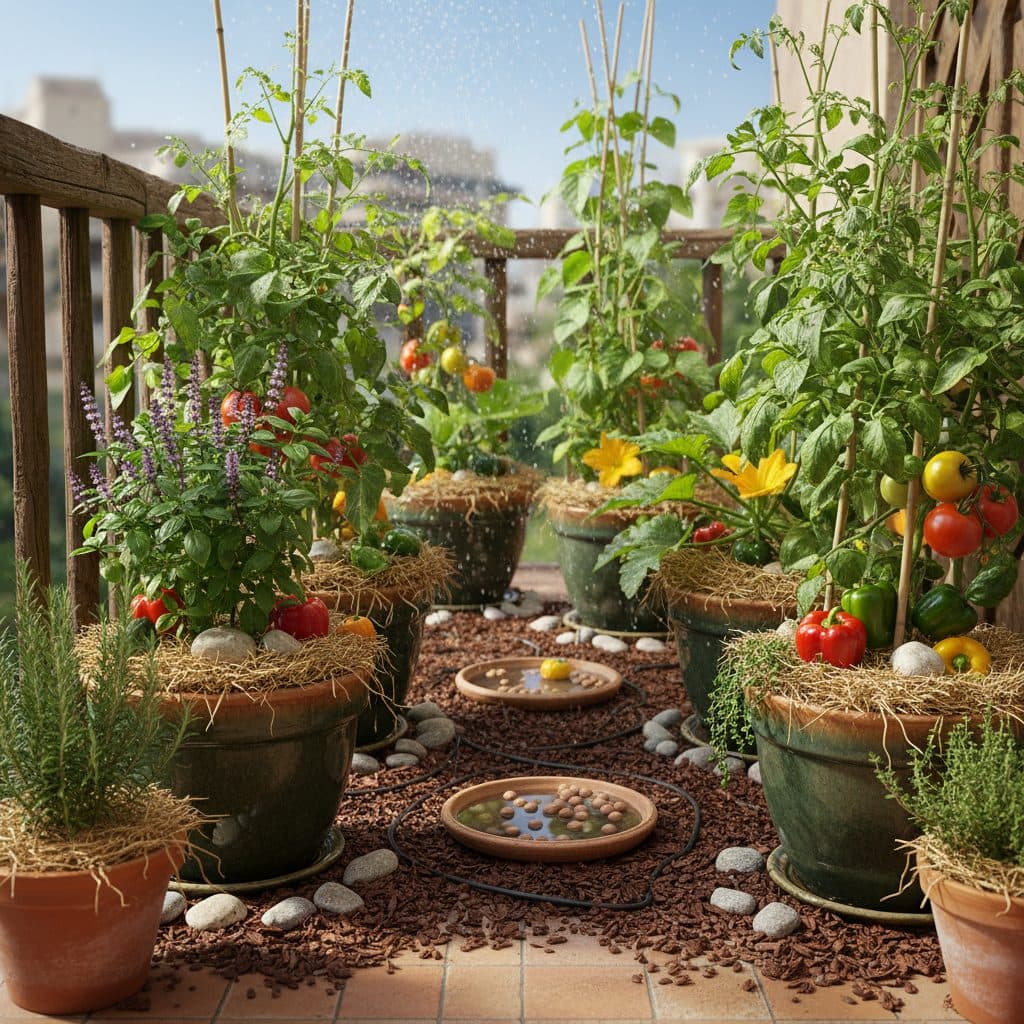
Key takeaways
- Container plants in USDA Zones 8-10 face root zone temperatures exceeding 90°F, severely impacting growth and yield.
- Self-insulating double-potting creates an air gap that can reduce root temperatures by 10-15°F, mimicking industrial insulation principles.
- Applying a two to four inch layer of organic mulch lowers soil surface temperatures and meaningfully reduces watering needs.
- Lighter-colored outer pots reflect up to 50% more solar radiation, providing an additional layer of heat protection for roots.
- Selecting appropriate potting media and plant varieties suited for warmer conditions complements these cooling strategies, ensuring robust plant health.
- Combining double-potting with mulching offers a synergistic effect, providing comprehensive thermal protection for container gardens in hot climates.
Quick answer: To keep container roots cool in hot climates like USDA Zones 8-10, use self-insulating double-potting to create an air gap and apply a 2-4 inch layer of organic mulch. These methods can reduce root temperatures by 10-20°F, preventing heat stress and improving plant health.
In the sun-drenched landscapes of USDA Zones 8 through 10, from the arid stretches of Arizona to the humid coasts of Florida, container gardening presents unique challenges, particularly when summer temperatures consistently climb above 90°F (32°C). While the sun nourishes plant foliage, intense heat can transform a container into a miniature oven, baking delicate root systems. This overheating stresses plants, hinders nutrient uptake, and ultimately reduces yields, turning a promising harvest into a struggle for survival.
Fortunately, experienced growers have developed practical, effective strategies to combat this heat: self-insulating double-potting and strategic mulching. These methods, grounded in principles of thermal regulation, can significantly moderate root zone temperatures, ensuring your tomatoes, peppers, and other container vegetables remain productive even when the mercury soars. By understanding and implementing these techniques, you can create a more stable and hospitable environment for your plants, leading to healthier growth and more abundant harvests, even in the most challenging summer conditions.
Understanding root zone heat stress in hot climates
For container plants thriving in USDA Zones 8-10, such as the Central Valley of California or the Gulf Coast of Texas, summer temperatures can regularly exceed 90°F (32°C) for extended periods. This intense heat directly impacts the root zone, which is critical for water and nutrient absorption. When soil temperatures in containers rise above 80°F (27°C), many vegetable crops begin to experience significant stress, leading to reduced growth, flower drop, and poor fruit set. For most vegetable crops, root zone temperatures in the 65°F to 75°F (18°C to 24°C) range support the best development and nutrient uptake. Maintaining temperatures within this range is essential for plant vigor and productivity.
The impact of high temperatures on container roots
The confined space of a container, especially one made of dark plastic or metal, readily absorbs solar radiation. A black plastic pot sitting in full sun on a 95°F (35°C) day can easily reach internal soil temperatures of 110°F (43°C) or higher within a few hours. This extreme heat damages delicate root cells, impairs water movement within the plant, and can even lead to root death, effectively shutting down the plant’s ability to absorb essential nutrients and moisture. Summer temperatures in Zones 8-10 routinely surpass 90°F (32°C), posing a challenge for container gardening. Protecting the root system maintains plant vigor and supports crop yields on balconies and patios.
- Reduced water uptake: Overheated roots struggle to absorb water efficiently, even in moist soil, leading to wilting.
- Nutrient lockout: High temperatures can alter soil chemistry and microbial activity, making nutrients unavailable to plants.
- Stunted growth: Plant energy is diverted to stress response mechanisms rather than foliage, flower, and fruit production.
- Flower and fruit drop: Plants abort reproductive efforts to conserve resources under severe heat stress.
- Increased disease susceptibility: Stressed plants have weakened immune systems, making them more vulnerable to pathogens and pests.
The mechanics of self-insulating double-potting
Self-insulating double-potting is a straightforward yet highly effective strategy for moderating root zone temperatures in containers. The core principle involves placing a smaller, inner pot, which holds your plant, inside a larger, outer pot. The air gap created between the two containers acts as a thermal buffer, significantly slowing the transfer of heat from the outer environment to the inner root ball. The same principle keeps a double-walled vessel cooler than a single-walled one: still air is a poor conductor of heat. On a 90°F (32°C) day, this air gap can reduce the inner pot’s temperature by 10-15°F (5-8°C).
Choosing materials and setting up your double-pot system
For this system to work effectively, the air gap should be between one and three inches wide on all sides, including the bottom. This space allows for sufficient insulation without making the system overly bulky. Lighter-colored outer pots reflect more solar radiation than dark pots and absorb less heat. Materials for the outer pot can range from terracotta to plastic, but the main factor is the air gap that prevents conductive heat transfer. For instance, a five-gallon nursery pot can easily fit inside a ten-gallon decorative planter, leaving a substantial insulating layer. Adding a layer of gravel, bricks, or a smaller inverted pot at the bottom of the outer pot elevates the inner container to maintain an air gap underneath. This prevents heat from radiating up from hot surfaces like concrete patios.
- Select two pots: An inner pot for the plant (e.g., 5-gallon) and an outer pot at least two to three inches wider in diameter and height (e.g., 10-gallon).
- Ensure drainage: Both pots must have adequate drainage holes to prevent waterlogging, which can lead to root rot.
- Create an air gap: Use spacers, bricks, or a layer of inert material like gravel in the outer pot to maintain consistent air circulation around the inner pot.
- Choose light colors: Opt for a light-colored outer pot, such as white or light gray, to maximize solar reflection and minimize heat absorption.
- Material durability: Durable plastics, glazed ceramics, or insulated foam containers make effective outer pots, offering good longevity and insulation.
Strategic mulching for container plants
Mulching is a widely recognized practice in ground-based gardening, but its benefits are equally, if not more, pronounced for container plants, especially in hot climates like those found in USDA Zone 9 in central Florida. A two to four inch layer of organic mulch applied to the surface of your container potting media acts as a protective barrier. This layer significantly reduces direct solar radiation reaching the soil, thereby decreasing soil surface temperatures by up to 20°F (11°C) on a hot day. Beyond temperature moderation, mulch retains soil moisture and reduces watering frequency. This is particularly valuable for plants like tomatoes or basil, which require consistent moisture to prevent stress and blossom end rot. Mulch also suppresses weed growth, which competes for limited water and nutrients in a container.
Selecting and applying the right mulch
When choosing mulch for containers, opt for organic materials that break down slowly and don’t compact easily. Shredded bark, wood chips, or straw are excellent choices. Avoid heavy, dense mulches like fine peat moss that can suffocate the soil or create a water-repellent layer when dry. For instance, a 10-gallon container would benefit from a two-inch layer of finely shredded cedar mulch, while a 20-gallon container could easily handle three to four inches. The USDA Natural Resources Conservation Service emphasizes soil health practices, including mulching, for water conservation and temperature moderation in agricultural systems [3]. Ensure the mulch doesn’t touch the plant stem, leaving a small, one-inch gap to prevent moisture-related issues and fungal growth. Reapply mulch as it decomposes, typically once or twice during a long growing season, to maintain its insulating and moisture-retaining properties. Using a lightweight garden hand trowel makes this process simple and efficient.
- Shredded bark: Excellent for long-lasting coverage, good insulation, and slow decomposition, adding organic matter.
- Wood chips: Provide good temperature moderation and moisture retention, and are often readily available.
- Straw: Lightweight, inexpensive, and highly effective for annuals or smaller containers, offering significant cooling.
- Leaf mold: Adds valuable nutrients as it breaks down, improving potting media structure and microbial activity.
- Compost: A nutrient-rich mulch that improves soil biology and water-holding capacity, but can decompose quickly.
Combining strategies and plant selection for success
The true power of these cooling strategies emerges when double-potting and mulching are used in tandem. A double-potted system provides foundational insulation, creating a stable microclimate around the roots by leveraging the air gap. Adding a two to three inch layer of organic mulch on top of the potting media then provides a secondary layer of protection, blocking direct solar radiation and further reducing evaporative water loss. This combined approach can lead to root zone temperatures that are 10-20°F (5-11°C) cooler than an uninsulated, unmulched container on a typical 90°F (32°C) summer day in places like Phoenix, Arizona, or Las Vegas, Nevada. This synergistic effect significantly reduces plant stress and promotes more vigorous growth and higher yields.
Optimizing your container garden with plant choices and watering
Beyond physical insulation, plant selection and watering schedules determine results. Heat-tolerant vegetable varieties include peppers (such as ‘Jalapeño’ and ‘Habanero’), okra, and sweet potatoes. Even cool-season crops like beets can be pushed a few weeks further into the warm season in Zones 8-10 with these methods, though they still need to be timed for spring and fall rather than midsummer. You can learn more about growing beets, including thinning and cool-season timing, at agripure.org/articles/how-to-grow-beets. Use a soil moisture meter to accurately gauge when to water, preventing both over and under-watering. Remember, even with insulation, containers dry out faster than in-ground beds, often requiring daily watering during peak summer heat, especially for five-gallon pots. For larger containers, like 20-gallon grow bags, watering every other day might suffice.
- Choose heat-tolerant varieties: Select vegetables known to perform well in high temperatures, such as okra, sweet potatoes, and heat-set peppers and eggplant.
- Potting mix selection: A well-draining, moisture-retentive mix with good aeration supports healthy root development and temperature stability.
- Monitor soil moisture: Use a soil moisture meter to water precisely, avoiding guesswork and ensuring consistent hydration without waterlogging.
- Consider shade cloth: Provide afternoon shade for plants during the hottest part of the day (e.g., 1 PM to 4 PM) using a 30-50% shade cloth, especially for sensitive crops.
- Fertilize appropriately: Slightly reduce nitrogen during extreme heat to prevent excessive leafy growth that can stress plants, focusing instead on balanced nutrients.
Long-term benefits and maintenance
Implementing double-potting and mulching isn’t just about surviving a single heatwave; it’s an investment in the long-term health and productivity of your container garden. By consistently maintaining cooler, more stable root zone temperatures, plants experience less stress throughout their growing cycle. This reduction in stress translates to stronger plants, more consistent flowering, and ultimately, higher yields over the entire season. For instance, a tomato plant in a protected container in USDA Zone 10 in southern Florida will generally out-produce an unprotected plant, simply due to better root health and reduced physiological stress. These practices also reduce the incidence of heat-related physiological disorders, such as blossom end rot in tomatoes, which is often exacerbated by inconsistent watering and root stress from high temperatures.
Seasonal adjustments and ongoing care
While these methods are primarily for heat mitigation, some seasonal adjustments might be beneficial. In cooler shoulder seasons, the insulating air gap can also help protect roots from sudden cold snaps, although its primary benefit is against heat. As organic mulches decompose, they enrich the potting media and improve soil health, a principle documented by the USDA Natural Resources Conservation Service [3]. Regularly check the mulch layer and replenish it as needed, typically every two to three months, to maintain its effective depth of two to four inches. Inspect your double-potting setup annually to ensure the outer pot and spacers are intact and the air gap remains clear. In areas like the high desert of New Mexico with wide diurnal temperature swings (such as 100°F days and 60°F nights), these methods stabilize root zones against daytime overheating and rapid nighttime cooling. This stable root environment supports steady growth across container setups, from single five-gallon pots to vertical planters.
- Annual inspection: Check outer pots for cracks or damage that could compromise insulation effectiveness, especially after winter freezes.
- Mulch replenishment: Top up organic mulch every two to three months, or as it decomposes, to maintain the recommended two to four inch depth.
- Potting media refresh: Annually replace or amend the top few inches of potting mix to renew nutrients and improve soil structure.
- Cleanliness: Keep the air gap between pots free of debris, leaves, or pests to ensure proper air circulation and insulation.
- Winter protection: In zones with mild winters, the double-potting can offer some frost protection for perennial container plants, extending their viability into the next year.
Comparison of Container Root Protection Strategies
Strategy | Temperature Reduction Potential | Water Savings Potential | Cost (approx.) |
|---|---|---|---|
No Protection | 0°F | 0% | Low |
Single Pot, Dark Color | 0-5°F | 0% | Low |
Single Pot, Light Color | 5-10°F | 0% | Low |
Mulching Only (soil surface) | 10-20°F | 25-30% | Low-Medium |
Double-Potting Only | 10-15°F | 0-5% | Medium |
Double-Potting + Mulching | 10-20°F | 25-30% | Medium |
Root Zone Stability: An air gap of one to three inches between pots can reduce root zone temperatures by 10-15°F (5-8°C) on a hot day, significantly improving plant health.
Water Conservation: Applying a two to four inch layer of organic mulch can decrease watering frequency by 25-30%, saving gallons of water over a growing season in hot climates.
Frequently asked questions
How much cooler can double-potting make my container roots?
Double-potting can reduce root zone temperatures by 10-15°F (5-8°C) on a hot day, especially when combined with a light-colored outer pot. This significant temperature drop helps prevent root stress and promotes healthier plant growth, even when ambient temperatures exceed 90°F (32°C).
What types of mulch are best for container plants in hot climates?
Organic mulches like shredded bark, wood chips, or straw are ideal for containers in hot climates. They should be applied in a two to four inch layer, reducing soil surface temperatures by up to 20°F (11°C) and decreasing watering needs by 25-30%.
Can I use double-potting and mulching for all types of container vegetables?
Yes, these methods are beneficial for most container vegetables, particularly those susceptible to heat stress like tomatoes, peppers, and leafy greens. They help maintain root temperatures between 65°F and 75°F (18°C and 24°C), which supports nutrient uptake and plant vigor.
How often should I water double-potted and mulched containers?
While mulching can reduce watering frequency by 25-30%, containers still dry out faster than in-ground beds. In peak summer heat in Zones 8-10, you may still need to water daily, especially for smaller five-gallon pots. Always check soil moisture with a meter before watering to avoid over or under-saturation.
Does the color of the outer pot matter for insulation?
Yes, the color of the outer pot significantly impacts insulation. Lighter-colored pots, such as white or light gray, reflect up to 50% more solar radiation than dark pots, helping to keep the air gap and inner pot cooler. This reflection forms a central part of container thermal management.
Are there any downsides to double-potting or mulching containers?
The main downsides are the increased initial cost and space required for the larger outer pot. Mulching can sometimes harbor pests if applied too thickly or directly against the stem, but a one-inch gap around the stem mitigates this risk. Overall, the benefits of reduced plant stress and increased yields far outweigh these minor drawbacks, especially in hot climates.
References
- Potting Adhesion Investigation Using Double Cantilever Beam Tests (2019). Potting Adhesion Investigation Using Double Cantilever Beam Tests.
- Effect of potting media and mulching on nursery and early field performance of passion fruit seedlings at Makurdi, Nigeria (2024). Effect of potting media and mulching on nursery and early field performance of passion fruit seedlings at Makurdi, Nigeria.
- USDA Natural Resources Conservation Service (2024). USDA Natural Resources Conservation Service.