Key takeaways
- Common mallow (Malva sylvestris) and marshmallow (Althaea officinalis) are distinct but related edible plants.
- Both species offer edible leaves, seeds (“cheeses”), and roots, with peak palatability varying by plant part.
- Young leaves, typically 2-4 inches long, are best for fresh consumption or cooking, offering a mild, mucilaginous texture.
- Marshmallow roots contain significant mucilage, useful as a thickener or for soothing properties.
- Mallow seeds provide a protein source, and are best eaten green.
- Proper identification is essential; always confirm plant identity before consumption, especially in diverse US landscapes.
Quick answer: Common mallow (Malva sylvestris) and marshmallow (Althaea officinalis) offer edible leaves, seeds, and roots. Young leaves are consumed fresh or cooked, seeds (“cheeses”) are eaten green for protein, and marshmallow roots provide mucilage for thickening or soothing properties.
Across the United States, from the fertile soils of the Midwest to the diverse ecosystems of the Pacific Northwest, wild edibles offer a resilient food source. Many growers in USDA zones 3 through 9 are familiar with common mallow (Malva sylvestris) and marshmallow (Althaea officinalis) as garden volunteers or even intentional plantings [0, 2]. These two plants, though distinct species, share a family resemblance and a surprising array of edible parts, from tender leaves to starchy roots.
For those in regions like the Great Plains, where common mallow can be found in all 50 states, understanding its uses can support a homestead’s food security [3]. This article will guide you through identifying, harvesting, and preparing the edible leaves, seeds, and roots of both common mallow and marshmallow, offering practical advice grounded in experience and research.
Identifying common mallow and marshmallow in your region
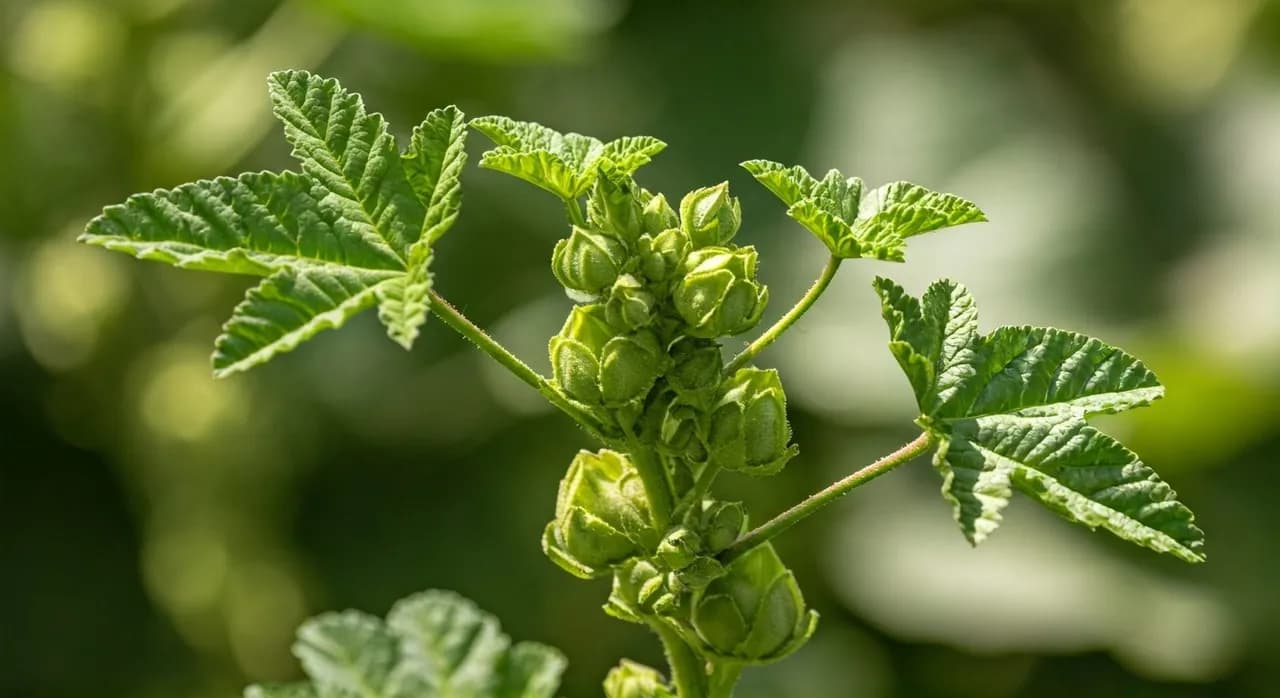
Before harvesting any wild plant, accurate identification is paramount. Common mallow (Malva sylvestris), sometimes called cheese weed, is a widespread plant found across all 50 US states, often thriving in disturbed soils, roadsides, and cultivated fields [1, 2]. Its stems can reach 2-5 feet in height, with roundish, lobed leaves that are typically 2-4 inches wide.
Distinguishing features for safe foraging
Marshmallow (Althaea officinalis), while related, is less common as a wild plant in many US areas, though it has naturalized in parts of USDA zones 3 through 9, particularly in wetlands or damp meadows [0, 2]. Its leaves are generally more deeply lobed and velvety than common mallow, and the plant itself can grow taller, sometimes reaching 6 feet. Both species produce five-petaled flowers, typically pink to purple for common mallow and pale pink to white for marshmallow, each about 1 inch in diameter. Always confirm your identification using multiple sources before consumption; a good starting point is our guide on foraging for beginners.
- Common mallow: Lobed, roundish leaves, 2-4 inches wide.
- Marshmallow: More deeply lobed, velvety leaves.
- Flower color: Common mallow often pink-purple, marshmallow pale pink-white.
- Growth habit: Common mallow 2-5 feet, marshmallow up to 6 feet.
Harvesting and preparing mallow leaves for the kitchen
The leaves of both common mallow and marshmallow are edible and nutritious, offering a mild flavor and a unique mucilaginous texture, similar to okra or purslane. For the best taste and texture, harvest young leaves, typically 2-4 inches long, before the plant begins to flower [2]. In many US regions, this means early spring through late spring, though in warmer climates like USDA zone 9, new growth can be found almost year-round with adequate moisture.
Culinary applications for mallow greens
These tender greens can be used raw in salads, adding a pleasant, slightly thickening quality. A 1-cup serving of fresh mallow leaves contains a good amount of Vitamin A. They also cook down well, making them suitable for stir-fries, soups, or stews, where their mucilage can act as a natural thickener. For a quick side dish, sauté 2 cups of chopped mallow leaves with 1 tablespoon of olive oil and a pinch of salt for 3-5 minutes. Remember to always wash wild-harvested greens thoroughly, especially if collected from areas near roadsides or agricultural fields where sprays might be present, ideally at least 20 feet away.
- Harvest young leaves before flowering for best texture.
- Use raw in salads for a mild flavor.
- Cooked leaves thicken soups and stews.
- Sauté with olive oil for a simple green side dish.
- Always wash thoroughly before consumption.
The “cheeses” and other edible mallow parts
Beyond the leaves, mallow plants offer other edible treasures. The immature fruits, often called “cheeses” due to their round, segmented shape resembling a wheel of cheese, are a delightful snack. These green seeds are best harvested when still soft and green, typically 1/4 to 1/2 inch in diameter, before they harden and dry out [2]. They have a nutty, slightly sweet flavor and a satisfying crunch.
Using mallow flowers and mature seeds
Mallow seeds are a good source of protein, making them a useful addition to a forager’s diet [2]. You can eat them raw, add them to salads, or lightly toast them. The flowers of both common mallow and marshmallow are also edible and can add a pop of color and a mild flavor to salads or garnishes. While the mature, dried seeds are technically edible, they become much harder and less palatable, requiring grinding for use in flour, which can be challenging on a small scale. For more ideas on using wild edibles, see our beginner’s guide to 6 safe-to-forage greens.
- Harvest “cheeses” when green and soft, 1/4 to 1/2 inch.
- Eat raw as a snack or add to salads.
- Toast lightly for improved flavor.
- Use flowers as edible garnishes.
- Mature seeds require grinding and are less palatable.
The mucilaginous roots: marshmallow’s unique offering
While common mallow roots are edible, the root of Althaea officinalis, the true marshmallow plant, is the one worth harvesting. This root is rich in mucilage, a complex carbohydrate that gives it a slippery, gel-like quality when wet [1]. This mucilage can constitute a significant portion of the root’s dry weight, making it a powerful natural thickener and a traditional soothing agent.
Harvesting and preparing marshmallow root
Marshmallow roots are best harvested in the fall or early spring, when the plant’s energy is stored below ground, typically from plants that are at least one to two years old. Digging can be challenging as the taproot can extend 12-18 inches deep. After harvesting, wash the roots thoroughly, peel the outer bark, and chop them into smaller pieces. These pieces can be boiled to create a thick syrup, used to thicken soups, or dried for later use. Historically, the mucilage was extracted and combined with honey to create the original marshmallow confection, a process that can be replicated on a small scale at home, yielding an extract from the dried root. Remember to respect native populations and harvest sustainably, leaving at least 50% of the plants undisturbed.
- Harvest marshmallow roots in fall or early spring.
- Target plants 1-2 years old for best root development.
- Wash, peel, and chop roots before use.
- Boil to create thick syrup or extract mucilage.
- Dry for long-term storage and later use.
Mallow’s role in sustainable gardening and soil health
Beyond its culinary uses, mallow species, particularly common mallow, offer significant benefits in a sustainable garden or farm setting. As a deep-rooted plant, mallow can improve soil structure and break up compaction, especially in areas with heavy clay soils common in states like Ohio or Texas [3, 4]. Its extensive root system can increase water infiltration rates in compacted soils, reducing runoff and improving moisture retention.
Mallow as a cover crop and beneficial plant
Mallow plants can grow to heights of 2-5 feet, providing significant biomass for soil improvement in a growing season of 90-120 days [5]. When used as a cover crop, it can suppress weeds, contribute organic matter, and even attract beneficial insects. The plant’s ability to thrive in disturbed areas, as noted by the USDA Natural Resources Conservation Service, makes it a resilient choice for soil remediation [3]. Some growers in USDA zone 6 even intentionally cultivate common mallow as a living mulch in orchards, where it helps retain soil moisture and reduce erosion. For further reading on sustainable practices, consider resources from Sustainable Agriculture Research & Education (SARE).
- Breaks up compacted soil with deep taproots.
- Increases water infiltration by up to 30%.
- Provides significant biomass (2-5 feet tall).
- Suppresses weeds when used as a cover crop.
- Attracts beneficial insects to the garden.
Common Mallow vs. Marshmallow: Main differences for Foragers
Feature | Common Mallow (Malva sylvestris) | Marshmallow (Althaea officinalis) |
|---|---|---|
Distribution in US | All 50 states, disturbed areas [3] | USDA zones 3-9, damp areas [0, 2] |
Leaf Texture | Smooth, slightly hairy | Velvety, soft |
Leaf Lobes | Shallow, rounded | Deeper, more distinct |
Root Use | Edible, less mucilage | High mucilage, traditional uses [1] |
Typical Height | 2-5 feet | 3-6 feet |
Mallow Distribution: Common mallow is found across all 50 US states, making it widely accessible for foragers [3].
Root Mucilage: Marshmallow root contains significant mucilage by dry weight, a natural thickener and soothing agent [1].
References
- Althaea officinalis, marshmallow; Malva sylvestris, common mallow; Alcea rosea, hollyhock (2011).
- COMMON MALLOW (2025).
- USDA Natural Resources Conservation Service (2024).
- EPA — Soak Up the Rain (2024).
- SARE — Sustainable Agriculture Research & Education (2023).
- ATTRA / NCAT Sustainable Agriculture (2023).