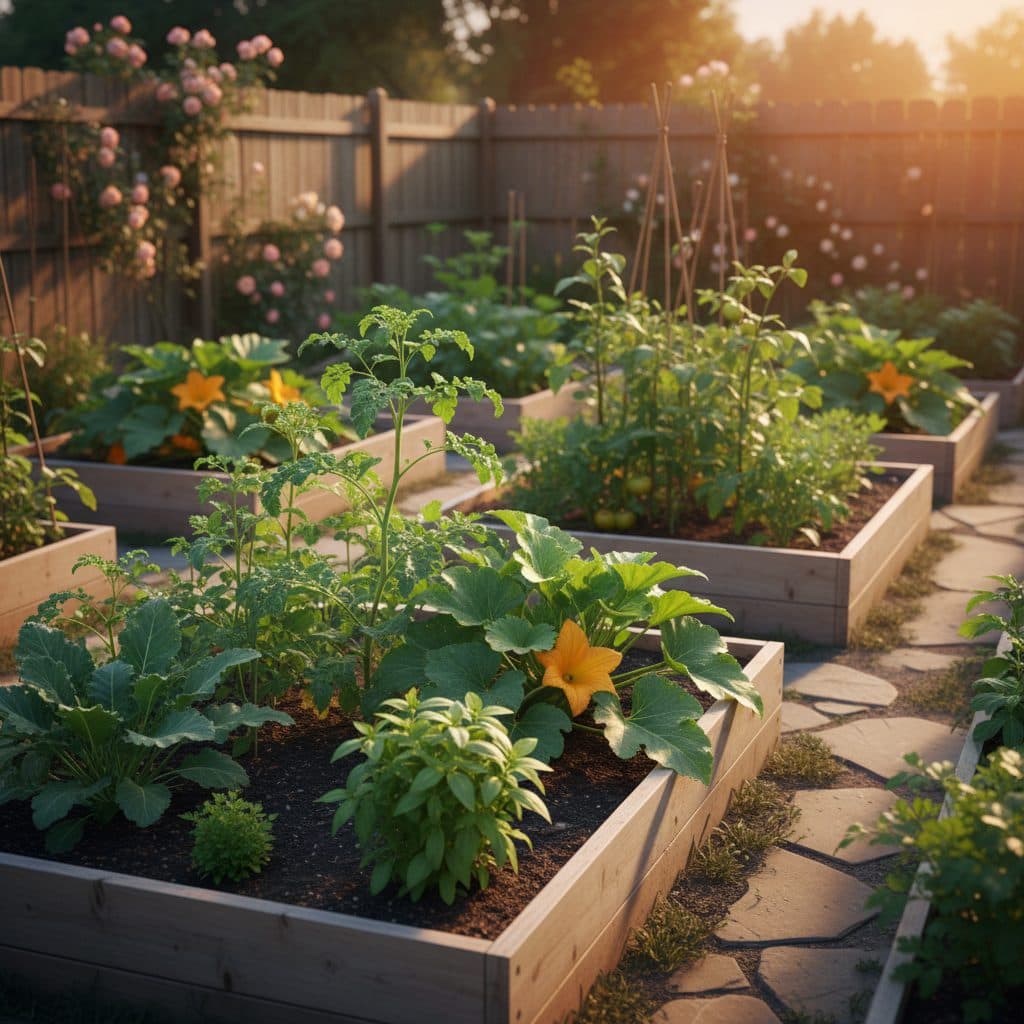
Key takeaways
- Select containers with drainage holes, at least 6 inches deep for most leafy greens and roots, and 5 gallons or more for fruiting plants.
- Ensure your balcony receives 6-8 hours of direct sunlight daily for optimal growth and yield.
- Use a high-quality potting mix enriched with a few handfuls of finished compost, and water consistently, often daily during warm periods.
- Start with quick-growing crops like radishes (21-30 days) and lettuce (4-6 weeks) for early success.
- Even small spaces can produce significant harvests; a single cherry tomato plant can yield 10-15 pounds of fruit.
- Regular feeding with a balanced liquid fertilizer every 2-3 weeks supports vigorous growth in confined container environments.
Quick answer: To grow vegetables in containers on a balcony, ensure 6-8 hours of direct sunlight, use quality potting mix with drainage, and water consistently. Select appropriate container sizes for each plant type and feed regularly with liquid fertilizer to maximize yields.
Balcony gardening is a rewarding endeavor, particularly for those in urban areas like New York City or Chicago, where traditional garden space is limited. With a little planning and the right plant choices, even a small balcony can become a productive food source, potentially yielding 50 pounds or more of fresh produce over a growing season. This guide focuses on 10 straightforward vegetables that thrive in containers, making them perfect for first-time gardeners.
Many home gardeners, from USDA zone 4 to 10, find success with container growing, transforming their outdoor spaces into productive edible gardens. Historically, home gardening was promoted in the US as early as 1917 to encourage self-sufficiency and healthy eating. Today, the principles remain much the same: provide adequate light, good soil, and consistent water, and your plants will flourish, offering fresh, homegrown food just steps from your kitchen.
Setting up your container garden for success
Before planting, consider the essentials: containers, soil, and sunlight. Most vegetables require at least 6-8 hours of direct sunlight daily; a south-facing balcony in the Northern Hemisphere typically offers the best exposure. Without sufficient light, your plants will struggle to produce fruit or develop robust foliage, often yielding far less than plants in full sun.
choosing the right containers and soil
Container size is critical, as root space directly impacts plant health and yield. Many vegetables can be grown in containers as small as 6 inches deep, making them suitable for limited spaces [1]. For larger plants like tomatoes, a 5-gallon container is a minimum, offering enough room for root development and moisture retention. Ensure all containers have drainage holes to prevent waterlogging, which can quickly kill plants.
- Select containers made from plastic, terracotta, or fabric, each with pros and cons for moisture retention.
- Use a high-quality, lightweight potting mix specifically designed for containers, not garden soil.
- Mix a few handfuls of finished compost into your potting mix to improve water retention and nutrient supply.
- Consider self-watering containers for busy gardeners; they can noticeably reduce how often you have to water in hot climates.
- Cover the drainage holes with a scrap of window screen or a coffee filter rather than a layer of gravel — a coarse layer at the bottom of a pot raises the saturated zone in the mix above it and makes drainage worse, not better.
Watering is often the most frequent task. Container gardens often require watering once or twice daily, especially during hot periods above 80°F, to prevent the soil from drying out completely. You can monitor soil moisture with a soil moisture meter to avoid over or under-watering. Regular feeding with a balanced liquid fertilizer every 2-3 weeks is also important, as nutrients leach out of containers more quickly than in ground beds.
Leafy greens: quick and continuous harvests
Leafy greens are an excellent starting point for any balcony gardener due to their rapid growth and continuous harvest potential. They generally require less space and can tolerate partial shade better than fruiting plants, needing only 4-6 hours of sunlight. In cooler climates, like USDA zone 5, these greens can often be grown from early spring through late fall.
lettuce, spinach, swiss chard, and kale
Lettuce is incredibly versatile, with many varieties suitable for containers. Loose-leaf types can be continuously harvested by removing outer leaves, providing fresh greens for 4-6 weeks from a single planting. Plant seeds every 2-3 weeks for a staggered harvest. A 6-inch deep container is sufficient for one to three plants, or you can grow many more in a window box that is 8-10 inches wide.
- Plant lettuce seeds 1/4 inch deep and 1 inch apart, thinning to 4-6 inches.
- Spinach thrives in cool weather; plant in early spring or late summer when temperatures are below 75°F.
- Swiss Chard offers colorful stems and leaves, growing well in 8-inch deep containers.
- Kale is genuinely cold-hardy, shrugging off hard frosts and often holding through temperatures in the teens, and its flavor sweetens after frost — which is what extends your harvest season.
- Harvest outer leaves of all greens to encourage new growth. This gives a longer yield from each plant.
Spinach is another fast grower, often ready for harvest in 30-45 days. It prefers cooler temperatures, making it ideal for spring and fall planting in regions like the Pacific Northwest. Both Swiss Chard and Kale are more heat-tolerant than lettuce or spinach, making them good choices for summer harvests in USDA zones 6-8. A 2-gallon container can comfortably support one large Swiss Chard or Kale plant, yielding fresh greens for several months.
Root vegetables and quick crops: instant gratification
For gardeners seeking quick results, root vegetables and other fast-growing crops are a perfect fit. The satisfaction of pulling a fresh radish or carrot from a pot is unmatched, and these plants mature rapidly, often within a month. They are excellent for teaching children about gardening, as the visible growth below ground is exciting.
radishes, carrots, and bush beans
Radishes are perhaps the fastest vegetable you can grow, often ready for harvest in as little as 21-30 days from planting [1]. They need a container at least 6 inches deep, filled with loose, well-draining potting mix to allow roots to expand without obstruction. Plant seeds 1/2 inch deep and 1 inch apart, thinning to 2-3 inches once seedlings emerge. Succession planting every 1-2 weeks will ensure a continuous supply.
- Choose short or round carrot varieties like ‘Paris Market’, ‘Thumbelina’ or ‘Little Finger’ for shallow containers.
- Plant carrot seeds 1/4 inch deep, thinning to 2-3 inches apart once seedlings are 1 inch tall.
- Bush beans do not require trellising, making them ideal for compact spaces and 2-gallon containers.
- Harvest radishes promptly when mature to prevent them from becoming woody or overly spicy.
- Provide a consistent watering schedule for carrots to prevent splitting and promote even growth.
Carrots, particularly shorter varieties, also do well in containers. A container 8-12 inches deep is ideal for varieties like ‘Danvers Half Long,’ allowing for proper root development. Carrots typically mature in 60-75 days. Keep the soil consistently moist, especially during germination, which can take 10-20 days. For bush beans, a 2-gallon container can support one plant; plan on several containers if you want enough beans for a meal at a time. Bush beans mature in about 50-60 days and can be harvested every few days for several weeks.
Fruiting vegetables: sweet rewards from your balcony
Growing fruiting vegetables in containers can be incredibly satisfying, offering a taste of summer from your own balcony. While they demand more sunlight and larger containers, the yields can be substantial. In warmer regions, like USDA zone 9, these plants can produce from late spring through early fall.
cherry tomatoes and bell peppers
Cherry tomatoes are a top choice for containers due to their prolific nature and compact growth habits. A 5-gallon container is the absolute minimum, but a 10-gallon container will produce a healthier, more productive plant. A single cherry tomato plant can produce 10-15 pounds of fruit over a growing season, offering a significant harvest for a small space. Choose determinate or dwarf varieties for best container performance. For another container crop in the same space, see how to grow strawberries, which shares some similar container principles.
- Provide sturdy stakes or a cage for cherry tomatoes to support their growth as they can reach 3-5 feet tall.
- Plant bell peppers in 3-5 gallon containers with at least 6-8 hours of full sun.
- Water fruiting plants deeply and consistently, especially when fruits are developing, to prevent blossom end rot.
- Fertilize every 2 weeks with a balanced liquid feed, or a tomato-specific fertilizer with a 5-10-10 NPK ratio.
- Harvest bell peppers when they reach their full color for the sweetest flavor, often 60-90 days after transplanting.
Bell peppers also thrive in containers, preferring at least 6-8 hours of direct sunlight. A 3-5 gallon container is suitable for one pepper plant, which can yield 8-12 peppers per season. They appreciate warm temperatures, ideally between 70-85°F. In cooler climates, consider placing containers against a south-facing wall to absorb extra heat.
More easy container vegetables: peas and dwarf cucumbers
Expanding beyond the most common choices, other vegetables also perform exceptionally well in containers, offering variety and adding to your overall harvest. These options are particularly good for maximizing vertical space or providing a unique addition to your balcony garden. Even in a small 10 square foot area, you can grow a surprising amount of food.
dwarf peas and compact cucumbers
Dwarf peas, such as ‘Sugar Ann’ snap peas or ‘Little Marvel’ shell peas, are excellent for container gardening. They only grow to about 2-3 feet tall and produce abundant yields. A 2-gallon container can support 3-4 pea plants, and they will need a small trellis or stakes to climb. Peas prefer cooler weather, thriving in temperatures between 50-75°F, making them ideal for spring and fall planting in many US regions. They are typically ready for harvest in 60-70 days.
- Choose dwarf or bush varieties of cucumbers, such as ‘Bush Crop’ or ‘Spacemaster,’ for containers.
- Provide a sturdy trellis or cage for dwarf cucumbers, as their vines can still reach 3-4 feet.
- Plant peas in early spring as soon as the soil can be worked, often in March or April in USDA zone 6.
- Ensure consistent moisture for cucumbers, as irregular watering can lead to bitter fruit.
- Harvest peas regularly to encourage more pod production, typically every 2-3 days once they start producing.
Compact cucumbers are another great choice. Varieties like ‘Bush Crop’ or ‘Spacemaster’ are bred for smaller spaces and can be grown in 5-gallon containers. These plants benefit from a small trellis or cage, even though they are bush varieties, as their vines can still reach 3-4 feet. Cucumbers are heavy feeders and drinkers, requiring consistent watering and feeding every 10-14 days with a balanced liquid fertilizer. They typically mature in 50-65 days, yielding 10-15 cucumbers per plant over their productive period.
Comparison of Easy Container Vegetables
Vegetable | Min. Container Size | Sunlight (hours) | Time to Harvest |
|---|---|---|---|
Lettuce (Loose-leaf) | 6 inches deep | 4-6 | 30-45 days |
Spinach | 6 inches deep | 4-6 | 30-45 days |
Radishes | 6 inches deep | 6-8 | 21-30 days |
Carrots (Dwarf) | 8-12 inches deep | 6-8 | 60-75 days |
Bush Beans | 2-gallon | 6-8 | 50-60 days |
Cherry Tomatoes | 5-gallon | 6-8+ | 60-80 days |
Bell Peppers | 3-5 gallon | 6-8+ | 60-90 days |
Swiss Chard | 8 inches deep | 6-8 | 50-60 days |
Kale | 8 inches deep | 6-8 | 50-70 days |
Dwarf Peas | 2-gallon | 6-8 | 60-70 days |
Sunlight Essential: Most vegetables need 6-8 hours of direct sunlight daily; less light means noticeably lower yields, especially for fruiting crops.
Watering Frequency: Container gardens in warm climates (above 80°F) often require watering once or twice daily to maintain adequate moisture levels.
Frequently asked questions
What is the best type of container for balcony gardening?
Containers made from plastic, terracotta, or fabric are all suitable, but plastic pots retain moisture better than terracotta, while fabric pots breathe and dry out faster still, so they need the most frequent watering. Ensure any container you choose has adequate drainage holes, typically 3-5 holes per pot.
How much sunlight do balcony vegetables need?
Most fruiting vegetables like tomatoes and peppers require a minimum of 6-8 hours of direct sunlight daily for optimal production. Leafy greens and root vegetables can tolerate slightly less, around 4-6 hours, but more sun generally leads to healthier plants and higher yields, potentially increasing harvest by 25%.
What kind of soil should I use for container vegetables?
Always use a high-quality potting mix, specifically formulated for containers, which provides good drainage and aeration. Avoid using heavy garden soil, as it compacts easily in pots and can restrict root growth. Mixing a few handfuls of finished compost into your potting mix can significantly improve nutrient availability and water retention.
How often should I water my container garden?
Container gardens typically require more frequent watering than in-ground gardens, often daily or even twice daily during hot summer months (above 80°F). Check the soil moisture by sticking your finger about 1 inch deep; if it feels dry, it’s time to water. A 5-gallon container may need watering once or twice on a hot day — water until it just begins to run from the drainage holes, then stop.
Can I grow vegetables on a north-facing balcony?
A north-facing balcony typically receives very little direct sunlight, making it challenging for most vegetables. However, you might have success with very shade-tolerant leafy greens like spinach or lettuce, which can manage on three or four hours of direct sun plus bright ambient light for the rest of the day. Expect significantly reduced yields compared with full-sun conditions.
References
- Grow your own vegetables: a practical handbook for allotment holders and those wishing to grow vegetables in small gardens; what to grow, where to grow, when to (1918). Grow your own vegetables: a practical handbook for allotment holders and those wishing to grow vegetables in small gardens; what to grow, where to grow, when to.
- Boys’ and girls’ club work : home gardens, vegetables to grow and how to grow them (1917). Boys’ and girls’ club work : home gardens, vegetables to grow and how to grow them.
- USDA Natural Resources Conservation Service (2024). USDA Natural Resources Conservation Service.
- EPA — Soak Up the Rain (2024). EPA — Soak Up the Rain.
- SARE — Sustainable Agriculture Research & Education (2023). SARE — Sustainable Agriculture Research & Education.