Key takeaways
- Elderberry (Sambucus canadensis) thrives in USDA zones 3-9, preferring 6 hours of direct sunlight daily.
- Harvest elderberries when dark purple, typically from late July to early September, ensuring no green berries are included.
- A 1:5 ratio of dried berries to 80-proof alcohol is common for tincture extraction, yielding potent results.
- Maceration for 4-6 weeks in a cool, dark place extracts beneficial compounds effectively.
- Proper straining and storage in dark glass bottles can preserve tincture potency for up to 5 years.
- Foraging requires careful identification to avoid toxic look-alikes, especially in regions like the Pacific Northwest.
Quick answer: To make elderberry tincture, combine 1 part dried elderberries with 5 parts 80-proof alcohol, or 1 part fresh berries with 2 parts alcohol. Macerate for 4-6 weeks in a cool, dark place, then strain and store in dark glass bottles.
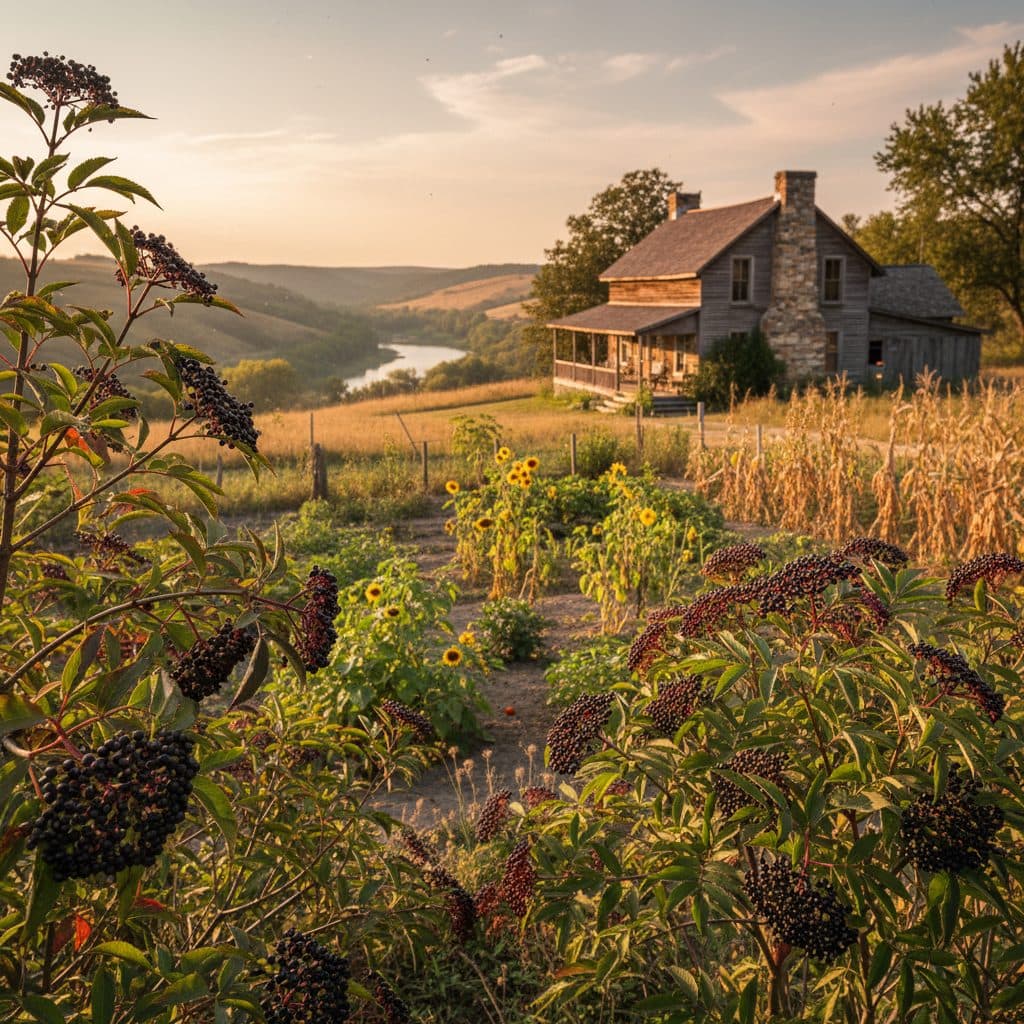
In the United States, elderberry (Sambucus canadensis) is a resilient plant, thriving across USDA zones 3 through 9, from the humid Southeast to the drier plains of the Midwest. This native species, often found along fence rows and stream banks, can produce a substantial berry harvest in a good season for home apothecaries. Making your own elderberry tincture is a practical skill, allowing you to harness the plant’s compounds directly from your garden or local wild spaces.
The process of creating a potent elderberry tincture involves careful cultivation or responsible foraging, precise harvesting, and a methodical extraction. This guide walks you through each step so the finished bottle is a high-quality product, whether your berries come from a backyard patch in Ohio or a foraged stand in Oregon. We aim for a tincture that is both effective and safe, with a shelf life of up to 5 years when stored correctly at 60°F.
Growing and foraging elderberries responsibly
Elderberry (Sambucus canadensis) is a robust shrub, well-suited for many US climates. It prefers full sun, meaning at least 6 hours of direct sunlight daily, and well-drained soil with a pH between 5.5 and 6.5. A mature plant can reach 10 feet tall and 8 feet wide, providing ample berries for a family’s needs. When planting, space individual shrubs 6-8 feet apart to allow for proper air circulation and growth. For optimal growth, consider amending heavy clay soils with 2-3 inches of compost annually. For more on establishing a productive space, consider starting a herb garden.
Identifying elderberry in the wild
Foraging for elderberries requires careful identification, and the look-alikes that actually poison people are not other elders. Pokeweed (Phytolacca americana) carries purple-black berries on an upright raceme off a stout red herbaceous stem, and all parts of it are toxic. Water hemlock (Cicuta maculata) and other white-flowered members of the carrot family can be mistaken for elderflower at a distance and are among the most poisonous plants in North America. Red elderberry (Sambucus racemosa), common in the Pacific Northwest, is a further reason to key out berry color and cluster shape before you cut. The native American elderberry (Sambucus canadensis) has flat-topped clusters of white flowers that mature into dark purple, almost black berries, typically ripening from late July to early September. Its leaves are compound, usually with 5-7 leaflets, and the stems are relatively smooth. Always confirm identification with at least three distinct features before harvesting, as consuming unripe or incorrect berries can lead to nausea, vomiting and diarrhoea.
- Look for flat-topped flower clusters, not conical.
- Observe dark purple to black berries, never red or green.
- Examine compound leaves with 5-7 leaflets.
- Note smooth, non-hairy stems.
- Confirm location in USDA zones 3-9.
Harvesting elderberries and preparing for extraction
Elderberry harvest timing affects tincture potency; harvest typically happens from late July through early September in most US regions. Berries should be fully ripe, dark purple to black, and plump. Green or reddish berries contain higher levels of cyanogenic glycosides, which can cause nausea and vomiting if consumed in significant quantities. Harvest entire cymes (berry clusters) by snipping the stem with pruning shears; a mature plant typically yields 5-10 pounds. This method minimizes damage to individual berries and simplifies the destemming process.
Destemming and cleaning berries
After harvesting, destemming is the next step. You can use a fork to gently comb the berries off their stems, or freeze the clusters for 30 minutes, which makes the berries easier to remove. Aim to remove as many small stems as possible, as these also contain undesirable compounds. Weigh your destemmed berries; for a standard batch, 1 pound of fresh berries will yield approximately 0.2 pounds of dried berries, which is a common starting point for tincture recipes. Rinse the berries briefly under cool water to remove any surface dirt or insects, then spread them on a clean towel to air dry for 15-20 minutes before proceeding.
- Harvest only fully ripe, dark purple berries.
- Avoid all green or reddish berries.
- Use a fork or freezing method for efficient destemming.
- Weigh berries for accurate tincture ratios.
- Rinse and air dry berries for 15-20 minutes.
Crafting your elderberry tincture
The foundation of a good elderberry tincture is the ratio of plant material to alcohol, known as the menstruum. A common ratio for dried elderberries is 1:5, meaning 1 part dried berries to 5 parts alcohol by weight. For fresh berries, a 1:2 ratio is often used due to their higher water content. Alcohol content is also important; 80-proof (40% alcohol) vodka or brandy is a suitable choice, as it effectively extracts the beneficial compounds without being overly harsh. Using 100-proof (50% alcohol) can extract slightly more resinous compounds.
Maceration and straining
Combine your prepared elderberries and alcohol in a clean, airtight glass jar. Ensure the berries are fully submerged, adding more alcohol if necessary to cover them by at least 1 inch. Store the jar in a cool, dark place, such as a pantry or cupboard, for 4-6 weeks. Shake the jar daily for the first week, then every few days, to encourage extraction. After the maceration period, strain the liquid through a fine-mesh sieve lined with cheesecloth, pressing the berry solids to extract all remaining liquid. This process can yield 16-20 fluid ounces of tincture from 4 ounces of dried berries.
- Use a 1:5 ratio for dried berries, 1:2 for fresh.
- Choose 80-100 proof alcohol (40-50% alcohol).
- Ensure berries are fully submerged in alcohol.
- Macerate in a cool, dark place for 4-6 weeks.
- Strain thoroughly using cheesecloth.
Storing your tincture and understanding dosage
Proper storage is essential for maintaining the potency and shelf life of your elderberry tincture. Transfer the strained liquid into dark amber or cobalt blue glass bottles, which protect the tincture from light degradation. Store these bottles in a cool, dark location, ideally between 50-65°F (10-18°C), away from direct sunlight or heat sources. When stored correctly, a high-quality elderberry tincture can remain potent for up to 5 years, providing a long-term resource for your home apothecary. Label each bottle with the date of preparation and the ingredients used.
Recommended dosage and safety considerations
A common adult dosage for elderberry tincture is 30-60 drops (approximately 1/4 to 1/2 teaspoon) taken 1-3 times daily, or as directed by a healthcare professional. It’s often diluted in a small amount of water or juice. While generally safe, elderberry can interact with certain medications, particularly immunosuppressants. Pregnant or nursing individuals, and those with autoimmune conditions, should consult a doctor before use. Always start with a lower dose to assess individual tolerance, especially if you are sensitive to new supplements. Raw elderberries, along with the stems, leaves and unripe fruit, contain cyanogenic glycosides, and heat is the standard way to break them down. Alcohol maceration does not destroy these compounds, so keep every stem and green berry out of the jar, and if you want the reassurance of a cooked preparation, make a syrup or decoction rather than a raw-berry tincture.
- Store in dark glass bottles.
- Keep in a cool, dark place (50-65°F).
- Label bottles with preparation date and ingredients.
- Adult dosage: 30-60 drops, 1-3 times daily.
- Consult a doctor if pregnant, nursing, or on medication.
Comparison of fresh versus dried elderberries for tincture preparation
Attribute | Fresh Berries | Dried Berries |
|---|---|---|
Ratio (berries:alcohol) | 1:2 by weight | 1:5 by weight |
Water Content | High (approx. 80%) | Low (approx. 10%) |
Potency | Good, but requires more volume | Concentrated, less volume needed |
Preparation | Minimal drying needed | Requires drying process |
Shelf Life of Tincture | Up to 5 years | Up to 5 years |
Elderberry yield: A single mature elderberry plant (Sambucus canadensis) can produce a substantial berry harvest in a favorable growing season, enough to supply a home apothecary.
Tincture potency: Storing elderberry tincture in dark glass bottles at temperatures between 50-65°F (10-18°C) can preserve its medicinal potency for up to 5 years.
Alcohol ratio: For dried elderberries, a 1:5 ratio of berries to 80-proof alcohol is commonly used, ensuring effective extraction of beneficial compounds.
Frequently asked questions
What is the best type of alcohol to use for elderberry tincture?
For elderberry tincture, 80-proof (40% alcohol) vodka or brandy is generally recommended. This alcohol concentration is effective at extracting the beneficial compounds from the berries and ensures a stable product with a shelf life of up to 5 years. Using 100-proof (50% alcohol) can also be effective for slightly more resinous extractions.
How long does elderberry tincture need to macerate?
Elderberry tincture typically needs to macerate for 4-6 weeks. This period allows sufficient time for the alcohol to extract the active compounds from the berries. Shaking the jar every few days during this time helps the solvent reach all of the plant material.
Can I use fresh elderberries instead of dried for tincture?
Yes, you can use fresh elderberries for tincture, but the ratio of berries to alcohol will differ. For fresh berries, a 1:2 ratio (1 part berries to 2 parts alcohol by weight) is often used due to their higher water content, compared to a 1:5 ratio for dried berries. Ensure all berries are ripe and dark purple.
What are the signs of a good quality elderberry tincture?
A good quality elderberry tincture will have a deep reddish-purple color and a distinct, slightly tart berry aroma. It should be clear, without sediment, and stored in a dark glass bottle. A well-made tincture can retain its potency for up to 5 years when stored correctly at 60°F.
Are there any safety precautions when Browse the plant guide or taking elderberry tincture?
When Browse the plant guide tincture, ensure you only use ripe, dark purple elderberries, as green or unripe berries contain compounds that can cause digestive upset. For consumption, a typical adult dose is 30-60 drops, 1-3 times daily. Consult a healthcare professional if you are pregnant, nursing, or taking immunosuppressant medications, as elderberry can interact with certain drugs.
References
- USDA Natural Resources Conservation Service (2024). USDA Natural Resources Conservation Service.