Key takeaways
- Aim for 15-20% moisture content in firewood for optimal burning efficiency and reduced creosote buildup.
- Split, stack, and cover firewood for at least six months, often 12-18 months, depending on wood type and climate.
- Hardwoods like oak and maple offer higher BTUs per cord, ranging from 20 to 28 million BTUs, compared to softwoods.
- Proper storage after seasoning matters; keep wood elevated and covered to maintain low moisture levels.
- Regularly check moisture content with a meter to ensure wood is ready to burn, preventing inefficient fires and air pollution.
- Understanding BTUs helps select the best wood species for your heating needs, maximizing energy output for your off-grid home.
Quick answer: To achieve clean, efficient burns on a homestead, season firewood to 15-20% moisture content by splitting, stacking, and covering it for 6-18 months. This maximizes BTUs, reduces creosote, and ensures optimal heat output.
For homesteaders across the US, from the cold winters of USDA zone 3 in northern Minnesota to the milder zones of the Pacific Northwest, heating with wood is a practical choice. However, burning unseasoned firewood is a common mistake that leads to less heat, more smoke, and potential chimney issues. Properly seasoned wood, with a moisture content between 15% and 20%, burns hotter and cleaner, providing significantly more heat per cord and reducing creosote buildup in your flue.
Understanding how to prepare firewood for optimal combustion involves more than just stacking logs. It requires knowledge of drying times, storage methods, and the energy content — measured in British Thermal Units (BTUs) — that different wood species offer. This guide will walk through the process of seasoning wood effectively so your off-grid heating system operates at peak efficiency and safety, whether you’re powering a tiny home or a larger homestead in USDA zone 6.
Understanding firewood moisture and its impact on heat
The amount of water in a log directly affects how much heat it can produce. Freshly cut wood, or ‘green’ wood, can contain 50% or more moisture by weight. Burning wood with high moisture content means a significant portion of the heat energy is wasted boiling off this water before the wood can truly combust, leading to cooler fires and less warmth for your home. Studies in regions like Podkarpacie have shown that homeowners often underestimate the time needed for proper seasoning, leading to inefficient burns [1].
Why moisture matters for off-grid heating
Beyond reduced heat output, burning wet wood creates more smoke and significantly increases the production of creosote, a tar-like substance that coats chimney flues. Creosote is highly flammable and is the leading cause of chimney fires, posing a serious risk to off-grid homes that rely on wood stoves. For a safe and efficient burn, the goal is to reduce the wood’s moisture content to between 15% and 20%. This ideal range ensures that the wood ignites easily, burns hot, and leaves behind minimal ash, making it a reliable heat source for systems like those discussed in solar for tiny homes.
- Reduced heat output: Wet wood uses energy to evaporate water, not produce heat.
- Increased creosote buildup: Higher moisture leads to more smoke and tar in the chimney.
- Poor combustion: Fires are harder to start and maintain, often smoldering.
- More air pollution: Incomplete combustion releases more particulates into the air.
- Shorter burn times: Wet wood burns less efficiently, requiring more frequent reloading.
The process of seasoning firewood for maximum BTUs
Seasoning firewood is essentially air-drying wood to reduce its moisture content. This process takes time, typically six months to two years, depending on the wood species, climate, and how the wood is prepared. For instance, in a humid region like the southeastern US, wood may take longer to dry than in the arid climates of the Mountain West, such as the areas around the Sawtooth National Forest in Idaho [4].
Best practices for drying wood
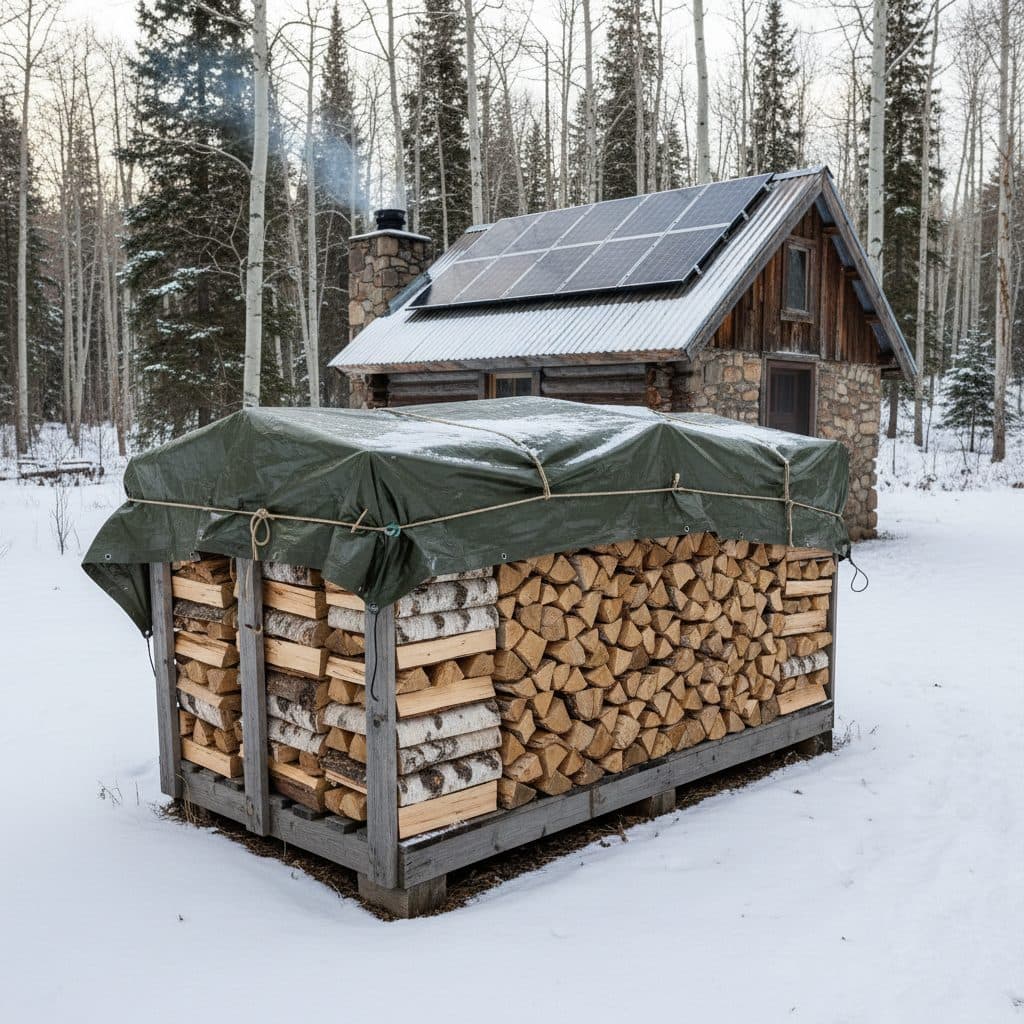
To maximize drying speed, split logs into smaller pieces — ideally 6 to 8 inches in diameter. Smaller pieces expose more surface area to the air, allowing moisture to evaporate faster. Next, stack the wood in an open, airy location that receives plenty of sunlight and allows for good air circulation. A stack that is 4 feet high and 8 feet long, known as a face cord, should be elevated off the ground by at least 6 inches to prevent moisture wicking from the soil. Finally, cover the top of the stack to protect it from rain and snow while leaving the sides exposed to the air. This ensures the wood dries out without getting re-wetted. For optimal results, aim for a seasoning period of 12 to 18 months for most hardwoods like oak or maple.
- Split wood promptly: Smaller pieces dry faster, typically 6-8 in diameter.
- Stack in open air: Ensure good airflow and sunlight exposure.
- Elevate off ground: Use pallets or skids to prevent moisture absorption.
- Cover the top: Protect from rain and snow, leaving sides open.
- Allow sufficient time: Most hardwoods need 12-18 months, softwoods 6-12 months.
Reading BTUs: understanding wood energy content
A British Thermal Unit (BTU) is a standard unit of energy, defined as the amount of heat required to raise the temperature of one pound of water by one degree Fahrenheit. When it comes to firewood, BTUs measure the potential heat energy released when a specific volume of wood, typically a cord (128 cubic feet), is fully combusted. Different wood species contain varying amounts of BTUs, primarily due to their density. Denser woods generally pack more energy per volume.
Comparing btu values of common wood species
For homesteaders in regions like the Midwest or Northeast, choosing high-BTU wood can significantly reduce the amount of fuel needed to heat a home through a long winter. For example, dense hardwoods like hickory and oak offer high BTU values. In contrast, softer woods like eastern white pine might only yield 14 to 17 million BTUs per cord. This difference means you’d need nearly two cords of pine to get the same heat as one cord of hickory. Understanding these values helps in making informed decisions about wood sourcing and budgeting for heating, especially when considering alternative energy solutions like those in off-grid and hybrid solar systems.
- Hickory: Up to 28 million BTUs per cord, excellent for long burns.
- Oak (white, red): 22-24 million BTUs per cord, a reliable choice.
- Maple (sugar, red): 20-22 million BTUs per cord, good heat output.
- Ash (white, green): 20-22 million BTUs per cord, burns clean.
- Pine (eastern white): 14-17 million BTUs per cord, burns fast, good for kindling.
Storing seasoned firewood for optimal burn performance
After investing the time and effort to properly season your firewood, maintaining its low moisture content is critical. Storing wood correctly prevents it from reabsorbing moisture from rain, snow, or damp ground, which can quickly undo months of drying. A well-designed wood shed or storage area is an important part of any off-grid homestead so your fuel supply remains ready for use throughout the heating season, which in USDA zone 4 can last for seven months or more.
Building a proper wood storage structure
A good storage structure should keep the wood off the ground, provide a roof for protection from precipitation, and allow for ample airflow. Stacking wood directly on the ground can lead to moisture wicking up into the logs, increasing their moisture content. Using pallets, concrete blocks, or a dedicated wood rack to elevate the stack by at least 6 inches is a simple yet effective solution. The sides of the storage area should remain open or partially open to allow air to circulate and carry away any residual moisture. Consider building a small shed, perhaps utilizing principles from solar power for a shed, to keep your wood dry and accessible so it burns cleanly and efficiently all winter long.
- Elevate off ground: Use pallets or a dedicated rack to lift wood 6-12 inches.
- Provide a roof: Protect from rain and snow with a sturdy cover.
- Ensure airflow: Keep sides open or partially open for ventilation.
- Stack loosely: Avoid tightly packed piles to allow air movement.
- Store close to home: Reduce trips in cold weather, but keep a safe distance from structures (at least 10 feet).
Comparison of seasoned hardwood and softwood firewood
Characteristic | Hardwood (e.g., Oak, Maple) | Softwood (e.g., Pine, Fir) |
|---|---|---|
BTUs per cord | 20-28 million | 14-18 million |
Density | High | Low |
Burn duration | Longer, steady heat | Shorter, quick heat |
Seasoning time | 12-18 months | 6-12 months |
Creosote potential | Lower (when seasoned) | Higher (even when seasoned) |
Ignition ease | Harder to start | Easier to start |
Best use | Primary heating, overnight burns | Kindling, shoulder season, quick fires |
Moisture Meter Reading: A moisture meter shows wood is ready to burn when it reads between 15% and 20% moisture content.
Creosote Reduction: Burning seasoned wood can reduce creosote buildup in your chimney by over 50%, which lowers the risk of chimney fires.
Heat Output Increase: Seasoned firewood can produce more heat per log compared to green wood, so you need fewer cords per winter.
References
- ANALYSIS OF CORRECT FIREWOOD SEASONING BY SELECTED HOMEOWNERS IN THE PODKARPACIE (SUBCARPATHIAN) REGION (2019).
- AIR SEASONING (1965).
- BTUs in GDP (2002).
- 2016 Sawtooth National Forest, Minidoka Ranger District firewood map for personal use firewood permits / (2016).
- USDA Natural Resources Conservation Service (2024).