Key takeaways
- Understand and work within your HOA’s specific landscaping covenants, which often include rules on plant height, lawn percentage, and aesthetics.
- Implement permaculture design principles like zoning and plant guilds to create a highly productive and visually appealing edible landscape.
- Select edible plants that offer ornamental value, such as serviceberry, dwarf fruit trees, and berry bushes, suitable for your specific USDA zone.
- Utilize water-saving techniques like swales, rain gardens, and sheet mulching to cut irrigation well below what a traditional lawn needs.
- Build healthy soil through consistent composting and mulching to support robust plant growth and minimize long-term maintenance.
Quick answer: To convert a front lawn into an edible food forest in USDA Zone 6, homeowners should first review HOA covenants, then apply permaculture principles like zoning and plant guilds, selecting ornamental edible plants, and utilizing water-saving techniques.
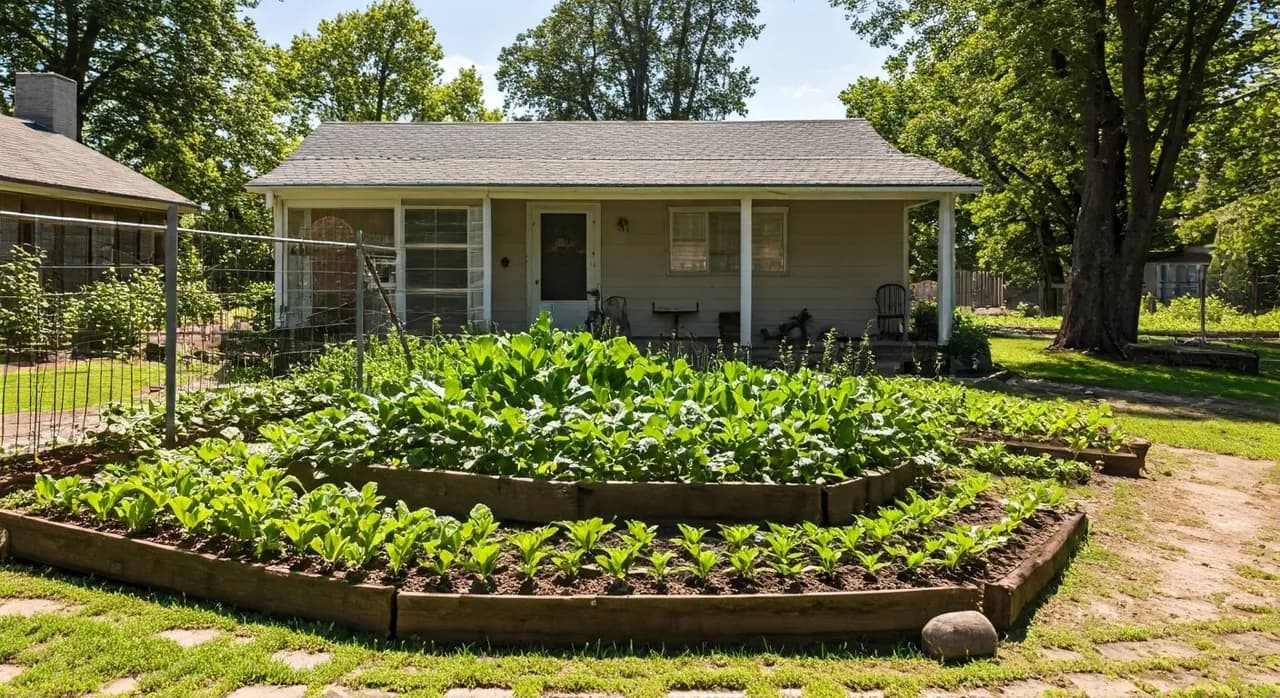
In many parts of the United States, particularly in the arid Southwest or overdeveloped suburban areas, the traditional front lawn demands significant resources—in hot, dry regions like inland California or Arizona, turf is the thirstiest thing in a typical yard. This high input for a low-output landscape is increasingly being questioned by homeowners looking for more sustainable and productive alternatives. Converting a portion of your front lawn into an edible food forest offers a compelling solution, providing food, supporting local biodiversity, and reducing resource consumption.
However, this transformation often comes with a unique challenge: navigating homeowners association (HOA) regulations. HOAs govern over 70 million Americans and frequently dictate landscaping rules, from grass height to approved plant species [2]. With careful planning and an understanding of permaculture design principles, it is entirely possible to create a beautiful, productive, and HOA-friendly edible front yard that yields fresh produce for years to come.
Navigating HOA rules for edible landscapes
Before breaking ground on any front yard transformation, the first and most critical step involves a thorough review of your homeowners association’s covenants, conditions, and restrictions (CC&Rs). These documents, which can average 50-100 pages, outline specific rules regarding landscaping, often including mandates on the percentage of turf grass, maximum plant heights, and general aesthetic guidelines [2]. Turf-percentage minimums and height limits near the property line are common, but the numbers vary enormously between associations — read your own CC&Rs rather than assuming a typical figure. A number of states have also passed laws limiting how far an association can restrict drought-tolerant or water-conserving landscaping, so it is worth checking your state statute alongside the covenants, and worth a conversation with a local attorney before you rely on either.
Understanding common restrictions
Common HOA restrictions often focus on maintaining a uniform appearance across the neighborhood. This can mean rules against ‘unkempt’ gardens, requirements for evergreen plants, or prohibitions on certain vegetable types in visible areas. To successfully implement an edible food forest, you will need to demonstrate that your design maintains or improves property values and adheres to community standards. Presenting a detailed plan (including plant choices, mature heights, irrigation methods, a maintenance schedule, and a drawing with mowed edges and clear bed lines) gives a board concrete specifications to review instead of an open-ended proposal.
- Review CC&Rs thoroughly, paying attention to landscaping clauses.
- Identify specific restrictions on plant height, lawn coverage, and plant types.
- Propose a design that integrates ornamental edibles and neat aesthetics.
- Seek pre-approval from your HOA board with a detailed plan.
- Document all communications and approvals in writing.
Applying permaculture principles to a visible space
Permaculture design offers a robust framework for creating productive and resilient ecosystems, even within the confines of a front yard. The concept of zoning is particularly useful here, helping to organize elements based on frequency of interaction. For a front yard, the most frequently visited areas (those within 10-15 feet of your home) fit into Zone 1, well suited for herbs, annual vegetables, and frequently harvested berries. Moving further out into Zone 2, you can incorporate larger shrubs and understory trees that require less daily attention.
Designing for aesthetics and productivity
Visual appeal is essential for HOA compliance. Focus on a layered system that maintains a tidy, intentional appearance with clear pathways and defined bed edges. Ornamental edibles include blueberry bushes (Vaccinium spp.), which provide fall color and fruit, and serviceberry trees (Amelanchier spp.), which produce spring blossoms and edible berries, reaching 15-25 feet tall.
- Prioritize Zone 1 plants (herbs, annuals) near the house for easy access.
- Integrate Zone 2 plants (shrubs, understory trees) further out.
- Choose plants with ornamental qualities to satisfy aesthetic requirements.
- Create clear boundaries and pathways to maintain a neat appearance.
- Design diverse plant guilds so the layers support each other instead of competing.
Selecting plants for visual appeal and productivity
Careful plant selection keeps an edible landscape acceptable to an HOA. Choose species that produce food while looking intentional and well maintained across the seven layers: canopy, understory, shrub, herbaceous, groundcover, rhizome, and vine. For the canopy in USDA zone 6, pawpaws (Asimina triloba) and American persimmons (Diospyros virginiana) work well. Pawpaw reaches 15-25 feet; American persimmon grows taller, so site it with its mature spread in mind. Plant at least two genetically distinct pawpaw cultivars, because a single plant or its root suckers will not set fruit. American persimmon is usually dioecious, requiring a male pollinator or a self-fertile cultivar like 'Meader'. Understory trees like serviceberry (Amelanchier spp.) offer spring flowers, summer fruit, and colorful fall foliage.
Building productive plant guilds
Shrub layers can include blueberries, currants (Ribes spp.), or elderberries (Sambucus canadensis). Elderberry fruit must be cooked before eating (raw berries, along with leaves, stems, and roots, contain cyanogenic glycosides that cause nausea and vomiting), which is an important consideration in a front yard. Currants and gooseberries remain restricted or banned in parts of the Northeast and upper Midwest because they host white pine blister rust, so check state regulations before purchasing. Perennial herbs like oregano, thyme, and chives stay compact and provide regular harvests. Groundcovers such as strawberries (Fragaria x ananassa) and creeping thyme suppress weeds and maintain a neat ground layer. Nitrogen-fixing plants like bush beans or white clover help build soil fertility. If including lupine for ornamental flowers, label it clearly: seeds and foliage contain quinolizidine alkaloids toxic to humans, dogs, and livestock. Aim for at least 20 plant species in a 1,000 sq ft area to build ecological resilience.
- Choose canopy trees like dwarf fruit varieties or pawpaws for visual interest and yield.
- Select understory trees such as serviceberry or redbud for aesthetic and edible value.
- Incorporate berry bushes (blueberry, currant) into the shrub layer for fruit and fall color.
- Plant perennial herbs (oregano, thyme) and edible groundcovers (strawberry) for low-maintenance production.
- Include nitrogen-fixers and dynamic accumulators to support overall plant health.
Efficient water use and soil health in the front yard
Converting turf to an edible landscape significantly reduces irrigation demands. An established food forest, protected by mulch and shade, requires far less water than a conventional lawn. Swales and rain gardens provide passive water harvesting. Swales intercept runoff from driveways and roofs on contour, allowing water to infiltrate the soil instead of running into the street. Size them to local rainfall and catchment area, maintain at least ten feet of clearance from foundations, and include a dedicated overflow path to prevent ponding against structures.
Building soil fertility with sheet mulching
Soil health is the foundation of any productive system. Sheet mulching, a no-dig method of layering cardboard, compost, and wood chips, smothers turf and builds topsoil. The materials settle substantially as they decompose, reducing in depth between autumn and spring. This technique suppresses weeds, retains moisture, and feeds soil biology, reducing the need for purchased fertilizers. Maintaining a 4-6 inch layer of wood chip mulch slows evaporation and prevents weed seeds from germinating.
- Install swales or rain gardens to capture and infiltrate rainwater efficiently.
- Utilize sheet mulching to build healthy soil and suppress weeds.
- Apply a 4-6 inch layer of wood chips to retain soil moisture and regulate temperature.
- Incorporate compost annually to replenish nutrients and improve soil structure.
- Consider drip irrigation for targeted watering, reducing water use by 30-50% compared to sprinklers.
Maintenance and long-term care
While the initial conversion of a lawn to a food forest requires effort, the long-term maintenance is often significantly less intensive than caring for a traditional turf lawn. Once established, a food forest mimics natural ecosystems, requiring minimal intervention. Regular tasks include pruning fruit trees and shrubs once a year, typically in late winter or early spring, removing up to 20% of old growth to encourage new production. Harvesting is, of course, a continuous and rewarding activity, providing fresh produce from spring through fall.
Reducing inputs over time
Ongoing soil fertility is maintained through the natural decomposition of leaf litter and the addition of compost, often 1-2 inches annually. Pest management in a diverse food forest relies heavily on beneficial insects and birds, which are attracted by the variety of plants and habitats. This biological control takes a real share of the pest pressure a monoculture would carry. Weeding becomes less of an issue as groundcovers establish and mulches suppress unwanted plants. Over 3-5 years, a well-designed food forest will become largely self-sustaining, requiring only a few hours of focused work per week during peak season, a stark contrast to the 2-4 hours weekly required for lawn care.
- Prune fruit trees and shrubs annually to maintain health and productivity.
- Harvest regularly to encourage new growth and prevent over-ripening.
- Replenish mulch layers every 1-2 years to maintain soil moisture and suppress weeds.
- Monitor for pests and diseases, relying on biological controls where possible.
- Add compost or worm castings to beds at least once a year to boost soil fertility.
Front Lawn vs. Edible Food Forest (1,000 sq ft)
Feature | Traditional Lawn | Edible Food Forest |
|---|---|---|
Water Use | High (50-70 gal/sq ft/year) | Low (15-20 gal/sq ft/year) |
Maintenance | Weekly mowing, fertilizing | Seasonal pruning, harvesting |
Productivity | Zero food | Food, increasing as the perennials mature |
Biodiversity | Low (1-2 species) | High (20+ species) |
Cost (Annual) | $200-$500 (water, fertilizer, gas) | $50-$150 (compost, mulch) |
Water savings: once perennials are established and mulched, a converted bed needs watering far less often than the turf it replaced. Measure your own before and after instead of relying on generic estimates.
HOA approval: boards approve far more readily when they are handed a drawing, a plant list with mature heights, and a written maintenance schedule than when they are asked to approve a concept.
Frequently asked questions
How much space do I need for a front yard food forest?
Even a small front yard of 200 sq ft can host a productive food forest with dwarf fruit trees, berry bushes, and perennial herbs, though the yield depends on how much sun the strip actually gets and how mature the perennials are.
Will an edible front yard attract pests?
A diverse food forest, with 20 or more plant species, naturally attracts beneficial insects and birds that keep common garden pests in check far better than a monoculture does. This ecological balance minimizes the need for chemical interventions.
What are the best plants for an HOA-friendly food forest in USDA zone 6?
For USDA zone 6, consider pawpaws (Asimina triloba) for the canopy (two genetically distinct cultivars, since a lone pawpaw will not set fruit), blueberries (Vaccinium spp.) for shrubs, and strawberries (Fragaria x ananassa) as groundcover. All three earn their place ornamentally as well as in the kitchen.
How much water does a food forest save compared to a lawn?
Once established, a food forest usually needs far less irrigation than a traditional lawn, because mulch, shade and deep perennial roots cut evaporation and let you water less often. How much you actually save depends on your climate, soil and plant choices, so meter a season before quoting yourself a figure.
What is the typical cost to convert a front lawn?
The initial cost to convert a 500 sq ft front lawn can range from $500 to $2,000, depending on plant choices and materials like compost and mulch. This investment can be recouped within 3-5 years through reduced water bills and harvested produce, valued at $100-300 annually.
References
- Recovery, Refining, Converting, and Stabilizing Edible Fats and Oils (2008). Recovery, Refining, Converting, and Stabilizing Edible Fats and Oils.
- Front Matter (2022). Front Matter.
- Recovery, Refining, Converting, and Stabilizing Edible Fats and Oils (2002). Recovery, Refining, Converting, and Stabilizing Edible Fats and Oils.
- Recovery, Refining, Converting, and Stabilizing Edible Fats and Oils (2008). Recovery, Refining, Converting, and Stabilizing Edible Fats and Oils.