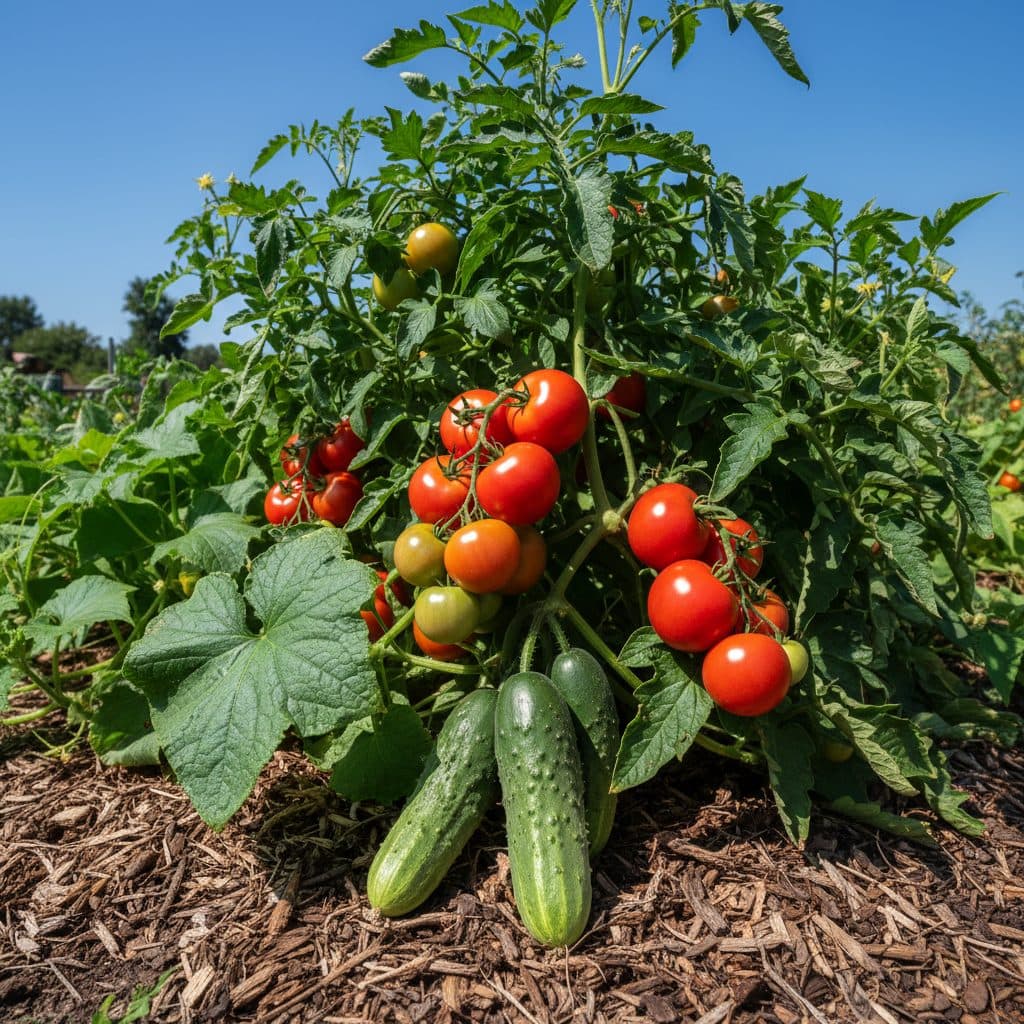
Key takeaways
- Healthy soil structure and balanced pH (6.0 to 6.8) are fundamental for optimal nutrient uptake and fruit flavor.
- Adequate calcium supply is critical for cell wall integrity, preventing issues like blossom end rot in tomatoes and ensuring firm fruit.
- Sugar accumulation (Brix level) in fruit is influenced by photosynthesis, water management, and balanced potassium levels.
- Soil testing every two to three years provides essential data for targeted amendments, preventing over-application and nutrient imbalances.
- Organic amendments like compost and fermented soybean meal improve soil structure and provide slow-release nutrients for sustained plant health.
- Consistent soil moisture, especially during fruit development, is vital for nutrient transport and sugar concentration in fruit.
Quick answer: To improve tomato and cucurbit flavor in USDA Zone 7, focus on building healthy soil with a balanced pH (6.0-6.8) to ensure adequate calcium for cell wall integrity, and optimizing sugar accumulation through consistent moisture and potassium.
In the humid summers of USDA zone 7, fruit quality depends heavily on growing conditions. Achieving sweet, balanced flavor in tomatoes and cucumbers requires managing soil biology to ensure steady calcium uptake, and maintaining conditions for sugar accumulation. In the Mid-Atlantic region, managing these factors can increase fruit Brix levels by 10% or more.
Improving fruit flavor in tomatoes and cucurbits centers on soil nutrient availability, calcium movement, and sugar accumulation. Targeted amendments and consistent cultural practices raise Brix levels and improve texture without sacrificing yield.
The foundation: building healthy soil for superior fruit
Good soil is the bedrock of flavorful fruit. In regions like the Pacific Northwest, where heavy clay soils are common, improving soil structure is often the first step. Healthy soil provides a stable environment for roots, allowing them to access water and nutrients efficiently. A soil test, conducted every two to three years, is the most accurate way to understand your soil’s composition, pH, and nutrient levels. For most fruiting plants, including tomatoes and melons, a soil pH between 6.0 and 6.8 is ideal, as this range optimizes the availability of essential nutrients. For instance, in a study of sugar beet nutrition, researchers found that calcium uptake was significantly affected by soil pH, demonstrating the importance of this metric for nutrient availability [1].
Understanding organic matter and soil structure
Organic matter is fundamental to soil health. It improves water retention in sandy soils common in Florida and improves drainage in dense clay soils found across the Midwest. Increasing organic matter by 1% allows soil to hold an additional 20,000 gallons of water per acre. Incorporating well-rotted compost, aged manure, or cover crops like sesbania (useful in warmer climates and similar US zones) builds soil structure over time. These additions feed soil microorganisms that cycle nutrients and make them available to plant roots. Fermented soybean meal also provides a slow-release nitrogen source for soil biology.
- improve water retention and drainage in diverse soil types
- buffer soil pH, maintaining optimal nutrient availability
- feed beneficial soil microorganisms and support nutrient cycling
- increase soil aggregation, reducing compaction by up to 15%
- supply a steady, slow release of essential plant nutrients
Calcium: the unsung hero of fruit quality and flavor
Calcium is a macronutrient often overlooked but is absolutely essential for strong plant growth and high-quality fruit. It plays a critical role in strengthening cell walls, which directly impacts fruit firmness, shelf life, and resistance to disease. Without sufficient calcium, fruit can become soft and susceptible to problems like blossom end rot in tomatoes and peppers, where the bottom of the fruit turns black and leathery. This physiological disorder is not caused by a pathogen but by a localized calcium deficiency in the developing fruit, often exacerbated by inconsistent watering or rapid growth [4]. In a 1979 study, it was observed that calcium moves primarily with water in the plant’s xylem, meaning consistent moisture is key for its delivery to growing fruit [5].
Ensuring adequate calcium uptake
Calcium moves through the plant via the transpiration stream, pulled upward with water from roots into leaves and fruit. Factors that hinder water uptake, such as drought stress, waterlogged soil, or rapid changes in moisture, cause calcium deficiencies even when soil calcium is abundant. Maintaining steady soil moisture prevents the swings that trigger blossom end rot. In California’s Central Valley, steady irrigation is necessary for calcium delivery. Soil calcium levels should be between 1,000 and 2,000 parts per million for adequate availability [3].
- maintain consistent soil moisture to facilitate calcium transport
- ensure proper soil pH (6.0-6.8) for calcium availability
- avoid excessive nitrogen fertilization, which can promote leafy growth over fruit development and calcium distribution
- apply gypsum (calcium sulfate) or crushed eggshells to supplement soil calcium, especially in acidic soils
- use foliar calcium sprays for a quick, temporary boost during critical fruit development stages
Boosting Brix: the science of sugar accumulation
The sweetness of fruit is measured by its Brix level, which indicates the percentage of soluble solids, primarily sugars. A truly flavorful tomato might register 6 to 8 Brix, while a supermarket variety might only hit 3 or 4. Sugar accumulation is a complex process driven by photosynthesis, where plants convert sunlight into energy. More efficient photosynthesis means more sugars are produced and transported to the developing fruit. Environmental factors like light intensity, temperature, and water availability significantly influence this process. For instance, a plant receiving 8 to 10 hours of direct sunlight daily will generally produce sweeter fruit than one in partial shade.
Managing water and potassium for sweetness
While steady moisture is necessary for calcium uptake, managing water during ripening helps concentrate fruit sugars. Reducing irrigation slightly as fruit approaches maturity encourages the plant to allocate sugars to ripening fruit instead of vegetative shoot growth. Extreme drought stress reduces both yield and quality. Potassium is also necessary for sugar transport and accumulation, functioning in photosynthesis and the movement of carbohydrates from leaves into fruit. A balanced potassium-to-calcium ratio is important; excessive potassium can interfere with calcium uptake, as observed in sugar beet studies where high potassium levels reduced calcium absorption by 20% [2].
- ensure ample sunlight exposure for optimal photosynthesis
- manage irrigation carefully, slightly reducing water during ripening to concentrate sugars
- provide adequate potassium to ensure a balanced ratio with other nutrients
- monitor leaf health; healthy leaves are efficient sugar factories
- avoid over-fertilization with nitrogen late in the season, which can promote leafy growth over fruit development
Practical amendments and strategies for your growing season
Implementing these principles requires a thoughtful approach to amendments and cultural practices. Start with a comprehensive soil test to identify specific deficiencies or imbalances. Based on these results, you can tailor your amendment strategy. For instance, if your soil pH is too low (acidic), applying agricultural lime can raise it to the optimal 6.0 to 6.8 range. If calcium is low, gypsum (calcium sulfate) can be incorporated at a rate of 5 to 10 pounds per 100 square feet, providing calcium without significantly altering pH. In contrast, if your soil is too alkaline, elemental sulfur can help lower the pH over several months.
Timing and application methods
Timing determines the effectiveness of soil amendments. Incorporate organic matter like compost or aged manure in fall or early spring to allow time for decomposition and nutrient integration. For calcium, a pre-plant application of gypsum or bone meal provides a slow, steady release through the growing season. During fruit set, foliar calcium sprays provide a quick supplemental boost if weather conditions hinder root uptake. A spray solution of 4 tablespoons of calcium chloride per gallon of water can be applied every 7 to 10 days to foliage and developing fruit. Deep watering (1 to 1.5 inches of water per week from rain or irrigation) works better than frequent shallow watering, supporting deep root systems and steady nutrient transport.
- conduct a soil test every two to three years for precise amendment needs
- apply agricultural lime for low pH or elemental sulfur for high pH as needed
- incorporate gypsum or bone meal pre-plant for sustained calcium release
- use foliar calcium sprays during fruit development for immediate impact
- maintain consistent deep watering, providing 1 to 1.5 inches of water weekly
Soil pH Sweet Spot: Most fruiting plants thrive in soil with a pH between 6.0 and 6.8, optimizing nutrient uptake by up to 90%.
Calcium for Firmness: Adequate calcium can increase fruit firmness by 15-20%, reducing post-harvest losses and improving texture.
Brix Level Goal: Aim for a Brix level of 6-8 in tomatoes for truly exceptional flavor, a significant increase over the average 3-4 Brix.
Frequently asked questions
How often should I test my soil?
It’s generally recommended to conduct a comprehensive soil test every two to three years. This frequency allows you to track changes in soil composition and nutrient levels over time to ensure you make informed decisions about amendments without over-applying. Many state extension offices offer affordable testing services, often for less than 20 dollars.
Can too much calcium be a problem?
While calcium is essential, excessive amounts can lead to nutrient imbalances, particularly by interfering with the uptake of other vital nutrients like magnesium and potassium. Maintaining a balanced soil environment with a calcium-to-magnesium ratio of approximately 5:1 to 7:1 is often recommended by soil scientists for optimal plant health and fruit development.
What’s the best way to increase sugar in my fruit?
To increase sugar content (Brix), focus on maximizing photosynthesis through ample sunlight (8-10 hours daily), providing balanced potassium, and managing water carefully during ripening. Slightly reducing irrigation as fruit matures, without causing wilting, can concentrate sugars, potentially increasing Brix levels by 10% or more in some fruits.
Will adding sugar to the soil make my fruit sweeter?
No, adding sugar directly to the soil will not make fruit sweeter. Plants synthesize their own sugars through leaf photosynthesis. Adding sugar to the soil disrupts soil microbes and attracts pests. Focus on managing sunlight, water, and potassium to support the plant’s natural sugar production instead.
How does soil moisture affect fruit flavor?
Consistent soil moisture is critical for nutrient transport, especially calcium, which moves with water to developing fruit. During the ripening phase, careful water management can concentrate sugars; slightly drier conditions (without stress) can lead to higher Brix levels. Extreme fluctuations, however, can cause issues like cracking or blossom end rot, impacting up to 20% of a harvest.
Are there specific varieties known for better flavor?
Yes, many heirloom and open-pollinated varieties of tomatoes and cucurbits are renowned for their superior flavor profiles, often having higher natural Brix levels and complex aromatic compounds. For example, ‘Brandywine’ tomatoes consistently rate high in flavor tests, often achieving Brix levels above 6.0, compared to many modern hybrids.
References
- CALCIUM UPTAKE BY SUGAR BEETS RELATIVE TO CONCENTRATION AND ACTIVITY OF CALCIUM (1973). CALCIUM UPTAKE BY SUGAR BEETS RELATIVE TO CONCENTRATION AND ACTIVITY OF CALCIUM.
- CALCIUM NUTRITION OF SUGAR BEETS AS AFFECTED BY POTASSIUM (1970). CALCIUM NUTRITION OF SUGAR BEETS AS AFFECTED BY POTASSIUM.
- Calcium and magnesium. (2003). Calcium and magnesium..
- Nutritional role of calcium in plants (1970). Nutritional role of calcium in plants.
- Fate of calcium in the sugar‐beet plant (1979). Fate of calcium in the sugar‐beet plant.