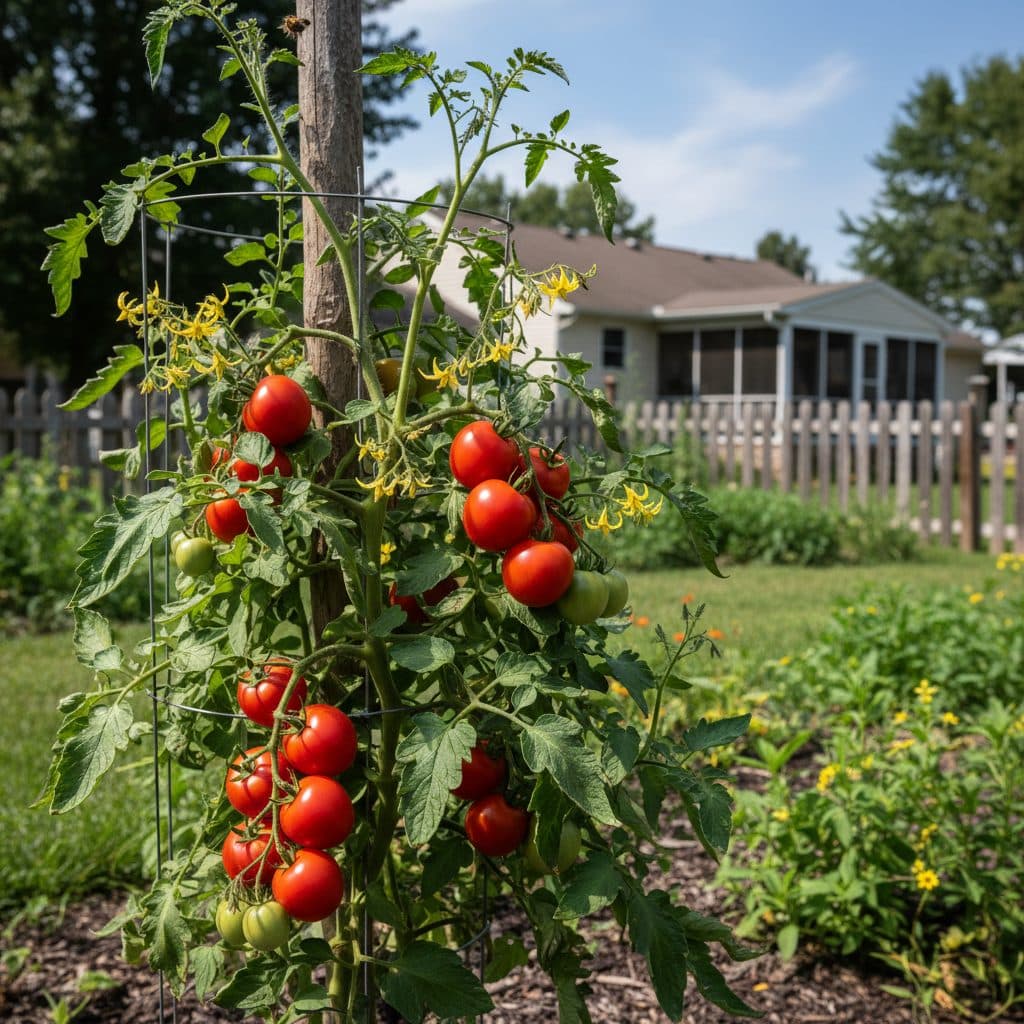
Key takeaways
- Tomato and pepper plants are self-fertile but often benefit from assisted pollination, especially in controlled environments or adverse weather.
- The electric toothbrush method simulates natural bee vibrations, effectively releasing pollen for improved fruit set.
- Optimal conditions for pollination include temperatures between 65°F and 85°F and relative humidity between 50% and 70%.
- Assisted pollination can increase greenhouse tomato yields by 15% to 30% compared to unassisted plants.
- Consistent daily hand-pollination during flowering periods, typically for 2-3 weeks per flower cluster, yields the best results.
- Poor fruit set can often be traced to environmental factors like extreme temperatures, low humidity, or nutrient imbalances.
Quick answer: Hand-pollination, particularly using the electric toothbrush method, can significantly increase tomato and pepper yields by simulating natural vibrations to release pollen. This technique is especially beneficial in controlled environments or when adverse weather hinders natural pollination, potentially boosting greenhouse yields by 15-30%.
In many parts of the United States, from the humid summers of USDA zone 7 in the Southeast to the cooler nights of USDA zone 5 in the Midwest, growers often face challenges getting consistent fruit set on their tomato and pepper plants. While these plants are largely self-pollinating, relying solely on wind or incidental insect activity might not always deliver the abundant harvest you’re aiming for. For instance, in a controlled greenhouse environment, yields can increase by 15% to 30% with assisted pollination techniques [2].
This article will guide you through the practical steps of hand-pollinating your tomatoes and peppers, focusing on the effective electric toothbrush method. This technique, which mimics the high-frequency vibrations of buzzing insects, helps release pollen more effectively than simply shaking the plant. We’ll cover when and why to intervene, provide a step-by-step guide, and discuss how to optimize your growing conditions to support a successful fruit set, aiming for a consistent yield of 10-20 pounds of fruit per plant in a good season [3].
understanding pollination for solanaceous crops
Tomatoes (Solanum lycopersicum) and peppers (Capsicum annuum) belong to the Solanaceae family, also known as nightshades, which also includes eggplants and potatoes [4]. These plants are generally self-fertile, meaning each flower contains both male (stamens, producing pollen) and female (pistil, receiving pollen) reproductive organs. For successful fruit development, pollen from the anthers must transfer to the stigma of the same flower or another flower on the same plant. While this sounds straightforward, environmental factors can often hinder this natural process, leading to reduced fruit set.
the role of wind and insects
Under ideal outdoor conditions, wind movement is often sufficient to dislodge pollen and facilitate transfer. Bees and other insects also play a role, not necessarily by carrying pollen between plants as they would with cross-pollinating species, but by vibrating the flowers, a process known as ‘buzz pollination’ or sonication. This vibration helps to release pollen from the anthers, which are often tube-shaped in solanaceous plants. In regions like USDA zone 6, where summer temperatures can fluctuate significantly, natural pollination can be inconsistent, which is why supplemental methods help [6].
- Wind: Gently shakes plants, aiding pollen release.
- Insects: Provide vibrations (buzz pollination) to dislodge pollen.
- Self-fertility: Each flower possesses both male and female parts.
- Pollen viability: Affected by temperature and humidity.
- Anther structure: Often tubular, requiring vibration for release.
when and why hand-pollination helps
Hand-pollination becomes particularly beneficial when natural conditions are less than ideal. In enclosed environments such as greenhouses, high tunnels, or even indoor grow tents, natural wind movement is minimal, and pollinator access is limited [3]. For example, a grower in a USDA zone 4 greenhouse might experience very calm air, necessitating manual intervention. Furthermore, adverse weather conditions outdoors, like prolonged periods of high humidity (above 70%) or lack of wind, can prevent pollen from drying and dispersing effectively. Temperatures outside the optimal range of 65°F to 85°F also reduce pollen viability and stigma receptivity [4].
identifying the need for assistance
You’ll know hand-pollination is needed if you observe flowers blooming but not developing into fruit, or if fruit set is consistently low. This is a common issue for growers in regions like the Pacific Northwest, where cool, damp conditions can persist into early summer. Assisted pollination can increase greenhouse tomato yields by 15% to 30% [2]. For pepper plants, which are also self-fertile, mechanical vibration similarly improves fruit development [4]. Regularly inspecting your plants for signs of poor fruit set, such as flower drop or misshapen fruit, will indicate when to intervene. Consider supplementing your plant care with a balanced fertilizer, like fermented soybean meal organic fertilizer, to support overall plant health and fruit production.
- Low fruit set: Flowers bloom but don’t develop into fruit.
- Enclosed spaces: Greenhouses, indoor grows, or high tunnels lack natural air movement.
- High humidity: Above 70%, pollen becomes sticky and doesn’t release.
- Lack of wind: No natural mechanism to dislodge pollen.
- Extreme temperatures: Below 55°F or above 90°F, pollen viability decreases [4].
the electric toothbrush method: step-by-step
The electric toothbrush method is a highly effective way to simulate the natural vibrations that release pollen from tomato and pepper flowers. This technique is particularly useful for growers in USDA zones 8 and 9, where intense heat can sometimes reduce natural pollinator activity during peak bloom. You’ll need a standard electric toothbrush – a cheap, battery-operated model works perfectly. The key is the vibration, which helps dislodge the pollen from the anther cone. This method is superior to simply shaking the plant because it delivers localized, high-frequency vibrations directly to the flower, for more efficient pollen release [1].
performing the technique
To begin, identify open flowers. Tomato and pepper flowers are typically yellow and star-shaped. The best time to pollinate is in the late morning or early afternoon, between 10 AM and 2 PM, when pollen is most abundant and dry. Gently press the vibrating head of the electric toothbrush against the stem just behind each flower for 1-2 seconds. You should see a small cloud of pollen release, indicating success. Repeat this process daily for all new flowers over a period of 2-3 weeks per cluster. This consistent effort will maximize your chances of a successful fruit set, potentially leading to a 20% increase in fruit production compared to unassisted methods.
- Select an electric toothbrush: Any basic, battery-operated model is sufficient.
- Identify open flowers: Look for fully open, healthy yellow blossoms.
- Timing is key: Pollinate between 10 AM and 2 PM for best results.
- Gentle application: Touch the toothbrush to the flower stem for 1-2 seconds.
- Observe pollen release: A visible puff of pollen confirms success.
other hand-pollination techniques
While the electric toothbrush method is highly effective, other hand-pollination techniques can also be used, especially if you don’t have an electric toothbrush readily available. These methods rely on manually transferring pollen or creating vibrations. For instance, in a small garden in USDA zone 5, where only a few plants are grown, a simpler approach might be sufficient. The goal remains the same: to ensure pollen moves from the anthers to the stigma. Consistent application, even with simpler tools, can still significantly improve fruit set, potentially increasing your harvest by 10% to 15%.
alternative methods
One common alternative is the **finger flick** or plant shake method. For this, you gently flick the back of each flower or lightly shake the entire plant stem for 5-10 seconds. This can be effective in releasing some pollen, particularly on a warm, dry day. Another method involves using a small, soft paintbrush or a cotton swab. You would gently collect pollen from the anthers of one flower and then dab it onto the stigma of the same flower or another. This is a more precise, but also more time-consuming, method, often used for specific breeding projects or very delicate plants. Remember to clean your tools, like those in a garden hand-tool set, regularly to prevent disease transmission.
- Finger flick: Gently tap the back of each flower.
- Plant shake: Lightly shake the main stem for 5-10 seconds.
- Paintbrush/cotton swab: Manually transfer pollen from anther to stigma.
- Air blower: Use a gentle puff of air to dislodge pollen.
- Vibration tool: Specialized tools designed for greenhouse pollination.
optimizing your growing environment
Beyond direct hand-pollination, maintaining an optimal growing environment matters for fruit set and overall plant health. For growers in the hot, humid conditions of USDA zone 9 in Florida, managing humidity and temperature is paramount. Temperature matters a lot; optimal fruit set for tomatoes occurs when temperatures are between 65°F and 85°F [4]. Temperatures consistently above 90°F or below 55°F can significantly reduce pollen viability and prevent fertilization, leading to flower drop.
humidity and air circulation
Relative humidity also plays a critical role. Ideal humidity levels for pollen release and viability are typically between 50% and 70%. When humidity rises above 70%, pollen can become sticky and fail to release from the anthers. Conversely, very low humidity (below 40%) can dry out the stigma too quickly, preventing pollen from adhering and germinating. Ensuring good air circulation, especially in enclosed spaces, helps manage humidity and provides some natural movement for pollen. Using fans in a greenhouse or even an open window in a sunroom can make a 5% to 10% difference in fruit set. Consider companion planting strategies, as discussed in our article, What not to plant with tomatoes, to further support your garden’s ecosystem.
- Temperature control: Maintain 65°F to 85°F for best results.
- Humidity management: Aim for 50% to 70% relative humidity.
- Air circulation: Use fans or natural breezes to move air.
- Watering practices: Consistent watering prevents stress, especially during fruit development.
- Nutrient balance: Ensure adequate phosphorus and potassium for flowering and fruiting.
troubleshooting fruit set issues
Even with diligent hand-pollination, you might occasionally encounter issues with fruit set. It’s important to act as a detective in your garden, especially if you’re growing in challenging climates like USDA zone 10 in Southern California, where intense sun and heat can be problematic. The first step in troubleshooting is to systematically review environmental factors and plant health. Poor fruit set is rarely due to a single cause but often a combination of stressors. For example, a tomato plant might produce 20-30 flowers, but only 5-10 fruits develop if conditions are not ideal.
common problems and solutions
One frequent culprit is extreme temperatures. As mentioned, pollen viability drops significantly above 90°F or below 55°F [4]. If temperatures are consistently outside this range, consider providing shade during peak heat or using row covers for unexpected cold snaps. Nutrient deficiencies, particularly a lack of phosphorus or potassium, can also hinder flowering and fruit development. A soil test can confirm this, and amendments like bone meal or a balanced fertilizer can help. Water stress, either too much or too little, also causes flower drop. Aim for consistent soil moisture, providing 1-2 inches of water per week, especially during fruiting. Finally, pest or disease pressure can weaken plants, diverting energy from fruit production. Regular scouting and early intervention, perhaps with a garden sprayer, matter for plant vigor and a successful harvest of 10-20 pounds per plant [3].
- Temperature extremes: Protect plants from heat above 90°F and cold below 55°F.
- Nutrient imbalance: Test soil and amend with phosphorus and potassium if needed.
- Water stress: Maintain consistent soil moisture, avoiding over or under-watering.
- Pest/disease: Monitor regularly and address issues promptly to reduce plant stress.
- Insufficient light: Ensure plants receive at least 6-8 hours of direct sunlight daily.
Comparison of Hand-Pollination Methods for Tomatoes and Peppers
Method | Effectiveness | Time Investment | Equipment Needed |
|---|---|---|---|
Electric Toothbrush | High (15-30% yield increase) | Moderate (1-2 seconds per flower) | Electric toothbrush |
Finger Flick/Plant Shake | Moderate (5-15% yield increase) | Low (5-10 seconds per plant) | None |
Paintbrush/Cotton Swab | High (precise pollen transfer) | High (5-10 seconds per flower) | Small paintbrush or cotton swab |
Pollen Viability: Tomato pollen viability significantly declines above 90°F or below 55°F [4].
Yield Boost: Assisted pollination can increase greenhouse tomato yields by 15% to 30% [2].
Frequently asked questions
How often should I hand-pollinate tomatoes and peppers?
You should hand-pollinate daily during the peak flowering period, typically between 10 AM and 2 PM, for each new cluster of flowers. Consistent daily effort over 2-3 weeks per cluster will yield the best results, potentially increasing fruit set by 15% to 30% [2].
What happens if I don’t hand-pollinate my plants?
If natural conditions (wind, insects) are insufficient, you may experience reduced fruit set, flower drop, or misshapen fruits. While some fruit may still develop, yields can be significantly lower, potentially by 10% to 20% compared to assisted methods.
Can I use any electric toothbrush for this method?
Yes, any basic, battery-operated electric toothbrush will work. The key is the vibration it produces, which effectively dislodges pollen. You don’t need a high-end model; a simple one costing under $10 is often sufficient [1].
What are the ideal temperature and humidity for tomato and pepper pollination?
Optimal temperatures for fruit set are between 65°F and 85°F. Relative humidity should ideally be between 50% and 70%. Temperatures above 90°F or below 55°F, or humidity outside this range, can severely impact pollen viability and fruit development [4].
Why are my tomato flowers falling off without setting fruit?
Flower drop often indicates environmental stress. Common causes include extreme temperatures (above 90°F or below 55°F), inconsistent watering, very high or low humidity, or nutrient deficiencies. Review your growing conditions to identify and address these factors, aiming for 1-2 inches of water per week.
Is hand-pollination necessary for outdoor tomato and pepper plants?
While not always strictly necessary for outdoor plants, hand-pollination can still be highly beneficial, especially in areas with limited wind or pollinator activity, or during periods of adverse weather. It can ensure a more consistent and potentially larger harvest, boosting yields by 5% to 10% even outdoors.
References
- Comparative Frequency of Use of the Electric Toothbrush and Hand Toothbrush (1969). Comparative Frequency of Use of the Electric Toothbrush and Hand Toothbrush.
- International Congress on Greenhouse Vegetables. The Production Chain of Fresh Tomatoes, Peppers and Cucumbers (2003). International Congress on Greenhouse Vegetables. The Production Chain of Fresh Tomatoes, Peppers and Cucumbers.
- Tomatoes, Peppers and Cucumbers in Small-Scale Soilless and Hydroponics Systems (2019). Tomatoes, Peppers and Cucumbers in Small-Scale Soilless and Hydroponics Systems.
- Tomatoes, Peppers, Eggplants, and Other Solanaceous Vegetables (1997). Tomatoes, Peppers, Eggplants, and Other Solanaceous Vegetables.
- Tomatoes and Peppers – Western Influences on Middle Eastern Cooking (2023). Tomatoes and Peppers – Western Influences on Middle Eastern Cooking.
- USDA Natural Resources Conservation Service (2024). USDA Natural Resources Conservation Service.