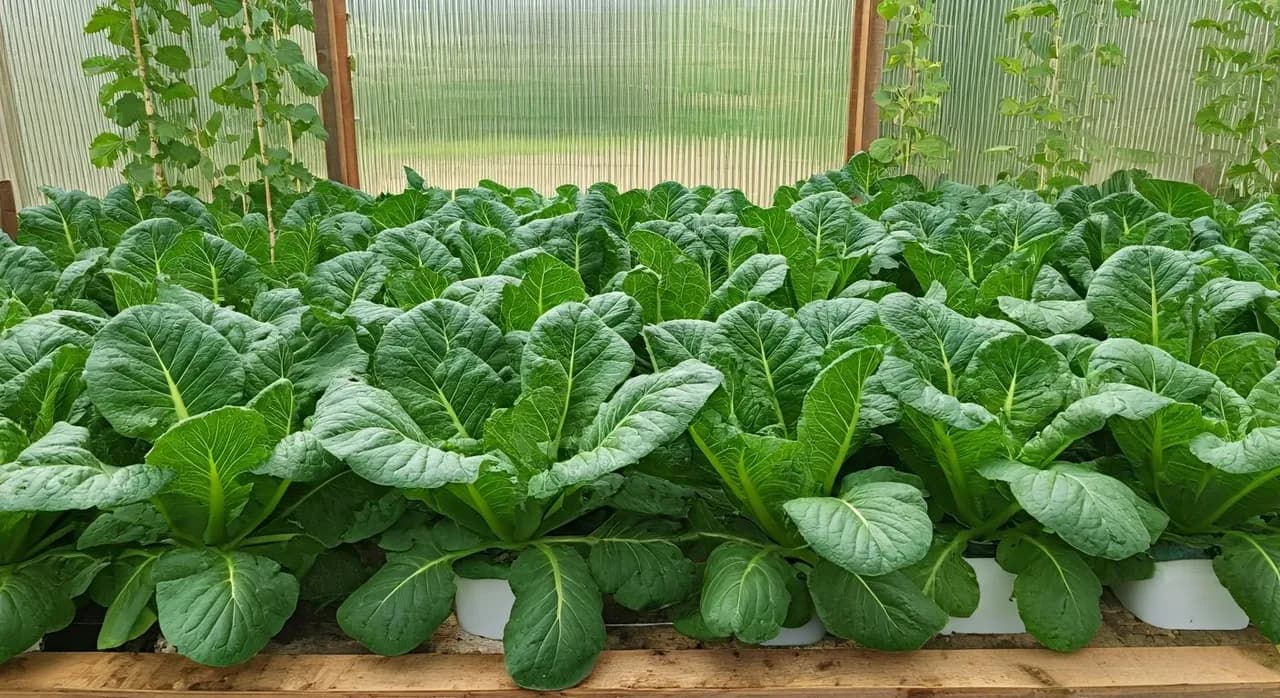
Key takeaways
- Nitrogen deficiency appears as general yellowing of older leaves, starting from the tips, and can reduce yields by 30% or more.
- Phosphorus deficiency causes stunted growth and dark green or purplish discoloration, particularly noticeable in cooler temperatures below 65°F.
- Potassium deficiency shows as yellowing or browning along leaf margins, especially on older leaves, impacting fruit quality and disease resistance.
- Calcium deficiency leads to distorted new growth, blossom end rot in tomatoes, and tip burn in lettuce, often due to transport issues rather than lack of calcium.
- Iron deficiency presents as interveinal chlorosis on new leaves, where veins remain green but the tissue between them turns yellow, and can be exacerbated by high pH.
- Regular monitoring of pH and EC levels, alongside visual inspection, matters for early detection and correction of nutrient imbalances in hydroponic systems.
Quick answer: Identifying hydroponic nutrient deficiencies involves observing specific leaf symptoms like yellowing (nitrogen), purplish hues (phosphorus), or interveinal chlorosis (iron). Correction often requires adjusting nutrient solution EC, pH, and temperature.
Growing plants without soil — whether through hydroponics, aquaponics, or other soilless methods — offers distinct advantages, including precise control over nutrient delivery and water usage. For instance, a well-managed hydroponic system can use 70% to 90% less water than traditional soil gardening, a significant benefit for growers in arid regions like Arizona or California. However, this precision also means that when something goes wrong with nutrient uptake, the symptoms can appear rapidly and impact your crop yield significantly. Understanding what your plants are trying to tell you through their leaves is a fundamental skill for any successful soilless grower.
This guide will walk you through the tell-tale signs of five common and critical nutrient deficiencies: nitrogen (N), phosphorus (P), potassium (K), calcium (Ca), and iron (Fe). We’ll cover how these deficiencies manifest, often starting with older or newer leaves, and what steps you can take to correct them. Early identification can save a crop, preventing significant losses to your harvest. Let’s get into the specifics of what to look for.
Nitrogen deficiency: the yellowing of older leaves
Nitrogen is a primary macronutrient, essential for chlorophyll production and overall plant growth. It’s a key component of amino acids, proteins, and nucleic acids, making it vital for cell division and expansion. In a hydroponic system, a lack of available nitrogen often presents as a general yellowing, or chlorosis, of the older, lower leaves. This happens because the plant mobilizes nitrogen from its older tissues to support newer growth, which is a survival mechanism. You might notice this yellowing starting at the leaf tips and progressing inward, sometimes turning the entire leaf a pale yellow or even white. This can significantly reduce the plant’s photosynthetic capacity, leading to stunted growth and a potential for significant yield reduction in crops like lettuce or basil.
Correcting nitrogen issues
When you spot these symptoms, the first step is to check your nutrient solution’s electrical conductivity (EC) to ensure it’s within the recommended range for your specific crop. For many leafy greens, an EC between 1.2 and 1.8 mS/cm is common. If the EC is low, increase the concentration of your nutrient solution. If the EC is appropriate but symptoms persist, consider a nitrogen-specific supplement. For example, a tomato plant in USDA zone 6 might require a nitrogen boost during its vegetative growth phase, especially if it’s producing a large amount of foliage. Regularly flushing your system every one to two weeks, and replacing with fresh nutrient solution, helps prevent nutrient imbalances and keeps your plants thriving. Maintaining a stable pH between 5.5 and 6.5 is also crucial for nitrogen uptake.
- Check nutrient solution EC levels, aiming for 1.2 to 1.8 mS/cm for many greens.
- Adjust nutrient concentration if EC is low.
- Consider a nitrogen-specific supplement if symptoms persist.
- Flush and replace nutrient solution every one to two weeks.
- Maintain pH between 5.5 and 6.5 for optimal uptake.
Phosphorus deficiency: stunted growth and purplish hues
Phosphorus is another vital macronutrient, playing a central role in energy transfer (ATP), photosynthesis, and the development of roots, flowers, and fruits. When plants are deficient in phosphorus, their growth becomes noticeably stunted, and leaves may develop an unusually dark green or even purplish tint, particularly on the undersides of older leaves. This discoloration is often more pronounced in cooler temperatures, below 65°F, which can inhibit phosphorus uptake. For example, a hydroponic tomato plant in a cool greenhouse in Michigan during early spring might show these symptoms more readily. Root development can also be severely impacted, leading to a less robust plant structure and reduced water and nutrient absorption, potentially cutting fruit yield.
Addressing low phosphorus
To correct phosphorus deficiency, first verify your nutrient solution’s pH. Phosphorus uptake is most efficient in a slightly acidic range, typically between 5.8 and 6.2. If your pH is too high (above 6.5), phosphorus can become less available. Ensure your nutrient solution contains adequate phosphorus, often indicated by the middle number in an N-P-K ratio. Many hydroponic solutions are formulated with a balanced N-P-K, but specific bloom formulas will have higher phosphorus. For instance, a solution with an N-P-K ratio of 5-10-5 would provide a good phosphorus boost for flowering plants. Regular water temperature checks are also important; maintaining root zone temperatures between 68°F and 72°F can improve phosphorus availability. You can learn more about managing your setup by checking out reflective indoor grow tents, which help maintain consistent temperatures.
- Verify nutrient solution pH, aiming for 5.8 to 6.2 for optimal phosphorus uptake.
- Ensure your nutrient solution’s N-P-K ratio provides sufficient phosphorus (middle number).
- Consider a bloom-specific nutrient formula if plants are flowering or fruiting.
- Maintain root zone temperatures between 68°F and 72°F.
- Observe new growth for improved color and vigor within five to seven days.
Potassium deficiency: scorched leaf edges
Potassium is an important macronutrient involved in over 50 enzyme activations, regulating water movement, nutrient transport, and stomatal function. It significantly contributes to fruit quality, disease resistance, and overall plant vigor. A lack of potassium typically manifests as yellowing, browning, or necrosis (tissue death) along the margins and tips of older leaves. These symptoms often resemble scorching or burning. You might see this on a hydroponic pepper plant in a Florida greenhouse, where high light intensity and rapid growth can quickly deplete potassium reserves. The affected areas may feel dry and brittle, and the plant’s overall growth might slow down, potentially reducing fruit size and making the plant more susceptible to common pathogens.
Boosting potassium levels
When you observe these scorched edges, first check your nutrient solution’s potassium levels. Many general hydroponic formulas provide adequate potassium, but heavy-fruiting plants, like tomatoes or strawberries, often require higher amounts during their reproductive stages. Ensure your N-P-K ratio reflects this need; a bloom formula might have an N-P-K like 4-8-10. Potassium uptake is also influenced by other cations, so maintaining a balanced nutrient profile matters. If you’re growing a crop like curry leaf, which thrives in warm conditions, ensure its nutrient solution is refreshed regularly to provide a consistent supply of potassium. A complete solution change every seven to ten days can help prevent accumulation of other ions that might compete with potassium uptake. Keep your pH between 5.5 and 6.5.
- Inspect older leaves for yellowing or browning along the margins and tips.
- Verify nutrient solution’s potassium (K) levels, especially for fruiting plants.
- Consider a bloom-specific nutrient with a higher K ratio, such as 4-8-10.
- Perform a complete nutrient solution change every seven to ten days.
- Maintain stable pH between 5.5 and 6.5 for optimal nutrient availability.
Calcium and iron: issues with new growth
Calcium (Ca) and iron (Fe) are micronutrients, but their roles are no less critical. Calcium is essential for cell wall structure, cell division, and membrane permeability. Iron is vital for chlorophyll synthesis and enzyme function. Unlike N, P, and K, deficiencies in Ca and Fe primarily affect new growth because these nutrients are relatively immobile within the plant. Calcium deficiency often appears as distorted or stunted new leaves, tip burn on lettuce, or blossom end rot in tomatoes and peppers. For example, a hydroponic lettuce crop in a vertical farm in New York might exhibit tip burn on its outer leaves if calcium transport is impaired. Iron deficiency, on the other hand, causes interveinal chlorosis (yellowing between the veins) on the youngest leaves, while the veins themselves remain green. This symptom can be observed in a wide range of plants, including wild indigo, if grown hydroponically with high pH water. Research from 2001 indicates that inhibited leaf growth can be a more sensitive indicator of iron deficiency than chlorosis itself [1].
Solving calcium and iron problems
For calcium deficiency, the issue is often not a lack of calcium in the solution but rather poor transport within the plant, often due to low humidity or inconsistent watering. Ensure your nutrient solution has at least 150-200 ppm of calcium. Maintaining consistent humidity, ideally between 50% and 70%, and adequate air circulation can improve calcium uptake and distribution. For iron deficiency, the most common culprit is high pH. Iron becomes less available as pH rises above 6.5. Lowering your pH to the 5.5 to 6.0 range will often resolve the issue. If your water source has high alkalinity, which is common in areas like the Great Plains, you might need to regularly adjust pH downwards. Consider using an iron chelate (like Fe-EDDHA) which remains stable at higher pH levels, providing a more reliable iron source. Regularly check your water source’s hardness, as high levels of bicarbonates can buffer pH, making it harder to adjust. A good quality reverse osmosis filter can remove up to 98% of dissolved solids, making pH management simpler.
- Observe new leaves for distortion, tip burn, or interveinal yellowing.
- Ensure nutrient solution contains 150-200 ppm of calcium.
- Maintain consistent humidity (50-70%) and good air circulation.
- Lower nutrient solution pH to 5.5-6.0 to improve iron availability.
- Consider an iron chelate supplement, especially if pH is difficult to control.
Putting it all together: prevention and observation
Understanding individual nutrient deficiencies is a critical step, but successful hydroponic growing relies heavily on a holistic approach to plant health. Prevention is always more effective than cure, especially when dealing with a complex system where nutrient interactions play a significant role. Regular monitoring of your nutrient solution’s pH and EC (electrical conductivity) is your first line of defense. Aim to check these parameters daily, or at least every other day, and record your readings. A pH meter should be calibrated weekly to ensure accuracy within 0.1 pH units. Maintaining a stable pH, typically between 5.5 and 6.5 for most crops, ensures that all essential nutrients remain available for uptake by the plant roots. Fluctuations outside this range, even for a few hours, can lead to nutrient lockout, where nutrients are present but inaccessible.
The importance of routine checks
Beyond pH and EC, consistent observation of your plants is paramount. Spend at least five to ten minutes each day inspecting your crop, looking for subtle changes in leaf color, texture, or growth patterns. Early detection of symptoms — whether it’s a slight yellowing on an older leaf or a subtle distortion on a new one — can allow you to make minor adjustments before a full-blown deficiency impacts your yield. For example, a hydroponic basil crop in a controlled environment agriculture facility might show early signs of nitrogen stress if the nutrient solution is not replenished every seven days. Regular system flushing, typically every one to two weeks, and replacing the entire nutrient reservoir with fresh solution, helps prevent nutrient imbalances and the buildup of unwanted salts. This practice, combined with a high-quality nutrient formula designed for hydroponics, can significantly reduce the incidence of deficiencies. Consider exploring resources like turning a fish tank into an aquaponics garden for more insights into integrated systems and nutrient management.
- Monitor pH and EC daily, calibrating your pH meter weekly for accuracy.
- Spend five to ten minutes daily inspecting plants for early symptoms.
- Perform regular system flushing and complete nutrient solution changes every one to two weeks.
- Use a high-quality, balanced hydroponic nutrient formula designed for your crop stage.
- Maintain consistent environmental conditions, including temperature and humidity, to support nutrient uptake.
Common hydroponic nutrient deficiency symptoms
Nutrient | Affected Leaves | Symptoms |
|---|---|---|
Nitrogen (N) | Older, lower leaves | General yellowing (chlorosis), starting from leaf tips; stunted growth. |
Phosphorus (P) | Older leaves | Stunted growth; dark green or purplish discoloration, especially on undersides. |
Potassium (K) | Older leaves | Yellowing, browning, or scorching along leaf margins and tips. |
Calcium (Ca) | New, young leaves | Distorted, stunted new growth; tip burn; blossom end rot (tomatoes/peppers). |
Iron (Fe) | New, young leaves | Interveinal chlorosis (yellowing between veins) with green veins; often pH-related. |
Water Savings: Hydroponic systems can reduce water usage significantly compared to traditional soil gardening methods, a significant advantage in areas like California.
Early Detection: Prompt identification of nutrient deficiencies can prevent yield losses of significant yield in a single hydroponic growing cycle.
Optimal pH: Maintaining a nutrient solution pH between 5.5 and 6.5 ensures optimal availability for most essential nutrients, reducing deficiency risks significantly.
Frequently asked questions
How often should I check my hydroponic nutrient solution’s pH and EC?
You should check your nutrient solution’s pH and EC daily, or at least every other day, to ensure optimal nutrient availability. This regular monitoring helps prevent nutrient imbalances that could impact a significant portion of your crop.
Can high pH cause nutrient deficiencies in hydroponics?
Yes, a high pH (above 6.5) can significantly reduce the availability of several key nutrients, especially iron and phosphorus. For instance, iron uptake can drop significantly if the pH consistently stays above 7.0, leading to deficiency symptoms in new growth.
What is the most common reason for calcium deficiency in hydroponic plants?
The most common reason for calcium deficiency symptoms like tip burn is often not a lack of calcium in the solution, but rather poor transport within the plant due to low humidity or inconsistent transpiration rates. Maintaining humidity between 50% and 70% can improve calcium distribution .
How can I distinguish between nitrogen and potassium deficiency?
Nitrogen deficiency typically causes a general yellowing of older leaves, starting from the tips and moving inward. Potassium deficiency, however, usually presents as yellowing or browning along the margins and tips of older leaves, often resembling a scorched appearance.
Why do phosphorus deficiency symptoms appear more in cooler temperatures?
Cooler root zone temperatures, particularly below 65°F, can inhibit a plant’s ability to absorb and utilize phosphorus, even if it’s present in the nutrient solution. Maintaining root zone temperatures between 68°F and 72°F can improve phosphorus uptake efficiency .
References
- Inhibited leaf growth of plants grown in alkaline solution and on calcareous soils is a more sensitive Fe-deficiency symptom than leaf chlorosis (2001). Inhibited leaf growth of plants grown in alkaline solution and on calcareous soils is a more sensitive Fe-deficiency symptom than leaf chlorosis.
- The Effects of NaCl on Calcium-deficiency Disorder Vary with Symptom Development Stage and Cultivar in Hydroponic Purslane (2014). The Effects of NaCl on Calcium-deficiency Disorder Vary with Symptom Development Stage and Cultivar in Hydroponic Purslane.
- Efficiency and sustainability of resource utilization in hydroponic cultivation of baby leaf vegetables (2023). Efficiency and sustainability of resource utilization in hydroponic cultivation of baby leaf vegetables.
- USDA Natural Resources Conservation Service (2024). USDA Natural Resources Conservation Service.
- EPA — Soak Up the Rain (2024). EPA — Soak Up the Rain.