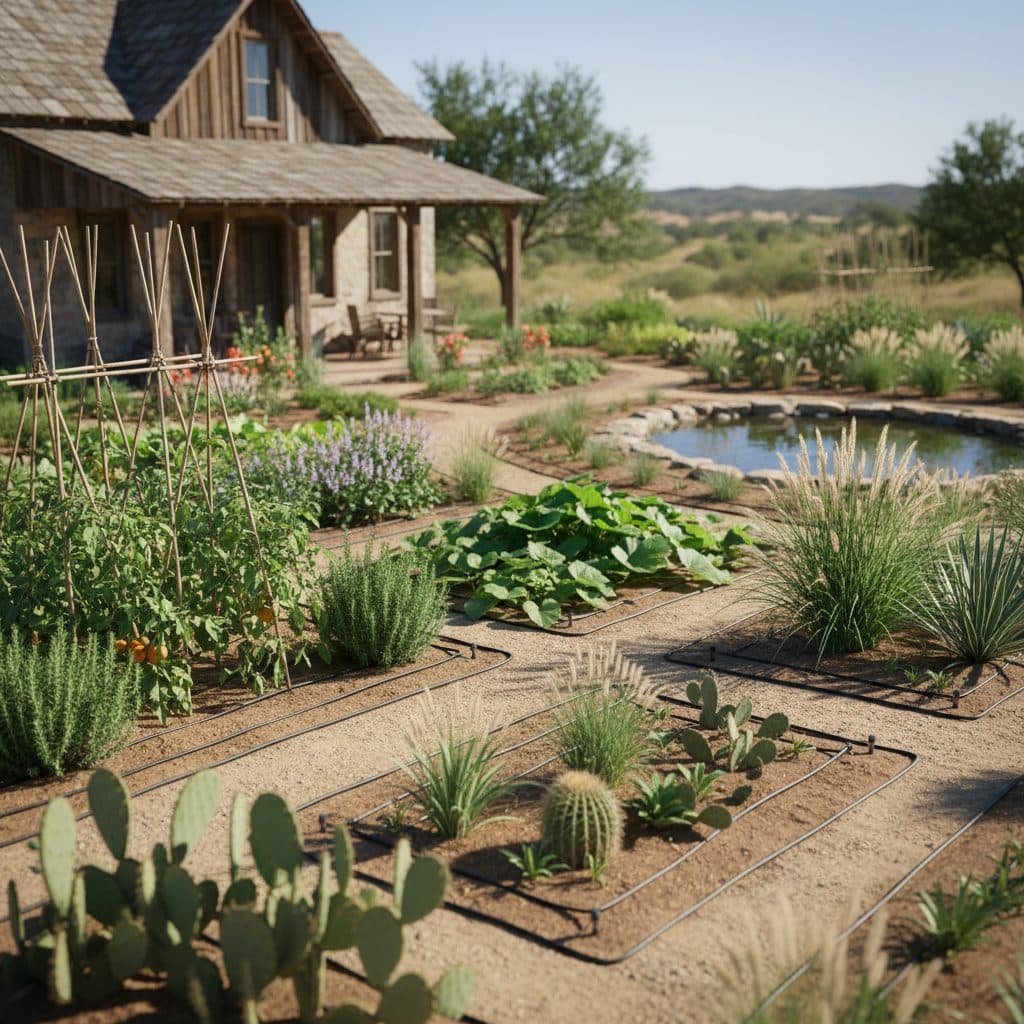
Key takeaways
- Grouping plants by water needs, or hydrozoning, can reduce landscape water use by 30% to 50% in many US regions.
- Begin by mapping your garden’s sun exposure, wind patterns, and soil types to identify natural microclimates.
- Design three primary hydrozones: high-water, moderate-water, and low-water, placing plants accordingly.
- Select drought-tolerant native species for low-water zones to thrive with minimal supplemental irrigation, especially in USDA zones 7 and above.
- Implement efficient irrigation systems like drip lines in high-water zones to deliver water precisely and reduce waste.
- Regularly monitor soil moisture and adjust irrigation schedules to prevent overwatering and conserve resources.
Quick answer: Hydrozoning is the practice of grouping plants with similar water needs to optimize irrigation. This method can reduce landscape water use by 30-50% and support plant resilience against drought and heat.
In the arid regions of the American Southwest, like Arizona and parts of California, water conservation is a necessity. Even in states with more rainfall, such as Florida or Pennsylvania, periods of drought are becoming more common, challenging traditional gardening practices. Hydrozoning, a method of grouping plants with similar water requirements, offers a practical solution, allowing gardeners to reduce their irrigation needs by 30% or more while maintaining a thriving landscape [1]. This approach helps create gardens that stand up to heat, drought, and even poor soil conditions, making them more resilient to the changing climate.
By strategically arranging plants, we can ensure every plant receives the right amount of water without wasting resources on those that need less. For instance, a typical Texas landscape can see water savings of 30% by adopting hydrozoning principles, according to the USDA Natural Resources Conservation Service. This method works smarter with available resources, supports plant health, and builds a garden that flourishes even when conditions are tough.
Understanding hydrozoning principles for resilience
Hydrozoning is a straightforward concept: you group plants with similar water needs together. This allows for more efficient watering, preventing overwatering of drought-tolerant species and underwatering of thirsty ones. For example, a garden in USDA zone 8, like much of central California, might typically use 50 gallons of water per square foot annually without hydrozoning. By implementing this strategy, that usage could drop to 30 gallons or less, representing a 40% reduction. The core idea is to match the plant to the place, considering its natural habitat and water requirements. This approach is particularly effective in regions experiencing increasing drought severity, such as the Colorado River Basin states, where water restrictions are becoming common, sometimes limiting outdoor watering to two days per week. It also builds resilience against unpredictable weather patterns, which have led to a 10% increase in extreme precipitation events in some parts of the US over the last 50 years.
the core concept of water zones
The most common hydrozoning model divides a landscape into three main categories: high-water zones, moderate-water zones, and low-water zones. High-water zones are typically small, visible areas near the house or patio, often featuring annuals or vegetables that require consistent moisture, sometimes 1 to 2 inches of water per week. These areas might only represent 10% to 20% of the total garden space. Moderate-water zones might include shrubs and perennials that thrive with occasional supplemental irrigation, perhaps 0.5 to 1 inch every 10 to 14 days during dry spells, covering 30% to 40% of the landscape. Low-water zones, often comprising the largest area of the garden (50% or more), use drought-tolerant plants that need minimal or no supplemental water once established, especially after their first year. This structured approach ensures that water is applied precisely where and when it is needed, reducing overall consumption by 25% to 50% in many residential settings, according to EPA estimates [2]. This method also reduces runoff by up to 40%, keeping valuable topsoil in place.
- High-water plants: Require 1-2 inches of water weekly, often near living spaces, representing 10-20% of the garden.
- Moderate-water plants: Need 0.5-1 inch of water every 10-14 days during dry periods, covering 30-40% of the area.
- Low-water plants: Thrive with natural rainfall after establishment, needing less than 0.5 inch per month, often 50% or more of the landscape.
- Transitional zones: Blend between different water needs, often using plants with flexible requirements, like some ornamental grasses.
- Native plant zones: Utilize local species that are adapted to regional rainfall patterns, such as those found in the Great Plains, which can reduce water needs by up to 75% after the first year [5].
Assessing your site and soil for optimal placement
Before you move a single plant, a thorough site assessment matters. Understanding your garden’s unique conditions—its sun exposure, wind patterns, and soil composition—will inform your hydrozoning plan. A south-facing slope in USDA zone 7, for example, will receive significantly more intense sunlight and heat than a north-facing area, potentially increasing plant water needs by 20% to 30%. Mapping these microclimates helps determine where your high-water, moderate-water, and low-water zones should naturally fall. Observe your garden throughout the day and across seasons to identify areas that stay consistently moist versus those that dry out quickly, often within 24 to 48 hours after rain. This initial observation phase can take one to two weeks to capture a complete picture of your site’s dynamics.
understanding sun, wind, and soil
Start by charting sun exposure. Areas receiving six or more hours of direct sun daily are ideal for full-sun, low-water plants, while shadier spots are better for plants that prefer less intense light and often less water. Wind exposure also plays a role; a constant breeze can increase water evaporation from leaves and soil by up to 15%, particularly in open areas of states like Kansas or Oklahoma. Next, analyze your soil. Sandy soils drain quickly, requiring more frequent watering or plants adapted to dry conditions, while heavy clay soils retain moisture longer, sometimes for several days after rain. You can test your soil’s drainage by digging a 12-inch deep hole, filling it with water, and noting how long it takes to drain. A drainage rate of less than 1 inch per hour indicates poor drainage, suitable for plants like sedges or some ferns, while more than 4 inches per hour suggests very sandy soil, which might need 25% more water for some plants. A soil moisture meter can provide daily insights into these conditions, showing moisture levels at depths up to 6 inches.
- Map sun exposure: Identify areas with full sun (6+ hours), partial sun (3-6 hours), and shade (less than 3 hours) over an 8-hour period.
- Observe wind patterns: Note areas prone to strong winds, which increase evaporation by up to 15% and can cause plant stress.
- Test soil drainage: Dig a 12-inch hole and measure how quickly water drains; a rate of 1-3 inches per hour is generally suitable.
- Assess soil texture: Determine if your soil is sandy (drains fast), loamy (balanced), or clay-heavy (retains water), influencing plant choice and watering by up to 25%.
- Consider existing topography: Slopes shed water quickly (up to 50% runoff), while depressions collect it, influencing moisture levels and plant selection.
Designing your hydrozones and irrigation strategy
Once your site assessment is complete, you can begin designing your hydrozones on paper or using a digital tool. Start by sketching the outline of your property and marking the areas you identified as high-sun, shady, windy, and with different soil types. Then, overlay your desired water zones, typically placing high-water plants closest to the house or in highly visible areas where they can be enjoyed most, perhaps within 10 feet of a patio. For example, a small bed of annual flowers near a porch in USDA zone 6 might be designated a high-water zone, requiring daily or every-other-day watering during summer heat, consuming 10-15 gallons per week. The goal is to create distinct zones that minimize water waste and simplify irrigation management, potentially reducing overall water use by 30% to 50% compared to uniform watering across the entire landscape [3]. This systematic approach can save hundreds of dollars annually on water bills for an average US household.
matching irrigation to zones
The type of irrigation you choose should match your hydrozones. For high-water zones, drip irrigation systems or soaker hoses are highly efficient, delivering water directly to the plant roots with minimal evaporation. These systems can achieve 90% or greater efficiency, compared to traditional sprinklers, which often lose 30% or more to evaporation and runoff, especially in windy conditions. Moderate-water zones might benefit from less frequent, deeper watering using targeted sprinklers or hand-watering with an expandable hose with a 7-pattern spray nozzle, applying 0.5 inches of water over 30 minutes. Low-water zones, once established, should rely primarily on natural rainfall, though a supplemental deep soak once a month during extreme drought in regions like Arizona’s Sonoran Desert can be beneficial, providing 1 inch of water. Consider installing a smart irrigation controller that adjusts watering schedules based on local weather data, potentially saving another 15% to 20% on water bills by preventing unnecessary watering after rain [2].
- Sketch your property: Map out sun, shade, wind, and soil types, including specific dimensions in feet.
- Define water zones: Delineate high, moderate, and low-water areas based on plant needs and site conditions, often using a 1:2:3 ratio for high:moderate:low.
- Select efficient irrigation: Use drip lines for high-water zones (90%+ efficient) and targeted watering for moderate zones, avoiding overhead sprinklers where possible.
- Install smart controllers: Automate watering schedules based on real-time weather and plant needs, potentially reducing water use by 15-20% [2].
- Consider rainwater harvesting: Collect rainwater from rooftops into barrels or cisterns to supplement irrigation for moderate and high-water zones, storing hundreds of gallons for later use.
Plant selection and ongoing maintenance for success
Choosing the right plants for each hydrozone is where the garden truly comes to life. For low-water zones, prioritize native and drought-tolerant species that are naturally adapted to your region’s climate. For instance, in the arid Southwest, plants like Agave, Yucca, and various Cacti thrive with minimal water, often less than 10 inches of rainfall annually, and can survive temperatures over 100°F. In the Southeast, plants such as Coneflower (Echinacea purpurea) or Black-eyed Susan (Rudbeckia hirta) are excellent choices for moderate-water zones, requiring supplemental water only during prolonged dry spells, perhaps every 2 to 3 weeks, totaling 15-20 gallons per plant per month. Research specific plant water needs and their hardiness zones before purchasing. You can find extensive lists of options in articles like Drought tolerant plants: how to choose them by zone and water them right. Many nurseries now label plants by water requirement, simplifying selection.
maintaining your hydrozoned garden
Ongoing maintenance keeps a hydrozoned garden successful. Regularly monitor your plants for signs of stress, such as wilting or discolored leaves, which might indicate over or under-watering. Use a soil moisture meter to check moisture levels at root depth, to check that water reaches 6 to 8 inches deep, not just the surface. Apply a 2-4 inch layer of organic mulch around plants to suppress weeds, regulate soil temperature, and reduce evaporation by 20% to 30% [4]. Prune plants appropriately to encourage healthy growth and remove dead or diseased material, which can reduce water competition. In USDA zone 9, for example, proper mulching can reduce watering frequency by up to 50% for many shrubs, saving hundreds of gallons over a growing season. Remember that even drought-tolerant plants need consistent watering during their establishment period, typically the first one to two growing seasons, receiving 1 inch of water weekly.
- Select native species: Choose plants adapted to your local climate and rainfall patterns, such as the California Poppy in USDA zone 7.
- Prioritize drought tolerance: Opt for plants that thrive with minimal supplemental water, especially for low-water zones, reducing needs by up to 75% [5].
- Monitor plant health: Watch for signs of stress and adjust watering as needed, checking soil moisture every 3-5 days during dry periods.
- Apply mulch: Maintain a 2-4 inch layer of organic mulch to conserve soil moisture and reduce weeds by up to 60%.
- Adjust irrigation seasonally: Reduce watering frequency in cooler months (e.g., by 50% in fall) and increase during hot, dry periods, always checking soil moisture.
Water Needs of Common US Garden Plants
Plant Type | Typical Water Need | Example Species | USDA Zones |
|---|---|---|---|
High-Water | 1-2 inches per week | Impatiens, Tomatoes | 3-11 |
Moderate-Water | 0.5-1 inch every 10-14 days | Coneflower, Lavender | 4-9 |
Low-Water (Drought-Tolerant) | Minimal once established | Sedum, Agave, Yarrow | 3-10 |
Very Low-Water (Xeric) | Almost none after establishment | Cactus, Desert Willow | 7-11 |
Water Savings: Hydrozoning can reduce outdoor water consumption by 30% to 50% in residential landscapes, saving hundreds of gallons annually.
Mulch Benefits: A 2-4 inch layer of organic mulch can reduce soil moisture evaporation by 20% to 30%, decreasing watering frequency.
Frequently asked questions
What is the primary benefit of hydrozoning?
The primary benefit of hydrozoning is significant water conservation, often reducing irrigation needs by 30% to 50% compared to traditional uniform watering methods. This saves money and helps plants thrive with appropriate moisture levels.
How many hydrozones should I create in my garden?
Most gardens benefit from three main hydrozones: high-water, moderate-water, and low-water. However, smaller gardens might only need two, while larger properties could incorporate five or more distinct zones.
Can I hydrozone an existing garden?
Yes, you can hydrozone an existing garden, though it might involve relocating some plants. Start by assessing your current plants’ water needs and grouping them, then move plants as necessary, which can be done over one to two seasons.
What kind of plants are best for low-water zones?
For low-water zones, prioritize native and drought-tolerant plants that are well-suited to your specific USDA hardiness zone, such as Sedum, Lavender, Agave, or various ornamental grasses, which can survive on less than 1 inch of water per month.
How does soil type affect hydrozoning?
Soil type greatly affects hydrozoning because it dictates water retention. Sandy soils drain quickly, requiring more frequent watering or very drought-tolerant plants, while clay soils hold moisture longer, sometimes for several days, influencing plant selection and irrigation schedules.
Is hydrozoning only for arid climates?
No, hydrozoning is beneficial in all climates, not just arid ones. Even in regions with ample rainfall, it helps manage water efficiently, prepares gardens for drought periods, and ensures plants receive optimal moisture, potentially reducing water bills by 20% even in humid areas.
References
- USDA Natural Resources Conservation Service (2024). USDA Natural Resources Conservation Service.
- EPA — Soak Up the Rain (2024). EPA — Soak Up the Rain.
- SARE — Sustainable Agriculture Research & Education (2023). SARE — Sustainable Agriculture Research & Education.
- ATTRA / NCAT Sustainable Agriculture (2023). ATTRA / NCAT Sustainable Agriculture.
- USDA National Agroforestry Center (2023). USDA National Agroforestry Center.