Key takeaways
- An IBC tote provides a cost-effective, durable foundation for a home aquaponics system, typically 275-330 gallons.
- Flood-and-drain (media bed) systems use gravity and a bell siphon to cycle water, providing oxygen to roots and filtering solids.
- Properly preparing and plumbing the IBC tote is crucial, including thorough cleaning and cutting for the grow bed and sump.
- Selecting appropriate fish like tilapia or catfish and plants such as leafy greens or herbs ensures system balance and productivity.
- Cycling the system establishes beneficial bacteria, converting fish waste into plant nutrients over three to six weeks.
- Regular water testing, pH adjustments, and fish feeding are essential for maintaining a healthy and productive aquaponics setup.
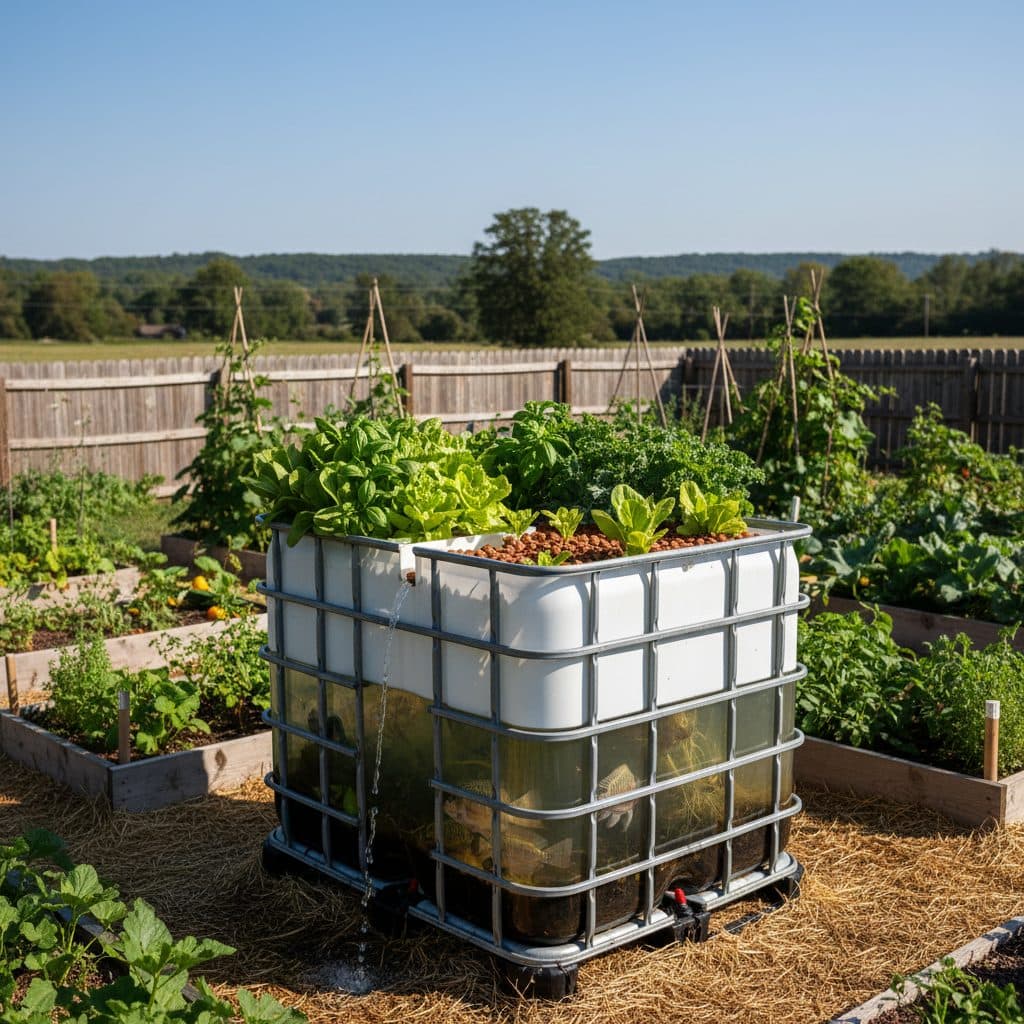
Quick answer: An IBC tote aquaponics system uses a repurposed intermediate bulk container to create a cost-effective, flood-and-drain setup for growing fish and plants. This system cycles water between a fish tank and a media-filled grow bed, providing nutrients to plants and filtering water for fish.
In the arid regions of the Southwestern United States, where water conservation is paramount, aquaponics systems offer a compelling solution for food production. A well-designed system can use up to 90% less water than traditional soil-based agriculture, making it an attractive option for growers in areas like Arizona or Southern California. Building a robust aquaponics setup doesn’t require a large budget or complex engineering; a repurposed intermediate bulk container (IBC) tote provides the tank and bed for a functional system, supporting both fish and plants.
A media-bed, flood-and-drain aquaponics system built from an IBC tote balances fish waste inputs with plant uptake. Fish waste nourishes the crops, while gravel or clay media filters the water before it returns to the tank, operating year-round in a backyard or a 10 ft by 12 ft greenhouse in USDA zone 8.
Why choose an IBC tote for your aquaponics system?
Intermediate Bulk Containers, or IBC totes, are large, industrial containers commonly used for transporting liquids. They typically hold between 275 and 330 gallons, making them an ideal size for a backyard aquaponics system. Their construction (high-density polyethylene plastic encased in a galvanized steel cage) provides UV resistance suited for outdoor setups in sunny regions like Florida or Texas. A new 330-gallon IBC tote can cost upwards of $200, but used food-grade totes can often be acquired for $50 to $100, significantly reducing initial setup costs.
cost-effectiveness and availability
The primary appeal of an IBC tote lies in its cost-effectiveness and ready availability. Instead of purchasing expensive, purpose-built aquaponics components, a single IBC tote can be transformed into both the fish tank and the grow bed. This dual-purpose design saves money and simplifies the construction process for many growers. For example, a 275-gallon IBC tote, when cut, provides approximately 70-80 gallons for the grow bed and 190-200 gallons for the fish tank, offering ample volume for a productive system. This scale is suitable for growing a notable amount of fish and a substantial amount of leafy greens annually. You can often find used totes from food processing plants or beverage distributors, ensuring they are food-grade and safe for growing edible produce and fish.
- Affordable foundation: Used food-grade IBC totes often cost under $100.
- Durable construction: HDPE plastic and steel cage withstand outdoor conditions.
- Optimal volume: 275-330 gallons provides sufficient space for fish and plants.
- Easy to modify: Plastic material is simple to cut and plumb.
- Space efficient: Compact footprint for its capacity, ideal for urban gardens.
Understanding the media bed flood-and-drain system
The media bed, or flood-and-drain, system is one of the most popular and forgiving aquaponics designs for home growers. It operates on a simple principle: water from the fish tank is pumped into a grow bed filled with an inert growing medium, such as expanded clay pebbles or gravel. This grow bed periodically fills (floods) with nutrient-rich water, then drains back into the fish tank. This cycle is typically managed by a bell siphon, which automates the flooding and draining process without requiring complex electronics. The intermittent flooding delivers dissolved nutrients to plant roots, while the draining phase draws atmospheric oxygen down into the root zone. This system is particularly effective for filtering solid waste from the fish tank.
the role of the bell siphon and media
The bell siphon is the heart of the flood-and-drain mechanism. As water fills the grow bed, it eventually reaches a level that triggers the siphon, rapidly draining the water back to the fish tank. This cycle usually takes 15-30 minutes, with 4-6 cycles per hour, depending on pump strength and siphon design. The growing media in the bed serves multiple functions: it supports the plants physically, acts as a biological filter by providing a large surface area for beneficial bacteria, and mechanically filters out solid fish waste. These bacteria convert ammonia from fish waste into nitrates, a form of nitrogen readily absorbed by plants. Research in 2022 showed that Clarias gariepinus (African catfish) grew well in flood-and-drain systems, indicating the effectiveness of this method for fish growth and waste conversion [1].
- Gravity-fed cycle: Water floods the grow bed and drains back via a siphon.
- Oxygenation: Roots are exposed to air during the drain cycle.
- Biological filtration: Beneficial bacteria in the media convert fish waste.
- Mechanical filtration: Media traps solid fish waste.
- Plant support: Media provides a stable anchor for plant roots.
Sourcing and preparing your IBC tote
The first step is to acquire a food-grade IBC tote. Always ensure the tote previously held a non-toxic, food-safe substance like juice, syrup, or purified water. Avoid totes that contained chemicals, oils, or hazardous materials, as residues can contaminate your system and harm fish or plants. Once sourced, a thorough cleaning is essential. Rinse the tote multiple times with clean water, then use a mild bleach solution (one part bleach to ten parts water) to sanitize it, letting it sit for 24 hours. Follow this with several more rinses to remove all bleach residue, ensuring the water runs clear and odorless. Thorough rinsing and sanitizing prevents chemical toxicity before adding fish or media.
cutting and assembling the tote
To prepare the IBC tote, cut the top section to create the grow bed. Measure down from the top edge approximately 10-12 inches, marking a line around the tote. Use a jigsaw or reciprocating saw to carefully cut along this line, creating two distinct sections. The top section becomes the grow bed, while the larger bottom section acts as the fish tank. The steel cage will need to be modified to support the grow bed above the fish tank, typically by cutting and bending the top bars to form a sturdy frame. This modification allows the grow bed to sit securely above the fish tank, facilitating gravity-fed drainage. For optimal plant growth, a grow bed depth of at least 10 inches is recommended to provide ample space for root development and media volume. This setup is often housed in a greenhouse for year-round production, such as those found at agripure.org/shop/beylsion-grow-tent-growbox-plant-tent-indoor-hydroponics-grow-room-tent-growing-tent-for-indoor-greenhouse-growing-plants-mylar.
- Source food-grade IBC: Confirm previous contents were non-toxic.
- Thorough cleaning: Rinse, sanitize with bleach solution, then rinse extensively.
- Precise cutting: Measure 10-12 inches from the top for the grow bed.
- Modify steel cage: Create a stable support frame for the grow bed.
- Ensure level placement: The entire system must be level for proper water flow.
Plumbing and media selection for optimal performance
Proper plumbing sizing controls the flood-and-drain cycle timing. This involves installing a water pump in the fish tank, which will push water up to the grow bed. The pump should be sized to turn over the entire fish tank volume at least once per hour; for a 200-gallon fish tank, a pump rated for 200-300 gallons per hour (GPH) is appropriate. A standpipe and bell siphon assembly are then installed in the grow bed. The standpipe sets the maximum water level, typically 8-9 inches deep, while the bell siphon automates the draining process. Use Schedule 40 PVC pipes and fittings for durability and ease of assembly, ensuring all connections are watertight with PVC cement.
choosing the right growing media
The choice of growing media significantly impacts system performance. Expanded clay pebbles (hydroton) are a popular choice due to their lightweight nature, neutral pH, and excellent surface area for bacterial colonization. They are typically 0.5-1 inch in diameter and provide good drainage and aeration. Other options include lava rock, which is heavier but also porous, or gravel (pea gravel), which is more affordable but can be dense and may require more frequent cleaning. Avoid media that can compact, degrade, or alter water chemistry, such as limestone or sand. A grow bed filled with 70-80 gallons of media will weigh approximately 300-400 pounds when wet, so ensure the support frame is rigid and stable. For specific plant needs, you might explore options like those discussed in agripure.org/articles/how-to-grow-microgreens, though microgreens often prefer different setups.
- Select appropriate pump: 1x tank volume per hour (e.g., 200 GPH for 200 gallons).
- Install standpipe: Sets maximum water level in the grow bed, typically 8-9 inches.
- Construct bell siphon: Automates the flood-and-drain cycle reliably.
- Use PVC fittings: Ensure durable, watertight connections with Schedule 40 PVC.
- Choose inert media: Expanded clay pebbles, lava rock, or pea gravel are good choices.
Choosing fish and plants for your IBC aquaponics system
Matching fish species to water temperature and plant nutrient uptake maintains system balance. For fish, tilapia are a popular choice due to their rapid growth rate, tolerance to varying water conditions, and edibility. They can reach harvestable size (1-1.5 pounds) in 6-9 months in warm water (75-85°F). Other good options include catfish (like Clarias gariepinus, which showed good growth in flood-and-drain systems [1]), trout (for cooler climates, 55-65°F), or ornamental fish like koi. Aim for a stocking density of about one pound of fish per 5-10 gallons of water; for a 200-gallon tank, this means 20-40 pounds of fish. Overstocking can lead to poor water quality and stressed fish, while understocking may not provide enough nutrients for your plants.
matching plants to your system’s output
For plants, leafy greens and herbs generally thrive in aquaponics systems because they have lower nutrient demands compared to fruiting plants. Lettuce, kale, Swiss chard, spinach, basil, mint, and cilantro are excellent choices. These plants typically mature in 4-8 weeks, allowing for continuous harvesting. Fruiting plants like tomatoes or peppers can be grown but require a more mature system, higher fish stocking densities, and potentially supplemental nutrients. Consider starting with a high density of lettuce plants in the grow bed area. The USDA Natural Resources Conservation Service emphasizes the importance of nutrient cycling in sustainable agriculture, a principle central to aquaponics. For growers interested in other soilless methods, information on turning a fish tank into an aquaponics garden can provide further insights.
- Tilapia: Fast-growing, hardy, ideal for warm water (75-85°F).
- Catfish: Tolerant, good growth in flood-and-drain systems [1].
- Leafy greens: Lettuce, kale, spinach, basil thrive with moderate nutrients.
- Herbs: Mint, cilantro, chives are excellent, low-demand options.
- Avoid overstocking: Maintain 1 pound of fish per 5-10 gallons of water.
System cycling and ongoing maintenance for success
Before adding fish, your aquaponics system must be ‘cycled’ to establish the beneficial bacteria that convert fish waste into plant nutrients. This process, known as the nitrogen cycle, typically takes three to six weeks. Start by filling the system with dechlorinated water and adding an ammonia source, such as pure ammonia (without surfactants) or fish food. Monitor ammonia, nitrite, and nitrate levels daily using a liquid test kit. Ammonia and nitrites should spike and then drop to zero, while nitrates will steadily rise. Once ammonia and nitrites are consistently at 0 ppm, and nitrates are present (5-40 ppm), the system is ready for fish. Establishing the biofilter before stocking prevents lethal ammonia and nitrite spikes.
routine checks and adjustments
Ongoing maintenance is relatively simple but consistent. Daily checks should include observing fish behavior, feeding them 1-2 times per day (only what they can consume in 5 minutes), and ensuring the pump and siphon are operating correctly. Weekly tasks involve testing water pH, which should ideally be between 6.0 and 7.0 for most aquaponics systems. Adjust pH using phosphoric acid to lower it or potassium bicarbonate to raise it. Top off the system with dechlorinated water to replace evaporation losses, typically 5-10 gallons per week in a 200-gallon system, especially in dry climates like Nevada. Periodically, you might need to clean the pump intake or remove any accumulated solids from the fish tank bottom, though a well-designed media bed system minimizes this. The USDA Natural Resources Conservation Service highlights how efficient water use, like in aquaponics, contributes to agricultural sustainability.
- Dechlorinate water: Essential before adding fish or starting the cycle.
- Add ammonia source: Initiates bacterial growth for the nitrogen cycle.
- Monitor water parameters: Daily tests for ammonia, nitrite, and nitrate.
- Feed fish sparingly: 1-2 times daily, only what they eat in 5 minutes.
- Adjust pH weekly: Maintain 6.0-7.0 using safe buffers.
Comparison of aquaponics system types for home use
Feature | Media Bed (Flood & Drain) | Nutrient Film Technique (NFT) | Deep Water Culture (DWC) |
|---|---|---|---|
Complexity | Low to Moderate | Moderate | Low |
Filtration | Excellent (biological & mechanical) | Requires external filter | Requires external filter |
Plant Support | Good for most plants, including root vegetables | Best for leafy greens | Best for leafy greens |
Media Cost | Moderate (one-time purchase) | Low (net pots) | Low (net pots) |
Maintenance | Relatively low, siphon can clog | Medium, channel cleaning | Medium, reservoir cleaning |
Oxygenation | Excellent (air exposure during drain) | Good (thin film of water) | Requires air stone/pump |
Water Savings: Aquaponics systems use up to 90% less water than traditional soil-based farming, conserving thousands of gallons annually in dry climates.
Fish Growth: African catfish (Clarias gariepinus
) can achieve a specific growth rate of 1.7% per day in flood-and-drain aquaponics systems [1].
System Volume: A typical IBC tote provides 275-330 gallons of total volume, supporting 20-40 pounds of fish and dozens of plants.
Frequently asked questions
What kind of fish are best for an IBC aquaponics system?
Tilapia are highly recommended due to their fast growth, tolerance to varying water conditions, and ability to thrive in warm water (75-85°F). Catfish, such as Clarias gariepinus, also perform well in flood-and-drain systems, as evidenced by growth rates of 1.7% per day [1].
How much does it cost to build an IBC aquaponics system?
The cost can range from $200 to $500, depending on whether you source a used food-grade IBC tote (often $50-$100) or a new one. Pumps, plumbing, and media typically add another $150-$300 to the total budget.
What plants grow best in an IBC aquaponics system?
Leafy greens like lettuce, kale, and spinach, along with herbs such as basil and mint, are excellent choices. These plants have lower nutrient demands and typically mature in 4-8 weeks, allowing for continuous harvests in a 70-80 gallon grow bed.
How often do I need to clean an IBC aquaponics system?
With a well-designed media bed system, major cleaning of the fish tank is infrequent, perhaps once every 6-12 months. Routine maintenance involves daily fish feeding and observation, and weekly water testing and pH adjustments, which take about 15-30 minutes.
Can I grow fruiting plants like tomatoes in an IBC aquaponics system?
Yes, fruiting plants can be grown, but they require a more mature system with higher fish stocking densities and potentially supplemental nutrients like iron. It’s often best to start with leafy greens and herbs for the first 6-12 months to establish system stability before attempting fruiting varieties.
References
- Growth performance and nutritional composition of <i>Clarias gariepinus</i> in flood-and-drain aquaponics coupled with three (2022). https://doi.org/10.1101/2022.10.06.511190
- Building an Aquaponics Business (2026). Building an Aquaponics Business.
- Politics drain into Indonesia’s flood management (2023). Politics drain into Indonesia’s flood management.
- Brain drain in flood (1989). Brain drain in flood.
- Review of “Ensemble flood forecasting considering dominant runoff processes: I. Setup and application to nested basins (Emme, Switzerland)” (2018). Review of “Ensemble flood forecasting considering dominant runoff processes: I. Setup and application to nested basins (Emme, Switzerland)”.
- USDA Natural Resources Conservation Service (2024). USDA Natural Resources Conservation Service.