Key takeaways
- Traditional turfgrass consumes immense irrigation water, synthetic fertilizers, and weekly mowing time.
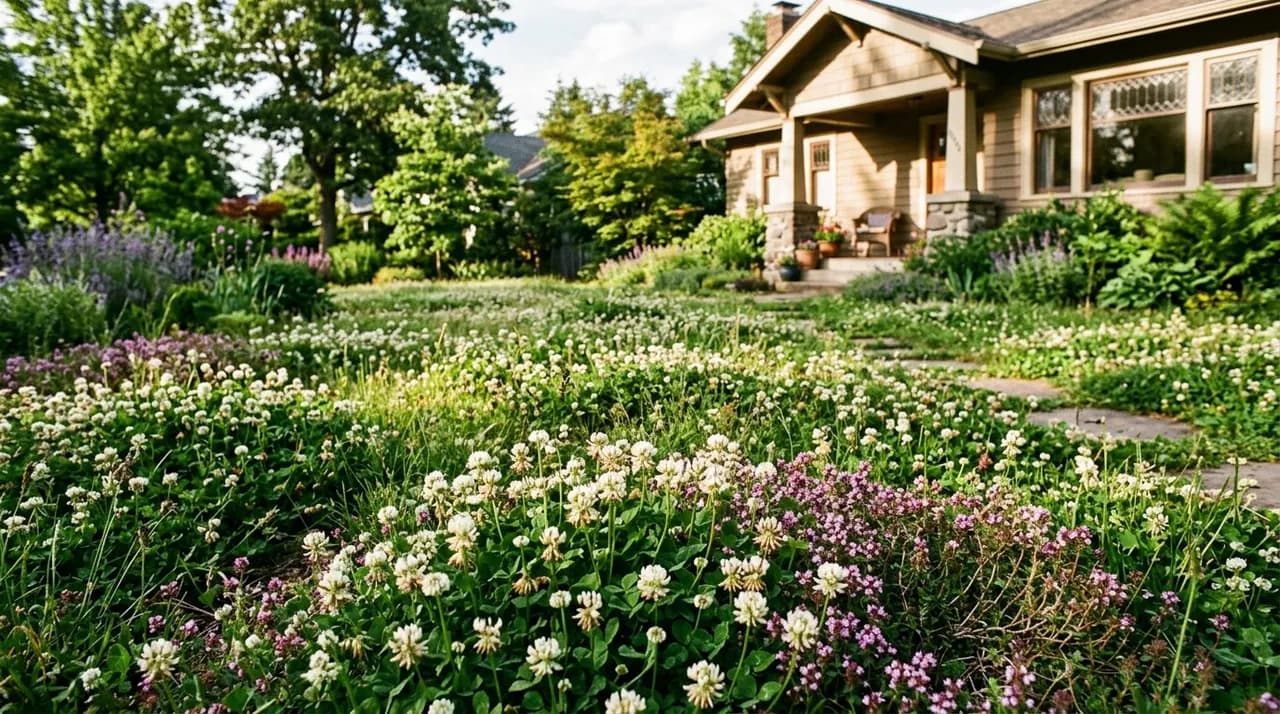
- White clover fixes atmospheric nitrogen into the soil — though applying high-nitrogen fertiliser stops the nodules working, so let the clover feed itself.
- Creeping thyme creates a dense, fragrant, flowering carpet reaching 2 to 3 inches tall that handles light path traffic.
- Native shortgrasses like buffalograss and blue grama survive severe drought with deep 5-foot root networks.
- Remove existing turfgrass organically using cardboard sheet mulching or summer solarization before establishing ground covers.
Quick answer: The best lawn alternatives include Dutch white clover, creeping thyme, native sedges, and fine fescue no-mow blends. These living ground covers use roughly 30% to 60% less water than conventional cool-season turfgrass, eliminate the need for synthetic fertilisers, and drastically reduce mowing chores.
Transforming a high-maintenance grass lawn with sustainable lawn alternatives is one of the most impactful ecological upgrades a homeowner can make. For decades, the standard manicured monoculture lawn (typically composed of thirsty Kentucky bluegrass or perennial ryegrass) has dominated North American landscaping.
However, maintaining a pristine turfgrass lawn comes with steep environmental and financial costs. Traditional lawns demand thousands of gallons of municipal water every summer, regular applications of synthetic chemical fertilizers, and weekly gas-powered mowing that generates air and noise pollution. During peak summer heatwaves and regional drought restrictions, conventional lawns quickly turn brown, dry out, and develop patchy weed infestations.
Replacing turf with ground covers like nitrogen-fixing clover, creeping thyme, native shortgrasses, and shade-tolerant sedges creates a drought-hardy yard that supports pollinators, improves soil biology, and reduces mowing.
Why replace traditional turfgrass?
Replacing a traditional lawn offers clear ecological and practical benefits:
- Substantial Water Conservation: Conventional turfgrass concentrates most of its root mass in the top 10 cm to 15 cm (4 to 6 in). Deeply rooted alternatives, such as native prairie grasses and clover, use roughly 30% to 60% less water than a conventional cool-season lawn once established — more if you choose native warm-season species.
- Reduced fertiliser and chemical inputs: Grass monocultures are fragile and vulnerable to grubs, fungal blights, and weed invasions. Diverse ground covers build natural soil resilience, sharply reducing or eliminating the need for synthetic fertilisers and selective herbicides.
- Drastically Reduced Mowing: Most living lawn alternatives grow to a naturally compact height (2 to 6 inches), requiring mowing only once or twice a year—or never at all.
- Pollinator Habitat Creation: Flowering ground covers provide essential nectar and pollen for native solitary bees, honeybees, butterflies, and beneficial predatory insects.
To integrate water-wise landscaping principles across edible zones, explore our foundational advice in xeriscaping a productive food garden.
Top 6 lawn alternatives
Selecting the ideal lawn substitute depends on your local climate, sun exposure, and how much foot traffic the area receives.
1. Dutch white clover and microclover (Trifolium repens)
White clover is the benchmark for low-maintenance, walkable lawn replacements.
- Growth Habit: Forms a dense, cool green carpet 4 to 8 inches (10 to 20 cm) tall with sweet-scented white blossoms from late spring through summer. Microclover cultivars feature smaller leaves and a lower, tighter growth habit (3 to 4 inches).
- Nitrogen-Fixing Power: Clover forms a symbiotic partnership with soil bacteria to capture atmospheric nitrogen, naturally fertilizing itself and surrounding soil without chemical inputs.
- Foot Traffic & Hardiness: Tolerates moderate foot traffic, children, and dogs (dog urine will not cause brown burn spots on clover). Thrives in USDA Zones 3 to 10 in full sun to partial shade.
- Mowing Requirements: Requires mowing only 2 to 3 times per season to deadhead spent blooms, or leave completely unmown for a natural meadow look.
- Two cautions with clover: Its flowers draw bees, which is great for pollination but worth knowing if children play barefoot on the lawn; and it dies back somewhat in hard winters, leaving bare soil that may need overseeding come spring.
2. Creeping thyme (Thymus serpyllum and Thymus praecox)
Creeping thyme (mother of thyme) transforms sunny yards into a dense, fragrant, flowering carpet.
- Growth Habit: Reaches only 2 to 3 inches (5 to 7.5 cm) in height, forming a woody, evergreen mat covered in pink, purple, or white flowers in midsummer.
- Drought Resilience: Extremely drought-tolerant once established, thriving in lean, sandy, or rocky soils where traditional grass fails.
- Foot Traffic & Hardiness: Handles light foot traffic well (such as along a garden path or between pavers), but struggles under regular sport or dogs, and benefits from a light shear once flowering finishes to stop the centre going woody. Hardy in Zones 4 to 9 in full sun.
- Mowing: Never requires standard lawnmower cutting; shear lightly after flowering.
For additional evergreen carpets across varied garden zones, review our dedicated guide to evergreen ground covers.
3. Native sedges (Carex species)
Native sedges are outstanding fine-textured alternatives for challenging shade and slope areas.
- Top Species: Pennsylvania sedge (Carex pensylvanica) for dry shade in Zones 3 to 8; Meadow sedge (Carex praegracilis) for full sun and moist soils in Zones 4 to 9.
- Appearance: Soft, weeping, grass-like green blades form a natural 6 to 8-inch (15 to 20 cm) flowing meadow.
- Shade Tolerance: Thrives directly beneath the dense shade of mature oak, maple, and pine trees where turfgrass refuses to grow.
- Maintenance: Leave unmown for a soft, undulating texture, or mow once in late winter to remove dormant tips. Discover more shade solutions in our guide to ground cover for shade.
4. Native shortgrasses: buffalograss and blue grama
Native to the North American shortgrass prairie, buffalograss (Bouteloua dactyloides) and blue grama (Bouteloua gracilis) are true warm-season native turfgrasses.
- Root Architecture: Develops deep, extensive root networks plunging 5 to 6 feet (1.5 to 1.8 m) into the subsoil, accessing moisture deep underground.
- Water Needs: Requires 75% less water than Kentucky bluegrass and survives severe summer heat and cold winters (Zones 3 to 9).
- Maintenance: Grows to a maximum height of 4 to 6 inches. Mow every 3 to 4 weeks for a manicured turf appearance, or leave unmown for a low prairie look.
5. Fine fescue no-mow blends
Blends of fine fescues (Hard fescue, Chewings fescue, Sheep fescue, and Creeping red fescue) offer a classic turf look with a fraction of the maintenance.
- Growth Habit: Slow-growing, cool-season grasses that thrive in poor, acidic soils in Zones 4 to 7.
- Texture: Forms a lush, fine-bladed green lawn in sun or partial shade. Left unmown, it gracefully arches over at 8 to 10 inches into a picturesque, flowing lawn.
6. Kurapia (Phyla nodiflora)
Kurapia is a sterile, low-growing ground cover developed for extreme drought tolerance.
- Performance: Thrives in full sun across warm southern and western states (Zones 7b to 11), handling foot traffic well. It stays green through mild winters in zones 9 to 11 but drops its leaves and turns straw-coloured in colder areas (zones 7b to 8b) before greening up again in spring. Reaches 2 to 3 inches tall and blooms with small white flowers from May to October.
Turf replacement comparison matrix
Lawn Alternative | Ideal Sun Exposure | Foot Traffic Tolerance | Height (Unmown) | Mowing Frequency |
|---|---|---|---|---|
White Clover | Full sun to part shade | Moderate | 4–8 in (10–20 cm) | 2–3 times / year |
Creeping Thyme | Full sun | Light to Moderate | 2–3 in (5–7.5 cm) | Shear after bloom |
Native Sedges | Partial to deep shade | Low to Moderate | 6–8 in (15–20 cm) | 0–1 time / year |
Buffalograss | Full sun | Moderate | 4–6 in (10–15 cm) | 2–3 times / year (or leave unmown) |
Fine Fescue Mix | Full sun to part shade | Moderate | 8–10 in (20–25 cm) | 0–2 times / year |
Kurapia | Full sun | Moderate to High | 2–3 in (5–7.5 cm) | 1–2 times / year |
How to remove existing turfgrass organically
Establishing a successful lawn alternative requires completely removing or smothering existing grass and perennial weeds before planting.
Method 1: cardboard sheet mulching (lasagna method)
Sheet mulching is the most effective organic method for eliminating lawn without disturbing soil biology:
- Mow the existing grass as short as possible (scalping).
- Lay down overlapping layers of thick, non-waxed corrugated cardboard over the entire lawn area, overlapping all seams by at least 6 to 8 inches (15 to 20 cm) to block sunlight completely.
- Top the cardboard with a 3 to 4-inch (7.5 to 10 cm) layer of rich, weed-free compost and coarse arborist mulch.
- Plant plugs of creeping thyme, sedges, or clover directly through cuts in the cardboard into the soil below. Learn step-by-step cardboard laying techniques in sheet mulching for weed control.
Method 2: summer solarization
In hot, sunny regions (Zones 7 to 10), clear UV-stabilized polyethylene plastic sheeting laid tightly over moist mowed grass for 6 to 8 weeks during midsummer traps solar heat, killing grass, roots, and weed seeds in the top 6 inches of soil.
To restore soil microbial health before seeding new alternatives, apply organic top-dressings following our advice in compost for lawns.
Establishment and long-term care
Once your new lawn alternative is installed, attentive early care guarantees long-term durability:
- Initial Establishment Watering: Keep newly sown seed or nursery plugs evenly moist for the first 3 to 4 weeks until roots establish. Once settled, taper off watering gradually.
- Weed Management in Year One: Hand-pull occasional opportunistic weeds during the first growing season while ground covers knit together into a solid, weed-suppressing carpet.
- Minimal Seasonal Feeding: Avoid high-nitrogen chemical fertilizers, which cause excessive rank growth in clover and native grasses. A light top-dressing of aged compost in spring provides all the organic fertility required.
Replacing high-maintenance turf with clover, creeping thyme, native sedges, or prairie shortgrasses saves water, supports wildlife, and reduces maintenance throughout the growing season.