Key takeaways
- Chickweed (Stellaria media) is a succulent, mild-flavored annual common in USDA zones 3-9, rich in vitamins A and C.
- Broadleaf plantain (Plantago major) and narrowleaf plantain (Plantago lanceolata) are widespread, offering a slightly bitter, earthy taste and significant minerals.
- Clover, particularly white clover (Trifolium repens) and red clover (Trifolium pratense), provides a sweet, grassy flavor and is a good source of protein and isoflavones. Due to its isoflavone content, which can have estrogenic effects, red clover should be consumed in moderation, particularly by pregnant women or individuals with hormone-sensitive conditions.
- Foraging safely requires positive identification, avoiding chemically treated areas, and harvesting away from roadsides to prevent contamination.
- These three plants can be incorporated raw into salads, sandwiches, or smoothies, adding nutrition and flavor to your diet.
- Many common ‘weeds’ are more nutritious than cultivated greens, with chickweed offering more iron than spinach by dry weight.
Quick answer: Chickweed (Stellaria media), broadleaf plantain (Plantago major), narrowleaf plantain (Plantago lanceolata), and white and red clover (Trifolium repens, Trifolium pratense) are common lawn weeds found across many US states that can be safely eaten raw.
Across the United States, from the humid summers of USDA zone 8 in the Southeast to the cooler climates of USDA zone 4 in the Upper Midwest, many gardeners view certain plants as persistent nuisances. However, some of these common lawn plants are edible and nutritious. Instead of using herbicides, these plants can be harvested for food. This article explores three such plants: chickweed, plantain, and clover, all of which can be safely eaten raw.
Foraging for wild edibles is a practice that connects us to the land and gives a sustainable way to supplement our diets. With proper identification and careful harvesting, these plants can provide a fresh, local source of vitamins, minerals, and other beneficial compounds. Many of these plants, like plantain, have been used in traditional diets for centuries, and have a documented history in regional diets.
Chickweed: a succulent spring green
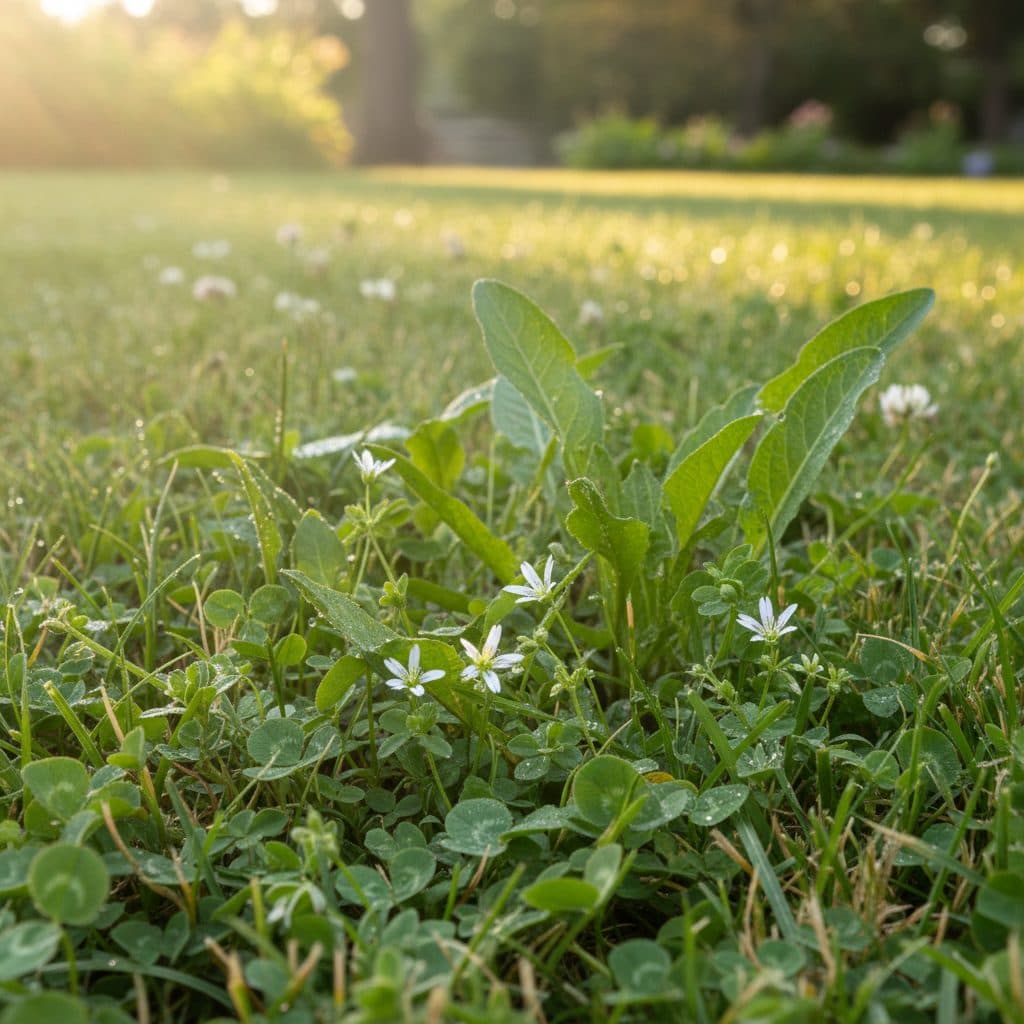
Chickweed, scientifically known as Stellaria media, is a low-growing annual herb that thrives in cool, moist conditions across much of the US, particularly in USDA zones 3 through 9. You’ll often find it forming dense mats in gardens, lawns, and disturbed areas, reaching heights of up to 6 inches. Its small, oval leaves and tiny white, star-shaped flowers are distinctive. This plant is a true spring ephemeral, often appearing in late winter or early spring and fading as summer temperatures rise above 80°F.
Identifying and using chickweed
To identify chickweed, look for its characteristic single line of hairs running up one side of the stem, switching sides at each node. The leaves are bright green and somewhat succulent, providing a mild, slightly sweet flavor when eaten raw. Chickweed is notably rich in vitamins A and C, and contains minerals like iron and magnesium. Chickweed has a history of traditional uses. It can be added to salads, sandwiches, or blended into smoothies. For example, a 1-cup serving of fresh chickweed can provide approximately 20% of the daily recommended vitamin C intake for an adult.
- Look for small, white, star-shaped flowers with five deeply notched petals.
- Observe the single line of hairs on the stem, which changes direction at each leaf node.
- Harvest the tender top 2-4 inches of the plant for the best flavor.
- Avoid areas treated with pesticides or near busy roadsides to prevent contamination.
- Rinse thoroughly in cold water before consumption to remove any soil or debris.
Plantain: a resilient and nutritious green
Plantain, specifically broadleaf plantain (Plantago major) and narrowleaf plantain (Plantago lanceolata), is one of the most common and recognizable weeds across all 50 US states, thriving in compacted soils and high-traffic areas. These resilient plants can tolerate a wide range of conditions, from the arid plains of USDA zone 7 in Colorado to the wet coastal regions of USDA zone 9 in Florida. Broadleaf plantain features wide, oval leaves with prominent parallel veins, while narrowleaf plantain has long, lance-shaped leaves. Both varieties produce tall flower stalks with tiny, inconspicuous flowers.
Harvesting and enjoying plantain
The young, tender leaves of plantain are best for raw consumption, offering a slightly bitter, earthy flavor that can add depth to salads. As the leaves mature, they become tougher and more fibrous, making them better suited for cooking. Plantain is a rich source of calcium, iron, and vitamins A and K, making it a useful addition to a forager’s diet. Research in 2014 and 2015 evaluated plantain in animal forage and measured its nutritional value [0, 2]. You can learn more about identifying this plant at Plantain weed: how to identify broadleaf and narrowleaf plantain (and eat it). Fresh plantain leaves are a good source of calcium.
- Harvest young, tender leaves, typically 2-4 inches long, from the center of the rosette.
- Avoid older, tougher leaves, which can be stringy and less palatable raw.
- Look for the distinctive parallel veins running the length of the leaf.
- Ensure the harvesting area is free from chemical sprays and pet waste.
- Rinse thoroughly and pat dry before adding to your favorite dishes.
Clover: a sweet and protein-rich legume
Clover, particularly white clover (Trifolium repens) and red clover (Trifolium pratense), is a ubiquitous sight in lawns, pastures, and disturbed ground throughout the US, thriving in USDA zones 3-10. These legumes are easily recognized by their trifoliate leaves (three leaflets per stem) and their characteristic white or pinkish-red flower heads. White clover typically grows low to the ground, spreading by stolons, while red clover has a more upright growth habit, reaching up to 20 inches tall. Both varieties are known for their ability to fix atmospheric nitrogen, improving soil fertility.
Culinary uses and benefits of clover
The leaves and flowers of clover can be eaten raw. White clover leaves have a mild, slightly sweet, grassy flavor, while red clover leaves and flowers can be a bit more sturdy. Both are excellent additions to salads, offering a pleasant crunch and a nutritional boost. Clover is a good source of protein, essential minerals, and isoflavones, which have been studied for their potential health benefits. In 2012, research acknowledged clover’s presence in mixed swards, indicating its widespread occurrence [2]. For example, fresh clover leaves contain protein, making it a useful plant-based protein source.
- Harvest young, tender leaves and flower heads for the best flavor and texture.
- Distinguish between white clover (white flowers, often with a V-shaped watermark on leaves) and red clover (pinkish-red flowers).
- Avoid harvesting clover that shows signs of disease or pest damage.
- Ensure the area has not been treated with herbicides, as clover is often targeted by lawn chemicals.
- Rinse thoroughly under cool running water before consumption to remove any dirt or small insects.
Foraging safely and responsibly
Before you begin harvesting these edible lawn weeds, foragers need to follow basic safety principles. The most important rule is positive identification: never eat a plant unless you are 100% certain of its identity. There are many plant look-alikes, and some can be toxic. Consult reliable field guides specific to your region, such as those covering the flora of the Pacific Northwest or the Eastern Woodlands, and consider joining local foraging groups. An excellent starting point for learning safe identification is Foraging for beginners: identifying common wild edibles safely.
Best practices for harvesting wild edibles
Always harvest from areas that are free from chemical contamination. This means avoiding lawns that have been treated with pesticides, herbicides, or synthetic fertilizers within the last 2-3 years. Stay away from roadsides, industrial sites, and areas with heavy foot traffic or pet activity, as these locations can accumulate pollutants and pathogens. The USDA Natural Resources Conservation Service provides extensive data on plant distributions and safe harvesting practices across various US ecosystems [6]. When harvesting, take only what you need: harvest no more than 10-20% of a patch so the plants can regenerate. For example, leaving 80% of a chickweed patch allows it to continue its growth cycle and provide future harvests.
- Positively identify every plant before consumption, using multiple reliable sources.
- Avoid areas treated with chemicals, including pesticides, herbicides, and synthetic fertilizers.
- Stay clear of roadsides, industrial zones, and areas with high pet traffic to prevent contamination.
- Harvest only a small portion (e.g., 10-20%) of a plant patch to ensure its regeneration.
- Wash all foraged plants thoroughly under cold running water before eating.
Beyond the lawn: integrating wild edibles into your diet
Incorporating chickweed, plantain, and clover into your diet can be a simple and rewarding way to add fresh, nutrient-dense greens to your meals. These plants are versatile and can be used in many of the same ways as cultivated leafy greens. Consider them as a free, local source of nutrition that often surpasses the vitamin and mineral content of store-bought produce. For instance, fresh chickweed can offer up to 20% more iron by dry weight compared to spinach, according to some nutritional analyses.
Creative ways to use your foraged greens
One popular method is to use them as a base for salads, mixing them with other greens, vegetables, and a light vinaigrette. The mild flavor of chickweed pairs well with almost anything, while plantain’s slightly bitter notes can complement sweeter ingredients. Clover leaves and flowers can add a delicate sweetness and texture. You can also chop them finely and add them to sandwiches, wraps, or even as a garnish for soups and stews. For a quick nutritional boost, blend a handful of these greens into your morning smoothie. These wild greens supplement cultivated produce rather than replacing it. In a 2023 farm system study, plantain was successfully integrated into dairy systems, showing its utility in pasture systems [4].
- Use chickweed, plantain, and clover as a fresh base for mixed green salads.
- Finely chop and add to sandwiches, wraps, or as a fresh garnish.
- Blend a small handful into fruit smoothies for an added nutritional kick.
- Experiment with combining their unique flavors with other foraged or cultivated ingredients.
- Introduce them gradually into your diet to assess your body’s response.
Comparison of edible lawn weeds
Plant | Typical height | Primary flavor profile | Key nutrients | USDA zones |
|---|---|---|---|---|
Chickweed (Stellaria media) | 2-6 in | Mild, slightly sweet, succulent | Vitamins A, C; Iron | 3-9 |
Broadleaf Plantain (Plantago major) | 4-12 in | Slightly bitter, earthy | Calcium, Iron, Vitamins A, K | 3-10 |
Red/White Clover (Trifolium spp.) | 4-20 in | Mild, sweet, grassy | Protein, Minerals, Isoflavones | 3-10 |
Chickweed Vitamin C: Fresh chickweed is a good source of vitamin C.
Plantain Calcium Content: A typical 100-gram serving of fresh plantain leaves can contain over 300 mg of calcium, rivaling some dairy products.
Clover Protein: One cup of fresh clover leaves contains approximately 2 grams of protein while aiding daily protein needs.
References
- Ewe lamb diet selection on plantain (Plantago lanceolata) and on a herb and legume mix, including plantain, chicory (Cichorium intybus), red clover (Trifolium p (2014).
- Weed control in establishing mixed swards of clover plantain and chicory (2012).
- A review of the use of chicory, plantain, red clover and white clover in a sward mix for increased sheep and beef production (2015).
- Incorporating plantain into ryegrass-white clover mixed sward for an economically and environmentally sustainable dairy system: Year one of a farm system study (2023).
- Chickweed Tincture (2020).
- USDA Natural Resources Conservation Service (2024).