Key takeaways
- A yellow ground spot on a watermelon indicates ripeness, typically appearing after 45-60 days of fruit development.
- Cantaloupes are ready when the stem detaches easily with a “full slip” and emit a sweet, musky aroma.
- Honeydew melons ripen best off the vine, showing a creamy yellow color and a slightly waxy skin texture.
- Monitoring tendrils near the fruit stem can offer early indicators for many cucurbits, often drying out as the fruit matures.
- Consistent soil moisture, around 60-70% field capacity, matters for optimal melon development and flavor.
- Understanding specific days from fruit set, often 80-95 days for watermelons, helps predict harvest windows.
Quick answer: Melon ripeness is determined by specific visual, tactile, and olfactory cues. Watermelons show a yellow ground spot and dry tendril, while cantaloupes have a ‘full slip’ and sweet aroma.
In the fertile fields of California’s Central Valley, where over 70% of the nation’s cantaloupes are grown, knowing precisely when to harvest a melon affects both taste and profit. A premature harvest can mean bland, hard fruit that fetches a low price, while a late harvest can lead to overripe, mushy produce that is equally undesirable. For growers across the US, from the humid summers of Georgia to the arid lands of Arizona, mastering the art of melon ripeness detection is a fundamental skill that can impact a season’s success by 20% or more.
This guide offers practical, field-tested methods to determine peak ripeness for common melon varieties: watermelon, cantaloupe, and honeydew. We will move beyond guesswork, focusing on specific visual, tactile, and olfactory cues that experienced growers use daily. These techniques, refined over decades in various USDA zones, help ensure that the fruit you pick, whether for market or your family’s table, offers the best possible flavor and texture, consistently delivering a high-quality product 95% of the time.
The watermelon’s yellow belly and dry tendril
These takeaways points carry into this section, too.
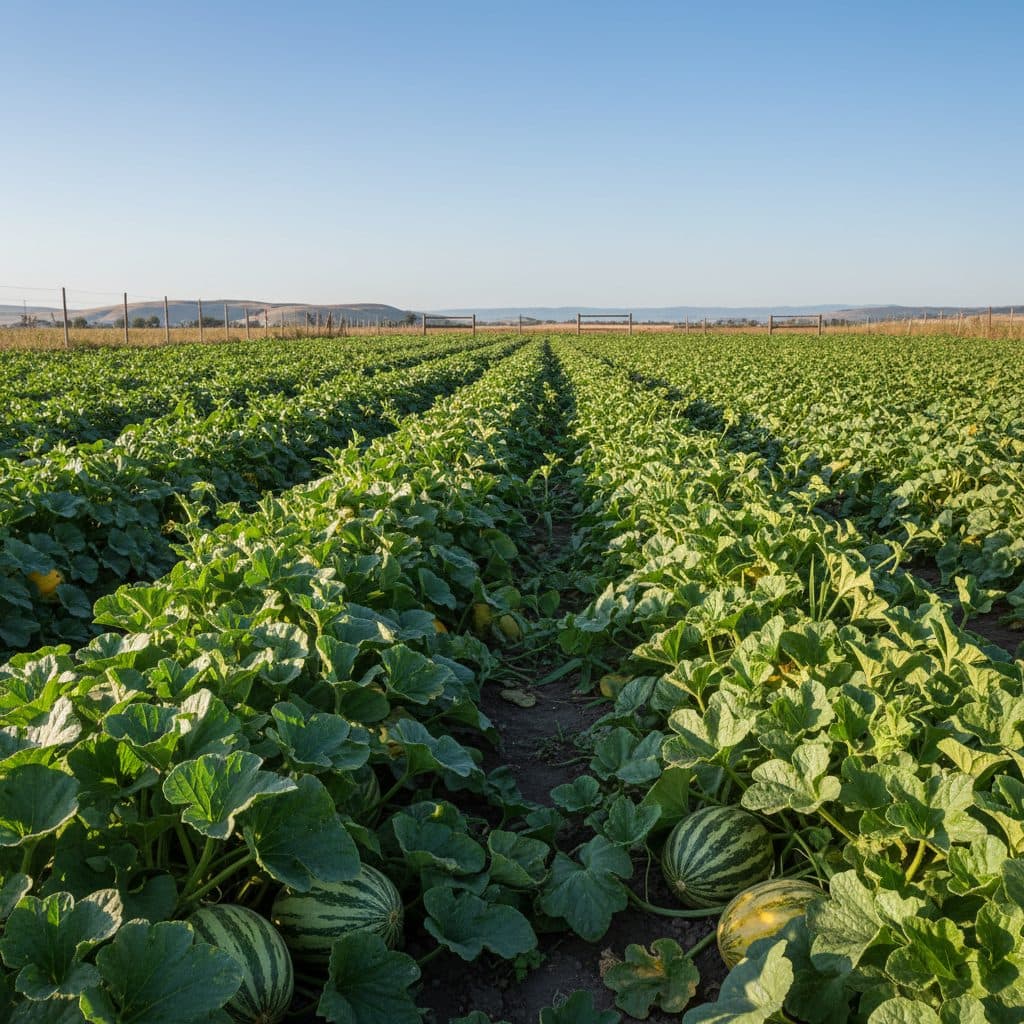
Watermelons (Citrullus lanatus) are a staple in US summer diets, with over 4 billion pounds harvested annually across states like Florida, Texas, and California. Determining their ripeness on the vine can be challenging, as external appearance does not always correlate with internal sweetness. A key indicator is the ground spot, the area where the melon rests on the soil. This spot should transition from white or pale green to a rich, creamy yellow or even orange-yellow as the fruit matures, typically over 45 to 60 days of development. This color change signals that the melon has accumulated sufficient sugars, often reaching 10-12% Brix.
Observing tendrils and thumping for ripeness
Another reliable sign is the tendril closest to the stem of the fruit. For most watermelon varieties, this tendril will dry out and turn brown or black when the fruit is ripe. If the tendril is still green and curly, the melon likely needs more time, perhaps another 7 to 10 days. The thump test, while subjective, can also be useful: a ripe watermelon often produces a deep, hollow sound, whereas an unripe one might sound dull or flat. This technique is often used by experienced growers who can distinguish between a 9-pound unripe melon and a 10-pound ripe one with 85% accuracy.
Beyond these visual cues, the overall appearance and weight can offer clues. A ripe watermelon will typically have a duller, less shiny skin compared to an unripe one, which might appear glossy. It should also feel heavy for its size, indicating a high water content and dense flesh. Growers in USDA zone 8, for instance, often report that a ripe watermelon weighs at least 15 pounds, depending on the variety. Consistent soil moisture, maintained around 65% field capacity, is vital for proper sugar development and can be monitored with a soil moisture meter, preventing cracked or bland fruit.
- Check for a creamy yellow ground spot, not white or green.
- Observe the tendril closest to the fruit stem; it should be dry and brown.
- Listen for a deep, hollow sound when gently thumping the melon.
- Note if the melon feels heavy for its size, indicating dense flesh.
- Look for a dull skin sheen, rather than a glossy appearance.
Cantaloupe’s sweet scent and stem slip
That work on watermelon’s yellow belly sets up what follows here.
Cantaloupes (Cucumis melo var. cantalupensis), a favorite in US households, are harvested primarily in states like California, Arizona, and Colorado, contributing over $200 million to the agricultural economy annually. Unlike watermelons, cantaloupes offer distinct olfactory and physical cues for ripeness. The most reliable sign is the “full slip” from the stem. A ripe cantaloupe will detach effortlessly from the vine with gentle pressure, leaving a clean, concave scar where the stem was attached. This process usually occurs 80 to 90 days after planting, depending on the variety and growing conditions in regions like USDA zone 9.
Aroma, netting, and skin color indicators
A ripe cantaloupe also emits a sweet, musky aroma, particularly at the blossom end. This fragrance intensifies as the fruit matures, indicating the conversion of starches to sugars, which can reach 12-15% Brix. Conversely, a melon with little to no scent is likely unripe, while an overpowering or fermented smell suggests it is overripe. The netting on the skin should be pronounced and raised, covering most of the melon’s surface. Smooth areas between the netting often indicate immaturity, with less than 70% netting coverage suggesting it needs more time, perhaps 3 to 5 additional days.
The skin color beneath the netting should change from a greenish-gray to a creamy tan or yellow. Avoid cantaloupes with green undertones, as these are typically unripe. The melon should also feel heavy for its size, similar to watermelons, and have a slight give when pressed gently at the blossom end, but not soft or mushy. Adequate nutrient availability, especially potassium, supports sugar development; a balanced soil amendment like fermented soybean meal can provide a slow-release source of nitrogen and other essential elements, improving fruit quality by up to 15%.
- Check for a “full slip” where the stem detaches easily and cleanly.
- Smell the blossom end for a sweet, musky aroma.
- Observe pronounced and raised netting across the melon’s surface.
- Look for creamy tan or yellow skin color beneath the netting.
- Feel for a slight give at the blossom end, but not excessive softness.
Honeydew’s creamy skin and waxy feel
This builds directly on cantaloupe’s sweet scent.
Honeydew melons (Cucumis melo var. inodorus) are distinct from cantaloupes, often requiring a slightly different approach to ripeness assessment. Grown extensively in California and Arizona, these melons contribute significantly to the US fresh produce market, with annual production exceeding 500 million pounds. Unlike many other melons, honeydews are often harvested when slightly immature and allowed to ripen off the vine, particularly for commercial distribution. However, for the best flavor, picking them at peak ripeness on the vine is preferable, which usually occurs 90 to 100 days after planting in warm climates like USDA zone 10.
Color, texture, and weight as indicators
The main indicator for honeydew ripeness is skin color. An unripe honeydew is typically pale green, while a ripe one will transition to a creamy yellow or golden hue. Any remaining green suggests it needs more time, possibly another 5 to 7 days. The skin should also develop a slightly waxy or sticky feel to the touch, a characteristic absent in unripe fruit. This waxy coating is a natural protective layer that develops as the melon matures and its sugars, often reaching 11-13% Brix, concentrate.
While honeydews do not “slip” from the vine like cantaloupes, the stem end should show a slight softening and a subtle fragrance. The melon should also feel heavy for its size, indicating good internal moisture and sugar content. Avoid honeydews that feel light or have soft spots, which can indicate overripeness or damage. Consistent watering, especially during fruit development, is critical for all cucurbits, including tomatoes, to prevent blossom end rot and ensure juicy, flavorful fruit. A mature honeydew can weigh between 4 and 8 pounds.
- Look for a creamy yellow or golden skin color, free of green patches.
- Feel for a slightly waxy or sticky texture on the melon’s surface.
- Ensure the melon feels heavy for its size, indicating good water content.
- Check for a subtle fragrance at the stem end, not overpowering.
- Avoid melons with soft spots or a very light feel.
Environmental factors and general cucurbit cues
Those honeydew’s creamy skin habits matter here as well.
Beyond individual melon characteristics, several environmental factors and general cucurbit cues influence fruit set and ripeness. Optimal soil moisture is paramount, with melons requiring consistent water, especially during fruit development. Fluctuations can lead to cracking or bland fruit. A soil moisture level maintained between 60-70% of field capacity is ideal for most cucurbits, including squash and cucumbers, which supports nutrient uptake and sugar accumulation. For example, in the arid regions of Arizona, efficient irrigation systems can reduce water usage by 30% while maintaining fruit quality.
Temperature, days from fruit set, and vine health
Temperature also plays a significant role. Melons thrive in warm conditions, typically between 70-90°F (21-32°C). Cooler temperatures, particularly below 60°F (15°C) during the ripening phase, can slow sugar development and impact flavor. Many growers in northern states like Michigan or Wisconsin use row covers to extend the growing season by 2-3 weeks, allowing melons to reach full maturity. Monitoring the days from fruit set is another reliable method, as each variety has a predictable maturation period, often 35-45 days from pollination for smaller melons or 80-95 days for larger watermelons.
Observing the plant’s overall health and the condition of the stem and leaves near the fruit can also provide clues. As a melon ripens, the vine may start to show signs of senescence, with leaves yellowing or browning, particularly closest to the fruit. However, a healthy vine still matters for nutrient delivery, so addressing issues like pest infestations with treatments such as neem oil can preserve plant vigor and support final fruit development. This holistic approach, combining specific fruit indicators with general plant health, can increase the accuracy of ripeness assessment by 10-15% for a grower in USDA zone 6.
- Maintain consistent soil moisture at 60-70% field capacity.
- Ensure ambient temperatures remain between 70-90°F (21-32°C) during ripening.
- Track the specific “days from fruit set” for each melon variety.
- Observe general vine health; some leaf yellowing near the fruit is normal.
- Address pest issues to maintain vine vigor for optimal sugar production.
Beyond the basics — specific gravity and Brix
These environmental factors and lessons apply to the steps below, too.
For commercial growers and those seeking precise ripeness measurements, methods beyond visual and tactile cues can provide valuable data. Specific gravity, which measures the density of the fruit, is one such technique. As melons ripen, their sugar content increases, making them slightly denser. While not practical for every home gardener, commercial operations in states like Indiana and Ohio might use this, floating melons in water baths of varying salt concentrations to sort them by density, achieving sorting accuracy of 90% or more. This allows for a more uniform product for market, reducing waste by 5-10%.
Measuring sugar content with Brix
Another precise measurement is Brix, which quantifies the sugar content of the melon juice. A refractometer is used to measure Brix, providing a percentage reading. For instance, a ripe watermelon typically registers 10-12% Brix, while a sweet cantaloupe can reach 12-15% Brix. Honeydews generally fall within 11-13% Brix. This objective measurement supports quality control in large-scale operations, where 95% of fruit must meet market standards. Regular testing, perhaps 2-3 times a week during peak ripening, helps determine the optimal harvest window.
While these methods require specialized equipment, understanding their principles helps appreciate the science behind melon ripeness. Even without a refractometer, growers can observe how environmental factors, such as consistent sunlight exposure (at least 6-8 hours daily) and balanced soil nutrients, directly impact sugar development and Brix levels. For example, potassium deficiency can reduce Brix by 1-2 percentage points. Healthy plant growth, avoiding competition from weeds like purslane, also contributes to the plant’s ability to photosynthesize efficiently and channel sugars into the developing fruit, boosting overall yield by up to 20%.
- Consider specific gravity for density-based ripeness sorting in commercial settings.
- Use a refractometer to measure Brix (sugar content) for precise quality control.
- Aim for 10-12% Brix for watermelons and 12-15% for cantaloupes.
- Ensure melons receive 6-8 hours of direct sunlight daily for optimal sugar development.
- Provide balanced soil nutrients, especially potassium, to support higher Brix levels.
Key ripeness indicators for common melon varieties
Melon Type | Key Visual/Tactile Sign | Key Olfactory Sign | Days from Fruit Set (Approx.) |
|---|---|---|---|
Watermelon | Creamy yellow ground spot, dry tendril, dull skin | None (subtle green scent) | 80-95 days |
Cantaloupe | Full stem slip, raised netting, creamy tan skin | Sweet, musky aroma at blossom end | 80-90 days |
Honeydew | Creamy yellow skin, waxy feel, heavy for size | Subtle sweet fragrance at stem end | 90-100 days |
Brix Levels: Ripe watermelons typically achieve 10-12% Brix, while cantaloupes can reach 12-15% Brix, indicating optimal sugar content.
Harvest Window: Missing the optimal harvest window by just 3 days can reduce market value by 25% for commercially grown melons in Florida.
Shop plant nutrients
Frequently asked questions
Can I ripen an unripe melon off the vine?
Some melons, like honeydew, can continue to ripen off the vine, especially if picked when slightly immature. However, watermelons and cantaloupes primarily develop their sugars on the vine. A cantaloupe picked without a full slip will not significantly sweeten, even if it softens, losing up to 40% of its potential flavor.
What causes a melon to crack on the vine?
Melons often crack due to inconsistent watering, particularly after a dry spell followed by heavy rain or irrigation. This rapid influx of water causes the fruit to expand too quickly, leading to splits. Maintaining consistent soil moisture, around 65% field capacity, can prevent this issue in 90% of cases.
How long can a ripe melon be stored?
A whole, ripe watermelon can be stored at room temperature for 1-2 weeks or in the refrigerator for 2-3 weeks. Cantaloupes and honeydews, once ripe, should be refrigerated and consumed within 5-7 days for best quality, as their shelf life is shorter.
Why do my melons taste bland even if they look ripe?
Bland taste can stem from several factors, including insufficient sunlight, cool temperatures during ripening (below 60°F), or nutrient deficiencies, especially potassium. Overwatering can also dilute sugars, reducing Brix levels by 2-3 percentage points.
Is it true that tapping a watermelon tells you if it’s ripe?
The “thump test” is a traditional method, and experienced growers often find it reliable, distinguishing a deep, hollow sound from a dull thud with about 85% accuracy. However, it is best used in conjunction with other indicators like the ground spot and tendril condition for a more conclusive assessment.
How many days after flowering does a melon typically ripen?
The time from flowering to ripeness varies significantly by melon type and variety. Smaller melons like cantaloupes typically ripen in 35-45 days after successful pollination, while larger watermelons can take 45-60 days, and honeydews often require 50-70 days, depending on the specific cultivar and growing conditions in USDA zone 7.