Key takeaways
- Selecting native plants by USDA zone and regional climate ensures better establishment and long-term health.
- Groundcovers like wild ginger and foamflower suppress weeds, reduce soil erosion, and maintain soil moisture in shaded areas.
- Understanding specific light, soil, and moisture needs for each species matters most for success, especially in deep shade.
- Many native woodland plants offer seasonal interest, from spring blooms to attractive foliage in summer and fall.
- Consider plant height and spread to create a layered, naturalistic look in your woodland garden, aiming for 6-18 inches for most groundcovers.
- Deer resistance varies by species and region; some plants, like wild ginger, are generally less palatable to deer.
Quick answer: To select native shade plants and groundcovers for woodland gardens, choose species adapted to your USDA zone and regional climate, considering specific light, soil, and moisture needs. This ensures better establishment, long-term health, and contributes to local biodiversity.
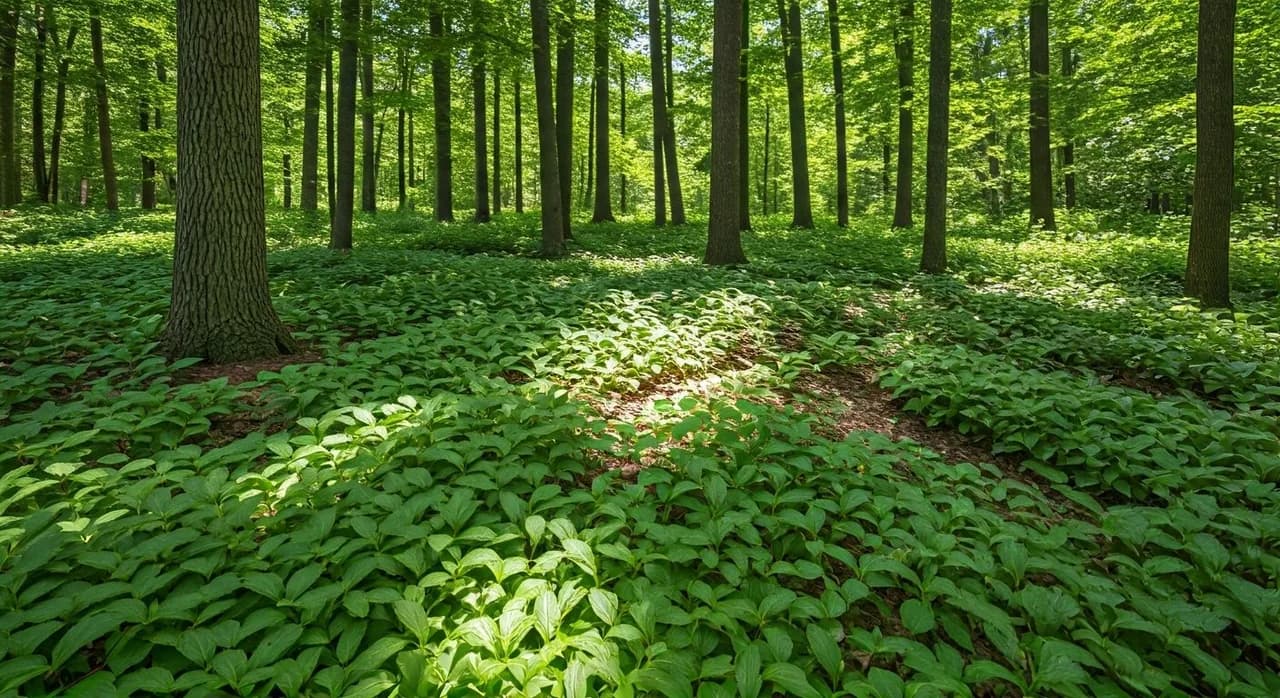
In the humid woodlands of the Appalachian Mountains, where dappled light filters through a canopy of oaks and maples, native plants form a resilient understory. For growers across the United States looking to cultivate a thriving woodland garden, selecting the right native shade plants and groundcovers is paramount. These species are adapted to local conditions, often requiring less intervention once established, and contribute to regional biodiversity.
This guide provides regional lists for native shade plants and groundcovers, focusing on species that perform well in the specific light, soil, and moisture conditions found in various US woodland settings. We’ll cover options for USDA Zones ranging from three to nine so you can find suitable choices for your particular climate and site, including plants that thrive in deep shade.
Northeast and mid-atlantic woodlands: cool-season performers
For woodland gardens in the Northeast and Mid-Atlantic, spanning USDA Zones four through eight, plants that tolerate cool, moist conditions and a significant winter dormancy are ideal. Many of these species emerge early in spring, taking advantage of sunlight before the tree canopy fully leafs out. For instance, Canadian wild ginger (Asarum canadense) forms a dense, heart-shaped leaf carpet typically growing 6-8 inches tall. Research indicates that propagating wild ginger can be successful under shade conditions, with high germination rates when seeds are collected and sown fresh [1].
Selecting plants for consistent moisture
Another excellent choice is foamflower (Tiarella cordifolia), which reaches 8-12 inches in height and produces delicate white flower spikes in spring. This plant thrives in consistently moist, well-drained soil, making it a good companion for wild ginger. For a sturdy evergreen option, consider the Christmas fern (Polystichum acrostichoides), which can grow up to 24 inches tall and provides year-round interest. These plants are generally deer resistant, a significant advantage in areas with high deer populations, and can be explored further in our guide to deer resistant plants.
- Canadian wild ginger (Asarum canadense): 6-8 inches tall, USDA Zones 4-8.
- Foamflower (Tiarella cordifolia): 8-12 inches tall, USDA Zones 4-8.
- Christmas fern (Polystichum acrostichoides): 18-24 inches tall, USDA Zones 3-9.
- Wild geranium (Geranium maculatum): 12-24 inches tall, USDA Zones 3-8.
- Virginia bluebells (Mertensia virginica): 12-24 inches tall, USDA Zones 3-8.
Southeast woodlands: heat and humidity tolerant options
Gardens in the humid Southeast, covering USDA Zones six through nine, require plants that can withstand heat and humidity while still thriving in shade. Many native species here are adapted to sandy or clay soils, though good drainage is always beneficial. For instance, American alumroot (Heuchera americana) is a versatile groundcover, growing 12-18 inches tall, known for its attractive foliage and tolerance of various soil types, including clay soil. Its leaves often display interesting patterns and colors, providing visual interest throughout the growing season.
Groundcovers for erosion control
Another excellent choice is creeping phlox (Phlox stolonifera), a true groundcover that spreads to form a mat about 6-8 inches high, blooming with purple or pink flowers in spring. This plant is particularly effective for stabilizing slopes and preventing erosion, a common concern in many landscapes. For a striking spring display, consider various trillium species (Trillium spp.), which grow 12-18 inches tall and are iconic woodland wildflowers, though they can be slow to establish. These plants benefit from a rich, organic soil, often improved with amendments like fermented soybean meal.
- American alumroot (Heuchera americana): 12-18 inches tall, USDA Zones 4-9.
- Creeping phlox (Phlox stolonifera): 6-8 inches tall, USDA Zones 5-9.
- Trillium species (Trillium spp.): 12-18 inches tall, USDA Zones 4-9.
- Partridgeberry (Mitchella repens): one-two inches tall, USDA Zones 3-8.
- Green-and-gold (Chrysogonum virginianum): 4-6 inches tall, USDA Zones 5-9.
Midwest and great plains woodlands: cold-hardy and resilient
For the Midwest and Great Plains, covering USDA Zones three through seven, cold hardiness and resilience to fluctuating temperatures are key. Many native woodland plants in this region are accustomed to deep winter freezes and hot, sometimes dry, summers. Wild geranium (Geranium maculatum) is a dependable choice, growing 12-24 inches tall with pink-purple flowers in spring. It can tolerate a range of soil conditions, from moist to somewhat dry, making it adaptable to various sites within a woodland setting.
Groundcovers for varied conditions
Another excellent groundcover is false Solomon’s seal (Maianthemum racemosum), reaching 18-36 inches in height and producing feathery white flower clusters followed by red berries. This plant offers significant textural interest and is quite sturdy. For areas with more consistent moisture, large-leaved aster (Eurybia macrophylla) can form a dense groundcover 18-30 inches tall, blooming in late summer and fall. These plants help create a dense ground cover, which suppresses weeds and reduces the need for frequent weeding, potentially saving significant maintenance time.
- Wild geranium (Geranium maculatum): 12-24 inches tall, USDA Zones 3-8.
- False Solomon’s seal (Maianthemum racemosum): 18-36 inches tall, USDA Zones 3-7.
- Large-leaved aster (Eurybia macrophylla): 18-30 inches tall, USDA Zones 3-7.
- Bloodroot (Sanguinaria canadensis): 6-10 inches tall, USDA Zones 3-8.
- Zigzag goldenrod (Solidago flexicaulis): 24-48 inches tall, USDA Zones 3-8.
Pacific northwest and western woodlands: moisture-loving and evergreen
The Pacific Northwest and other western woodland regions, primarily USDA Zones six through nine, often feature coniferous forests and experience wet winters and dry summers. Plants here need to be adapted to consistent moisture in one season and potentially drier conditions in another. Inside-out flower (Vancouveria hexandra) is an excellent groundcover, reaching 8-12 inches tall, known for its delicate, fern-like foliage and white flowers. It forms a dense mat, effectively suppressing weeds over large areas, and can spread up to 24 inches wide.
Evergreen options for year-round appeal
Another superb choice is Oregon oxalis (Oxalis oregana), also known as redwood sorrel, which grows 4-8 inches tall and forms a lush, clover-like carpet. This plant thrives in deep shade and consistently moist conditions, often found under dense tree canopies. For a larger, more architectural element, sword fern (Polystichum munitum) can reach 36-48 inches in height and provides evergreen structure. These plants contribute to a rich forest floor, helping to retain soil moisture by reducing evaporation by up to 20%.
- Inside-out flower (Vancouveria hexandra): 8-12 inches tall, USDA Zones 5-9.
- Oregon oxalis (Oxalis oregana): 4-8 inches tall, USDA Zones 6-9.
- Sword fern (Polystichum munitum): 36-48 inches tall, USDA Zones 3-9.
- Western bleeding heart (Dicentra formosa): 12-18 inches tall, USDA Zones 4-8.
- Fringe cup (Tellima grandiflora): 12-24 inches tall, USDA Zones 4-9.
General planting and care tips for woodland gardens
Regardless of your region, successful woodland gardening hinges on understanding and mimicking natural forest conditions. The most critical factor is light; most woodland plants prefer partial to full shade, meaning less than three hours of direct sun per day [4]. Soil preparation is also vital. Woodland soils are typically rich in organic matter, well-drained, and slightly acidic. Incorporating 2-4 inches of compost or leaf mold annually will significantly improve soil structure and fertility.
Watering and maintenance strategies
Consistent moisture is another main element, especially during establishment. While many native plants become drought tolerant once mature, young plants require regular watering, perhaps one inch per week during dry periods, for their first one or two growing seasons. Using a soil moisture meter can help prevent over or under-watering. Minimal fertilization is usually needed; the decomposition of leaf litter provides sufficient nutrients. Removing invasive species is also important to protect native plant communities, as non-natives can outcompete desirable species, sometimes reducing native plant populations by 30% or more.
- Assess light levels: Less than three hours of direct sun for most woodland plants.
- Improve soil with organic matter: Add 2-4 inches of compost or leaf mold annually.
- Provide consistent moisture: Especially for the first 1-2 years after planting.
- Mulch with leaf litter: A 2-3 inch layer helps retain moisture and suppress weeds.
- Monitor for invasive species: Remove non-native plants to protect native biodiversity.
Comparison of native woodland groundcovers
Plant Name | USDA Zones | Height (inches) | Light Needs | Moisture Needs |
|---|---|---|---|---|
Canadian Wild Ginger | 4-8 | 6-8 | Full to Part Shade | Moist, Well-Drained |
Foamflower | 4-8 | 8-12 | Part to Full Shade | Consistently Moist |
American Alumroot | 4-9 | 12-18 | Part to Full Shade | Medium, Well-Drained |
Creeping Phlox | 5-9 | 6-8 | Part Shade | Medium, Well-Drained |
Inside-Out Flower | 5-9 | 8-12 | Part to Full Shade | Moist, Well-Drained |
Oregon Oxalis | 6-9 | 4-8 | Full Shade | Consistently Moist |
Wild Ginger Growth: Canadian wild ginger (Asarum canadense) can be successfully propagated under shade, with high germination rates often exceeding 70% when seeds are sown fresh [1].
Groundcover Benefits: Effective groundcovers, like foamflower, can reduce soil erosion by up to 90% on slopes and decrease maintenance time by 20-30% compared to bare soil [2].
Shade Definition: Full shade generally means less than three hours of direct sunlight per day, a condition preferred by many native woodland species [4].
References
- Using shade to propagate Canadian wild ginger (Asarum canadense L.) and other woodland forbs (2014).
- Chapter 2 Groundcovers and Shrubs (2013).
- Groundcovers and shrubs (2013).
- shade (2014). shade.
- Armitage’s Native Plants for North American Gardens (review) (2006).
- USDA Natural Resources Conservation Service (2024).