Key takeaways
- No-dig gardening preserves subterranean soil fungal networks and earthworm channels by feeding the soil from the surface with organic compost.
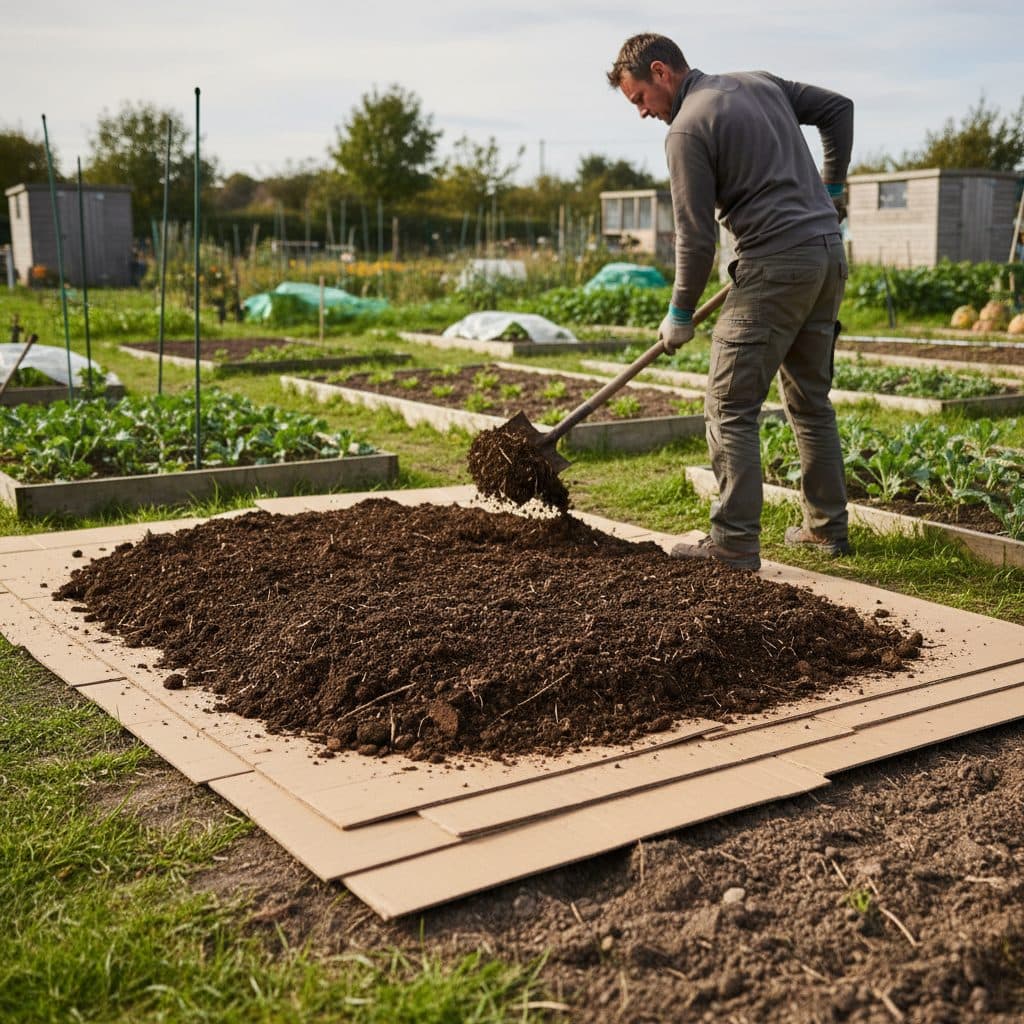
- Starting a bed over turf or weeds requires only plain cardboard and a 10 to 15 cm layer of well-rotted compost, eliminating turf stripping.
- Digging inverts the soil profile, bringing thousands of dormant weed seeds to the surface where light triggers a flush of germination.
- Ongoing maintenance requires an annual 2.5 to 5 cm surface topdressing of compost each autumn or early spring, requiring no digging tools.
- Seeds and young transplants are sown directly into the top compost layer, where loose texture encourages rapid, healthy root development.
Quick answer: To start a no-dig garden, lay thick, overlapping cardboard directly over mowed grass or weeds, cover it with 10 to 15 cm of well-rotted compost, and plant seeds or vegetable seedlings directly into the compost layer. Each autumn, apply a fresh 2.5 to 5 cm mulch of compost to feed soil life and suppress weeds for the following year.
For generations, UK gardeners were taught that autumn digging and double-digging were mandatory rituals for productive vegetable plots. However, mastering no dig gardening for beginners reveals that turning the soil actually harms soil structure, kills earthworms, and multiplies weed problems.
Popularised across Britain by market gardener Charles Dowding, the no-dig method mimics natural soil creation in forests. Leaves and decaying matter fall to the forest floor from above, and earthworms, fungi, and beneficial bacteria slowly pull that organic matter downward, creating soft, crumbly topsoil.
By feeding your garden from the surface with quality compost rather than inverting the soil profile with a spade, you cultivate an active biological ecosystem that holds moisture during summer droughts, drains freely during winter downpours, and drastically reduces manual weeding.
+-------------------------------------------------------------+
|              NO DIG VS TRADITIONAL DIGGING                  |
|                                                             |
|   FEATURE          NO DIG METHOD            TRADITIONAL DIG |
|   -------          -------------            --------------- |
|   Soil Disruption  Zero turning or tilling  Inverts topsoil |
|   Weed Pressure    Minimal (seeds buried)   High (seeds lit)|
|   Soil Fungi       Intact mycorrhizae       Severed hyphae  |
|   Moisture Control Excellent retention      Dries out fast  |
|   Annual Labor     Light surface mulching   Heavy digging   |
|   Crop Yields      High and consistent      Variable        |
+-------------------------------------------------------------+
Why does digging harm garden soil and increase weeds?
Garden topsoil holds many thousands of dormant weed seeds per square metre. When you dig or rotovate, you bring these buried seeds up into the warmth and light of the surface, where light triggers a flush of germination into a thick carpet of weeds.
Digging also causes severe physical damage to the living soil web:
- Destroys fungal hyphae: Mycorrhizal fungi form vast microscopic networks that connect to plant roots, delivering phosphorus, trace minerals, and water in exchange for plant sugars. A spade slices these networks into fragments.
- Collapses natural drainage channels: Earthworms and decomposing root systems create vertical macropores that allow rain to penetrate deeply. Tilling collapses these voids, creating a hardpan layer beneath that traps water and causes winter waterlogging.
- Oxidises organic matter: Inverting soil exposes subterranean carbon to sudden bursts of oxygen, causing soil microbes to rapidly consume humus and release it into the atmosphere as carbon dioxide rather than retaining it as fertile humus.
Leaving the soil undisturbed preserves these natural biological systems, allowing worms to do the aeration work for you.
+-------------------------------------------------------------+
|              THE NO DIG BIOLOGICAL ADVANTAGE                |
|                                                             |
|   Compost Applied on Surface                                |
|        |                                                    |
|        v                                                    |
|   Earthworms feed and tunnel -> Creates vertical drainage   |
|        |                                                    |
|        v                                                    |
|   Fungal networks flourish   -> Delivers deep nutrients     |
|        |                                                    |
|        v                                                    |
|   Undisturbed weed seeds     -> Remain dormant in darkness  |
+-------------------------------------------------------------+
How do you build a no-dig bed on lawn or weeds?
Building a new no-dig bed is straightforward and requires no heavy machinery or turf disposal. You can create beds in autumn or late winter, ready for immediate spring planting.
Step 1: Mark bed dimensions and paths
Standard beds should be 1.2 metres (4 feet) wide, allowing you to reach the centre from either side without ever stepping on the growing area. Make access paths 45 to 60 cm wide for wheelbarrow clearance.
Step 2: Mow the ground flat
Mow or strim existing lawn grass, nettles, or weeds as close to the soil surface as possible. Leave the clippings in place as a nitrogen-rich base layer.
Step 3: Lay overlapping cardboard
Source plain, unprinted, unwaxed brown corrugated cardboard (such as large appliance boxes). Remove all plastic tape, staples, and shipping labels. Lay the cardboard directly over the mowed grass, ensuring all edges overlap by at least 15 to 20 cm. This light-tight layer smothers existing vegetation. For cardboard preparation details, see our guide on sheet mulching with cardboard for weed control.
Step 4: Add compost
Spread 10 to 15 cm (4 to 6 inches) of rich, well-rotted garden compost, decomposed farmyard manure, or certified green-waste compost across the cardboard. Ask the supplier whether the manure came from land or forage treated with aminopyralid or clopyralid, and test a sample first by sowing broad beans in a pot of it before spreading it across a bed. Rake the surface level.
+-------------------------------------------------------------+
|              NO DIG BED CROSS SECTION                       |
|                                                             |
|   [ 10-15 cm Layer of Well-Rotted Organic Compost         ] |
|   =================== OVERLAPPING CARDBOARD =============== |
|   ------------------ Scalped Lawn / Weeds ----------------- |
|   .................. Undisturbed Native Soil .............. |
+-------------------------------------------------------------+
How do you plant and sow into no-dig beds?
A common misconception is that vegetables cannot grow in pure compost. In reality, mature compost provides an ideal seedbed with excellent aeration, moisture retention, and gentle nutrient availability.
Sowing seeds directly
Rake the compost surface until it has a fine, crumbly tilth. Make shallow drills with a stick or the corner of a rake, sow seeds (carrots, parsnips, radishes, beetroot, peas), and gently cover them with loose compost. The dark compost absorbs spring sunshine, warming the seedbed faster than heavy clay soil.
Planting modules and bare-root crops
Use a hand trowel to open a small pocket in the compost, insert your module-grown seedling (cabbage, leek, lettuce, onion set), and firm the compost around the root plug. For tuber crops, see our specific method for growing no-dig potatoes.
+-------------------------------------------------------------+
|              DIRECT PLANTING INTO COMPOST                   |
|                                                             |
|   CROP TYPE       PLANTING METHOD         ESTABLISHMENT     |
|   ---------       ---------------         -------------     |
|   Root Seeds      Shallow surface drill   Fast germination  |
|   Salad Greens    Direct or module plug   Quick root spread |
|   Brassicas       Firm plug into compost  Sturdy stem hold  |
|   Potatoes        Under compost layer     Hand-pull harvest |
+-------------------------------------------------------------+
What is the annual maintenance routine for no-dig beds?
Maintaining a no-dig garden takes significantly fewer hours than conventional plots, leaving more time for harvesting and crop planning.
Seasonal weeding
Because weed seeds remain buried, weed pressure is minimal. Any windblown seeds that land on the surface germinate in loose compost and can be sliced off in seconds with a sharp oscillating hoe on a dry afternoon.
Autumn compost topdressing
Once summer crops are cleared in October or November, remove plant stems and spread a fresh 2.5 to 5 cm (1 to 2 inches) layer of well-rotted compost or well-decomposed leaf mould over the bed surface. Winter rain and frost will incorporate this mulch into the soil, leaving a clean, weed-free surface ready for early spring sowing. Explore seasonal leaf layering in our guide on sheet mulching with leaves and cardboard.
Permanent pathways
Keep walking paths covered with woodchips, gravel, or cardboard. Never walk on your growing beds, as foot pressure compresses the soil pores that earthworms work hard to create.
To plan a complete multi-year vegetable rotation across your plot, consult our advice on what to grow on an allotment.