Key takeaways
- Prioritise high-value crops that taste noticeably better fresh or cost more in supermarkets, such as soft fruit, garlic, shallots, and heirloom tomatoes.
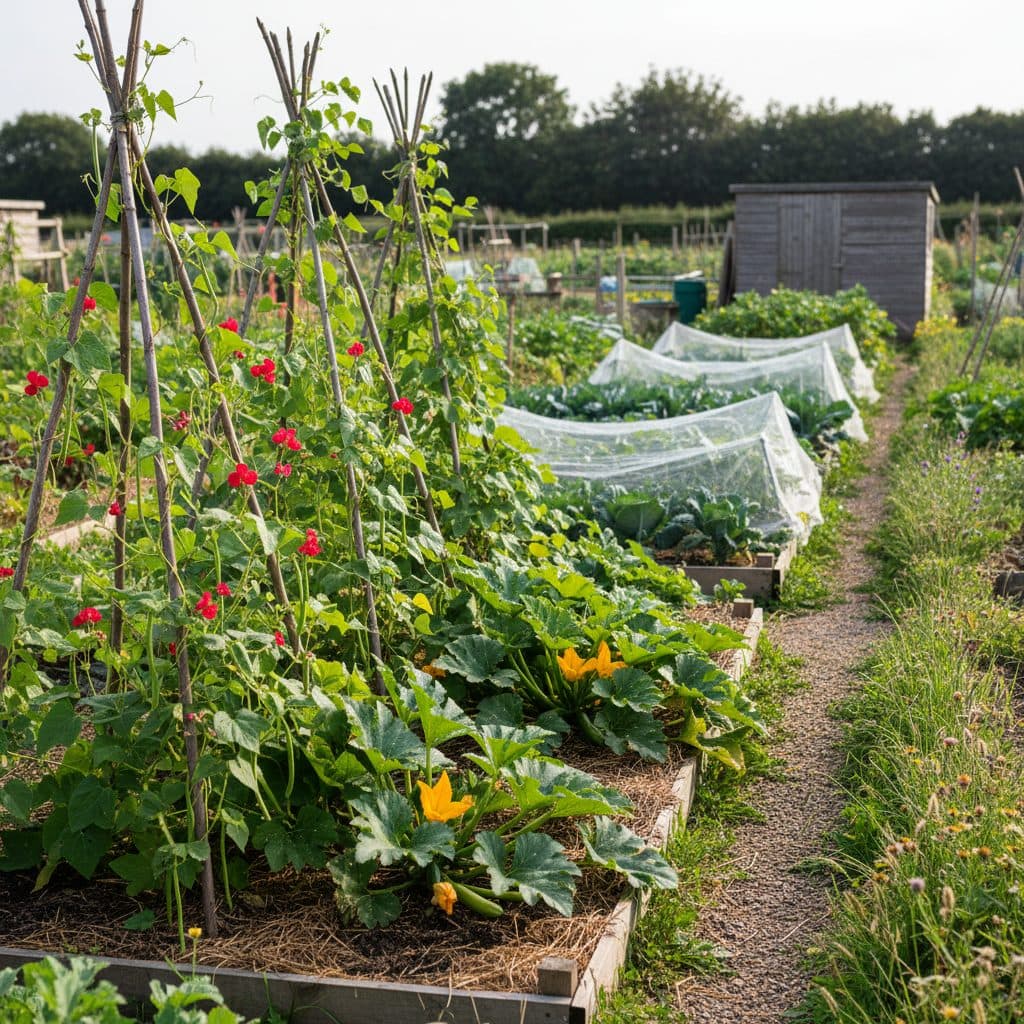
- Focus your first year on reliable, fast-clearing crops like potatoes, courgettes, runner beans, and beetroot to establish weed control across the plot.
- Group crops by plant families to manage crop rotation, reduce pest build-up, and organise seasonal feeding requirements.
- Utilise vertical growing space with wigwams, trellising, and cane supports to maximise harvests from a standard ten-pole (250 square metre) plot.
- Protect vulnerable crops from pigeons, cabbage whites, and slugs using physical netting and horticultural fleece rather than chemical sprays.
Quick answer: The best crops for a UK allotment are high-yielding, high-value staples including first-early potatoes, courgettes, runner beans, garlic, Swiss chard, and soft fruit bushes. In your first season, focus on vigorous vegetables that suppress weeds and provide fast returns while you clear and prepare the remaining ground.
Taking on an allotment plot gives you plenty of space to grow your own food, but deciding what to grow on an allotment can quickly overwhelm a newcomer. Standard UK allotment plots measure ten poles (approximately 250 square metres), which is significantly larger than typical back garden vegetable patches.
Without a clear strategy, growers often plant low-value, space-hungry crops that tie up beds for months with modest returns. Success on a council or private site comes down to balancing high-value culinary produce, easy-to-grow kitchen staples, and structural perennials that yield for years.
Whether you are stepping onto an overgrown plot for the first time or reorganising an established tenancy, structuring your planting around harvest value, ease of cultivation, and seasonal succession ensures a productive, manageable harvest.
+-----------------------------------------------------------------+
|              ALLOTMENT CROP SELECTION MATRIX                    |
|                                                                 |
|   CATEGORY        RECOMMENDED CROPS       BENEFIT               |
|   --------        -----------------       -------               |
|   First-Year      Early Potatoes, SquashesCultivation / clears  |
|   High-Value      Soft Fruit, Garlic, HerbHigh shop savings     |
|   Heavy Croppers  Runner Beans, CourgettesContinuous yield      |
|   Winter Standing Kale, Leeks, Parsnips   Fills hunger gap      |
+-----------------------------------------------------------------+
What are the best crops to grow in your first year?
During your first season on a new plot, soil clearance and weed management take priority over complex cropping plans.
Potatoes have a reputation as an allotment 'cleaning crop', but their dense foliage does not smother perennial weeds such as bindweed, horsetail, or couch grass, which push right through them. What actually helps is the cultivation around them: preparing the bed, earthing up, and digging the crop out gives repeated opportunities to fork out perennial weed roots without leaving bare ground behind. Harvesting early potatoes in July also frees up bed space for late-summer sowings of autumn salads, turnips, or overwintering brassicas. For traditional root care, see our guide on how to grow potatoes, or compare surface cultivation in our breakdown of no-dig potatoes.
Courgettes, summer squash, and winter squashes like butternut and Crown Prince provide massive leaf canopies that cast dense shade over newly cleared beds. Two or three courgette plants will produce a dozen fruits every week from July until the first autumn frost, leading to the legendary allotment courgette glut.
Climbing French beans and runner beans are equally dependable. Grown up bamboo wigwams, they take up minimal ground footprint while fixing nitrogen in the soil through beneficial root bacteria.
+-------------------------------------------------------------+
|              FIRST-YEAR TIMELINE ON A UK PLOT               |
|                                                             |
|   March - April: Plant early seed potatoes and broad beans  |
|   May - June:    Transplant courgettes, beans, squashes     |
|   July - August: Harvest early spuds; plant autumn brassicas|
|   Sept - Nov:    Plant autumn garlic cloves and onion sets  |
+-------------------------------------------------------------+
Which high-value crops deliver the biggest supermarket savings?
An allotment allows you to bypass expensive supermarket produce that suffers from storage and transport delays. Allocating dedicated beds to high-value items yields substantial economic and culinary returns.
Soft fruit bushes represent some of the highest value-per-square-metre crops you can establish. Raspberries (both summer-fruiting and autumn-fruiting types), blackcurrants, redcurrants, gooseberries, and strawberries cost pennies per plant once established but yield kilograms of premium fruit every summer. Because soft fruit bushes are perennial, install them along a dedicated boundary bed where they will not interfere with annual bed rotations.
Garlic and gourmet shallots are simple to grow and store well for six to nine months. Planting garlic cloves 3 to 5 cm deep in October allows roots to develop through cool winter weather, producing large, flavourful bulbs by midsummer.
Culinary herbs, heirloom tomatoes, and specialty salad greens (such as rocket, mizuna, and lamb's lettuce) provide continuous fresh pickings that degrade rapidly in supermarket plastic packaging.
+-----------------------------------------------------------------+
|              HIGH-VALUE CROP ALLOCATION                         |
|                                                                 |
|   BED / AREA      CROP SELECTION          HARVEST WINDOW        |
|   ----------      --------------          --------------        |
|   Perennial Bed   Raspberries, Currants   June to October       |
|   Alliums Bed     Autumn Garlic, Shallots June to July          |
|   Protected Frame Tomatoes, Sweet Peppers July to September     |
|   Salad Strip     Rocket, Chard, Radish   April to November     |
+-----------------------------------------------------------------+
What are the most reliable heavy croppers for small plots?
If you have a half-plot (five poles) or limited bed space, prioritise vegetables that yield multiple harvests over an extended season rather than single-harvest root crops.
Runner beans and climbing French beans produce heavy pickings every few days when picked regularly. Allowing pods to mature on the vine stops flower production, so frequent harvesting keeps the vines producing well into September. Utilising vertical structures like trellises and A-frames saves ground area, as outlined in our advice for vertical vegetable gardening in small spaces.
Cut-and-come-again leafy greens, particularly perpetual spinach and Swiss chard, survive winter freezes and produce edible leaves across nine months. Harvesting outer leaves allows the central crown to continue generating fresh growth.
Beetroot is another versatile performer. Sowing small batches every three weeks from April to July provides tender baby beets, mature storage roots, and edible greens throughout summer and autumn.
How do you plan an allotment for year-round harvests?
A common mistake on UK allotments is experiencing a massive glut of produce in August followed by bare, muddy ground throughout the cold months. Achieving a continuous food supply requires deliberate planning for the "hungry gap" in late winter and early spring.
Overwintering vegetables must be started during late spring and summer to ensure they reach maturity before daylight hours drop in autumn. For sowing schedules, reference our guide to fall and winter gardening from midsummer sowing. Brassicas such as curly kale, cavolo nero, and purple sprouting broccoli withstand sub-zero winter temperatures, providing nutritious greens when little else is growing.
Leeks and winter parsnips can remain in the soil throughout the winter months, allowing you to harvest them fresh as needed for hearty stews. Parsnips actually improve in sweetness following several hard frosts, as starches in the roots convert into natural sugars.
Broad beans sown in November develop hardy root systems over winter, emerging ahead of spring weeds and producing early pod harvests in late May, well before spring-sown crops mature.
+-------------------------------------------------------------+
|              YEAR-ROUND ALLOTMENT HARVEST PLAN              |
|                                                             |
|   SEASON          PRIMARY HARVESTS                          |
|   ------          ----------------                          |
|   Spring:         Asparagus, rhubarb, overwintered spinach  |
|   Summer:         Berries, beans, courgettes, early spuds   |
|   Autumn:         Squash, maincrop potatoes, apples, leeks  |
|   Winter:         Kale, purple sprouting broccoli, parsnips |
+-------------------------------------------------------------+
Which low-maintenance crops suit part-time plot holders?
Many allotment holders balance their plots alongside full-time work and family commitments. Selecting low-maintenance, resilient vegetables ensures the plot remains productive even if you can only visit on weekends.
Plant garlic cloves 3 to 5 cm deep, and push onion sets gently into weed-free soil so just their tips show. They require very little hands-on intervention once planted in fertile ground. Keeping the soil weeded during early spring and mulching between rows keeps moisture steady until the foliage naturally dies back in midsummer.
Rhubarb is a tough perennial crop. A single mature crown mulched annually with well-rotted manure will produce stems from March through June for over a decade. Remember that only the leaf stems (petioles) are edible — the large leaf blades contain oxalic acid at toxic concentrations and must never be eaten; compost or bin them.
Winter squashes require substantial room to sprawl, but once their vines cover the ground in early summer, they suppress weeds and require minimal watering compared to thirsty greenhouse crops.
Applying a no-dig layer of cardboard and well-rotted organic matter prevents weed seeds from germinating, drastically cutting weekly maintenance time. Learn more about setting up weed-free beds in our no-dig gardening for beginners tutorial.