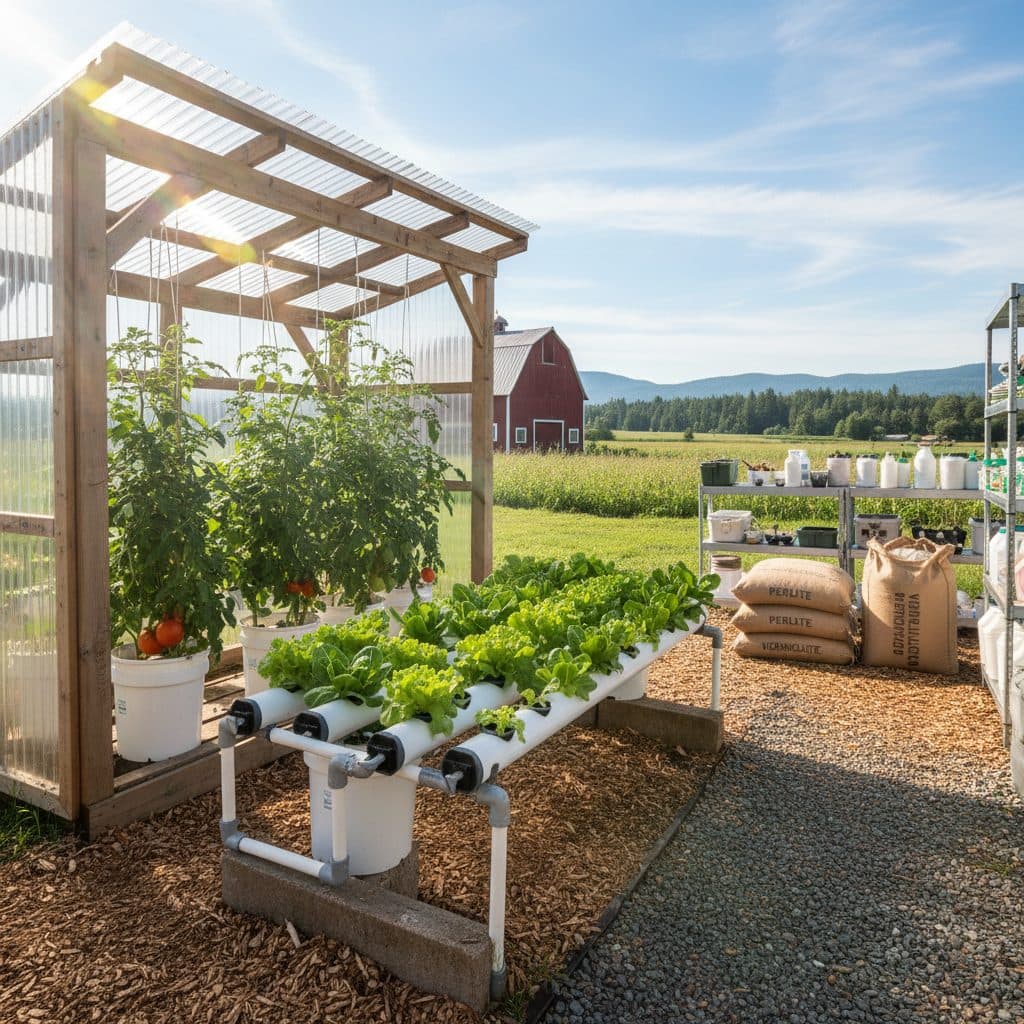
Key takeaways
- Perlite, a volcanic glass, offers superior aeration and drainage, expanding up to 20 times its size when heated to 1,600°F (870°C).
- Vermiculite, a hydrous mineral, excels in water retention and nutrient holding, absorbing 3-4 times its weight in water.
- Blending these aggregates balances root aeration and moisture availability, crucial for healthy plant growth in soilless systems.
- For net pots, a 50:50 or 60:40 perlite-to-vermiculite blend often works well, providing consistent moisture for smaller root zones.
- Dutch bucket systems benefit from higher perlite ratios, like 70:30, to ensure rapid drainage and prevent waterlogging in larger volumes.
- Proper rinsing and pH adjustment of media prepare the substrate before planting to ensure nutrient uptake and prevent issues.
Quick answer: To improve water retention in hydroponic systems, particularly in humid climates like Florida, blending perlite and vermiculite creates an optimal growing medium. This combination balances root aeration with consistent moisture and nutrient availability for healthier plant growth.
In the humid climate of central Florida, managing moisture in hydroponic systems can be a balancing act. Growers often find that a well-chosen growing medium can significantly impact plant health and yields. The right blend of aggregates provides consistent moisture without sacrificing aeration, which root systems need in net pots and Dutch buckets. These soilless methods require media that are both lightweight and effective, providing the structural support and environmental conditions plants need to thrive.
Understanding the distinct properties of materials like perlite and vermiculite is the first step toward creating an optimal growing environment. Perlite, with its porous structure, ensures roots get ample oxygen, while vermiculite acts as a moisture and nutrient reservoir. By combining these two, we can tailor a substrate that meets the specific demands of various crops and hydroponic setups. Matching the aggregate ratio to the crop and watering frequency maintains both oxygen levels and water availability.
The role of perlite in soilless growing
Perlite is a naturally occurring volcanic glass that, when heated rapidly to about 1,600°F (870°C), expands dramatically, sometimes up to 20 times its original volume. This process creates a lightweight, white, and highly porous material with a bulk density typically ranging from 3 to 9 pounds per cubic foot. Its irregular surface and numerous small cavities make it an excellent choice for providing aeration to plant roots, often holding 30-60% air by volume [1]. In a hydroponic setup, especially in net pots, this superior drainage prevents waterlogging and ensures that roots receive a consistent supply of oxygen, which supports nutrient uptake and plant vigor. Without adequate oxygen, roots can suffocate, leading to stunted growth or even plant death, particularly in recirculating systems where water is constantly flowing.
key benefits of perlite
Using perlite as a primary component in your growing medium offers several distinct advantages. Its inert nature means it won’t react with nutrient solutions or alter pH significantly, providing a stable environment for your plants. For instance, in a large-scale indoor grow tent setup, maintaining stable pH is necessary for maximizing yields. The material’s light weight also makes it easy to handle and reduces the structural load on growing systems, which is a consideration for operations with many Dutch buckets. Furthermore, perlite’s bright white color helps reflect light, which can be beneficial for plants in indoor environments or during hot summers in USDA zone 9, helping to keep root temperatures lower.
- Provides exceptional root aeration, preventing anaerobic conditions.
- Ensures rapid drainage, reducing the risk of root rot.
- Is inert and pH-neutral, maintaining nutrient solution stability.
- Offers a lightweight structure, easing system handling and setup.
- Helps reflect light, contributing to cooler root zone temperatures.
The benefits of vermiculite in hydroponics
Vermiculite is a hydrous phyllosilicate mineral that expands when heated to high temperatures in a process called exfoliation. This heating causes the mineral to expand into accordion-like particles, increasing its volume by 8-12 times. Unlike perlite, vermiculite’s primary strength lies in its exceptional water retention capabilities; it can absorb 3-4 times its weight in water. This makes it an invaluable component in soilless mixes where consistent moisture is paramount, such as in seedling trays or for plants with high water demands. For example, in a small aquaponics fish tank setup, maintaining stable moisture in the grow beds supports beneficial bacteria and plant roots.
why vermiculite matters for nutrient retention
Beyond its impressive water-holding capacity, vermiculite also possesses a high cation exchange capacity (CEC). This means it can temporarily hold onto positively charged nutrient ions, like potassium, magnesium, and calcium, preventing them from leaching out of the root zone too quickly. This nutrient buffering capacity is particularly beneficial in recirculating hydroponic systems, where nutrient solutions are constantly recycled. In a system operating with a 10-gallon reservoir, this can significantly reduce nutrient waste and ensure plants have access to essential elements over a longer period. Its soft, pliable nature also makes it easy for roots to penetrate, supporting healthy root development in plants like lettuce or herbs that require consistent moisture.
- Retains significant amounts of water, up to 3-4 times its weight.
- Possesses a high cation exchange capacity, holding onto nutrients.
- Promotes strong root development due to its soft texture.
- Provides insulation, helping to buffer root zone temperature fluctuations.
- Is free of pests, weed seeds and pathogens as supplied, reducing early disease risk.
Optimal blends for net pots and general hydroponics
When cultivating plants in net pots, especially in deep water culture (DWC) or nutrient film technique (NFT) systems, the choice of growing medium is critical for initial establishment and ongoing health. A balanced blend of perlite and vermiculite can provide the ideal environment for young roots to thrive. For instance, a 50:50 blend offers a good compromise between aeration and moisture retention, ensuring that seedlings in 2-inch net pots have enough consistent moisture without becoming waterlogged. This ratio is particularly effective for plants like leafy greens or herbs that prefer steady moisture levels and benefit from the nutrient buffering capacity of vermiculite.
tailoring blends for specific needs
For growers in arid regions like Arizona, where evaporation rates can be high, increasing the vermiculite component to a 40:60 perlite-to-vermiculite ratio might be beneficial. Conversely, in very humid environments or for plants that prefer drier feet, a 60:40 perlite-to-vermiculite blend can enhance drainage. The goal is to create a medium that supports the plant through its entire growth cycle, from a small seedling to a mature plant with an extensive root system. Remember that the size of the aggregate also matters; using medium-grade perlite and vermiculite (around 1/8 to 1/4 inch) typically provides the best balance for most net pot applications, ensuring good contact with the nutrient solution while allowing air exchange.
- A 50:50 perlite-vermiculite blend provides balanced aeration and moisture.
- Consider a 40:60 perlite-vermiculite blend for higher water retention in dry climates.
- Opt for a 60:40 perlite-vermiculite blend for enhanced drainage in humid conditions.
- Use medium-grade aggregates (1/8 to 1/4 inch) for optimal net pot performance.
- Ensure consistent moisture for seedlings in 2-inch net pots to promote early growth.
Customizing blends for Dutch buckets and larger systems
Dutch bucket systems, also known as Bato buckets, are popular for growing larger fruiting plants like tomatoes, cucumbers, and peppers. These systems typically use larger volumes of growing media, often 2-3 gallons per bucket, and rely on a recirculating drip irrigation system. Because the nutrient solution is delivered frequently and drains rapidly, the primary need for the growing medium in Dutch buckets is excellent drainage and aeration. A common and highly effective blend for Dutch buckets is 70% perlite and 30% vermiculite. This higher perlite ratio ensures that roots receive ample oxygen, preventing waterlogging even with frequent irrigation cycles, which can be as often as every 15-30 minutes during peak growth periods.
balancing drainage and nutrient access in larger volumes
While perlite dominates for drainage, the 30% vermiculite component provides necessary water holding. It provides just enough water retention to buffer against pump failures or temporary irrigation interruptions, giving plants a small reserve of moisture for up to 2-3 hours. Furthermore, vermiculite’s CEC helps to hold onto nutrients, making them available to the plant roots between irrigation cycles. In a commercial greenhouse setting in USDA zone 7, where hundreds of Dutch buckets might be in operation, optimizing this blend can lead to significant improvements in yield and plant health. For even larger systems, like those using 5-gallon buckets, maintaining a similar 70:30 or even 80:20 perlite-to-vermiculite ratio is advisable to ensure maximum aeration for extensive root systems.
- A 70:30 perlite-to-vermiculite blend is ideal for Dutch buckets.
- Higher perlite ratios ensure rapid drainage in large media volumes.
- Vermiculite buffers moisture during irrigation interruptions.
- CEC from vermiculite helps retain nutrients in recirculating systems.
- Consider an 80:20 blend for very large systems or plants needing maximum aeration.
Preparing and maintaining your hydroponic media
Before introducing any perlite or vermiculite blend into your hydroponic system, rinsing and conditioning the media prevents plumbing clogs and plant shock. Both materials can contain fine dust particles from manufacturing and shipping. Dampen the media before you handle it and wear a dust mask: perlite dust is a respiratory irritant, and vermiculite from some historic sources was contaminated with amphibole asbestos, so neither should be poured, tipped or mixed dry. Rinsing your chosen blend thoroughly with clean water, perhaps in a large mesh bag or colander, is essential to remove these fines. This step prevents clogging of pumps and drip emitters, which can lead to costly downtime and uneven nutrient delivery across your system. For a 20-gallon reservoir system, even a small amount of fine particulate matter can cause issues within a few days of operation.
ensuring optimal ph and long-term use
After rinsing, it’s a good practice to pre-soak your media in a pH-adjusted nutrient solution for 12-24 hours. While perlite is typically pH neutral, some vermiculite can have a slightly alkaline pH, sometimes up to 9.0. Pre-soaking helps to stabilize the media’s pH to your target range, usually between 5.5 and 6.5 for most hydroponic crops. This ensures that when plants are introduced, they immediately have access to nutrients without pH shock. For long-term use, especially in large-scale operations or a four-season greenhouse design, monitoring media conditions with IoT sensors can provide real-time data on moisture and nutrient levels, allowing for precise adjustments. This attention to detail can significantly impact the success of your aquaponics system or any soilless cultivation.
- Rinse perlite and vermiculite thoroughly to remove fine dust particles.
- Pre-soak media in pH-adjusted nutrient solution for 12-24 hours.
- Target a pH range of 5.5-6.5 for most hydroponic crops.
- Monitor media conditions with IoT sensors for precise adjustments.
- Consider replacing media every 1-2 years for optimal hygiene and performance.
Perlite vs. vermiculite: a direct comparison for hydroponic media
Characteristic | Perlite | Vermiculite |
|---|---|---|
Origin | Expanded volcanic glass | Exfoliated hydrous mineral |
Water retention | Low (drains rapidly) | High (absorbs 3-4x its weight) |
Aeration | Excellent (30-60% air by volume) | Moderate to low (can compact) |
Nutrient retention (CEC) | Very low | High (retains cations) |
Weight | Very lightweight (3-9 lbs/cu ft) | Lightweight (but heavier than perlite) |
pH | Neutral (around 7.0) | Neutral to slightly alkaline (6.0-9.0) |
Texture | Hard, irregular, granular | Soft, pliable, accordion-like |
Perlite aeration: Expanded perlite provides 30-60% air by volume to plant roots to prevent waterlogging in hydroponic systems [1].
Vermiculite water retention: Exfoliated vermiculite can absorb 3-4 times its weight in water, offering a significant moisture buffer for plants.
Dutch bucket blend: A 70:30 perlite-to-vermiculite blend is commonly used in Dutch buckets, balancing rapid drainage with essential moisture retention.
Frequently asked questions
What is the best perlite to vermiculite ratio for seedlings?
For starting seedlings in hydroponic systems, a 50:50 perlite-to-vermiculite blend is often recommended. This ratio provides balanced moisture retention and aeration, supporting delicate young roots. It ensures consistent moisture for the first 2-3 weeks of growth without leading to waterlogging.
Can I reuse perlite and vermiculite media?
Yes, you can reuse perlite and vermiculite, but it requires proper sterilization to prevent disease transmission. After harvesting, remove old root material, rinse the media thoroughly, then sterilize it with a mild bleach solution (1 part bleach to 9 parts water), rinsing until no chlorine smell remains, or by wet-heat pasteurization: moisten the media, cover it, and hold the core at 180°F (82°C) for 30 minutes. Do not dry-bake perlite or vermiculite in an oven; heating them dry drives fine mineral dust through the room.
How often should I change the media in my Dutch buckets?
For optimal hygiene and performance, it’s generally recommended to change the media in Dutch buckets annually, or after 1-2 growing cycles for long-term crops like tomatoes. While you can sterilize and reuse the media, replacing it ensures a fresh start and minimizes the risk of pathogen buildup.
Does perlite float in hydroponic systems?
Yes, perlite is very lightweight, with a bulk density of 3 to 9 pounds per cubic foot, and it can float, especially the finer particles. This can be an issue in systems with strong water flow or when initially filling your system. Rinsing the perlite thoroughly before use helps remove the lightest fines, reducing the amount that floats and preventing pump clogging.
Is vermiculite safe for aquaponics?
Vermiculite is a poor choice as a standalone aquaponics media bed. It compacts under repeated flood-and-drain cycling, creating anaerobic pockets that foul the water, and its high cation exchange capacity and sometimes-alkaline pH work against the stable water chemistry aquaponics needs. Coarse, hard media such as clay pebbles or lava rock are the standard choice, and if you use vermiculite at all, keep it to a minor fraction of the mix. However, ensure it’s thoroughly rinsed to remove any fine dust that could cloud the water or irritate fish gills. Using medium to coarse-grade vermiculite (around 1/8 inch) is best to avoid fines.
References
- Lightweight aggregates – vermiculite, perlite, pumice – for insulating concretes (1981). Lightweight aggregates – vermiculite, perlite, pumice – for insulating concretes.
- Farming with the utilization of IoT (2023). Farming with the utilization of IoT.