Key takeaways
- Crabgrass germinates when soil temperatures consistently reach a certain threshold at a shallow depth for several consecutive days.
- Pre-emergent herbicides form a chemical barrier in the top one inch of soil, preventing crabgrass seeds from establishing.
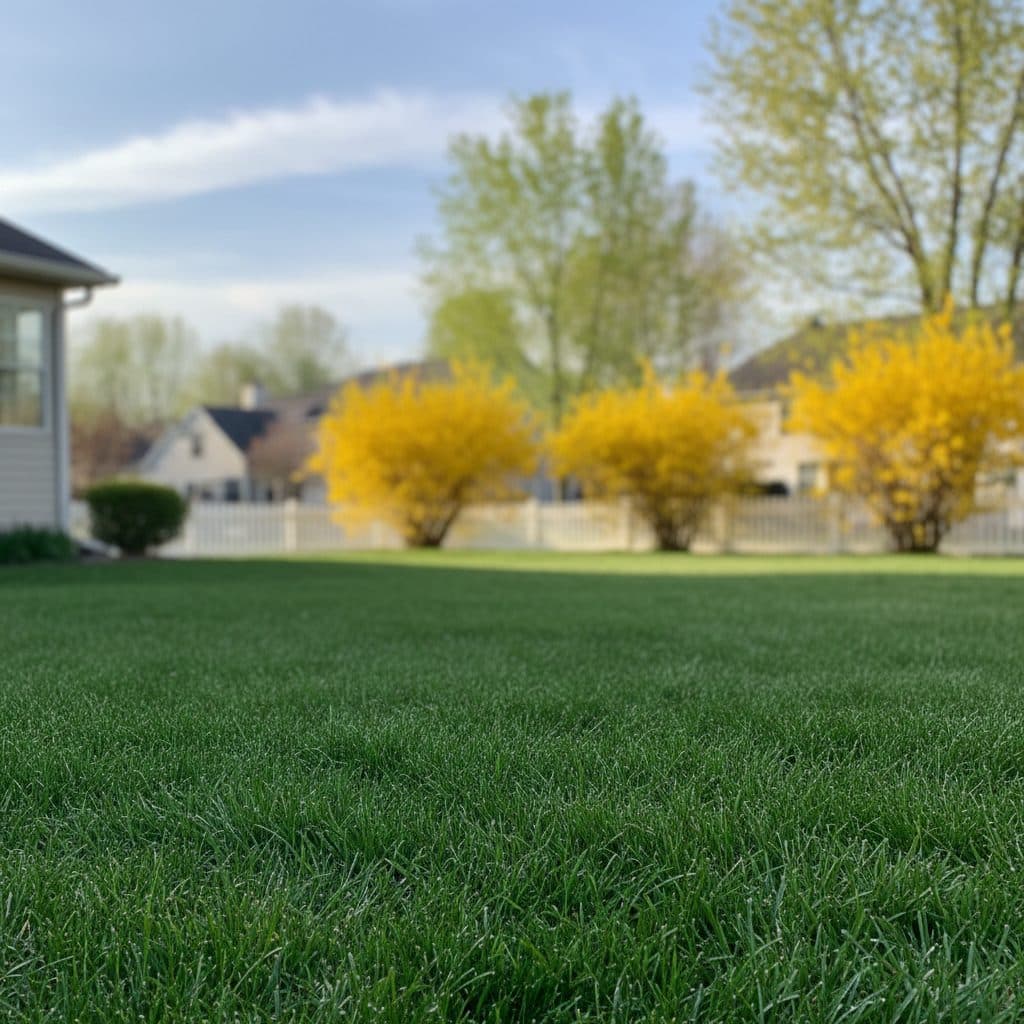
- Apply pre-emergent two to three weeks before the typical germination window in your USDA zone, often corresponding with forsythia bloom.
- Proper application involves calibrating your spreader for even coverage and watering in the product with sufficient irrigation.
- Consider your turf type; some pre-emergents are not safe for newly seeded lawns or specific grass varieties.
- A thick, healthy lawn, maintained with a higher mowing height, naturally suppresses crabgrass over time.
Quick answer: To stop crabgrass before it germinates, apply a pre-emergent herbicide two to three weeks before soil temperatures consistently reach 55°F at a 2-inch depth for four to five consecutive days. This often coincides with the blooming of forsythia and requires watering in the product with 0.5 inches of irrigation.
In many parts of the United States, from the humid summers of Georgia to the cooler growing seasons of Ohio, crabgrass (Digitaria spp.) is a persistent challenge for homeowners striving for a pristine lawn. This annual grassy weed can quickly overtake desirable turf, especially in thin or stressed areas. It produces tens of thousands of seeds per plant, which lie dormant until conditions are right. Understanding its life cycle and precisely timing control measures are critical steps in maintaining a healthy, resilient turfgrass stand.
The most effective strategy against crabgrass is prevention, specifically through the timely application of a pre-emergent herbicide. This approach targets the weed before it even emerges from the soil, creating a proactive defense that can save significant effort and expense later in the season. For instance, in USDA zone 6, the window for application typically opens in late March or early April, well before the summer heat arrives and crabgrass becomes a visible problem.
Understanding crabgrass and its life cycle
Crabgrass is an annual warm-season grass that thrives in hot, dry conditions, often outcompeting cool-season turfgrasses like Kentucky bluegrass or tall fescue once summer temperatures consistently exceed 80°F. It reproduces exclusively by seed, with a single plant capable of producing many thousands of seeds under ideal conditions. This builds a large population for the following year. These seeds can remain viable in the soil for several years, waiting for the right combination of temperature and moisture to germinate.
The germination trigger
The primary trigger for crabgrass germination is soil temperature. Crabgrass seeds begin to sprout when shallow soil temperatures warm consistently over several consecutive days. This often coincides with the blooming of certain spring-flowering shrubs, such as forsythia, which can be a useful visual cue for gardeners in various regions, from New England to the Pacific Northwest. In many parts of USDA zone 7, this event typically occurs in late March or early April. If you’re starting seeds for other crops, understanding soil temperature is just as vital; seed starting for beginners often stresses this point for successful plant establishment.
- Annual growth habit: Completes its life cycle in one growing season, typically from spring to fall.
- Warm-season grass: Thrives in temperatures above 80°F, turning brown and dying with the first hard frost.
- Prolific seed producer: A single plant can yield up to 150,000 seeds while aiding future infestations.
- Opportunistic growth: Fills in bare spots and thin areas in lawns, especially where turf is stressed or weak.
- Distinctive appearance: Features broad, coarse blades that grow in a crab-like, prostrate manner, differing from finer turfgrasses.
The science of pre-emergents: how they work
Pre-emergent herbicides are chemical compounds designed to prevent weed seeds from successfully germinating and establishing themselves in the soil. Unlike post-emergent herbicides, which kill existing weeds, pre-emergents create a protective barrier. When applied correctly, they form a thin layer in the top one inch of the soil profile, where most crabgrass seeds reside. As the seeds begin to sprout, their root or shoot comes into contact with this barrier, absorbing the herbicide and preventing further development. Timing matters because once the crabgrass has emerged, a pre-emergent will have little to no effect.
Active ingredients and their action
Several active ingredients are commonly used in pre-emergent formulations, each with slightly different modes of action but all aiming to inhibit cell division or root development in germinating seeds. For example, products containing dithiopyr or pendimethalin are widely available and offer residual control for six to twelve weeks, providing a long window of protection. Others, like prodiamine, can offer even longer residual activity, up to 16 weeks, making them a good choice for areas with extended warm periods, such as Florida or southern California. It’s important to choose a product that is safe for your specific turfgrass type; some pre-emergents can harm certain cool-season grasses if applied improperly or at the wrong time. After application, a sufficient watering is often recommended to activate the chemical barrier.
- Dithiopyr: Provides both pre-emergent and early post-emergent control for up to twelve weeks.
- Pendimethalin: A yellow-colored herbicide that inhibits cell division, offering eight to ten weeks of control.
- Prodiamine: Known for its long residual activity, often up to 16 weeks, making it suitable for extended protection.
- Corn gluten meal: An organic option that acts as a pre-emergent, also providing some nitrogen as a slow-release fertilizer.
- Isoxaben: Primarily used for broadleaf weed control, but also has some pre-emergent activity on certain grasses.
Pinpointing the perfect timing for your region
Successful crabgrass control hinges on applying pre-emergent herbicides at the precise moment before germination begins. This window is typically two to three weeks wide and is dictated primarily by soil temperature, which varies significantly across different USDA zones and even within microclimates. For instance, in northern states like Minnesota (USDA zone 4), this window might not open until late April or early Can, while in southern states like Florida (USDA zone 9), it can be as early as late February. Monitoring local soil temperatures is the most accurate method, often available through university extension services or even using a simple soil thermometer inserted to a 2-inch depth.
Regional considerations and visual cues
While soil temperature is the scientific benchmark, many growers use visual cues as a reliable indicator. The blooming of forsythia shrubs, with their bright yellow flowers, is a classic sign that soil temperatures are approaching the critical 55°F mark in many temperate regions, such as those in USDA zones 5 to 7. In areas like central Texas (USDA zone 8), the timing might match the blooming of redbud trees. It’s important to remember that these are general guidelines; a cold snap after an initial warm spell can delay germination, so a multi-pronged approach of observing cues and checking soil temperature is best. For example, if you’re growing cool-season vegetables like spinach, you’ll also be watching the weather closely to avoid bolting, as discussed in how to grow spinach.
- USDA Zone 4-5: Late April to early May, when soil reaches 55°F.
- USDA Zone 6-7: Mid-March to mid-April, often coinciding with forsythia bloom.
- USDA Zone 8-9: Late February to mid-March, when early spring flowers appear.
- Soil thermometer: The most accurate way to measure soil temperature at a 2-inch depth.
- Local extension offices: Provide region-specific recommendations and soil temperature data.
Application techniques and best practices
Once you’ve determined the optimal timing, proper application of the pre-emergent is paramount for its effectiveness. Most products are available in granular or liquid forms. Granular products are typically applied with a broadcast or drop spreader, while liquid products are mixed with water and sprayed. Regardless of the form, achieving uniform coverage is essential to create a continuous chemical barrier in the soil. Uneven application can lead to ‘streaking’ or ‘skipping,’ resulting in patches of crabgrass emerging later in the season. Always read the product label carefully, as application rates can vary significantly, often specified for a coverage area like 5,000 square feet.
Calibrating your spreader and watering in
Before applying granular pre-emergent, calibrate your spreader according to the manufacturer’s instructions for your specific product. This ensures you’re applying the correct amount per square foot, preventing both under-application (ineffective control) and over-application (potential turf damage or wasted product). After application, most pre-emergents require watering in to activate the chemical barrier. Aim for sufficient irrigation, either from rainfall or manual watering, within 24 to 48 hours. This moves the herbicide from the surface into the top inch of soil where it can intercept germinating seeds. Using a a calibrated soil pH or moisture test can help you monitor soil moisture levels accurately.
- Calibrate spreader: Adjust your spreader settings to ensure uniform application rate for granular products.
- Even coverage: Apply in a consistent pattern, overlapping slightly to avoid missed spots or streaks.
- Water in: Irrigate with 0.5 inches of water within 24-48 hours to activate the herbicide.
- Read the label: Always follow product-specific instructions for application rates and safety precautions.
- Wear protective gear: Use gloves, eye protection, and long sleeves as recommended by the product label.
Post-emergent considerations and long-term lawn health
Even with the most diligent pre-emergent application, a few crabgrass plants might still emerge. This can happen due to skipped spots, heavy rainfall washing away the barrier, or seeds germinating below the treated soil layer. If crabgrass does appear, especially in late spring or early summer, a post-emergent herbicide can be used to control it. These products are designed to kill existing weeds and are most effective when crabgrass is young, typically with two to four leaves. Applying post-emergents to mature crabgrass, particularly after it has started producing seeds, will be less effective and may require higher application rates, stressing desirable turf. Always check the label for temperature restrictions; many post-emergents are less effective or can damage turf when temperatures exceed 85°F.
Building a resilient turfgrass stand
Ultimately, the best defense against crabgrass and other weeds is a dense, healthy lawn. A thick turfgrass stand, maintained at a mowing height of 3 inches or more, shades the soil surface, keeping it cooler and inhibiting crabgrass germination. Regular fertilization, typically four times per year for cool-season grasses in USDA zones 5-7, provides the nutrients needed for strong growth. Proper irrigation, aiming for deep and infrequent watering, encourages deep root growth, making the turf more resilient to drought and competition. In areas like the arid Southwest, efficient watering systems using products like a Garden PE Irrigation Hose are critical. Overseeding thin areas in the fall with desirable turfgrass varieties also helps to fill in gaps where crabgrass might otherwise establish.
- Mow high: Maintain a mowing height of 3 inches or more to shade the soil and suppress weed germination.
- Fertilize regularly: Provide adequate nutrients to promote dense turf growth, typically 3-4 applications per year.
- Water deeply: Encourage deep root growth with 1 to 1.5 inches of water per week, rather than shallow, frequent watering.
- Overseed in fall: Fill in thin areas with desired turfgrass to reduce opportunities for weed establishment.
- Address soil compaction: Aerate annually in areas with heavy foot traffic or clay soils to improve root penetration.
Granular vs. Liquid Pre-Emergent Herbicides
Feature | Granular Pre-Emergent | Liquid Pre-Emergent |
|---|---|---|
Application Method | Broadcast or drop spreader | Sprayer (hose-end or pump) |
Ease of Use | Generally easier for beginners, less prone to drift | Requires careful mixing and calibration, potential for drift |
Coverage Uniformity | Good if spreader is calibrated, can be less precise on edges | Excellent if applied correctly, good for targeted areas |
Activation | Requires watering in (0.5 inches) after application | Often requires watering in (0.5 inches) after application |
Cost | Varies, often comparable per 5,000 sq ft | Varies, often comparable per 5,000 sq ft |
Soil Temperature: Crabgrass germinates when soil at 2 inches deep consistently hits 55°F for four to five days.
Application Window: Apply pre-emergent two to three weeks before the 55°F soil temperature threshold in your region.
Watering In: Most pre-emergents require sufficient water within 24-48 hours to activate the chemical barrier effectively.