Key takeaways
- Leaf mold, primarily decomposed leaves, significantly improves soil structure and water retention, holding up to 500% of its weight in water.
- Natural leaf mold decomposition, driven by fungi, typically takes six months to two years, but this can be greatly accelerated.
- Shredding leaves reduces decomposition time by 50% or more, often yielding usable leaf mold in three to six months.
- Consistent moisture, like a wrung-out sponge (around 50-60% moisture content), matters for optimal fungal activity in leaf mold piles.
- The simple bag method, using black plastic bags, can produce leaf mold in 12 to 18 months, especially in warmer climates like USDA Zone 7.
- Leaf mold has a high carbon-to-nitrogen ratio (40:1 to 80:1) and is distinct from compost, which has a lower C:N ratio (25:1 to 30:1).
Quick answer: To speed up leaf mold production, shred leaves to reduce decomposition time by 50% or more, maintain consistent moisture levels (50-60%), and consider using the simple black plastic bag method, which can yield usable leaf mold in 3-18 months.
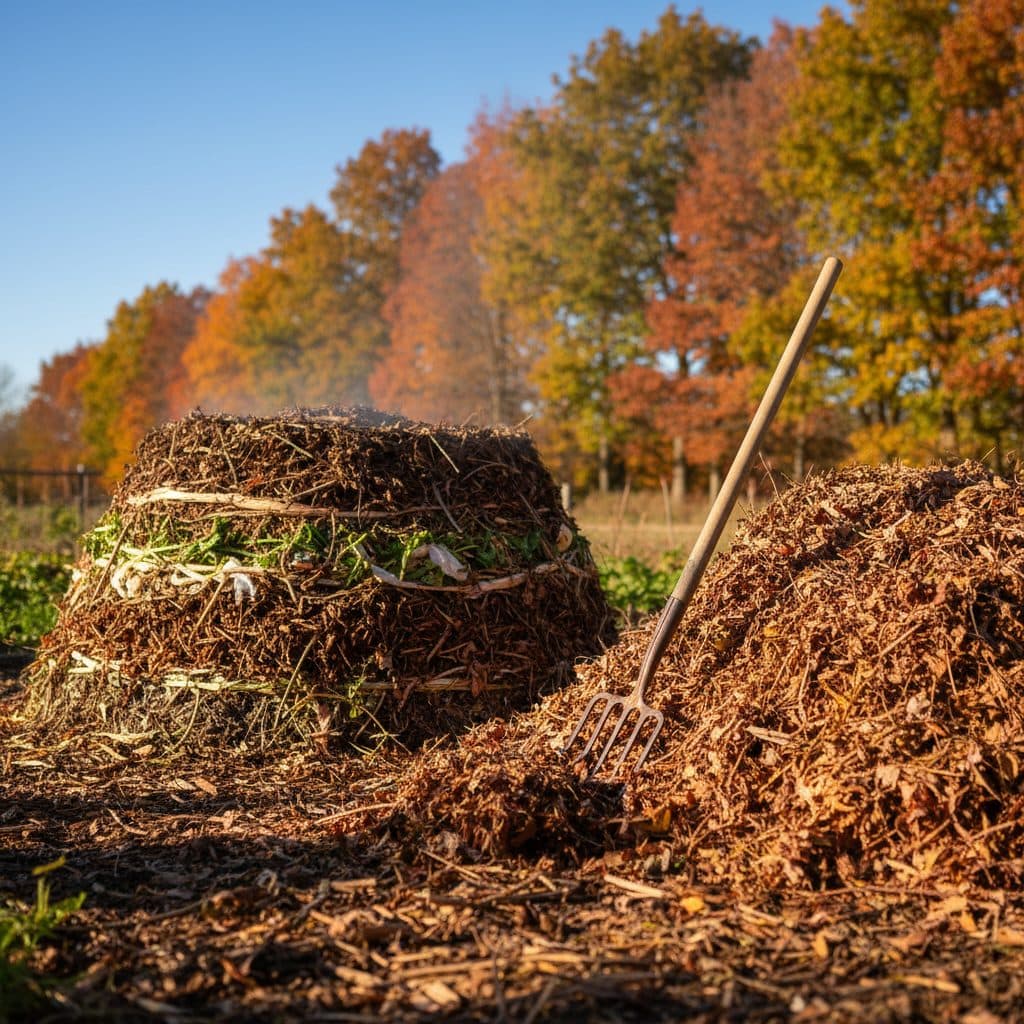
In my garden in central Pennsylvania, USDA Zone 6b, autumn brings a bounty of fallen leaves — often several cubic yards from just a few mature maples and oaks. Instead of bagging them for municipal pickup, I turn them into leaf mold, a dark, crumbly soil amendment that significantly improves my garden’s health [1]. This material is essentially decomposed leaves, and it’s a powerhouse for soil structure and water retention, capable of holding up to 500% of its weight in water [6].
While leaf mold naturally forms over one to two years, most gardeners don’t want to wait that long. I’ve found that by applying a few straightforward techniques — primarily shredding, maintaining consistent moisture, and using the bag method — I can produce usable leaf mold in as little as three to six months. These methods are simple, require minimal equipment, and dramatically cut down the waiting time, making this soil builder accessible for annual planting cycles.
What is leaf mold and why gardeners in the US Midwest value it
Leaf mold is a specific type of organic matter resulting from the slow decomposition of leaves, primarily by fungi [1]. Unlike traditional compost, which involves a mix of green and brown materials and relies heavily on bacteria, leaf mold is almost exclusively made from leaves and decomposes at lower temperatures. This dark, earthy material is not rich in nutrients like a balanced compost, but its value lies in its exceptional ability to improve soil structure, aeration, and water retention [3]. For gardeners in regions like the US Midwest, where clay soils are common, adding leaf mold can transform heavy, compacted ground into a more friable, workable medium.
the benefits of adding leaf mold to your garden soil
A single cubic foot of leaf mold can hold several gallons of water, making it invaluable for drought-prone areas or sandy soils that drain too quickly. I’ve observed that my vegetable beds, amended with a 2-inch layer of leaf mold each spring, require about 25% less irrigation during dry spells. This material also provides a habitat for beneficial soil organisms, including earthworms and mycorrhizal fungi, which further improve soil health and plant nutrient uptake. The long-term benefits are substantial: a more resilient and productive garden over many seasons.
- Improves soil structure: Loosens clay soils and adds body to sandy soils.
- Increases water retention: Can hold up to 500% of its weight in water, reducing irrigation needs by 25% or more [6].
- Enhances aeration: Creates pore spaces in the soil, allowing roots to breathe.
- Feeds beneficial organisms: Provides a fungal-rich environment for soil microbes and earthworms.
- Slow-release nutrients: Offers a gradual supply of trace minerals as it continues to break down.
The natural timeline: why it takes so long and how fungi help
Left to its own devices, a pile of fallen leaves can take anywhere from six months to two years to transform into usable leaf mold [3]. This extended timeline is primarily due to the nature of leaf decomposition. Leaves are rich in carbon and relatively low in nitrogen, giving them a high carbon-to-nitrogen (C:N) ratio, often ranging from 40:1 to 80:1. This high C:N ratio favors fungal decomposition over bacterial activity, which is dominant in hot composting. Fungi, particularly white rot fungi, are excellent at breaking down lignin, the tough, woody component of plant cell walls that makes leaves resistant to decay. They work slower than bacteria but are more effective at processing these complex carbon structures.
factors influencing natural decomposition rates
The rate of decomposition is also heavily influenced by environmental factors. A pile of dry, unshredded oak leaves in an arid climate like eastern Washington State might take three years to break down, whereas a moist pile of shredded maple leaves in a humid region like the Pacific Northwest could be ready in under a year. Temperature plays a role, with warmer temperatures generally accelerating fungal activity, but extreme heat can inhibit it. The presence of adequate moisture, as we’ll discuss, is perhaps the most critical factor, as fungi require a consistently damp environment to thrive and break down organic matter effectively. Without sufficient moisture, decomposition can stall for months.
- Leaf type: Softer leaves (maple, birch) decompose faster than tougher ones (oak, beech).
- Moisture levels: Consistent dampness is essential for fungal growth.
- Temperature: Warmer temperatures (above 40°F) generally speed up fungal activity.
- Particle size: Smaller pieces break down more quickly due to increased surface area.
- Aeration: Some airflow helps prevent anaerobic conditions, which can slow the process.
Shredding leaves: cutting down decomposition time by 50%
The single most impactful step you can take to speed up leaf mold production is shredding the leaves. Whole leaves, especially tough ones like oak or sycamore, have a waxy cuticle and a large surface area that resists decomposition. Shredding them into smaller pieces — ideally 1 to 2 inches in length — dramatically increases the surface area available for fungal colonization and breakdown [3]. I’ve found that shredded leaves can turn into usable leaf mold in as little as three to six months, a 50% to 75% reduction in time compared to whole leaves. This makes it possible to generate a batch of leaf mold within a single growing season.
effective methods for shredding leaves
There are several practical ways to shred leaves. For small to medium quantities, a standard lawnmower set to its highest blade setting works well. Simply rake leaves into a pile on your lawn and run over them multiple times. This method can reduce a 10-foot by 10-foot pile of leaves to a quarter of its original volume in about 15 minutes. For larger volumes, a dedicated leaf shredder or chipper-shredder can process leaves much faster, often reducing them to fine confetti-like pieces in minutes. Some gardeners even use a string trimmer inside a large trash can, though this requires caution and protective eyewear. Regardless of the method, the goal is to break down the leaves into smaller, more manageable fragments that accelerate the fungal decomposition process.
- Lawnmower: Run over dry leaves multiple times on a paved or grassy surface.
- Leaf shredder: A dedicated machine for high-volume shredding, processing hundreds of pounds per hour.
- Chipper-shredder: Versatile for both leaves and small branches, creating fine material.
- String trimmer in a can: Use a powerful string trimmer inside a sturdy trash can for smaller batches, wearing eye protection.
- Commercial shredding services: Some municipalities or landscaping companies offer shredding for large quantities.
Moisture is key: aiming for a wrung-out sponge
Consistent moisture is arguably the most critical factor for successful and rapid leaf mold production. Fungi, the primary decomposers of leaves, require a damp environment to grow and break down organic matter. If the leaves are too dry, fungal activity slows or stops entirely. If they are too wet, anaerobic conditions can develop, leading to foul odors and a much slower, less effective decomposition process. The ideal moisture level for leaf mold is often described as feeling like a wrung-out sponge — damp but not dripping wet. This typically translates to a moisture content of 50-60% by weight, which you can monitor with a soil moisture meter.
maintaining optimal moisture levels in your leaf pile
Achieving and maintaining this moisture level requires regular attention, especially during dry periods. In my USDA Zone 6 garden, I often find that autumn leaves are relatively dry, so I’ll thoroughly wet them as I build the pile. I use a hose with a spray nozzle, ensuring that water penetrates all layers of the pile, not just the top. During subsequent weeks, I check the pile’s moisture weekly by squeezing a handful of leaves; if no water drips out but the leaves feel cool and damp, the moisture is just right. If it feels dry, I add more water. Covering the pile with a tarp can help retain moisture, especially in windy or sunny locations, and prevent it from becoming waterlogged during heavy rains, which can exceed 2 inches in a single storm in my region.
- Initial wetting: Thoroughly soak dry leaves when building the pile.
- Regular checks: Squeeze a handful of leaves weekly; it should feel like a wrung-out sponge.
- Add water: If dry, use a hose to moisten the pile evenly; aim for 1-2 gallons per cubic foot of leaves.
- Covering: Use a tarp to prevent drying out from sun/wind and over-saturation from rain.
- Avoid overwatering: Ensure good drainage to prevent anaerobic conditions and odors.
The bag method: a simple way to make leaf mold in 12 months
For gardeners with limited space or those who prefer a contained method, the bag method is an excellent option for producing leaf mold efficiently. This technique involves filling large black plastic trash bags with shredded, moistened leaves, tying them shut, and letting nature do the rest. The black bags absorb solar heat, which slightly elevates the internal temperature, which speeds up fungal activity, especially in cooler climates like USDA Zone 5. In warmer regions, such as USDA Zone 7, usable leaf mold can often be ready in 12 to 18 months using this method [3]. I’ve successfully produced several bags of leaf mold each year, storing them behind my shed where they’re out of sight and out of mind.
step-by-step guide to the bag method
Gather your leaves and shred them as finely as possible. Next, thoroughly moisten the shredded leaves until they feel like a damp sponge. Fill sturdy black plastic trash bags — 30-gallon or 40-gallon bags work well — packing them loosely to allow for some air circulation. Tie the bags securely, but poke several small holes (about 0.25 inches in diameter) in the sides and bottom with a pitchfork or screwdriver to allow for minimal airflow and drainage. Place the bags in a shaded or semi-shaded spot where they won’t be disturbed, such as under a dense shrub or against a fence. Check them every few months, adding a bit of water if they feel dry. After a year, you should have dark, crumbly leaf mold ready to amend your garden beds, improving soil structure and water retention by up to 500% [6].
- Shred leaves: Reduce leaves to 1-2 inch pieces for faster decomposition.
- Moisten thoroughly: Ensure leaves are damp, like a wrung-out sponge, before bagging.
- Fill bags: Use sturdy, black plastic trash bags (30-40 gallon capacity) and pack loosely.
- Ventilate: Poke 5-10 small holes (0.25 inch) in the bags for airflow and drainage.
- Store: Place bags in a shaded, undisturbed location for 12-18 months.
Leaf mold versus compost: understanding the differences
While both leaf mold and compost are valuable organic amendments, they serve distinct purposes and are produced through different processes. Compost, especially hot compost made with a balanced mix of greens and browns, typically has a carbon-to-nitrogen (C:N) ratio between 25:1 and 30:1. It decomposes rapidly through bacterial action, often reaching temperatures of 140°F to 160°F, and provides a broad spectrum of nutrients to the soil. Hot composting can yield finished material in as little as three weeks under ideal conditions.
choosing the right amendment for your garden needs
Leaf mold, on the other hand, has a much higher C:N ratio, usually 40:1 to 80:1, and decomposes slowly through fungal activity at cooler temperatures (often below 90°F). It’s primarily a soil conditioner, excellent for improving soil structure, aeration, and water retention, but it offers fewer immediate nutrients than compost. I use both in my garden: compost for nutrient-hungry vegetables like tomatoes and peppers, and leaf mold for improving the overall texture of my heavy clay soil, especially around perennials and shrubs. For example, I might incorporate 1 inch of compost into my annual vegetable beds, but spread a 2-inch layer of leaf mold over my perennial borders every two years to build long-term soil health. Understanding these differences allows for more targeted and effective soil management.
- Primary decomposers: Leaf mold relies on fungi; compost relies on bacteria.
- C:N ratio: Leaf mold is high (40:1 to 80:1); compost is balanced (25:1 to 30:1).
- Decomposition speed: Leaf mold is slower (6 months to 2 years); compost is faster (weeks to months).
- Nutrient content: Leaf mold is low in nutrients; compost is nutrient-rich.
- Main benefit: Leaf mold improves soil structure and water retention; compost feeds plants.
Comparison of Leaf Mold Production Methods
Method | Time to Usable Material | Effort Level | Best for |
|---|---|---|---|
Natural Pile (Whole Leaves) | 18-24 months | Low | Large quantities, minimal intervention |
Shredded Pile (Open) | 6-12 months | Medium (shredding, occasional turning) | Faster results, medium quantities |
Bag Method (Shredded) | 12-18 months | Medium (shredding, bagging) | Small spaces, contained decomposition |
Shredded & Managed Pile (Moisture/Aeration) | 3-6 months | High (shredding, consistent moisture, turning) | Fastest results, active management |
Water Retention: Leaf mold can hold up to 500% of its weight in water, significantly reducing irrigation needs by 25% in amended soils [6].
Decomposition Speed: Shredding leaves can cut the decomposition time for leaf mold by 50% or more, often yielding usable material in three to six months [3].
Browse soil fertility products
Frequently asked questions
Can I use any type of leaves for leaf mold?
Most deciduous leaves work well, but some break down faster than others. Softer leaves like maple, birch, and ash decompose in six to twelve months, while tougher leaves like oak and beech can take up to two years if not shredded. Avoid black walnut leaves in large quantities due to juglone, which can inhibit plant growth for up to 12 months.
Do I need to turn a leaf mold pile?
Unlike hot composting, leaf mold piles do not require frequent turning. Turning can help introduce oxygen and redistribute moisture, potentially shaving a few months off the decomposition time. However, a well-built, consistently moist pile will decompose effectively even if turned only once or twice over a 12-month period.
What is the ideal size for a leaf mold pile?
A pile at least 3 feet by 3 feet by 3 feet (27 cubic feet) is generally recommended. This size helps retain enough moisture and warmth for fungal activity. Smaller piles tend to dry out too quickly, slowing the process significantly, potentially adding 6 months to decomposition time.
How can I tell if my leaf mold is ready?
Finished leaf mold will be dark brown to black, crumbly, and have an earthy, forest-floor smell. The original leaf shapes will be mostly unrecognizable, though some tougher veins might remain. It should feel cool and damp, similar to a rich potting mix. This typically takes 6 to 24 months, depending on your methods and climate.
Can I add other materials to my leaf mold pile?
For true leaf mold, it’s best to stick to leaves only. Adding other materials like grass clippings, food scraps, or manure will turn it into a traditional compost pile, which decomposes differently and at higher temperatures. A pure leaf mold pile maintains a high carbon-to-nitrogen ratio, often 40:1 to 80:1, favoring fungal decomposition.
Is leaf mold acidic or alkaline?
Leaf mold is generally slightly acidic, with a pH typically ranging from 6.0 to 6.8, making it suitable for most garden plants. However, the pH can vary depending on the original leaves; oak leaves, for instance, tend to produce a slightly more acidic product, potentially dropping the pH to 5.5 over 18 months.
References
- leaf mould | leaf mold, n.² (2023). leaf mould | leaf mold, n.².
- leaf mould | leaf mold, n.¹ (2023). leaf mould | leaf mold, n.¹.
- Leaf-mold for soil improvement in home gardens / (1978). Leaf-mold for soil improvement in home gardens /.
- 3214 leaf mold [n] [US]/leaf-mould [n] [UK] (2010). [3214 leaf mold [n] [US]/leaf-mould [n] \UK].
- leaf mold (US) (2014). leaf mold (US).
- USDA Natural Resources Conservation Service (2024). USDA Natural Resources Conservation Service.