Key takeaways
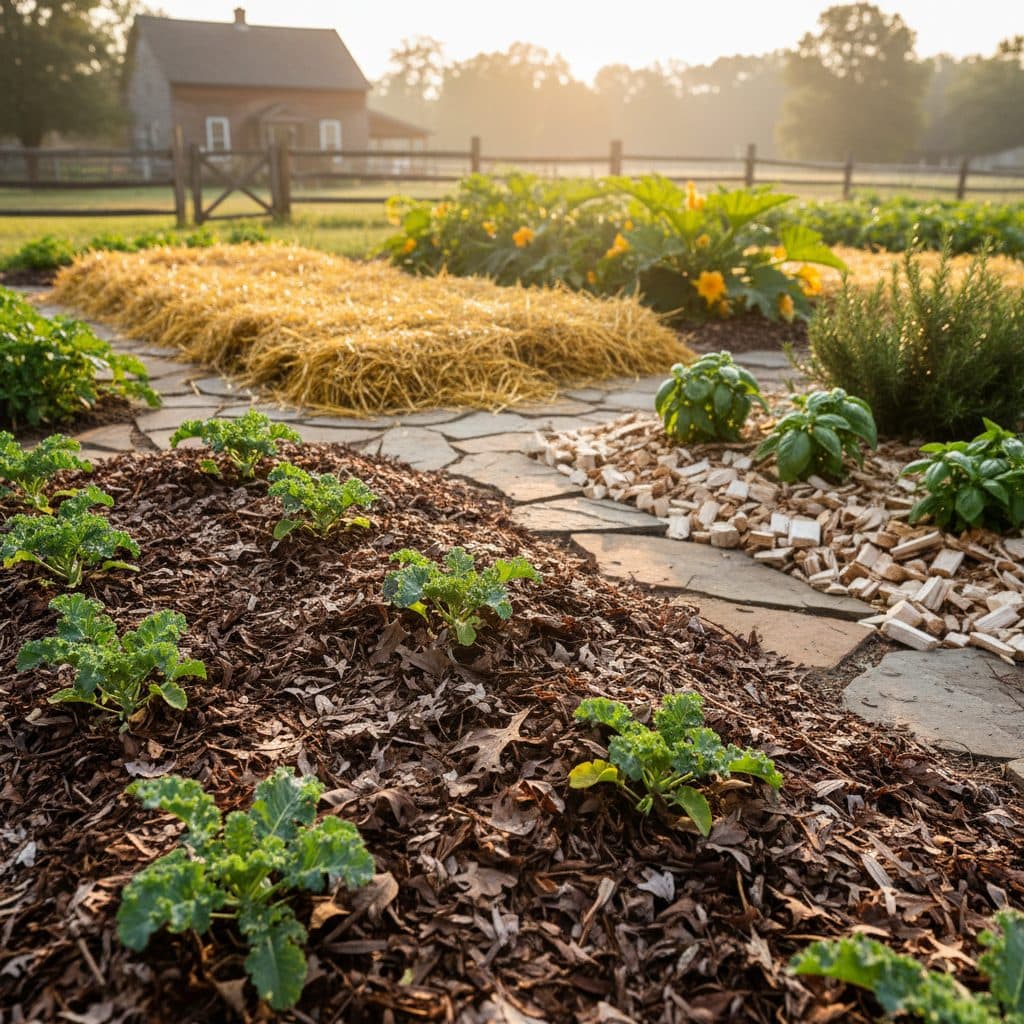
- Shredded leaves offer free, nutrient-rich organic matter, improving soil structure and supporting microbial life, especially in vegetable beds.
- Wood chips provide long-lasting weed suppression and superior moisture retention, ideal for perennial beds, shrubs, and pathways, reducing watering needs by up to 25%.
- Straw is lightweight and excellent for insulating vegetable gardens and fruit crops like strawberries, helping maintain consistent soil temperatures and preventing splash-back.
- Consider the carbon-to-nitrogen ratio of each mulch type; fresh wood chips can temporarily tie up nitrogen, requiring supplemental feeding for young plants.
- Mulch depth matters: aim for 2-4 inches for wood chips and shredded leaves, and 4-6 inches for straw to achieve optimal benefits.
- Regularly assess soil moisture levels with a tool like a soil moisture meter to ensure your mulch strategy is effective for your specific plants and climate.
Quick answer: Choosing the right mulch involves considering your garden’s specific needs, plant types, and local resources. Options like shredded leaves, wood chips, and straw offer distinct benefits for soil moisture retention, weed suppression, and fertility.
In many parts of the US, from the humid Southeast to the arid Southwest, maintaining consistent soil moisture and suppressing weeds are constant challenges for growers. For example, a garden in USDA zone 7 might experience 40 days over 90°F in a typical summer, making water retention especially important. Mulching offers a practical, effective solution, helping to reduce water evaporation by 20-30% and stabilize soil temperatures, which benefits plant health and reduces the need for frequent irrigation.
But not all mulches are created equal. The choice between shredded leaves, wood chips, and straw depends on your specific garden needs, plant types, and local resources. Each material brings its own set of advantages and disadvantages to the table, impacting everything from soil fertility to long-term maintenance. Understanding these differences helps you select the right option for your beds, pathways, or orchard.
The benefits and considerations of shredded leaves
Shredded leaves, often available for free in autumn, are a gardener’s gold, especially in regions like the Northeast where deciduous trees are abundant. They are an excellent source of organic matter, breaking down relatively quickly to enrich the soil with essential nutrients over one to two growing seasons. When applied at a depth of 3-4 inches, shredded leaves improve soil structure, increase water retention, and support microbial activity. For instance, in a typical vegetable garden in USDA zone 5, a 3-inch layer can reduce soil temperature fluctuations by 10°F on a hot summer day.
Preparing and applying leaf mulch
To maximize benefits and prevent matting, shred leaves before application. Whole leaves can form a dense, impenetrable layer that repels water and suffocates plant roots, especially after heavy rains. A leaf shredder or a lawnmower with a bagging attachment can easily process a large volume of leaves in a few hours. Once shredded, they should be spread evenly around plants, keeping them a few inches away from stems to prevent moisture buildup and potential rot. The carbon-to-nitrogen ratio of shredded leaves is generally around 30:1 to 60:1, making them a balanced choice that enriches the soil without causing significant nitrogen drawdown, unlike some fresh wood products. This makes them particularly suitable for annual vegetable beds where quick nutrient cycling is desired.
- Availability: Often free from your yard or local municipal collection, especially in the fall.
- Nutrient Content: Rich in micronutrients, slowly releasing them as they decompose.
- Soil Improvement: Improves soil structure, aeration, and water retention.
- Decomposition Rate: Breaks down relatively quickly, typically within one to two years.
- Weed Suppression: Effective at blocking weeds when applied at a 3-4 inch depth.
Understanding wood chips for long-term mulching
Wood chips are a durable mulch, often favored for perennial beds, shrub borders, and pathways in larger gardens, such as those found in USDA zone 8 across the Pacific Northwest. Their primary advantage lies in their longevity; depending on the wood type, they can last for two to five years before needing replenishment. This durability translates to less frequent reapplication and sustained weed suppression over multiple seasons. Research from 2006 on young apple trees showed that wood chip mulch effectively maintained soil moisture and promoted biological soil activity, leading to better vegetative and generative growth [1]. Applied at a 2-4 inch depth, wood chips are excellent at insulating soil, keeping it cooler in summer and warmer in winter, which is particularly beneficial for sensitive root systems.
Types and application of wood chips
The type of wood chip matters. Hardwood chips, like oak or maple, decompose slower and last longer than softwood chips from pine or cedar. While fresh wood chips have a high carbon-to-nitrogen ratio (often 100:1 or more), which can temporarily tie up nitrogen in the soil, this effect is usually minimal if the chips are applied on top of the soil rather than mixed in. For young, nitrogen-hungry plants, a supplemental feeding with a product like fermented soybean meal organic fertilizer can mitigate any potential nitrogen deficiency. When establishing new beds, consider using a portable petrol wood chipper to process branches into fresh chips, saving money and recycling yard waste. The 2016 study on ornamental grasses showed that wood chips improve soil moisture and weed control [2].
- Longevity: Lasts two to five years, reducing maintenance frequency.
- Weed Control: Excellent at suppressing weeds due to their density and slow decomposition.
- Moisture Retention: Significantly reduces water evaporation, saving 20-25% on irrigation.
- Temperature Moderation: Insulates soil, protecting roots from extreme temperatures.
- Aesthetics: Provides a clean, uniform look for landscape beds and pathways.
Straw as a versatile and insulating mulch
Straw, the dried stalks of cereal grains like wheat or oats, is a lightweight and highly effective mulch, particularly valued in vegetable gardens and for protecting sensitive crops like strawberries in regions such as the Midwest. Its loose structure allows for good air circulation while still providing excellent insulation, helping to keep soil temperatures stable. A 4-6 inch layer of straw can protect plants from late spring frosts, increasing soil temperature by 5-10°F compared to unmulched soil, and also keeps fruits clean by preventing splash-back of soil during watering or rain. This is especially useful for crops like cucumbers or squash that sprawl on the ground. The USDA Natural Resources Conservation Service (NRCS) promotes straw mulching for its soil health benefits, including erosion control and improved water infiltration [6].
Choosing and applying straw mulch
When selecting straw, it’s important to distinguish between straw and hay. Hay contains seed heads and can introduce unwanted weeds into your garden, whereas straw is largely seed-free. Always opt for weed-free straw to avoid future headaches. Its carbon-to-nitrogen ratio is typically around 80:1, meaning it will break down slower than leaves but faster than wood chips, contributing organic matter to the soil over one to two years. For example, in a semi-arid forest environment, short-term mulching with straw has been shown to improve soil properties, including water infiltration and organic matter content, within a few months of application [5]. Straw is also easy to apply and remove, making it suitable for annual crop rotations. You can easily check the soil moisture under your straw mulch using a soil moisture meter to ensure plants are getting adequate water.
- Insulation: Excellent for moderating soil temperature, protecting against frost and heat.
- Lightweight: Easy to handle and apply, ideal for annual vegetable beds.
- Cleanliness: Prevents soil splash-back, keeping fruits and vegetables clean.
- Decomposition: Breaks down at a moderate rate, adding organic matter to the soil.
- Cost-Effective: Often available at a reasonable price from local farm supply stores.
Choosing the right mulch for your garden needs
Selecting the best mulch for your garden involves weighing the specific needs of your plants, your aesthetic preferences, and your budget. For instance, a vegetable gardener in USDA zone 4 focused on building soil fertility quickly might lean heavily on shredded leaves, applying a fresh 3-inch layer each spring. In contrast, a homeowner with extensive perennial beds in USDA zone 7 might prefer wood chips for their long-lasting weed control and uniform appearance, reducing the need for reapplication for several years. The cost difference can be significant; shredded leaves are often free, while a cubic yard of wood chips can cost $30-$60, and a bale of straw typically runs $5-$10.
Mixing and matching mulch for optimal results
Don’t feel limited to just one type of mulch. Many experienced growers in the Mid-Atlantic region, for example, successfully combine different materials to harness their individual strengths. You might use a 4-inch layer of straw in your annual vegetable beds for excellent insulation and easy incorporation at the end of the season, while applying a 3-inch layer of wood chips around your fruit trees and shrubs for durable weed suppression and moisture retention. For particularly challenging areas with persistent weeds, a 2-inch layer of cardboard underneath 3 inches of wood chips can provide nearly 100% weed control for the first year. Regularly monitoring your soil with a 3-in-1 soil pH, moisture & fertility meter shows how the mulch performs and whether moisture levels remain steady throughout the season.
- Vegetable Gardens: Shredded leaves or straw are ideal for annuals due to their faster decomposition and ease of incorporation.
- Perennial Beds & Shrubs: Wood chips offer long-term weed control and moisture retention, lasting 2-5 years.
- Pathways: Wood chips provide a durable, stable surface that suppresses weeds effectively.
- Container Plants: A thin 1-inch layer of shredded leaves can help retain moisture without adding excessive weight.
- New Plantings: Consider a mix: straw for quick establishment, then wood chips for long-term benefits.
Comparison of mulching materials
Feature | Shredded Leaves | Wood Chips | Straw |
|---|---|---|---|
Cost | Often free | $30-$60 per cubic yard | $5-$10 per bale |
Longevity | 1-2 years | 2-5 years | 1-2 years |
C:N Ratio | 30:1 to 60:1 | 100:1 to 400:1 | 80:1 to 100:1 |
Weed Suppression | Good (3-4 in depth) | Excellent (2-4 in depth) | Good (4-6 in depth) |
Moisture Retention | Good | Excellent | Good |
Soil Temperature Reg. | Good (up to 10°F) | Excellent (up to 15°F) | Excellent (up to 10°F) |
Nutrient Contribution | High | Low (slow release) | Moderate |
Best Use | Vegetable gardens, annuals | Perennials, shrubs, pathways | Vegetable gardens, fruit crops |
Moisture Savings: Mulching can reduce water evaporation by 20-30%, saving hundreds of gallons of water in a 1,000 square foot garden over a growing season.
Weed Reduction: A proper 3-inch layer of mulch can suppress up to 90% of annual weeds, significantly cutting down on weeding time by 50% or more.
Frequently asked questions
Can I use fresh wood chips directly in my garden?
Yes, you can use fresh wood chips directly as a top layer of mulch, typically 2-4 inches deep. While they have a high carbon-to-nitrogen ratio, this nitrogen drawdown primarily occurs if chips are mixed into the soil, not when applied on the surface. For young, nitrogen-hungry plants, consider adding a nitrogen supplement like blood meal at a rate of one pound per 100 square feet.
How deep should I apply mulch for effective weed control?
For effective weed control, apply shredded leaves or wood chips to a depth of 2-4 inches. Straw mulch, being lighter and looser, generally requires a deeper layer of 4-6 inches to achieve similar suppression. Maintaining these depths can reduce weed germination by up to 90%.
Will shredded leaves mat and prevent water penetration?
Whole, unshredded leaves can indeed mat together, especially after heavy rain, forming an impenetrable layer that sheds water. To prevent this, shred leaves before applying them. Shredded leaves, when applied at a 3-4 inch depth, allow water to pass through effectively while still retaining moisture in the soil below.
Is there a fire risk with straw mulch?
Yes, straw mulch can pose a fire risk, particularly in dry climates like parts of California or during extended drought periods in other regions. It is more flammable than wood chips or shredded leaves. Always keep straw mulch several feet away from structures and avoid using it in areas prone to wildfires or where outdoor cooking is frequent.
How often do I need to replenish mulch?
The replenishment frequency depends on the mulch type and climate. Shredded leaves and straw typically break down within one to two years, requiring annual or biennial reapplication. Wood chips, being more durable, can last two to five years before needing a fresh 1-2 inch top-up layer. Regularly check your mulch depth to ensure it remains effective.
Can I mix different types of mulch in my garden?
Absolutely, mixing different mulch types can be a smart strategy. For example, you might use a 4-inch layer of straw in your vegetable beds for its insulating properties and ease of annual incorporation, while applying a 3-inch layer of wood chips around your permanent shrubs for long-term weed control. This approach leverages the best features of each material for specific garden areas.
References
- Holzhäcksel- und Miscanthusmulch erhalten die Bodenfeuchte und fördern die biologische Bodenaktivität sowie vegetatives und generatives Wachstum junger Apfelbäu (2006). Holzhäcksel- und Miscanthusmulch erhalten die Bodenfeuchte und fördern die biologische Bodenaktivität sowie vegetatives und generatives Wachstum junger Apfelbäu.
- Application of wood chips for soil mulching in the cultivation of ornamental grasses (2016). Application of wood chips for soil mulching in the cultivation of ornamental grasses.
- Use of shredded tire chips and tire crumbs as packing media in trickling filter system for landfill leachate treatment (2021). Use of shredded tire chips and tire crumbs as packing media in trickling filter system for landfill leachate treatment.
- Use of shredded tire chips and tire crumbs as packing media in trickling filter system for landfill leachate treatment (2021). Use of shredded tire chips and tire crumbs as packing media in trickling filter system for landfill leachate treatment.
- Short-term effects of post-fire mulching with straw or wood chips on soil properties of semi-arid forests (2023). Short-term effects of post-fire mulching with straw or wood chips on soil properties of semi-arid forests.
- USDA Natural Resources Conservation Service (2024). USDA Natural Resources Conservation Service.