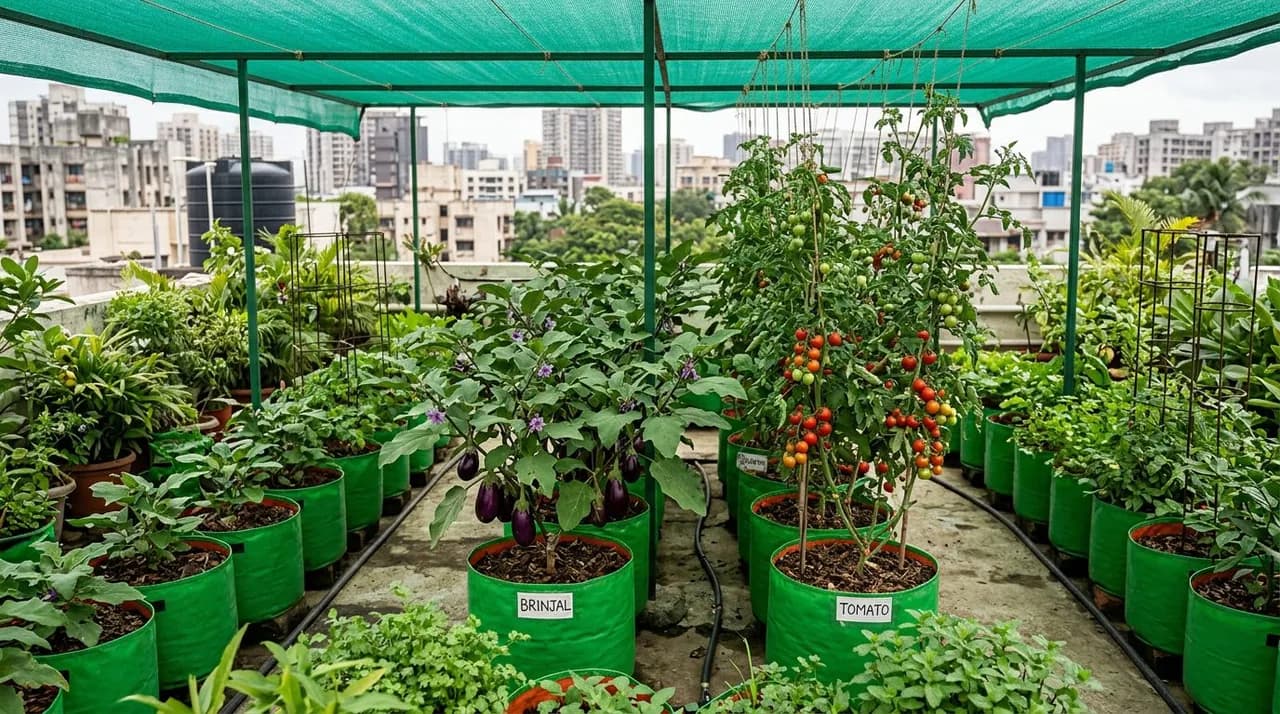
Key takeaways
- Verify roof waterproofing and place containers on raised brick supports or drainage mats to prevent moisture pooling on concrete slabs.
- Distribute heavy planters and water drums directly over structural columns and beams underneath the slab, keeping load off non-structural parapets.
- Install a 50% green agro-shade net to buffer intense zaid (summer) temperatures above 40°C and protect delicate crops.
- Use lightweight growing media formulated from coco peat, vermicompost, and red soil rather than heavy garden earth.
- Group vegetables and herbs by water needs using automated drip lines to streamline irrigation during scorching weather.
Quick answer: A successful terrace garden design in India starts with waterproofing checks, drainage elevation, and weight planning over structural beams. Arrange lightweight coco-peat grow bags into functional zones with a 50% shade net overhead, securing a productive year-round harvest across kharif, rabi, and zaid seasons.
Creating a well-structured terrace garden design transforms bare concrete rooftops across Indian cities into productive spaces for organic vegetables, culinary herbs, and flowering plants. From dense apartment terraces in Bengaluru and Chennai to residential rooftops in Delhi, Mumbai, and Hyderabad, rooftop cultivation is the most effective way for urban households to access fresh greens.
However, designing an open-roof garden in the Indian climate presents unique structural and environmental challenges. Rooftop spaces face severe zaid summer conditions with concrete slabs radiating intense heat, ferocious pre-monsoon winds, and heavy kharif torrential downpours that can saturate soil in minutes. Without deliberate layout planning, gardeners face water seepage, excessive slab weight, scorched foliage, or wind-damaged trellises.
By integrating fundamental civil precautions with smart permaculture zoning, you can create a high-yielding roof terrace garden that stays cool, drains freely, and produces abundant food throughout the year.
Structural safety: waterproofing, weight distribution, and slab drainage
Before purchasing containers or potting soil, evaluating the civil and structural aspects of your concrete roof slab is non-negotiable.
1. Waterproofing integrity
Standing water under moist planters is the primary cause of ceiling dampness and structural rebar corrosion in Indian buildings:
- Slab inspection: Ensure your roof slab has an intact waterproof coating, such as elastomeric bitumen membranes or polymer-modified cementitious coatings.
- Slope to drain: Check that the roof slope directs all surface runoff freely toward rainwater downspouts without forming stagnant puddles.
2. Weight distribution and load management
Wet garden soil weighs significantly more than dry mix. A standard 50-litre container filled with wet garden mud can weigh over 60 kg:
- Locating structural columns: Place the heaviest items (water drums, large tree pots, compost tumblers) close to the roof edge, directly over the beams or load-bearing walls that sit underneath the slab, and over columns. The parapet is not a support; never rest or hang load on it. Before you add a filled water drum or a row of large drums to any roof, have the slab's capacity confirmed by the builder, your society, or a civil engineer; an older or thin slab may not take it.
- Center of the slab: Keep the central, unsupported span of the roof clear for lightweight seating, movable fabric grow bags, or walking pathways.
3. Elevating containers for free drainage
Never place pots or grow bags directly flat onto the bare concrete roof. Dirt and algae accumulate underneath, blocking natural water flow:
- Place pots on pairs of burnt red bricks, terracotta pot feet, or interlocking plastic drainage cell mats.
- Elevating pots 5 cm to 10 cm above the slab ensures rainwater flows freely underneath toward roof outlets, allowing the concrete to dry rapidly after monsoon showers.
For fundamental small-space layout principles, review our guide to small home terrace garden.
Climate zoning for Indian weather: shade nets, windbreaks, and monsoon management
Indian rooftop gardens face three distinct weather phases: the scorching zaid summer (March to June), the torrential kharif monsoon (June to September), and the pleasant rabi winter (October to February). Seasonal timing shifts between the northern plains, the coastal regions, the Deccan plateau, and southern India, making adaptable shelter essential.
Installing agro-shade nets for extreme heat
In peak summer, air temperatures run above 42°C across the northwest and central plains, while coastal and southern cities stay lower but far more humid. Everywhere, the exposed concrete surface itself gets much hotter than the air and radiates that heat into container root zones:
- Shade net specification: Install a high-density polyethylene (HDPE) 50% green or white agro-shade net 2.5 metres above the terrace floor. A 50% net cuts solar radiation without starving fruiting vegetables of necessary light.
- Retractable design: Use a pulley or rope-supported framework so you can slide the shade net open during overcast monsoon days and winter mornings, then pull it closed during harsh afternoon sun.
Windbreaks and parapet protection
Strong pre-monsoon gusts and coastal winds can snap tall tomato vines and topple top-heavy containers:
- Arrange sturdy wooden or metal trellises along the windward parapet.
- Fasten vertical bamboo screens or wire mesh firmly to parapet walls to diffuse wind velocity before it hits delicate foliage.
Monsoon deluge and fungal prevention
During heavy kharif rains, excessive moisture encourages damping off, fungal leaf spot, and nutrient leaching:
- Ensure all grow bags have generous drainage holes punched along the lower side walls as well as the base.
- Mulch soil surfaces with dry leaves or sugarcane bagasse to prevent heavy raindrops from splashing soil-borne fungal spores onto lower leaves.
Choosing containers and lightweight potting media
Traditional garden soil (red clay or black cotton soil) compacts quickly and adds dangerous dead weight to building slabs. Modern terrace garden design India relies on lightweight, porous media in durable containers.
Container types for rooftops
- HDPE and fabric grow bags: UV-treated green HDPE bags (200 to 250 GSM) and breathable non-woven geotextile fabric bags work best for Indian terraces. They are lightweight, shatterproof, inexpensive, and promote natural root air-pruning.
- Rectangular raised grow beds: Modular PVC or galvanised metal troughs lined with drainage sheets provide continuous bed space for planting leafy greens in rows.
- Repurposed containers: Food-grade plastic tubs and paint buckets work well after drilling multiple 1 cm drainage holes in the base and sides.
The ideal lightweight potting mix
Formulate a lightweight potting blend that balances water retention, aeration, and fertility:
- Potting mix recipe: 50% washed coco peat, 30% aged vermicompost or well-rotted manure, 20% perlite or coarse river sand; shift a little more coco peat in if your terrace dries fast, or more sand if water sits on the surface.
- Organic amendments: Add a handful of neem cake powder (to prevent root grubs and nematodes) and bone meal or rock phosphate per bag.
For vertical planting strategies that maximize narrow spaces, consult our tutorial on vertical vegetable gardening in small spaces.
Layout ideas: zoning your roof terrace garden for maximum yield
Organising your rooftop into functional zones streamlines daily maintenance and keeps the space enjoyable for family living.
+---------------------------------------------------------+
| [Zone 4: Parapet Trellis & Vertical Climbers]           |
| Bottle Gourd, Ridge Gourd, Bitter Gourd, Pole Beans     |
+---------------------------------------------------------+
|                                                         |
|  [Zone 1: Fruiting Crops]       [Zone 2: Leafy Greens]  |
|  Brinjal, Bhindi, Chilli,       Palak, Methi, Amaranth  |
|  Tomatoes in 12x12 Grow Bags    in Shallow 24x6 Troughs |
|                                                         |
|  [Zone 3: Kitchen Herbs]        [Zone 5: Perennials]    |
|  Coriander, Mint, Tulsi         Lemon, Guava, Pomegranate|
|  Near Access Doorway            Over Structural Columns |
+---------------------------------------------------------+
| [South/East Edge] Central Walking Spine & Seating Area  |
+---------------------------------------------------------+
Zone 1: high-sun fruiting vegetables
Place sun-loving solanaceous and malvaceous crops where they receive 6 to 8 hours of direct light:
- Crops: Brinjal (eggplant), bhindi (ladies finger / okra), green chillies, and tomatoes.
- Container size: 30 cm by 30 cm (12x12 inch) individual grow bags.
Zone 2: fast-growing leafy greens
Position leafy greens where they receive gentle morning light and afternoon shade beneath the net canopy:
- Crops: Palak (spinach), methi (fenugreek), and lal saag (red amaranth).
- Container size: Shallow rectangular grow trays measuring 60 cm by 30 cm with a depth of 15 cm to 20 cm.
Zone 3: kitchen herbs near access doorway
Place daily culinary herbs right beside the terrace entry door for effortless picking while cooking:
- Crops: Coriander (dhania), mint (pudina), sacred holy basil (tulsi), and curry leaf.
- Container size: Wide shallow 20 cm pots or dedicated small planters.
- Learn to cultivate regular kitchen greens in our dedicated guide to how to grow coriander at home.
Zone 4: vertical climbers along parapet trellises
Vining cucurbits produce heavy harvests without consuming horizontal floor area:
- Crops: Bottle gourd (lauki), ridge gourd (turai), bitter gourd (karela), and pole beans.
- Trellis setup: Run heavy nylon creep netting or coir ropes from the container up to the overhead shade net frame or parapet railing.
Zone 5: perennial fruit trees and large pots over structural lines
Place heavy perennial containers directly over load-bearing structural beams and columns:
- Crops: Kagzi lime (nimbu), dwarf guava, pomegranate, and culinary staples like the curry leaf plant care shrub.
- Container size: Large 45 cm to 60 cm drums (50 to 100 litres).
Water management, drip irrigation, and terrace garden decoration ideas
Reliable irrigation is the lifeline of an Indian rooftop garden, particularly during dry zaid summers when potting media can dry out twice a day.
Automated drip irrigation setup
Carrying heavy watering cans up flights of stairs becomes exhausting during hot weather:
- Mainline and micro-tubing: Run a 16 mm UV-resistant LDPE pipe from an overhead water tank or dedicated terrace tap, branching off with 4 mm feeder tubes and adjustable pin drippers into every grow bag.
- Battery timer: Install a battery-operated tap timer programmed to deliver 5 to 10 minutes of gentle drip irrigation twice daily (at early dawn and sunset).
- To explore pipeline sizing and emitter placement, consult drip irrigation system design.
Terrace garden decoration ideas and aesthetics
A functional kitchen garden can also be a relaxing outdoor retreat:
- Flooring accents: Lay artificial turf strips or interlocking wooden deck tiles along central walking pathways where containers are not seated.
- Warm ambient lighting: Install solar-powered string fairy lights or warm LED spotlights along perimeter parapet walls for evening enjoyment.
- Upcycled aesthetics: Paint terracotta pots in traditional terracotta and white Warli motifs, or build vertical planter ladders using reclaimed wooden packing crates.
For broader container cultivation techniques across urban spaces, see our guide on rooftop and patio container gardening.