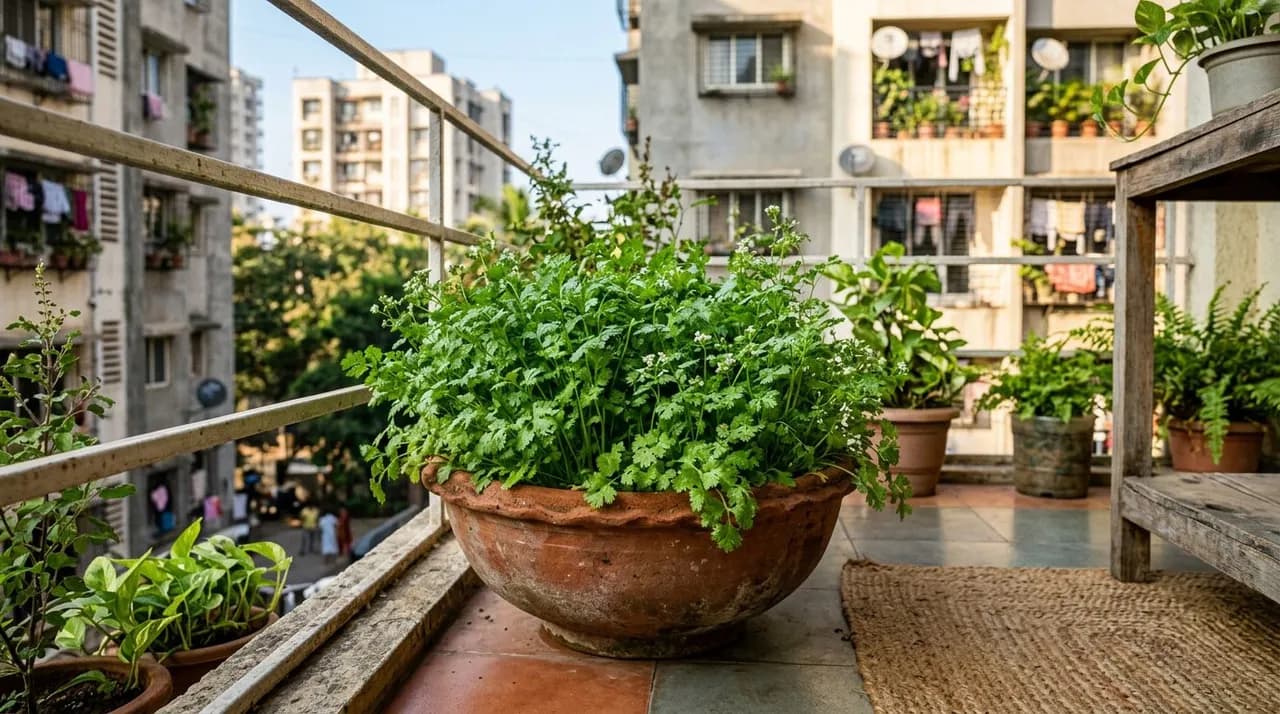
Key takeaways
- Split whole culinary coriander seeds into their two halves with light rolling-pin pressure before sowing; water reaches the embryo faster and the two seedlings are not left fighting for the same spot.
- Soak split seeds in clean water for 12 to 24 hours to soften the tough outer husk and accelerate sprouting time.
- Use wide, shallow containers (15 cm to 20 cm depth) filled with a lightweight mix of coco peat, vermicompost, and sand.
- Position containers where plants receive 4 to 5 hours of morning sunlight and protection from intense afternoon heat.
- Harvest using the cut-and-come-again method by trimming outer stems 2.5 cm above the soil to enable continuous regrowth.
Quick answer: To grow coriander at home successfully, gently split whole seeds into halves, soak in water for 12 to 24 hours, and sow 1 cm deep in wide, shallow pots filled with coco peat and vermicompost. Keep soil evenly moist in morning sun to harvest fresh leaves within 35 to 45 days.
Learning how to grow coriander at home is common in Indian households. Fresh coriander (Coriandrum sativum), known as dhania, is a staple aromatic garnish in Indian cooking. From seasoning dal and curries to blending into chutneys, homegrown dhania has a fresh fragrance and crisp flavor that wilted store-bought bunches lack.
However, coriander is notorious among home gardeners for erratic germination and premature bolting (flowering). Beginners often scatter whole grocery spice seeds onto heavy garden mud, only to see zero green shoots emerge after weeks of waiting, or find plants bolting to seed within a few days of summer heat.
Understanding the botanical structure of the coriander seed, managing moisture properly, and applying simple seed-prep techniques ensures rapid germination and a lush, continuous harvest from your balcony or terrace garden.
Solving the germination challenge: splitting and soaking dhania seeds
The primary reason home gardeners fail to germinate coriander lies in the nature of the seed itself:
+---------------------------------------------------------+
|                  [Splitting Dhania Seeds]               |
|                                                         |
|    (Whole Schizocarp)       (Light Rolling Pin Pressure)|
|           ( O )         ===>          /=====\           |
|                                                         |
|    (Two Seed Mericarps)     (12-24 Hour Water Soak)     |
|          ( ) ( )        ===>    [Water Bucket]          |
|                                 Enzymes Activated       |
+---------------------------------------------------------+
1. The schizocarp structure
What looks like a single round coriander seed is botanically a dried fruit called a schizocarp. It contains two separate, independent seeds (mericarps) encased inside a tough, woody outer husk:
- If sown whole, water penetrates slowly, and emerging shoots compete against each other for space.
- The rolling pin technique: Place clean coriander seeds on a flat kitchen board. Gently roll a wooden rolling pin (belan) over the seeds with light, even pressure. You do not want to crush or pulverise the seed; simply press firmly enough to split the spherical husks into two distinct halves.
2. Soaking for rapid sprouting
- Submerge the split seed halves in a small bowl of clean, lukewarm water for 12 to 24 hours.
- Soaking softens the husk and hydrates the embryo. Dry whole seed often takes two to three weeks to show; soaked, split seed sown into warm, evenly moist mix usually emerges in about seven to fourteen days.
Sizing containers and blending the ideal potting soil
Coriander possesses a delicate, shallow taproot system accompanied by fine fibrous feeder roots. It thrives in wide containers instead of deep pots:
1. Choosing the right pots for dhania
- Shallow rectangular trays: Wide, shallow grow bags or plastic planters (measuring 45 cm to 60 cm in length, 30 cm in width, and 15 cm to 20 cm in depth) are ideal.
- Terracotta containers: Unglazed clay pots breathe naturally, preventing the waterlogged conditions that cause stem rot (damping off).
- Drainage verification: Ensure your coriander in pots setup features multiple open drainage holes at the base.
2. Formulating a loose potting mix
Coriander demands a loose, porous, moisture-retentive medium with a neutral pH (6.5 to 7.0):
- 50% washed coco peat (keeps media light and retains moisture evenly)
- 40% mature vermicompost or aged cow dung manure (provides steady organic nitrogen for leafy growth)
- 10% coarse river sand or perlite (guarantees rapid drainage)
- Add 1 tablespoon of neem cake powder per pot against soil grubs and nematodes. Root rot and damping off stem from drainage issues instead of pests; open drainage holes and a lighter mix do more than any amendment, and a Trichoderma drench at sowing helps if you have lost seedlings before.
For broader small-footprint container methods, see our guide to small home terrace garden.
Step-by-step sowing and caring for your dhania plant at home
Once your seeds and containers are prepared, follow these precise sowing steps:
+---------------------------------------------------------+
|                  [Sowing & Care Routine]                |
|                                                         |
|   1. Fill shallow tray with loose coco peat blend       |
|   2. Scatter soaked split seeds 2 cm apart              |
|   3. Cover with 0.5 cm to 1 cm fine vermicompost        |
|   4. Mist surface gently; place in morning sun          |
|   5. Harvest outer stems when 15 cm tall                |
+---------------------------------------------------------+
Step 1: Sowing the seeds
- Moisten the potting mix thoroughly before sowing.
- Scatter the soaked split seeds evenly across the soil surface, leaving roughly 2 cm of space between seeds.
- Cover the seeds with a light 0.5 cm to 1 cm layer of fine coco peat or sifted vermicompost. Sowing too deep delays germination.
- Mist the surface gently using a handheld spray bottle to settle the top layer without dislodging the seeds.
Step 2: Sunlight and temperature management
- Germination phase: Keep the container in a warm, bright spot out of scorching direct sun until green shoots emerge (typically 7 to 10 days).
- Active growth phase: Move the container to where it receives 4 to 5 hours of gentle morning sunlight.
- Preventing bolting: Coriander bolts (sends up tall flower stalks) when exposed to high temperatures above 30°C to 32°C. During hot months, position containers in bright, dappled shade or beneath a 50% green agro-shade net.
Step 3: Irrigation routine
- Keep the potting mix consistently cool and barely moist like a wrung-out sponge.
- Never let the top layer dry out completely while seedlings are establishing.
- Avoid heavy, forceful watering from a bucket, which flattens tender green stems against the soil.
For whole-rooftop layout ideas, see our guide on terrace garden design in India.
Alternative methods: how to grow coriander in water and microgreens
For urban apartment dwellers without outdoor balcony space, indoor water culture offers a fast supply of micro-herbs:
Growing coriander microgreens on windowsills
- Fill a shallow seed tray with moist coco peat or a damp paper towel mat.
- Scatter split seeds densely across the surface.
- Cover with a dark lid for 3 days to encourage root emergence, then place on a sunny indoor windowsill.
- Snip aromatic microgreen stems 14 to 18 days after sowing when first true leaves appear, for use in salads and soups.
Water culture (hydroponic trays)
Growing coriander in water works best using modular mesh net pots:
- Suspend sprouted seedlings in net cups filled with clay pebbles over a reservoir of aerated, mild organic nutrient solution.
- Change water weekly to prevent root stagnation and maintain oxygen levels.
Harvesting techniques and succession planting
Correct harvesting technique allows a single container to yield multiple flushes of leaves:
+---------------------------------------------------------+
|                  [Cut-and-Come-Again]                   |
|                                                         |
|             \   |   /  (Central Growing Heart)          |
|              \  |  /    [LEAVE INTACT]                  |
|               \ | /                                     |
|     (Snip) --> \|/ <-- (Snip)                           |
|    ===========|===|=========== (2.5 cm Above Soil)      |
|               /   \                                     |
|              / Roots\                                   |
+---------------------------------------------------------+
1. The cut-and-come-again method
- When the dhania plant at home reaches 15 cm in height (typically 35 to 45 days after sowing), harvest begins.
- Use clean scissors to snip the outermost, mature stems approximately 2.5 cm above the soil line.
- Always leave the central crown and young inner leaves intact. The plant will rapidly generate new stems, providing 3 to 4 successive harvests from the same pot over 6 to 8 weeks.
2. Whole plant uprooting
If you prefer tender roots for traditional soup stocks and pastes, gently pull entire plants from one side of the tray, allowing remaining plants space to expand.
3. Fortnightly succession sowing
Sow a fresh container every two to three weeks so a new batch is always coming on. Expect this to work best from October through February in the plains. Through the hot months, sowings bolt fast however you time them, so use shade, a slow-bolting variety, and treat summer coriander as a bonus instead of a steady supply.
For related herbs and crops, see our guides on how to grow mint at home, curry leaf plant care, and winter vegetables in India.