Key takeaways
- Provide full sunlight (at least 6 hours daily) and warm temperatures above 18°C (65°F) for rapid vegetative growth.
- Use a well-draining, slightly acidic potting mix rich in compost and sand to prevent root rot.
- Prune the main stem and side branches in spring to stimulate bushy, multibranched growth and prevent legginess.
- Overwinter indoor container plants in bright light and reduce watering significantly when temperatures drop below 12°C (54°F).
- Feed monthly during the warm growing season with diluted organic nitrogen fertilizers such as compost tea, fish emulsion, or buttermilk.
Quick answer: Proper curry leaf plant care requires warm temperatures, at least 6 hours of direct sunlight, and well-draining soil that dries slightly between waterings. Protect plants from freezing temperatures, prune terminal shoots regularly to promote branching, and feed with organic nitrogen during active growth.
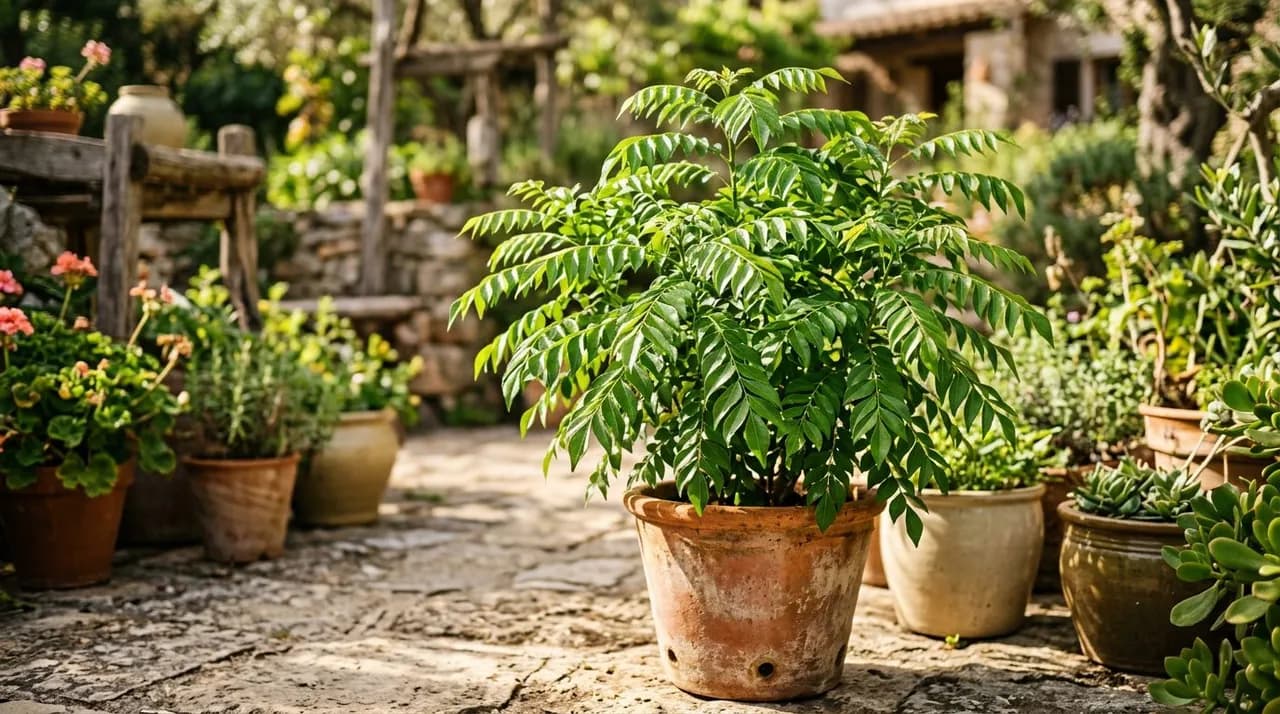
Providing attentive curry leaf plant care rewards growers with a continuous harvest of aromatic, glossy compound leaves essential for traditional South Asian cooking. Known botanically as Murraya koenigii (syn. Bergera koenigii) and widely referred to as the kadi patta plant, this subtropical and tropical evergreen shrub belongs to the citrus family (Rutaceae).
While naturally adapted to the hot, frost-free climates of the Indian subcontinent and Southeast Asia, curry leaf plants adapt remarkably well to container culture across temperate zones worldwide. Growers in North America, the UK, Europe, and southern Australia routinely maintain healthy specimens on sunny patios during summer and indoors near bright windows during winter.
Understanding the seasonal rhythm, nutrient preferences, and pruning mechanics of Murraya koenigii is the foundation for maintaining a vigorous, long-lived bush that produces culinary foliage for decades.
Botanical profile and understanding how to grow curry leaves
To understand how to grow curry leaves successfully, it helps to examine the natural habitat and growth characteristics of the species:
- Growth habit: In ground beds within tropical climates, Murraya koenigii grows into a small tree or large multi-stemmed shrub reaching 4 to 6 metres (13 to 20 feet) tall. In containers, root restriction and routine pruning keep the plant at a manageable 1 to 1.5 metres (3 to 5 feet).
- Foliage and flowers: The plant has pinnate compound leaves holding 11 to 21 leaflets with a pungent, citrus-herbal aroma. Small, fragrant white blossoms appear in spring and summer, followed by small berry-like drupes that turn shiny purplish-black when mature.
- Root architecture: Curry leaf plants develop a sensitive taproot system accompanied by fibrous feeder roots near the soil surface. They dislike soil compaction, waterlogged root zones, and frequent, aggressive root disturbance.
When establishing an aromatic culinary space, you can integrate this perennial alongside other classic herbs. Explore our foundational advice in starting an herb garden.
Soil requirements and container selection for potted plants
Selecting an appropriate potting medium and container is critical for indoor and patio specimens:
Soil mixture formula
Curry leaf plants require a porous, freely draining medium with a slightly acidic to neutral pH (6.0 to 6.8). A heavy, dense garden soil will suffocate the root system. Prepare a balanced container blend using:
- 40% quality potting soil or aged leaf compost
- 30% coco coir or peat moss (for moisture buffering)
- 20% coarse horticultural perlite or pumice
- 10% coarse sand or grit (to improve drainage)
Container sizing and drainage
- Young seedlings and rooted cuttings: Start in a 15 cm to 20 cm (6 to 8 in) diameter pot.
- Mature shrubs (2+ years old): Step up to a 35 cm to 45 cm (14 to 18 in) pot holding approximately 25 to 40 litres (6.5 to 10 gallons).
- Material choice: Unglazed terracotta pots provide natural breathability, allowing excess soil moisture to evaporate through the clay walls and reducing the risk of root rot.
- Drainage holes: Ensure the container has open, unobstructed drainage holes at the base.
For broader container cultivation techniques across small spaces, see our guide on rooftop and patio container gardening.
Propagation methods: seeds, stem cuttings, and root suckers
You can propagate new plants via fresh seeds, stem cuttings, or separated root suckers.
1. Curry leaf plant from seed
Growing a curry leaf plant from seed requires fresh, viable fruit:
- Seed viability: Seeds must be sown fresh within a few days of harvesting from the tree. Dried, stored commercial seeds usually lose viability rapidly.
- Pulp removal: Gently squeeze the soft black pulp away from the greenish seed kernel, taking care not to crush the seed.
- Sowing procedure: Press the seed 1 cm (0.5 in) deep into moist seed-starting mix. Maintain bottom heat between 22°C and 28°C (72°F to 82°F). Germination typically takes 2 to 4 weeks under warm conditions.
2. Curry leaf plant from cuttings
Propagating a curry leaf plant from cuttings produces a clone of a productive mother plant:
- Selecting wood: Take semi-hardwood cuttings 10 cm to 15 cm (4 to 6 in) long from pencil-thick, mature stems in late spring or midsummer. Avoid soft, fleshy green tips or old woody trunks.
- Preparation: Strip leaves from the lower two-thirds of the stem. Make a clean diagonal cut just below a leaf node.
- Rooting medium: Insert the cutting into a mixture of equal parts perlite and moist coco coir. Cover with a clear plastic dome to maintain high humidity and position in bright, indirect light at 24°C (75°F). Roots generally develop within 5 to 8 weeks.
3. Dividing root suckers
Established in-ground and large container plants frequently send up vertical shoots directly from the root crown. In spring, carefully dig down to locate where the sucker attaches to the main root, slice it off with a sharp sterile blade preserving its attached fibrous roots, and pot it into fresh soil.
Watering, feeding, and techniques on how to grow curry leaves faster
Gardeners often seek practical techniques on how to grow curry leaves faster when plants stall or develop pale foliage.
Irrigation regimen
- Active growing season (spring and summer): Water thoroughly whenever the top 2.5 cm (1 in) of potting mix feels dry. Water until liquid runs freely from the bottom drainage holes, then discard any standing runoff from the saucer.
- Resting season (autumn and winter): Scale back watering dramatically. Allow the top half of the pot to dry before adding modest moisture.
Nutrient needs and curry leaf plant fertilizer
A targeted curry leaf plant fertilizer program supports continuous leaf synthesis without causing salt burn:
- Organic nitrogen: Apply diluted fish emulsion or seaweed extract every 3 to 4 weeks during the active warm season.
- Iron and micronutrients: Curry leaf foliage is prone to iron chlorosis (yellow leaves with green veins) in alkaline soils. Top-dress with well-rotted manure, compost, or an occasional drench of chelated iron if yellowing appears.
- Traditional buttermilk drench: In traditional Indian home gardening, growers apply sour buttermilk diluted with water (1 part sour curd to 10 parts water) every month. This mild organic drench introduces beneficial lactic microbes and slightly acidifies the soil medium.
- For broader feeding strategies, consult our review of organic gardening fertilizer.
Seasonal management: curry leaf plant indoor care and winter survival
Temperature and light management determine whether a plant thrives or drops its leaves during cold weather.
Outdoor sun exposure in warm months
Move plants outdoors as soon as night temperatures reliably stay above 15°C (59°F). Place the pot in partial shade for the first week to harden off the foliage before shifting into full morning sun.
In subtropical and tropical climates: The plant can remain outdoors year-round in the ground or in large decorative planters, tolerating full blazing sun and summer rains.
In cool temperate climates: Keep the plant on a warm, sheltered patio or deck during the warm months, positioning it near a sun-facing wall (south-facing in the Northern Hemisphere, north-facing in the Southern) that radiates ambient heat.
Curry leaf plant winter protection and indoor care
Managing curry leaf plant winter conditions is the greatest challenge for growers in cold zones:
- Threshold temperature: Move containers indoors when nighttime temperatures fall below 12°C (54°F). The plant drops foliage and stops growing below about 5°C (41°F). A brief dip to 0°C (32°F) usually causes leaf scorch and stem dieback, and sustained freezing will kill the plant, so move containers under cover before any frost is forecast.
- Indoor positioning: Place the container in your brightest equator-facing window (south-facing in the Northern Hemisphere, north-facing in the Southern) or a west-facing one. If indoor light is insufficient, provide a full-spectrum LED grow light for 10 to 12 hours daily.
- Winter leaf drop: If the plant sheds some leaves upon moving inside, this is a normal acclimatization response to lower light levels and drier heated indoor air. Maintain warmth, avoid overwatering, and withhold all fertilizer until spring.
Pruning, harvesting, and pest management
Pruning is essential to prevent a single upright stem from growing tall and bare.
Pinching and pruning for bushy growth
- Initial pinching: When a young seedling or cutting reaches 20 cm to 30 cm (8 to 12 in) in height, pinch off the top terminal growing tip. This breaks apical dominance and forces dormant lateral buds to develop into multiple side branches.
- Spring heading back: In early spring, prune back long, leggy branches by one-third to one-half of their length using clean, sharp secateurs.
- Removing flower buds: Unless you intend to harvest seed, pinch off developing flower clusters on young or small plants. Flowering diverts significant metabolic energy away from vegetative leaf production.
Harvesting foliage correctly
Never harvest by pulling individual leaflets off the stem, which leaves bare petioles that die back into snags. Instead, pinch or snip off the entire compound leaf branch where it meets the main stem. This clean cut stimulates new leaf buds at the junction.
Managing pests organically
Curry leaf plants are relatively pest-resistant due to their essential oil content, but indoor container plants may attract common garden pests:
- Spider mites and aphids: Treat early infestations by washing foliage with a strong jet of water or applying insecticidal soap or diluted cold-pressed neem oil to both sides of the leaves.
- Scale insects: Hand-remove visible waxy brown scales with a soft cotton swab dipped in rubbing alcohol.
- For integrated biological controls, review our guide to integrated pest management for home gardens.
- If cultivating complementary root crops nearby, see our companion tutorial on how to grow turmeric.