Key takeaways
- Hyderabad's semi-arid Deccan climate (elevation 540 m) requires intensive summer heat management when unshaded roof slabs exceed 50°C.
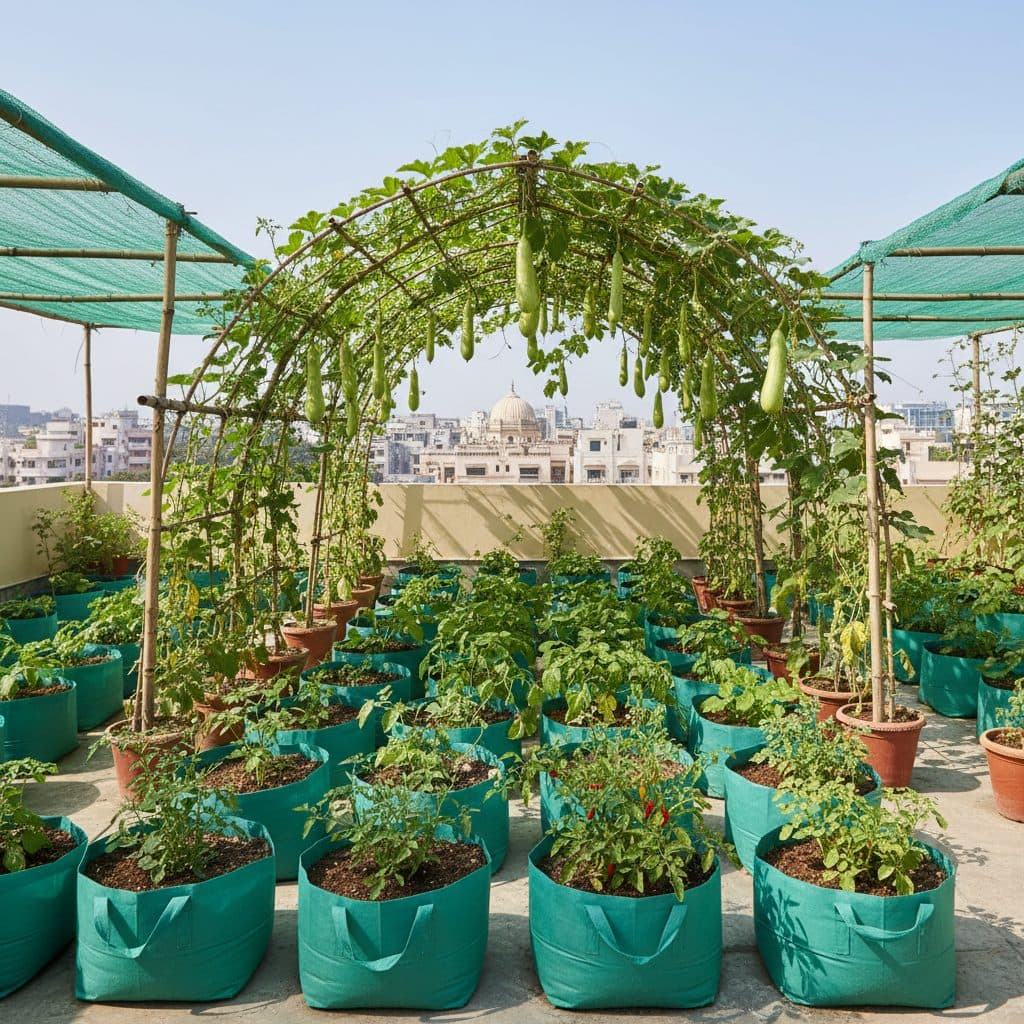
- Installing fifty percent UV-stabilized green shade netting 2.5 to 3 meters above the terrace reduces heat stress and reduces heat-driven blossom drop.
- Protect roof slabs from moisture buildup by elevating grow bags on drainage stands, brick pedestals, or interlocking plastic mats.
- A potting mix of forty percent cocopeat, thirty percent vermicompost, and thirty percent red chalka soil (with a handful of neem cake per bag) retains moisture without compaction.
- Summer-resilient greens such as gongura and thotakura (amaranth) thrive during hot months alongside hardy climbing gourds.
- Kharif monsoon rains require open drainage eyelets, while winter rabi months deliver optimal yields of leafy herbs, tomatoes, and root crops.
Quick answer: Creating a successful terrace garden in Hyderabad requires protecting plants from extreme summer heat (where unshaded concrete slabs exceed 50°C) while harnessing sunny weather for year-round vegetable production. Key requirements include installing fifty percent green shade netting, using elevated drainage stands, blending moisture-retentive cocopeat mixes, and selecting heat-hardy crops like gongura and cluster beans.
Rooftop gardening has transformed residential neighborhoods across Hyderabad and Secunderabad. From standalone houses in Jubilee Hills and Gachibowli to apartment terraces in Kukatpally and Uppal, growing vegetables on concrete roofs delivers fresh, chemical-free produce directly to the kitchen.
However, Hyderabad's semi-arid climate creates intense growing challenges. Concrete slabs absorb relentless solar radiation from March through May, baking container roots. Strong pre-monsoon squalls test trellis stability, while heavy monsoon cloudbursts can quickly saturate poorly drained pots.
By implementing summer shade protection, lightweight soil formulation, structural slab care, and seasonal planting calendars, you can cultivate a productive terrace garden in Hyderabad.
Managing Deccan summer heat on Hyderabad rooftops
From mid-March through late May, daytime highs in Hyderabad commonly sit in the high 30s to low 40s °C, and an unshaded concrete slab runs far hotter than the air above it. Surface temperatures can exceed 50°C, causing root dieback and blossom drop.
+-------------------------------------------------------------+
|             HYDERABAD SUMMER TERRACE PROTECTION             |
+-------------------------------------------------------------+
| [50% UV-Stabilized Green Agro-Shade Net (2.5 - 3.0 m Height)]|
|                               \   |   /                      |
|                                \  |  / (Filtered Sunlight)   |
| [Climbing Gourd Trellis: Kakarakaya, Beerakaya, Sorakaya]   |
|                                                              |
| [Mulch Layer: 4-5 cm Sugarcane Bagasse or Crushed Leaves]   |
|                                                              |
| [Aerated Grow Bag on 8 cm Elevated Metal Stand]             |
|                                                              |
| [Concrete Terrace Slab with Clean Slope to Drain]           |
+-------------------------------------------------------------+
1. Erecting protective shade netting
- Shade rating: Use fifty percent UV-stabilized green agro-shade netting. Higher shade ratings (75% or 90%) restrict light excessively, leading to leggy, unproductive plants.
- Structure height: Secure the net on galvanized iron pipes or sturdy bamboo poles at least 2.5 to 3 meters above the terrace floor. This height allows heat to escape laterally while providing comfortable headroom for daily gardening.
2. Deep mulching on container surfaces
Bare potting soil exposed to intense afternoon sun dries out within hours.
- Cover the surface of every grow bag with a 4 to 5 cm layer of organic mulch, such as dried sugarcane bagasse, crushed dry neem leaves, or paddy straw.
- Reviewing practical methods in mulching vegetables and container crops explains how surface cover buffers soil microbial populations against high temperatures.
3. Summer watering routines
- Timing: Water deeply before 7:00 AM so plants enter the hottest part of the day fully hydrated. Provide a light, secondary drink after 6:30 PM if container surfaces feel dry.
- Water early rather than at midday: far more water is lost to evaporation in the middle of the day, and wetting foliage in full sun simply wastes it. If a plant is truly wilting at 2 pm, water it — do not wait for evening.
- Explore proven heat-mitigation steps in container gardens summer survival to prevent permanent wilting.
Rooftop structural care and potting media
Protecting your building structure is essential before setting up dozens of heavy planting containers. Wet potting mix is heavy: roughly 1,600 to 1,800 kg per cubic metre when saturated. Before you set out dozens of filled bags, have a structural engineer confirm the live load your terrace slab was designed for, keep the heaviest containers near the perimeter over beams and columns rather than out in the middle of a broad span, and get written permission from your society if you live in an apartment block.
       Hyderabad Chalka Potting Mix Composition

 +------------------+------------------+
 |   COCOPEAT       |   VERMICOMPOST   |
 |   40% By Volume  |   30% By Volume  |
 |   (Moisture Hold)|   (Organic Bio)  |
 +------------------+------------------+
 |   RED CHALKA SOIL|   NEEM CAKE      |
 |   30% By Volume  |   Handful/Bag    |
 |   (Mineral Base) |   (Nematodes)    |
 +------------------+------------------+
Waterproofing and drainage protection
- Inspect the slab before you start: check that the existing bituminous coating, polyurethane membrane or China mosaic finish is intact, and repair cracks before any containers go down. Retrofitting waterproofing under an established garden means dismantling the whole thing.
- Elevate every container: Never leave grow bags sitting flat on bare concrete. Elevate containers on welded metal stands, terracotta bricks, or plastic drainage cell mats to maintain an 8 cm air gap.
- Maintain drainage slopes: Keep terrace drainage paths free of fallen leaves and spilled media to prevent pooling during monsoon cloudbursts.
- Learn more about structural weight distribution through rooftop and patio container gardening guidelines.
The lightweight Deccan potting mix recipe
Local red chalka soil (the shallow, light red sandy loam common across Telangana) provides rich minerals but sets hard in containers when dry. Blending it with organic inputs creates a soft, friable growing medium:
- 40% De-salted cocopeat: Absorbs moisture and keeps the mix light and well-aerated.
- 30% Vermicompost or aged cattle manure: Supplies nitrogen, phosphorus, potassium, and beneficial mycorrhizae.
- 30% Sifted red chalka soil: Supplies mineral body and micronutrients.
- Neem cake (neem khali), a handful (about 50 to 100 g) per 30 cm bag: a slow-release nitrogen source with useful activity against root-knot nematodes. Mix it in before sowing; do not build it up to a large fraction of the mix, as it will burn young roots.
Seasonal crop selection for Hyderabad
Hyderabad supports diverse vegetable and herb production across three agricultural seasons.
Season | Calendar Months | Weather Conditions | Top Performing Vegetables |
|---|---|---|---|
Zaid (Summer) | March to May | Dry heat, 38–44°C, intense sun | Gongura, thotakura, gawar (cluster beans), kakarakaya (bitter gourd), sorakaya |
Kharif (Monsoon) | June to October | Moderate heat (28–34°C), heavy rain | Vankaya (brinjal), tomatoes, beerakaya (ridge gourd), green chillies, bhendi |
Rabi (Winter) | November to February | Mild days, cool nights (14–18°C) | Palak, methi, kothimeera (coriander), carrots, mullangi (radish), cabbage |
Summer staples (Zaid)
- Gongura (Hibiscus sabdariffa): The quintessential Andhra leafy green thrives in summer heat and produces tangy, nutrient-dense leaves with minimal pest issues.
- Thotakura (Amaranth): Fast-growing red and green varieties tolerate high temperatures and can be harvested repeatedly every two weeks.
- Cluster beans (Gawar / Goruchikkudu): Drought-tolerant legume that sets abundant pods during hot, dry weather.
Kharif monsoon planting
The arrival of the southwest monsoon in June brings relief from extreme heat and kickstarts vigorous vine growth.
- Erect bamboo mandap trellises for vigorous climbers like ridge gourd (beerakaya), bitter gourd (kakarakaya), and bottle gourd (sorakaya); explore vertical vining crops in pots for sturdy rooftop trellis construction.
- Transplant seedlings of brinjal (vankaya) and green chillies into 30 cm grow bags.
- Ensure all container drainage eyelets remain clear to prevent waterlogging during monsoon downpours.
Rabi winter bounty
November through February offers pleasant weather and cool nights, making it Hyderabad's easiest growing window.
- Sow leafy greens (kothimeera, menthi kura, palak) in shallow 24 cm grow bags for weekly kitchen harvests.
- Plant root vegetables like carrots, beetroot, and white radishes (mullangi).
- Transplant cauliflower, cabbage, and bush beans for winter harvesting.
Organic pest management and crop hygiene
Hyderabad's warm climate allows insect populations to reproduce quickly if neglected.
       Preventative Organic Spray Protocol

 [Every 10-14 Days, Applied After 5:30 PM]
                    |
      +-------------+-------------+
      |                           |
      v                           v
 [Cold-Pressed Neem Oil (5 ml)]  [Mild Liquid Soap (2 ml)]
      |                           |
      +-------------+-------------+
                    |
                    v
    [Emulsify in 1 Litre Warm Water]
                    |
                    v
  [Spray Leaf Undersides & Growing Tips]
Managing common pests
- Aphids and whiteflies: Spray an emulsion of cold-pressed neem oil (5 ml) and mild liquid soap (2 ml) per litre of water every ten to fourteen days.
- Leaf miners: Remove and dispose of heavily tunneled leaves; spray neem oil to prevent adult flies from ovipositing.
- Fruit and shoot borers in brinjal: Prune out wilted terminal shoots immediately and dispose of them away from the garden. For caterpillar infestations, explore organic caterpillar and beetle control for non-toxic biological remedies.
Managing birds and wildlife
Urban pigeons (kabootar) frequently damage young seedlings on open terraces. Enclose vulnerable seed beds with 25 mm nylon bird netting attached to lightweight bamboo frames until plants develop sturdy foliage.
By respecting seasonal climate shifts, providing summer shade, and maintaining healthy root aeration, your Hyderabad terrace garden will yield continuous harvests of fresh, organic vegetables throughout the year. At agripure, practical organic methods help urban growers turn scorching concrete rooftops into flourishing edible ecosystems.