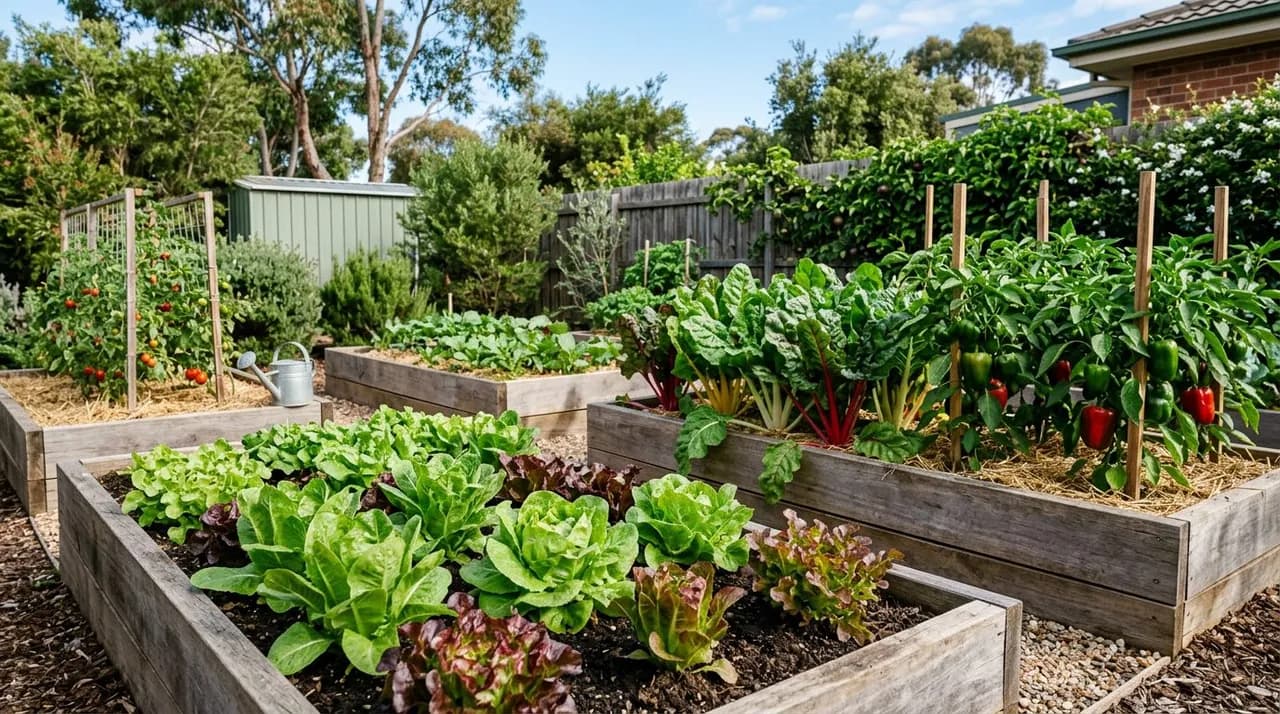
Key takeaways
- Select a level site receiving 6 to 8 hours of direct daily sunlight, ideally with unshaded northern and eastern exposure in the Southern Hemisphere.
- Choose between no-dig lasagna sheet beds, in-ground tilled beds, or raised timber and corrugated iron planters based on your local soil.
- Enrich native Australian soils with copious organic compost, aged animal manures, and rock minerals to improve moisture retention and nutrient capacity.
- Install efficient drip irrigation or weeping soaker hoses beneath a thick 5 cm layer of organic mulch to withstand intense summer evaporation.
- Start with foolproof, high-yielding beginner vegetables including silverbeet, bush beans, cherry tomatoes, radishes, zucchini, and culinary herbs.
Quick answer: To start a veggie patch in Australia, choose a sunny, north-facing site, build no-dig raised beds using cardboard, compost, and aged manure, install drip irrigation, and mulch with pea straw. Sowing climate-suited starter crops like silverbeet, bush beans, and cherry tomatoes ensures fast, productive harvests.
Growing a home vegetable garden produces fresh food straight to your kitchen without synthetic sprays, lowers grocery costs, and follows the seasonal cycles of the Southern Hemisphere.
However, starting a vegetable garden in Australia comes with specific environmental realities. Australian soils are ancient, weathered, and frequently depleted of organic matter and phosphorus. Furthermore, gardeners face blazing summer heatwaves, drying winds, and unpredictable rainfall patterns. Establishing an unmulched, shallow garden without proper soil preparation often leads to waterlogged clay in winter and rock-hard, hydrophobic dirt in summer.
Good site selection, no-dig soil preparation, and reliable starter crops produce a garden that yields well across the Australian seasons.
Choosing the best site for an Australian veggie garden
Site selection determines the long-term success of your vegetable patch. Before turning a single shovel of earth, evaluate your backyard conditions:
1. Sunlight Exposure
Most fruiting and leafy vegetables require a minimum of 6 hours of direct sunlight daily to photosynthesise efficiently:
- Northern aspect: In the Southern Hemisphere, the sun arcs across the northern sky. Position your main growing beds with an open northern or north-eastern aspect to capture maximum solar energy during winter and early spring.
- Afternoon shade: In hot inland and subtropical areas, light afternoon shade from deciduous trees or shade cloth protects tender greens from scorching 35°C+ summer heat.
2. Wind Protection and Tree Root Competition
- Avoid placing beds directly under the canopy of large native trees (such as eucalypts or paperbarks). Vigorous tree roots will rapidly invade rich garden beds, robbing vegetables of moisture and nitrogen.
- Siting beds near a sheltered boundary fence or dense hedge buffers crops against damaging hot westerly winds in summer and chilling southerly gales in winter.
3. Proximity to Water and Kitchen
Place your small veggie patch close to an outdoor garden tap and within easy walking distance of the kitchen. A garden you see every day is a garden you will water, weed, and harvest consistently.
Sizing and building beds: in-ground vs. raised beds vs. no-dig
Gardeners generally choose between three bed styles based on budget and soil conditions:
+---------------------------------------------------------+
|                    [No-Dig Lasagna Bed]                 |
|   5 cm Lucerne / Pea Straw Mulch (Top Layer)            |
|   ---------------------------------------------------   |
|   10 cm Rich Aged Compost & Worm Castings               |
|   ---------------------------------------------------   |
|   10 cm Well-Rotted Cow / Sheep Manure                  |
|   ---------------------------------------------------   |
|   Thick Overlapping Cardboard (Weed Barrier Base)       |
|   ================ Existing Ground / Lawn ============= |
+---------------------------------------------------------+
1. Raised timber and corrugated iron beds
Raised planters (measuring 30 cm to 60 cm in height) are ideal for suburban backyards:
- Ergonomic comfort: Reduces bending and kneeling during planting and weeding.
- Drainage control: Ideal for heavy clay soils prone to winter waterlogging.
- Pest barrier: Provides a defined perimeter that helps deter digging pets and simplifies the installation of protective netting frames.
2. The no-dig lasagna method (recommended for beginners)
Building a no-dig vegetable patch creates instant, fertile soil directly over existing lawn without exhausting trench digging:
- Mow the grass short and lay thick, overlapping layers of unprinted cardboard over the entire footprint to smother grass and weeds.
- Wet the cardboard thoroughly with a hose.
- Spread a 10 cm layer of well-rotted animal manure (cow, sheep, or horse manure).
- Add a 10 cm layer of mature organic compost.
- Top with 5 cm of clean lucerne or pea straw mulch, creating planting pockets filled with handfuls of compost to sow seeds directly.
- Learn more about soil building with sheet mulches in sheet mulching for soil moisture across seasons.
3. In-ground beds
Direct in-ground planting is the most economical option for large suburban blocks with reasonable topsoil. Keep bed widths to 1.2 metres so you can easily reach the centre from pathways without stepping on and compacting the cultivated soil.
Soil preparation and organic feeding in Australian conditions
Australian soils generally fall into two extremes: dense, poorly draining clay or gutless, water-repellent sand. Improving both types relies on one universal remedy: organic matter.
Amending soil chemistry and biology
- Organic matter: Incorporate 5 cm to 8 cm of well-rotted compost and manure into the top 20 cm of soil before planting. Compost adds beneficial soil microbes, balances drainage in clay, and retains water in sand.
- Gypsum for clay soils: If your soil is heavy, sticky clay, apply gypsum (calcium sulphate) at 500 g per square metre. Gypsum breaks clay particles apart (flocculation) without altering soil pH.
- pH balancing: Most vegetables thrive in a slightly acidic to neutral pH between 6.2 and 7.0. Test your soil with an inexpensive nursery test kit. Add dolomite lime to raise acidic soils, or composted pine bark and organic sulphur to lower alkaline soils.
Organic fertilising schedule
- At planting: Blend pelletised organic poultry manure and blood and bone into planting holes.
- Active growth: Apply diluted liquid seaweed and fish emulsion every 2 to 3 weeks to stimulate root development and boost plant immunity against heat stress.
For regional soil advice on Western Australia's sandy coastal soils, consult our specialised Perth vegetable planting guide.
Best vegetables for Australian beginners
Starting with forgiving, fast-maturing crops builds confidence and guarantees early harvest success:
+------------------+-----------------------+-------------------+------------------------------+
| Vegetable        | Sowing Method         | Days to Harvest   | Best Growing Window          |
+------------------+-----------------------+-------------------+------------------------------+
| Silverbeet       | Seed or seedling      | 50 - 60 days      | Autumn to Spring             |
+------------------+-----------------------+-------------------+------------------------------+
| Cherry Tomatoes  | Transplant seedling   | 70 - 80 days      | Spring and Summer            |
+------------------+-----------------------+-------------------+------------------------------+
| Dwarf Bush Beans | Direct seed           | 55 - 65 days      | Spring to Summer             |
+------------------+-----------------------+-------------------+------------------------------+
| Zucchini         | Direct seed / pot     | 45 - 55 days      | Spring and Summer            |
+------------------+-----------------------+-------------------+------------------------------+
| Radishes         | Direct seed           | 25 - 35 days      | Year-round except midsummer  |
+------------------+-----------------------+-------------------+------------------------------+
| Rocket & Lettuce | Direct seed / tray    | 30 - 45 days      | Autumn to Spring             |
+------------------+-----------------------+-------------------+------------------------------+
1. Silverbeet (Fordhook Giant and Rainbow Chard)
The workhorse of the Australian garden. Silverbeet tolerates wide temperature swings, produces continuous cut-and-come-again leaves for over 9 months, and resists most common pests.
2. Dwarf Bush Beans
These fast-growing legumes produce heavy flushes of tender green pods without requiring trellis supports. They also fix nitrogen into the soil for subsequent crops.
3. Cherry Tomatoes (Sweet 100, Tommy Toe)
Cherry tomatoes are vastly easier for beginners than giant beefsteak varieties. They produce hundreds of sweet fruits per vine, ripen quickly, and are less prone to blossom end rot during erratic summer watering.
4. Zucchini (Black Beauty, Costata Romanesco)
Two healthy zucchini plants will supply an entire family from December until powdery mildew ends them in late summer; a second sowing in January carries the run into autumn. Pick fruits when young (15 cm to 20 cm) to encourage non-stop flower production.
For detailed seasonal sowing calendars, check our guides on what to plant in September in Australia and winter vegetables in Australia.
Water management, mulching, and pest protection
Efficient irrigation and protective barriers keep your garden productive through extreme weather:
1. Drip irrigation and deep watering
- Avoid shallow daily sprinkler spraying, which wets foliage and encourages powdery mildew while leaving deep root zones parched.
- Install 13 mm poly-drip lines or soaker hoses laid directly over the soil beneath the mulch layer.
- Water deeply 2 to 3 times a week during early morning hours so moisture penetrates 15 cm deep to encourage strong, drought-resilient taproots.
2. Mulching for moisture retention
Never leave bare soil exposed to the Australian sun. A 5 cm layer of organic pea straw, sugar cane mulch, or lucerne cuts soil water evaporation by more than half, suppresses weed growth, and gradually breaks down into rich humus.
3. Protecting crops from nocturnal wildlife
Australian urban gardens face pressure from native wildlife, particularly possums, which feast on tender seedlings and ripening fruit. Because possums are protected native animals, install physical exclusion netting and wire mesh frames around beds. For ethical exclusion techniques, review how to keep possums out of the garden.