Key takeaways
- Sheet mulching can reduce soil moisture evaporation by 30% to 35%, significantly cutting watering needs for US growers.
- Applying a layered approach of cardboard, nitrogen-rich, and carbon-rich materials builds soil organic matter over one season.
- Improved soil structure from mulching increases capillary moisture retention, allowing soil to hold more water for longer periods.
- Mulch helps regulate soil temperature, keeping roots 10 to 15°F cooler in summer and warmer in winter, benefiting plant health.
- Effective sheet mulching suppresses 70% to 90% of weeds, reducing competition for water and nutrients.
- Monitoring soil moisture with a meter helps optimize watering and maintain mulch effectiveness in your garden.
Quick answer: Sheet mulching builds moisture-holding soil by layering organic materials, reducing evaporation by 30-35% and suppressing weeds. This technique improves soil structure and moderates temperatures, significantly cutting watering needs in arid regions.
In arid and semi-arid regions of the US, such as parts of the Southwest and USDA zones 6 and 7, conserving water is essential for garden survival. Summer temperatures frequently reach 90 to 100°F for weeks, depleting soil moisture quickly. Sheet mulching builds moisture-holding soil over a single growing season. This method can reduce the need for irrigation by 30% or more, according to research on mulching materials and their impact on soil moisture [0, 4].
This technique, sometimes called ‘lasagna gardening,’ transforms poor or compacted soil into a rich, living medium that retains water far more effectively. By mimicking natural forest floor processes, sheet mulching encourages beneficial soil organisms, suppresses weeds, and moderates soil temperatures. It’s a proactive step that can significantly improve your garden’s ability to withstand heat and drought, making your growing efforts more productive and less dependent on constant watering, even in areas receiving less than 20 inches of annual rainfall.
Why moisture matters for soil health and plant resilience
Soil moisture is the lifeblood of any garden, directly influencing nutrient uptake, root development, and overall plant vigor. In many US gardens, especially those with sandy or heavily tilled soils, water can drain away too quickly, or evaporate rapidly under a hot sun. For instance, in a citrus orchard study from 1961, mulching was shown to significantly reduce soil-moisture depletion, preserving the water available to the trees [3]. This isn’t just about giving plants enough to drink; it’s about creating a stable environment where soil microbes can flourish, breaking down organic matter and making essential nutrients available.
The science of capillary action and water retention
Healthy soil has a complex structure, full of tiny pores and channels. These spaces, particularly the smaller ones, hold water through a process called capillary action, as described in early soil science research from 1919 [2]. Mulching helps preserve this structure by protecting the soil surface from compaction by rain and foot traffic. A well-mulched garden in USDA zone 5, for example, can see soil temperatures remain 10 to 15°F cooler than unmulched soil during summer heatwaves, reducing evaporation by 30% to 35% [3, 4]. This cooler, more stable environment allows soil to hold onto its moisture for longer periods, meaning you might only need to water once a week instead of every two or three days. You can monitor these changes with a soil moisture meter, ensuring your plants receive optimal hydration without overwatering.
- Reduces water evaporation from the soil surface by up to 35%.
- Maintains more consistent soil temperatures, preventing extreme fluctuations.
- Supports a thriving population of beneficial soil microbes and fungi.
- Improves nutrient availability by facilitating decomposition processes.
- Improves soil structure, increasing its capacity to hold water and air.
Layering for long-term moisture retention and soil building
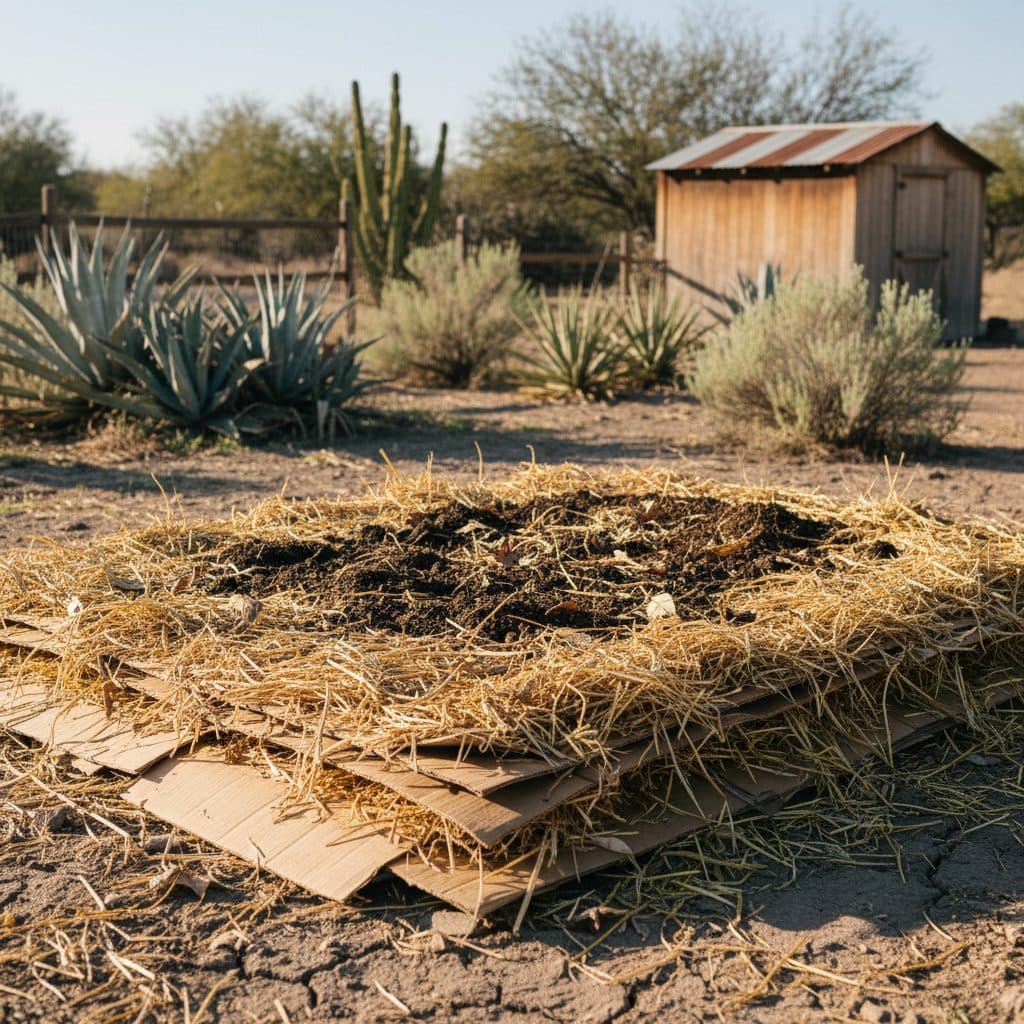
Sheet mulching involves applying layers of organic materials directly onto the ground, without digging or tilling. This process mimics the natural accumulation of organic matter on a forest floor, gradually building rich, fertile soil. For a 100 square foot garden bed in a region like the Pacific Northwest, you might expect to apply 6 to 8 inches of total material. The first step is to lay down a weed barrier, typically overlapping sheets of cardboard, which blocks sunlight and smothers existing weeds. This initial layer is critical for suppressing unwanted growth, with cardboard often reducing weed populations by 70% to 90% in the first season [1].
Constructing your sheet mulch layers
After the cardboard, you’ll add layers of nitrogen-rich ‘green’ materials, such as fresh grass clippings, kitchen scraps, or fermented soybean meal, followed by carbon-rich ‘brown’ materials like straw, dried leaves, or wood chips. Aim for a carbon-to-nitrogen ratio of roughly 30:1 for optimal decomposition, ensuring your layers are about 2 to 4 inches thick each. Over a few months, these layers break down, adding significant organic matter to the soil. For example, a 6-inch layer of organic mulch can increase soil organic carbon by 0.5% to 1.0% in just one year, according to USDA Natural Resources Conservation Service guidelines [6]. This enriched soil becomes a sponge, capable of holding far more water than compacted, lifeless dirt.
- Start with a base layer of overlapping cardboard to suppress weeds.
- Add 2 to 4 inches of nitrogen-rich materials like grass clippings or food scraps.
- Follow with 2 to 4 inches of carbon-rich materials such as straw or dried leaves.
- Repeat green and brown layers until the desired depth of 6 to 8 inches is reached.
- Water each layer thoroughly as you build, helping to initiate decomposition.
Benefits beyond water savings: improving soil structure and nutrient cycling
While water conservation is a primary driver for sheet mulching, its benefits extend far beyond just saving on your water bill. As the organic layers decompose, they dramatically improve the soil’s physical structure. This means better aeration for roots, improved drainage in heavy clay soils, and increased water retention in sandy soils. For example, studies on wheat productivity have shown that mulching significantly improves soil structure, leading to better crop yields in regions like the Moi [0, 4]. This improved structure creates a healthier environment for plant roots to grow deep and strong, accessing more nutrients and water.
Building a living soil ecosystem
The decomposition process fueled by sheet mulching also supports a living soil ecosystem. Earthworms, fungi, and bacteria thrive in the moist, nutrient-rich environment beneath the mulch. These organisms are the unsung heroes of your garden, breaking down organic matter into forms plants can readily absorb. This natural nutrient cycling reduces the need for synthetic fertilizers, potentially cutting your fertilizer costs by 20% to 30% over a few seasons. Furthermore, the thick layers of mulch effectively suppress weeds, which compete with your desired plants for precious water and nutrients. Research indicates that mulching can lead to a 35% reduction in weed density, freeing up resources for your crops [5]. This allows your plants, from broccoli in USDA zone 4 to tomatoes in zone 9, to grow more robustly without constant competition.
- Significantly improves soil aeration and drainage in compacted soils.
- Increases the soil’s organic matter content, supporting beneficial microbial activity.
- Reduces weed growth by 70% to 90%, minimizing competition for resources.
- Moderates soil temperature, protecting roots from extreme heat and cold.
- Improves the long-term fertility of the soil, reducing reliance on external inputs.
Implementing and monitoring for optimal results
The best time to initiate sheet mulching is in the fall or early spring, allowing several months for the materials to begin decomposing before planting. In colder climates, like USDA zone 3 or 4, applying mulch in the fall means it can break down over winter, providing a ready-to-plant bed by spring. For warmer zones, such as USDA zone 8 or 9, an early spring application can still yield excellent results for summer planting. When applying, create a thick, consistent layer (aiming for 6 to 8 inches of settled material) to effectively suppress weeds and build soil. Always leave a 2 to 3 inch gap around plant stems and tree trunks to prevent moisture buildup and potential rot.
Maintaining and assessing your mulched beds
Once your sheet mulch is in place, regular monitoring is key. While mulching significantly reduces watering needs, it doesn’t eliminate them entirely. Use a 3-in-1 soil pH, moisture & fertility meter to check moisture levels 4 to 6 inches deep, especially during dry spells or before planting new crops. You’ll likely find that you need to irrigate 50% less frequently than before. Over time, the layers will compact and decompose, so plan to top up your mulch with 2 to 3 inches of fresh organic material annually, particularly in areas with heavy rainfall or intense sun. This continuous addition ensures the long-term health and moisture-holding capacity of your soil, benefiting everything from root vegetables to fruit trees in your organic gardening soil.
- Apply sheet mulch in fall or early spring for best decomposition results.
- Ensure a settled depth of 6 to 8 inches of organic material for effective weed suppression.
- Leave a 2 to 3 inch buffer zone around plant stems and tree trunks.
- Monitor soil moisture regularly, adjusting watering schedules as needed.
- Replenish mulch layers with 2 to 3 inches of new material annually to maintain depth.
Sheet mulching vs. traditional tilling
Feature | Sheet mulching | Traditional tilling |
|---|---|---|
Soil moisture retention | Increases by 30-35% | Decreases due to evaporation |
Weed control | 70-90% suppression | Temporary control, often brings up new seeds |
Soil structure | Improves over time, builds organic matter | Degrades, can lead to compaction |
Labor intensity | High initial effort, low ongoing | Moderate ongoing effort (weeding, tilling) |
Nutrient cycling | Supported by microbial activity | Interrupted, can lead to nutrient loss |
Soil Temperature | Moderated (10-15°F cooler in summer) | Fluctuates widely, hotter in summer |
Water Savings: Sheet mulching can reduce irrigation needs by 30% to 35% in US gardens, especially in dry climates like USDA zone 7.
Weed Suppression: A properly applied sheet mulch can suppress 70% to 90% of weeds, saving hours of manual labor over a season.
Soil Temperature: Mulched soil stays 10 to 15°F cooler in summer and warmer in winter, protecting delicate root systems.
Frequently asked questions
How long does it take for sheet mulch to break down?
The time it takes for sheet mulch to break down varies depending on the materials used and local climate, but typically, a well-constructed bed will be ready for planting in three to six months. In warmer USDA zones, decomposition can be faster, sometimes as quickly as two months for thinner layers.
Can I plant directly into sheet mulch?
Yes, you can plant directly into the top layer of sheet mulch, especially if you’ve added a final layer of finished compost or good topsoil. For larger plants or seedlings, create a small hole through the mulch layers down to the original soil, and backfill with compost to give the plant a good start. Ensure the hole is at least 6 inches wide.
What materials should I avoid in sheet mulching?
Avoid using materials that could introduce weeds, diseases, or harmful chemicals. This includes glossy magazine paper, treated wood products, and any plant material that has gone to seed, which could introduce hundreds of new weed seeds. Also, avoid using too much fresh manure, which can burn plants if not properly composted, or materials with a C:N ratio higher than 50:1.
How deep should my sheet mulch layers be?
For effective weed suppression and soil building, aim for a total settled depth of 6 to 8 inches of organic materials. The cardboard base should be at least 0.25 inches thick, followed by alternating layers of ‘green’ and ‘brown’ materials, each 2 to 4 inches thick before settling.
Will sheet mulching attract pests?
Sheet mulching generally promotes beneficial soil life, but if layers are too wet or contain certain food scraps, they might temporarily attract pests like slugs or rodents. To mitigate this, ensure good drainage, avoid including large quantities of meat or dairy in your ‘green’ layers, and maintain a balanced C:N ratio to encourage rapid decomposition, which deters many pests. A 2 to 3 inch buffer around plants also helps.
How much water can sheet mulching save?
Sheet mulching can significantly reduce the need for irrigation, with studies showing a 30% to 35% reduction in soil moisture evaporation compared to unmulched soil [5]. This translates to substantial water savings over a growing season, especially in regions with less than 25 inches of annual rainfall.
References
- Comparing the Effects of Different Organic Mulching Materials on Weed Control, Soil Moisture Conservation, and Wheat (Triticum Aestivum) Productivity in the Moi (2022). Comparing the Effects of Different Organic Mulching Materials on Weed Control, Soil Moisture Conservation, and Wheat (Triticum Aestivum) Productivity in the Moi.
- CAPILLARY MOISTURE-HOLDING CAPACITY (1919). CAPILLARY MOISTURE-HOLDING CAPACITY.
- EFFECTS OF MULCHING ON SOIL-MOISTURE DEPLETION IN CITRUS ORCHARDS (1961). EFFECTS OF MULCHING ON SOIL-MOISTURE DEPLETION IN CITRUS ORCHARDS.
- Soil Moisture and Soil Temperature beneath Film Mulching in Tobacco Culture (1970). Soil Moisture and Soil Temperature beneath Film Mulching in Tobacco Culture.
- Comparing the effects of different organic mulching materials on weed control, soil moisture conservation, and wheat (Triticum aestivum) productivity in the moi (2022). Comparing the effects of different organic mulching materials on weed control, soil moisture conservation, and wheat (Triticum aestivum) productivity in the moi.
- USDA Natural Resources Conservation Service (2024). USDA Natural Resources Conservation Service.