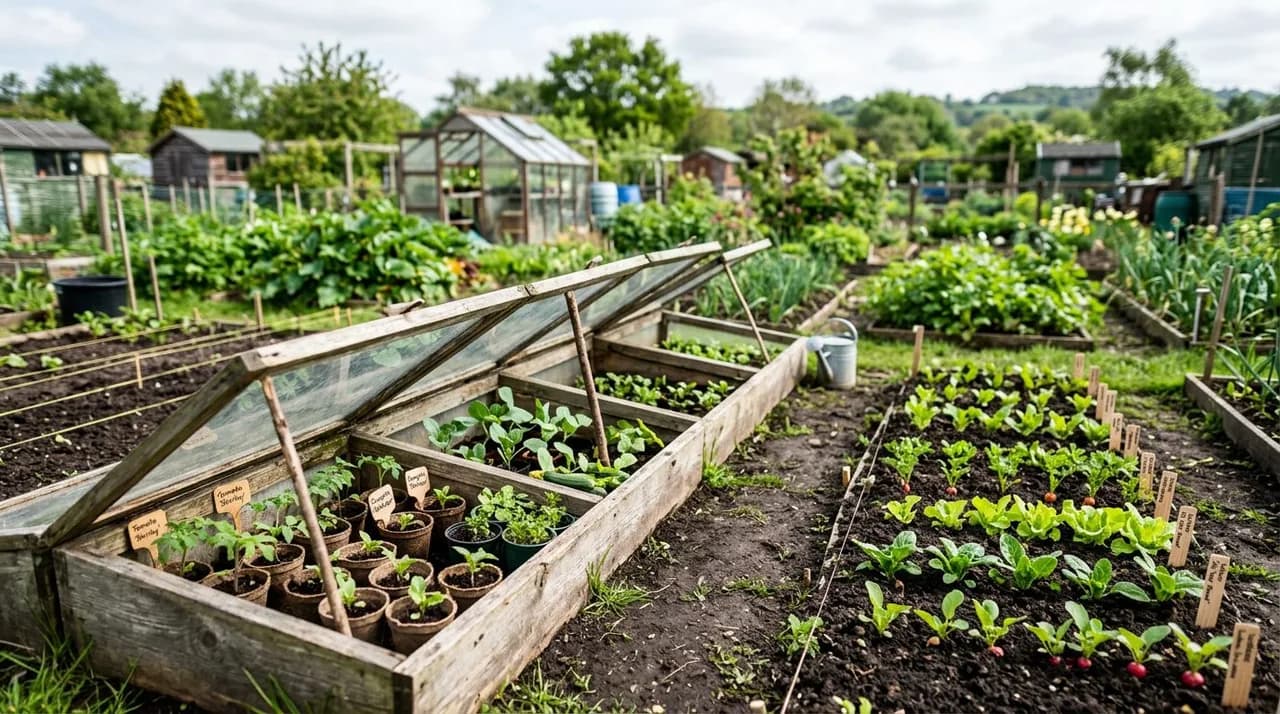
Key takeaways
- May brings the transition past the UK's last frost dates, allowing outdoor planting of tender summer crops.
- Harden off greenhouse and windowsill seedlings over 7 to 10 days before transplanting into outdoor allotment beds.
- Direct sow climbing French beans, runner beans, sweetcorn, winter squashes, and outdoor (ridge) cucumbers from late May once soil warms.
- Transplant tomatoes, courgettes, peppers, aubergines, and pumpkins into prepared beds after mid-to-late May.
- Maintain successional sowings of salad leaves, radishes, spring onions, and beetroot every fortnight for unbroken summer harvests.
Quick answer: In May, UK gardeners plant out tender crops like tomatoes, courgettes, runner beans, and sweetcorn once the risk of frost has passed, usually from mid-to-late May. May is also the ideal time to direct sow French beans, summer squash, beetroot, carrots, and successional salad leaves into warm outdoor soil.
May is an active planting month in the British horticultural calendar. As day length nears the summer solstice and soil temperatures reach the 10°C to 14°C range needed for germination, allotments and kitchen gardens get busy.
The primary event of May is the passing of the average last frost date. While southern coastal gardens are often frost-free by early May, central and northern England and Scotland must remain vigilant through late May.
Hardening off indoor-raised transplants and taking advantage of warm soil for direct outdoor sowings helps establish a productive plot that yields continuously from early summer through late autumn.
Navigating the last frost date and hardening off transplants
Moving tender seedlings directly from a warm windowsill or greenhouse into open ground without preparation often causes severe transplant shock:
[ Indoor Greenhouse / Window ] --> [ Cold Frame / Protected Patio ] --> [ Open Allotment Bed ]
Warm, still air, soft leaves       Daytime sun, night cool (7-10 days)    Sturdy outdoor growth
1. Understanding regional UK frost windows
- South Coast and London: Average last frost occurs between late April and early May.
- Midlands and Central England: Last frost risk typically ends around mid-May.
- Northern England and Wales: Frost risk persists until late May.
- Scotland and Upland Areas: Frosts frequently occur into early June.
Check local 10-day meteorological forecasts instead of relying on a rigid calendar date before setting tender crops into open beds.
2. The step-by-step hardening off protocol
Hardening off gradually thickens seedling leaf cuticles, strengthens stem vascular tissue, and acclimatizes plants to outdoor wind and temperature fluctuations:
- Days 1 to 3: Move potted plants into a sheltered, semi-shaded spot outdoors during the warmest hours of the day (roughly 10am to 4pm), then return them indoors before evening chills.
- Days 4 to 7: Place containers in a cold frame with the lid propped open, or position them against a sheltered, sun-facing wall. Leave them outdoors during mild nights if temperatures remain above 8°C.
- Days 8 to 10: Leave plants fully exposed outdoors day and night. If sudden frost threatens, close the cold frame lid or drape horticultural fleece over the trays.
Direct outdoor sowings for warm May soils
Warm, friable May soils allow rapid germination of seeds that would have rotted in cold April ground:
+-----------------------------------------------------------------------+
|                    MAY OUTDOOR DIRECT SOWING LIST                     |
+-------------------+-----------------------+---------------------------+
| CROP              | SOWING DEPTH          | SPACING & SUPPORT         |
+-------------------+-----------------------+---------------------------+
| Runner Beans      | 5 cm                  | 25-30 cm along cane frame |
| French Beans      | 4 to 5 cm             | 15 cm (dwarf) or on canes |
| Sweetcorn         | 3 to 4 cm             | 35-40 cm in square block  |
| Beetroot & Chard  | 2 cm                  | 20-30 cm rows; thinned    |
| Maincrop Carrots  | 1 cm (fine drill)     | 20 cm rows; fleece mesh   |
+-------------------+-----------------------+---------------------------+
1. Warm-season legumes (runner beans and French beans)
Direct sow runner beans and climbing French beans directly at the base of prepared cane supports in mid-to-late May. Sowing two seeds per cane 5 cm deep guarantees a full stand; thin to the strongest seedling once sprouted. For full cultivation advice, see our dedicated guide on how to grow runner beans.
2. Sweetcorn in grid blocks
Sow sweetcorn kernels in early to mid-May. Because sweetcorn is pollinated by wind-blown pollen from tassels to silks, always plant in a square grid block (such as 4 rows by 4 rows) spaced 35 to 40 cm apart, rather than in a single long row. Grid planting ensures dense pollination and fully filled cobs.
3. Root crops and continuous salads
- Maincrop Carrots and Beetroot: Sow maincrop carrots for winter storage, keeping fine insect mesh over the bed from sowing to exclude the first carrot fly flight (roughly May to June), and leaving it in place for the second flight from mid-summer.
- Successional Greens: Sow mixed salad leaves, rocket, radishes, and spring onions every 14 days in shallow drills to prevent harvest gluts.
Compare these tasks with our early-season planting guide on what to plant in April in the UK.
Planting out tender summer vegetables
Once the frost risk has passed, transplant your hardened-off warm-season crops into their final positions:
+-----------------------------------------------------------------------+
|                 PLANTING OUT TENDER CROPS IN LATE MAY                 |
+-------------------+-----------------------+---------------------------+
| CROP              | BED PREPARATION       | IN-BED SPACING            |
+-------------------+-----------------------+---------------------------+
| Tomatoes          | Compost + stake       | 45 to 60 cm apart         |
| Courgettes        | Manure-rich mound     | 90 cm apart (spreads wide)|
| Winter Squashes   | Heavy compost trench  | 1.0 to 1.5 m apart        |
| Sweet Peppers     | Greenhouse or shelter | 35 to 45 cm apart         |
+-------------------+-----------------------+---------------------------+
1. Courgettes and summer squashes
Courgettes are exceptionally productive, with two healthy plants easily supplying a household throughout summer. Dig a generous planting hole, backfill with a blend of soil and well-rotted garden compost, and set the plant firmly into the ground. Water generously around the root perimeter rather than directly onto the crown.
2. Outdoor bush and cordon tomatoes
Plant cordon tomatoes next to sturdy 1.8 m (6 ft) bamboo canes pushed 30 cm into the soil, tying the main stem loosely with soft garden twine. Deep planting (burying the lower stem) encourages a dense root system. Learn more about tomato care in our guide to how to grow tomatoes.
3. Pumpkins and winter squashes
Position trailing squashes (such as Butternut, Crown Prince, or Onion Squash) at the edges of beds or along compost mounds where their vigorous vines can ramble freely without smothering compact root crops.
Soil care, mulching, and container management
Sustaining rapid May plant development requires attentive soil moisture and nutrition:
Managing container composts
Ensure container crops receive regular moisture, especially when growing in modern peat-free mixes. Use the finger moisture test to check root depth rather than relying on pale surface appearance. For detailed potting guidelines, consult our overview of peat free compost.
Allotment mulching strategies
Once the sun has thoroughly warmed the soil profile in late May, apply a 5 cm layer of organic mulch (such as aged leaf mould, composted bark, or well-rotted straw) around thirsty crops like squashes and runner beans. Mulching suppresses emerging weed flushes and conserves soil moisture ahead of summer dry spells.
May allotment jobs and pest prevention
Stay ahead of seasonal plot maintenance with these proactive steps:
- Earthing Up Potatoes: Continue drawing soil up around emerging potato stems to protect foliage from late frosts and encourage more tuber formation along the buried stem. For long-term disease management, read our guide on potato blight.
- Constructing Cane Structures: Erect sturdy wigwams and A-frames for climbing beans and peas before the beans start twining and the peas throw out their first tendrils. Tie canes securely with natural twine to withstand gusty spring winds.
- Slug Management: Damp May evenings bring active slug browsing. Protect newly transplanted courgettes and bean starts using biological parasitic nematodes or organic beer traps.