Key takeaways
- Fertilise deciduous fruit trees (peaches, apples, plums, figs) in late winter to early spring (August–September) as buds swell, followed by a post-harvest autumn boost.
- Feed citrus trees (lemons, limes, oranges, mandarins) three times annually: late winter (August), midsummer (January), and mid-autumn (April).
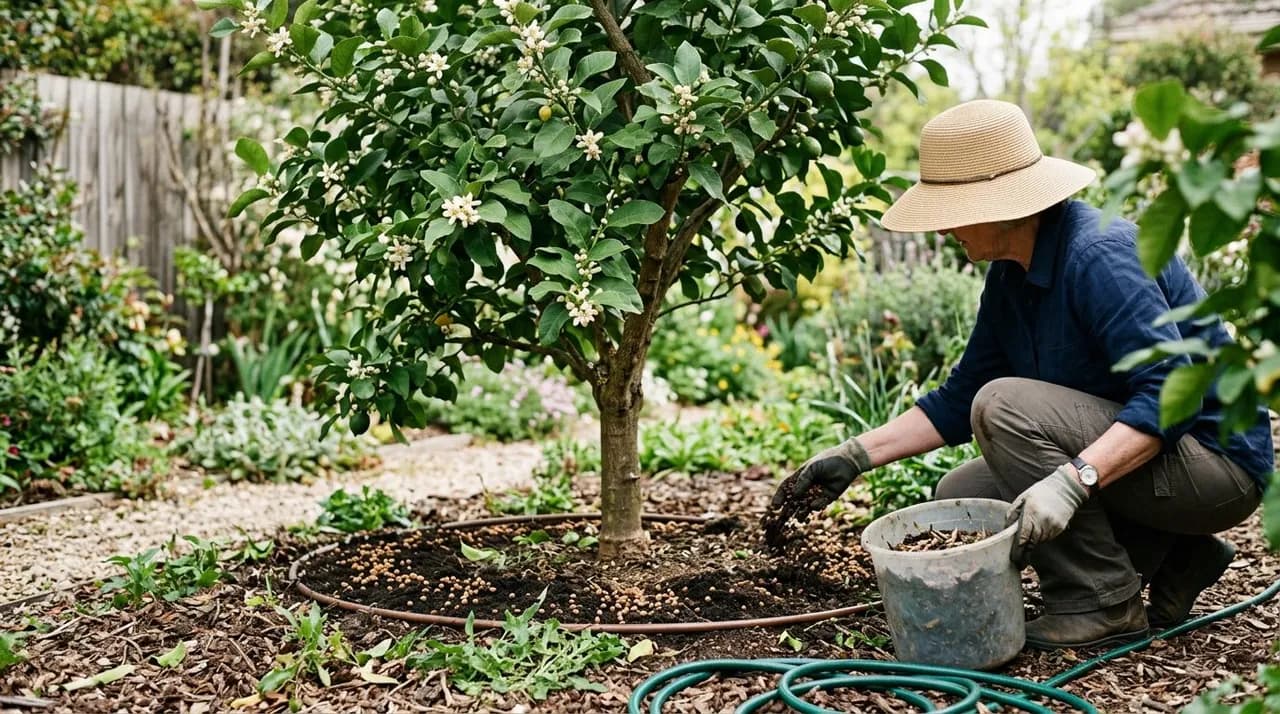
- Always apply organic fertilisers around the tree's outer drip line where active feeder roots operate, never piling nutrients against the trunk.
- Balance nitrogen inputs with potassium (sulphate of potash) to promote strong flower set, sweet fruit development, and disease resilience.
- Water trees deeply before and after applying dry fertilisers, topping the root zone with organic mulch to lock in soil moisture.
Quick answer: In Australia, fertilise deciduous fruit trees in early spring (August–September) at bud burst and again post-harvest in autumn. Feed citrus trees in August, January, and April using balanced organic citrus fertiliser, and feed subtropical fruit trees throughout the warm spring and summer growing months.
Knowing when to fertilise fruit trees australia matters more than which bag you buy. Feed at the right point in the season and a tree carries a heavier crop of better-sized fruit; feed at the wrong one and you get soft growth instead. Australian garden soils are naturally low in available phosphorus, nitrogen, and trace minerals. Without timely nutrient replenishment, fruit trees suffer from stunted growth, yellowing foliage, heavy flower drop, and undersized, sour fruit.
However, feeding fruit trees requires careful timing aligned with Southern Hemisphere seasonal rhythms. Applying heavy nitrogen fertilisers at the wrong time (such as during midwinter dormancy or late autumn) stimulates tender vegetative flush that is vulnerable to frost burn, fungal disease, and pest attack.
By adopting a structured seasonal feeding calendar, choosing the best fertiliser for fruit trees, and distributing nutrients across the active root drip line, you can sustain vigorous orchard productivity year after year.
The golden rules of feeding fruit trees in Australia
Before examining specific tree varieties, follow these core principles of orchard nutrition:
+---------------------------------------------------------+
|                  [Fruit Tree Drip Line]                 |
|                     . - ~ ~ ~ - .                       |
|                 .-'     Tree      '-.                   |
|                /       Canopy        \                  |
|               |                       |                 |
|                \                     /                  |
|                 '-.  [Trunk] (Clear) .-'                |
|           =========\==== | ====/================        |
|           : Apply Fertiliser & Compost Across  :        |
|           : The Active Drip Line Perimeter Zone:        |
+---------------------------------------------------------+
1. Feeding the drip line, not the trunk
A mature fruit tree absorbs water and minerals through microscopic root hairs concentrated along the "drip line" (the circular perimeter directly beneath the outermost tips of the leafy canopy):
- Never pile manure, pellets, or concentrated fertilisers against the tree trunk. Direct contact causes collar rot and fungal crown decay.
- Broadcast fertilisers evenly from halfway between the trunk and the drip line, extending roughly 30 cm beyond the canopy edge.
2. Moisture first, fertiliser second
Never apply dry organic pellets or mineral fertilisers to parched, hydrophobic soil:
- Water the ground deeply the day before fertilising.
- Spread the fertiliser evenly, lightly scratch it into the topsoil surface with a hand fork, and water thoroughly again to wash nutrients down into the feeder root zone.
3. Replenishing organic mulch
Always cover fertilised root zones with a 5 cm to 8 cm layer of clean pea straw, sugar cane mulch, or woodchips, leaving a 10 cm clear gap around the trunk base. Mulch prevents surface nutrient volatilisation, feeds earthworms, and moderates root temperature during hot Australian summers.
For broader soil nutrition foundations, consult our review of organic garden fertiliser.
Fertilising citrus trees: lemons, limes, oranges, and mandarins
Citrus trees are heavy, continuous feeders that require substantial nitrogen, potassium, magnesium, and trace elements to support concurrent flowering, leaf flush, and fruit sizing.
The Australian "rule of A" and citrus timing
Australian gardeners often follow the old adage to feed citrus in months starting with "A" (August and Autumn/April). In practice, an optimal schedule for fertilising citrus trees involves three balanced seasonal applications:
- Late Winter (August): The primary feed of the year. Supplies nutrients to fuel spring flowering and the development of new leaf flush.
- Midsummer (January): Sustains rapid fruit expansion and supports the secondary summer flush.
- Mid-Autumn (April): Strengthens root reserves before winter and supports developing winter crops like Navel oranges and mandarins.
Formulating the ideal citrus food
Commercial organic citrus food blends or DIY organic mixes should supply:
- Nitrogen (N): Sourced from pelletised poultry manure or blood and bone for healthy dark green foliage.
- Potassium (K): Sulphate of potash (potassium sulphate) applied at 50 g to 100 g per tree in spring and midsummer to support fruit size, juice content and sugar levels. Do not overdo it: surplus potassium coarsens and thickens the rind and can cut juice content.
- Magnesium and Trace Elements: Citrus are notorious for magnesium deficiency (interveinal yellowing forming an inverted green 'V' pattern on older leaves) and iron chlorosis. Apply 20 g (about one tablespoon) of Epsom salts (magnesium sulphate) and 1 tablespoon of iron chelates dissolved in 10 litres of water as a soil drench in spring.
To formulate rich, biologically active liquid feeds at home, review our tutorial on DIY fish and seaweed fertiliser.
Feeding deciduous fruit trees: peaches, nectarines, plums, apples, and figs
Deciduous fruit trees follow a distinct annual dormancy cycle, shedding all leaves in late autumn and resting through winter cold.
+-------------------+---------------------------------------------------------+
| Season            | Deciduous Tree Feeding Action                           |
+-------------------+---------------------------------------------------------+
| Late Winter       | Apply aged compost, pelletised poultry manure, and      |
| (August)          | sulphate of potash at early bud swell                   |
+-------------------+---------------------------------------------------------+
| Mid-Spring        | Apply liquid seaweed drench to support fruit set and    |
| (October)         | top up organic mulch over the drip line                 |
+-------------------+---------------------------------------------------------+
| Early Autumn      | Post-harvest top-up with blood and bone and compost     |
| (March / April)   | to store carbohydrates before winter leaf fall          |
+-------------------+---------------------------------------------------------+
| Midwinter         | Withhold all nitrogen fertiliser while trees rest       |
| (June / July)     | in deep dormancy                                        |
+-------------------+---------------------------------------------------------+
1. Late Winter / Early Spring Application (August to September)
As daytime temperatures rise and flower buds begin to swell (bud burst):
- Spread 1 to 2 kg of pelletised poultry manure combined with 200 g of blood and bone around the drip line of a mature fruit tree.
- Add 50 g of sulphate of potash to support flower pollination and cellular strength in young developing fruit.
2. Post-Harvest Autumn Boost (March to April)
After harvesting late summer fruit and before autumn leaves turn yellow and drop:
- Apply a moderate top-dressing of well-rotted cow manure and mature compost.
- This autumn feed allows the root system to absorb and store carbohydrate reserves in the woody branches and root tissues, which powers the initial surge of spring growth before new leaves emerge.
3. Midwinter Dormancy (June to July)
Do not apply high-nitrogen fertilisers during winter. Deciduous trees take up very little nitrogen in cold, saturated soils, so a winter application mostly leaches straight past the root zone into groundwater and local waterways.
During early spring bud burst, inspect your orchard for emerging tephritid pests using our guide to Queensland fruit fly control in Australia.
Feeding subtropical fruit trees: avocados, mangoes, and passion fruit
Subtropical and tropical fruit trees grow actively in warm, frost-free weather and have unique mineral requirements:
1. Avocado Trees (Persea americana)
Avocados have shallow, surface-feeding feeder roots that are sensitive to chemical salt burn:
- Feed little and often throughout the warm growing season (September through March).
- Use gentle organic compost, well-rotted cow manure, and pelletised organic fertiliser.
- Avocados require trace amounts of zinc and boron; apply a trace element mineral mix once a year in spring.
- Maintain a deep 10 cm layer of coarse woodchip mulch to keep the shallow root zone cool and moist.
2. Mangoes (Mangifera indica)
- Pre-flowering (Winter): Withhold high-nitrogen fertilisers in late autumn and winter to encourage floral initiation rather than excessive vegetative leaf flush.
- Fruit development (Spring/Summer): Once fruit sets in spring, apply balanced organic fertiliser and sulphate of potash monthly until harvest.
3. Passion Fruit Vines (Passiflora edulis)
Passion fruit vines are vigorous climbers with high nutrient demands:
- Apply organic poultry manure and sulphate of potash every 6 to 8 weeks from September through March to promote non-stop flowering and heavy fruit loads.
Troubleshooting nutrient deficiencies in Australian fruit trees
Inspect tree foliage regularly to identify and correct common mineral imbalances:
- Yellowing older leaves (Nitrogen deficiency): Spread a light top-dressing of organic poultry manure or blood and bone, followed by deep watering.
- Yellowing between green veins on older leaves (Magnesium deficiency): Drench the drip line with 20 g (about one tablespoon) of Epsom salts dissolved in 10 litres of water.
- Yellowing on newest young leaves (Iron deficiency): Common in alkaline or waterlogged soils. Apply chelated iron drench or incorporate compost to lower localised soil pH.
- Poor flowering and small, flavourless fruit (Potassium deficiency): Broadcast 100 g of sulphate of potash around the drip line in early spring and again in midsummer.
To coordinate orchard care with vegetable patch planting, see what to plant in September in Australia, and protect your ripening crops from nocturnal vertebrate pests with our practical guide on how to keep possums out of the garden.