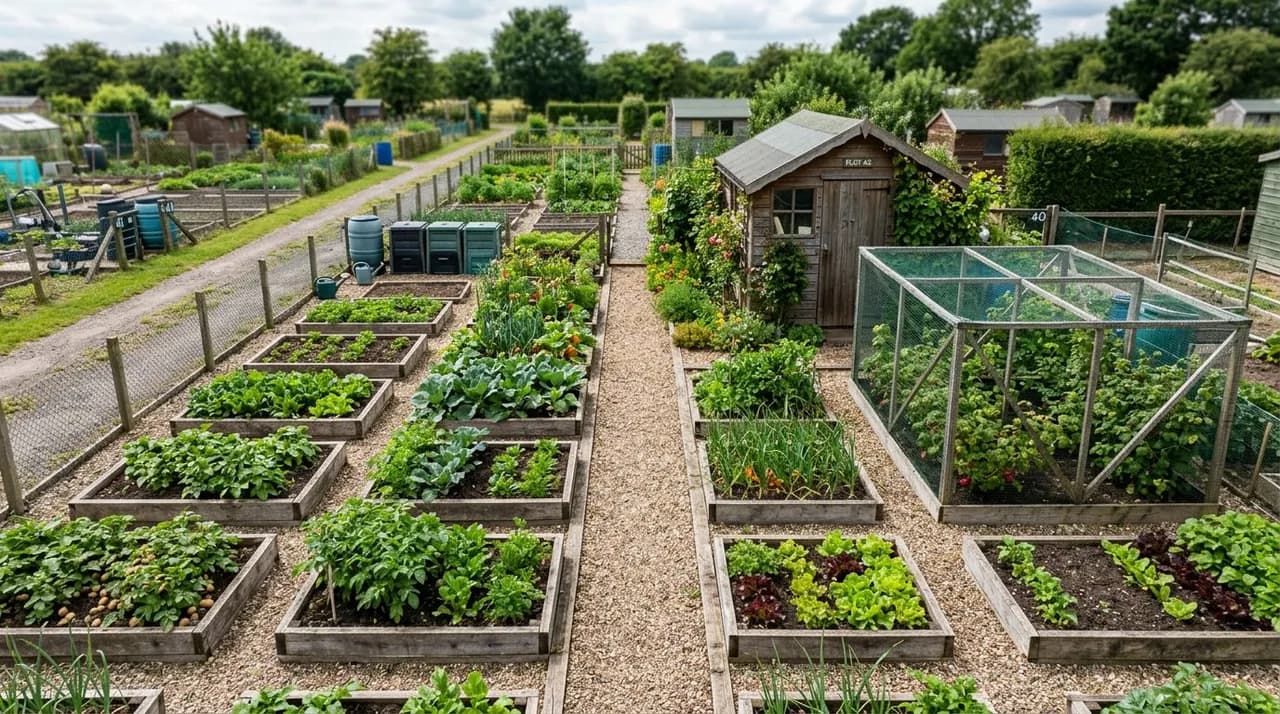
Key takeaways
- A well-structured allotment layout balances active vegetable beds, perennial fruit zones, access pathways, and infrastructure.
- Orienting main rectangular beds on a north-south axis maximises even sunlight exposure throughout the day.
- Designing permanent beds at 1.2-metre widths allows comfortable weeding and harvesting from pathways without stepping on soil.
- Placing permanent structures like sheds, compost heaps, and fruit cages along shaded or boundary edges prevents unwanted shading of annual beds.
- Integrating a dedicated four-year crop rotation area simplifies annual planting plans and disrupts soil pest cycles.
Quick answer: An effective allotment layout divides a standard 10-rod plot into dedicated functional zones: a central wheelbarrow access path, a four-bed crop rotation area for annual vegetables, a permanent perennial zone for fruit cages and asparagus, a compost and shed utility station, and an optional polytunnel or cold frame area.
Designing a practical, orderly plot layout is one of the most important steps you can take toward running a successful, low-stress allotment. An unplanned plot often leads to wasted space, unnecessary walking between beds, shaded crops, and trampled soil that degrades root health.
Whether you are designing a traditional 10 rod plot layout (approximately 250 square metres) or organising a compact 5-rod half-plot, exploring practical allotment planning ideas ensures every square metre works productively. Planning bed dimensions, path networks, and structural locations before planting builds an efficient growing layout that saves maintenance time throughout your tenancy.
Applying sound allotment design principles allows you to produce steady harvests of vegetables, soft fruits, and cut flowers while maintaining an attractive, manageable space.
What are the standard dimensions of a 10 rod allotment plot?
In the UK, allotment plots are traditionally measured in "rods" (an imperial agricultural unit also known as a pole or perch):
- One square rod: Equals approximately 25.3 square metres (30.25 square yards).
- Standard full plot (10 rods): Approximately 250 square metres (roughly 300 square yards). Typical physical dimensions are 25 metres long by 10 metres wide, or 50 metres long by 5 metres wide.
- Standard half-plot (5 rods): Approximately 125 square metres. Common dimensions are 12.5 metres by 10 metres or 25 metres by 5 metres.
When sketching your initial allotment plot layout, draw your boundary dimensions to scale on graph paper, noting the position of fixed site features such as water troughs, adjacent mature trees, and entrance gates.
To understand the administrative background and tenancy rules governing UK sites, read our overview on how to get an allotment.
How should you orient beds and paths for maximum sunlight?
Sunlight and air circulation dictate how you arrange beds across your plot:
1. North-south bed orientation
Whenever topography permits, lay out your long rectangular growing beds running north to south. A north-south orientation ensures that rising morning sun hits the east side of the bed, midday sun strikes directly overhead, and afternoon sun illuminates the west side. This prevents tall crops, such as climbing runner beans or sweetcorn, from casting continuous shade over adjacent root vegetables.
2. Sizing primary and secondary paths
Efficient pathway design protects soil from compaction while ensuring smooth wheelbarrow navigation:
- Central main spine path: 90 cm to 100 cm wide, running down the centre of the plot. This path should be wide enough for a loaded wheelbarrow and easy maneuvering of compost loads.
- Secondary working paths: 45 cm to 50 cm wide between individual beds. This provides ample foot room for kneeling and harvesting without taking unnecessary ground out of cultivation.
- Path surface materials: Woodchips laid over cardboard, compacted gravel, or mown turf grass make durable, weed-free path surfaces.
To explore how no-dig sheet mulching conditions soil across new beds, review sheet mulching for soil moisture.
What are the five key functional zones in an allotment layout?
Dividing your plot into five distinct functional zones keeps your workflow organised:
Zone 1: utility and storage (shed, compost, and water)
Place your tool shed, compost heaps, and water storage in the most accessible corner, typically near the main entrance or on the shadier northern boundary:
- Three-bay compost heap: Minimum 1 metre by 1 metre per bay, constructed from reclaimed wooden pallets for continuous hot composting.
- Tool shed: Sized according to council limits (typically 6 ft by 8 ft or 1.8 m by 2.4 m), fitted with rainwater guttering connected to large water butts.
- Storage area: Space for storing spare netting, bamboo canes, scaffold boards, and bagged manure out of direct view.
Zone 2: the annual four-bed crop rotation zone
This is the main food growing area of the allotment, occupying roughly 40% to 50% of the total plot area. Lay out four or eight identically sized rectangular beds (each measuring 1.2 metres wide by 5 to 6 metres long) to support a systematic four-year crop rotation:
- Bed A (Legumes & Sweetcorn): Broad beans, runner beans, peas.
- Bed B (Brassicas): Cabbages, broccoli, kale, Brussels sprouts.
- Bed C (Roots & Alliums): Carrots, parsnips, onions, garlic, beetroot.
- Bed D (Solanaceae & Cucurbits): Potatoes, tomatoes, courgettes, winter squash.
Zone 3: the permanent perennial zone
Perennial crops remain in place for many years and should not be disturbed by annual digging or crop rotation. Position them along a sunny side border:
- Asparagus bed: Requires permanent, undisturbed fertile soil for 15 to 20 years.
- Rhubarb crowns: Heavy feeders that produce early spring stalks for a decade or more.
- Perennial herbs: Rosemary, thyme, sage, and oregano that attract beneficial pollinators.
Zone 4: the soft fruit cage and orchard area
Soft fruit bushes require dedicated protection from bird damage:
- Walk-in fruit cage: A timber or metal netted enclosure housing raspberries, redcurrants, blackcurrants, gooseberries, and strawberries.
- Trellised cordons or espaliers: Train dwarf apple and pear cordons along fence lines or post-and-wire supports, producing heavy yields of top fruit in minimal horizontal space.
Zone 5: season extension (polytunnel or cold frames)
Position a small greenhouse, polytunnel, or bank of cold frames where they receive maximum winter and spring sunlight without being shaded by the shed:
- Use cold frames for hardening off spring seedlings and harvesting winter greens. Learn setup ideas in our guide to cold frame gardening.
- A polytunnel allows you to grow heat-loving aubergines, peppers, and cordon tomatoes through British summers.
Traditional long rows versus 1.2-metre permanent beds: which is better?
Allotment holders generally choose between two distinct bed styles:
Traditional long-row trenching
In traditional allotment cultivation, gardeners dig long trenches across the full width of the plot, walking on the soil to weed and harvest. While traditional and suitable for large tractor-worked farms, repetitive foot traffic severely compacts garden soil, necessitating heavy annual digging to re-aerate the ground.
1.2-metre permanent beds (no-dig method)
Modern allotment designers increasingly favour permanent 1.2-metre (4-foot) wide beds separated by dedicated permanent pathways:
- Zero soil compaction: The 1.2-metre width matches the natural reaching distance of an adult gardener from either side path, meaning you never step on the growing bed.
- Concentrated fertility: Manure, compost, and organic amendments are applied directly to the growing beds instead of footpaths.
- Easier pest protection: Standard insect mesh, bird netting, and low polythene cloches can be fitted over standard bed widths using flexible blue water-pipe hoops.
To learn how to clear weeds and build your first beds on neglected ground, see our tutorial on starting an allotment. For an honest breakdown of startup tools and annual rent fees, consult how much does an allotment cost.