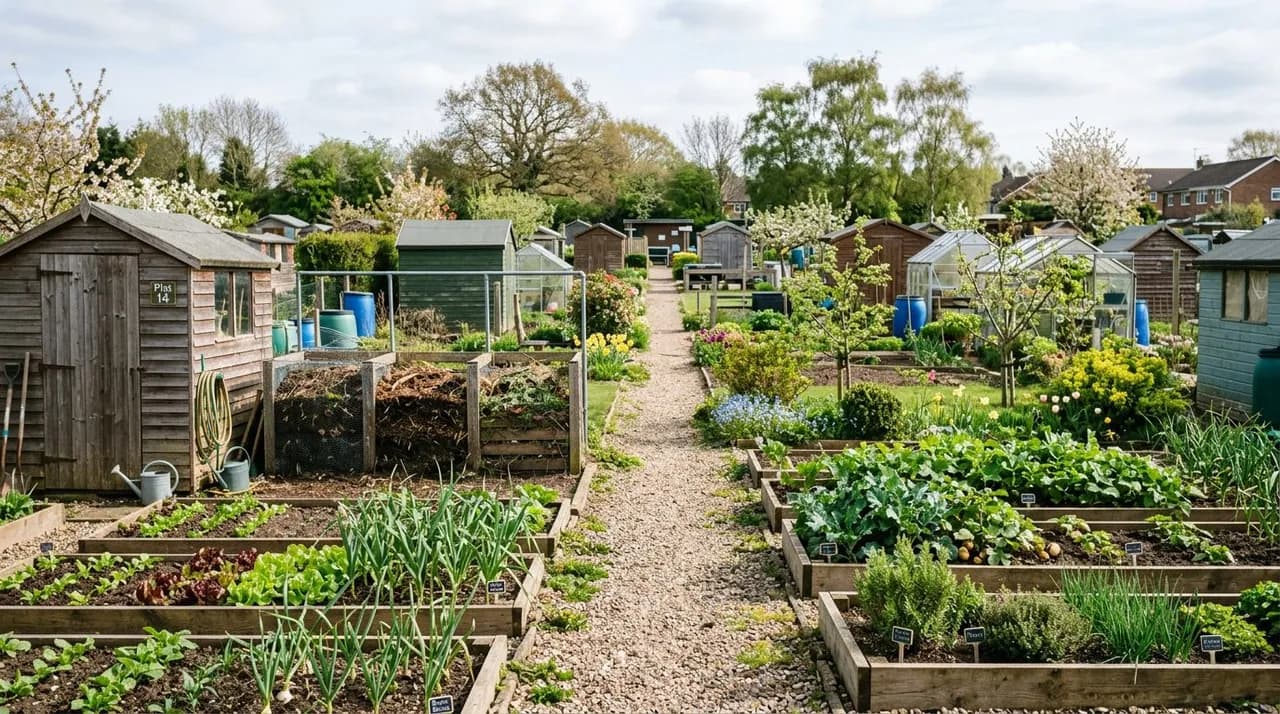
Key takeaways
- UK local councils have a statutory duty under allotment legislation to provide plots where sufficient local demand exists.
- Plot applications are submitted directly through your borough, district, town, or parish council website.
- Waiting list durations vary significantly by council area, from a few months in rural districts to several years in London boroughs.
- Private, church, and society-managed allotment sites offer practical alternatives when municipal lists are closed.
- Tenancy agreements specify strict cultivation rules, shed size limits, and livestock restrictions that every plot holder must follow.
Quick answer: To get an allotment in the UK, apply directly through your local council's parks or allotment department, or register with an independently managed allotment association in your parish. Because waiting lists vary widely between different council boroughs, apply to multiple nearby sites and consider taking on a starter half-plot to reduce your waiting time.
Growing your own fresh fruit and vegetables on an allotment is one of the most rewarding traditions in British gardening. Beyond providing a steady harvest of fresh produce, an allotment plot offers outdoor exercise, a strong sense of community, and a practical escape into nature.
However, learning how to get an allotment requires navigating local municipal application procedures and understanding how allotment waiting list systems operate. While local authorities have legal duties regarding land provision, demand in many urban and suburban areas regularly outstrips available plot capacity.
Understanding the difference between statutory council allotments and private associations, preparing for tenancy requirements, and considering plot-sharing arrangements helps in securing a plot.
Who provides allotments in the UK and what is the legal framework?
Allotments in England and Wales are governed primarily by historic legislation, notably the Small Holdings and Allotments Act 1908 and the Allotments Acts of 1922 and 1950. Under this statutory framework, if six or more registered local council tax electors submit a formal written request for allotment land, the local council is legally obligated to consider providing plots if practicable.
Allotment sites fall into three main administrative categories:
1. Council-managed allotments (statutory and temporary sites)
Most plots are owned and managed by local authorities (borough councils, district councils, town councils, or parish councils). Statutory sites are legally protected land specifically dedicated to allotment cultivation, meaning councils cannot easily sell or redevelop them without ministerial consent from the central government. Temporary allotment sites are on land leased or held for other future purposes.
2. Self-managed and society-run allotments
Many councils lease entire allotment sites to local allotment associations or gardening societies. These independent volunteer committees manage day-to-day site administration, collect annual rents, allocate vacant plots, and maintain communal perimeter fences and water troughs.
3. Private and charitable allotments
Some sites are owned by private landowners, church authorities, housing associations, or charitable trusts. These sites operate outside municipal systems and set their own independent application rules and tenancy agreements.
How do you apply for an allotment plot step by step?
Applying for an allotment plot is a straightforward administrative process:
Step 1: Identify allotment sites in your local catchment
Visit your local council website and navigate to the parks, leisure, or allotment services section. Most councils provide an interactive map or list of all active sites within the borough or parish boundaries.
Step 2: Check eligibility and catchment boundaries
Most local authorities require applicants to be registered council tax payers living within the council's administrative boundary. While you can sometimes apply to sites in neighbouring boroughs, non-residents are often placed on lower-priority waiting lists or charged higher annual non-resident rental rates.
Step 3: Submit online applications to multiple sites
Submit your application online or by post. If your council allows it, apply to two or three sites within walking or cycling distance of your home. Choosing sites with larger total plot numbers or requesting a smaller half-plot often reduces your waiting time substantially.
Step 4: Confirm your details annually
Many councils require applicants to respond to an annual email audit to confirm they wish to remain on the waiting list. Failing to respond to an annual audit will result in your application being removed from the list.
To prepare for what to expect when taking on your plot, see our guide on starting an allotment.
How long is an allotment waiting list and how do you reduce wait times?
Waiting list times vary drastically depending on location, population density, and site turnover:
In rural parishes or towns with multiple large sites, wait times can be as short as three to six months. In contrast, in dense London boroughs and major metropolitan cities, waiting lists for popular sites can stretch to several years, with some councils temporarily freezing new applications when lists become unmanageable.
To reduce your waiting time effectively:
- Request a half-plot (5 rods): A traditional 10-rod plot (approximately 250 square metres) can be overwhelming for beginners. Many councils now routinely split 10-rod plots into 5-rod starter plots (around 125 square metres), which turn over much faster.
- Accept an overgrown plot: Councils frequently struggle to let plots that have become choked with couch grass and brambles. Inform the allotment officer that you are willing to take on a neglected plot that requires clearance work.
- Look for privately managed sites: Contact independent allotment societies directly, as their waiting lists operate independently from council waiting lists and may move more quickly.
- Explore community gardens and plot sharing: Many established plot holders look for gardening partners to share weeding and harvesting duties. Community growing projects also provide immediate growing space while you wait for a private tenancy.
What rules and restrictions exist in allotment tenancy agreements?
When a plot becomes available, you must sign a legally binding tenancy agreement before receiving keys to the site gates. While exact terms vary by council and association, standard tenancy clauses include:
- Cultivation quotas: Most councils require that at least 70% to 75% of the plot area is actively cultivated for fruit, vegetables, herbs, or flowers within 12 months of taking on the tenancy. Leaving ground neglected or unworked will trigger a formal warning notice followed by eviction.
- Shed, greenhouse, and polytunnel guidelines: Structures are permitted but strictly regulated. Most councils limit shed footprints (typically to 6 ft by 8 ft or 1.8 m by 2.4 m) and require written permission before building glass greenhouses or erecting polytunnels.
- Hosepipes and water restrictions: Many sites ban continuous sprinkler systems and unattended hosepipes to prevent water waste, requiring tenants to use watering cans filled from shared dip tanks.
- Bonfires and waste management: Councils enforce strict seasonal bonfire rules to prevent smoke nuisance to neighbouring homes, encouraging on-site composting heaps instead.
- Livestock rules: Under the Allotments Act 1950, tenants have a statutory right to keep hens and rabbits for personal household use, provided they do not cause a nuisance or health hazard. However, keeping cockerels is almost universally prohibited.
To budget for annual rent, tools, and site fees, see our guide on how much does an allotment cost.
How should you prepare while waiting for your allotment?
Use your waiting period productively to develop growing skills and prepare infrastructure:
- Practise seed starting at home: Grow salad leaves, courgettes, and tomatoes in pots or window sills to learn propagation techniques.
- Collect second-hand tools: Look for sturdy second-hand garden spades, digging forks, Dutch hoes, and rakes at car boot sales or charity shops.
- Build a seasonal growing plan: Study companion planting, crop rotation, and bed layouts. Review our practical guide on allotment layout and learn natural soil conditioning from sheet mulching for soil moisture.