Key takeaways
- Tackle an overgrown allotment in manageable sections instead of digging the entire plot at once.
- Mow down tall vegetation and smother perennial weeds with heavy-duty tarpaulins or thick cardboard mulch.
- Avoid mechanical rototilling on weed-choked ground, which chops and multiplies bindweed and couch grass roots.
- Planting first-year cleaning crops like maincrop potatoes, squashes, and courgettes suppresses weeds while yielding food.
- Establish a sturdy three-bay compost heap and inspect soil drainage before building permanent paths.
Quick answer: When starting an allotment, divide your plot into manageable quarters, strim surface weeds down to ground level, and cover resting sections with light-excluding black plastic or thick cardboard. Clear and cultivate one section at a time, planting robust pioneer vegetables like potatoes, courgettes, and winter squashes that shade out emerging weeds.
Receiving the keys to a newly allocated allotment plot is an exciting milestone for any gardener. However, new tenants are frequently faced with a plot that has sat abandoned for months or years, choked waist-high with brambles, nettles, couch grass, and creeping bindweed.
Facing an overgrown plot without a clear strategy often leads to physical exhaustion and early tenancy surrender. Taking on an allotment requires breaking down the reclamation process into manageable phases instead of trying to dig over 250 square metres in a single weekend.
By using simple weed-smothering methods, avoiding common rototilling mistakes, and establishing heavy-shading first-year crops, clearing an allotment becomes a rewarding, productive project within your first growing season.
What are the essential allotment first jobs on day one?
Before picking up a digging fork, complete these practical setup tasks during your first few visits:
1. Survey the boundaries and hazards
Walk the perimeter of the plot to confirm exact boundary lines with the allotment site secretary or neighbouring tenants. Look for hidden hazards beneath overgrown grass, such as buried metal stakes, broken glass, concrete slabs, or discarded barbed wire.
2. Check water access and soil drainage
Locate the nearest communal water trough or standpipe. Observe the plot after heavy rainfall to identify low-lying spots where water pools, as well as naturally free-draining sandy areas.
3. Establish a dedicated compost area
Choose a level, accessible corner (typically on the shadier side of the plot) to set up a compost heap. You will generate substantial volumes of green matter during initial site clearance. Building a simple two- or three-bay bin from reclaimed wooden pallets provides immediate storage for organic waste.
4. Mark out main access pathways
Treading across wet, unworked soil causes severe soil compaction. Mark a central pathway measuring at least 60 cm to 90 cm wide using wooden stakes and string, allowing comfortable access with a wheelbarrow.
To understand the broader rules and tenancy requirements of site management, review our guide on how to get an allotment.
How do you clear an overgrown allotment without rototilling?
Taking over an overgrown allotment presents tough perennial weed challenges. The most common beginner error is hiring a petrol rototiller to churn through thick weeds.
Rototilling chops persistent perennial weed roots, such as bindweed (Calystegia sepium), couch grass (Elymus repens), ground elder, and horsetail/mare's tail (Equisetum arvense), into hundreds of small fragments, each of which rapidly sprouts into a new weed plant.
Instead, follow this methodical clearing protocol:
Step 1: Strim and chop surface vegetation
Use a heavy-duty brush cutter or garden shears to cut brambles, nettles, and tall grass down to ground level. Pile soft green stems onto your new compost heap, while placing woody bramble vines and thorny canes aside to dry for a controlled autumn burn.
Step 2: Cover and smother with occultation sheets
Cover two-thirds to three-quarters of the plot with heavy-duty UV-stabilised black polythene sheets, silage tarps, or woven ground-cover membrane. Weight down the edges securely with bricks, wooden scaffold boards, or sandbags. Excluding light starves weed root reserves over several months, softening compacted soil naturally.
Step 3: Sheet mulch the active cultivation area
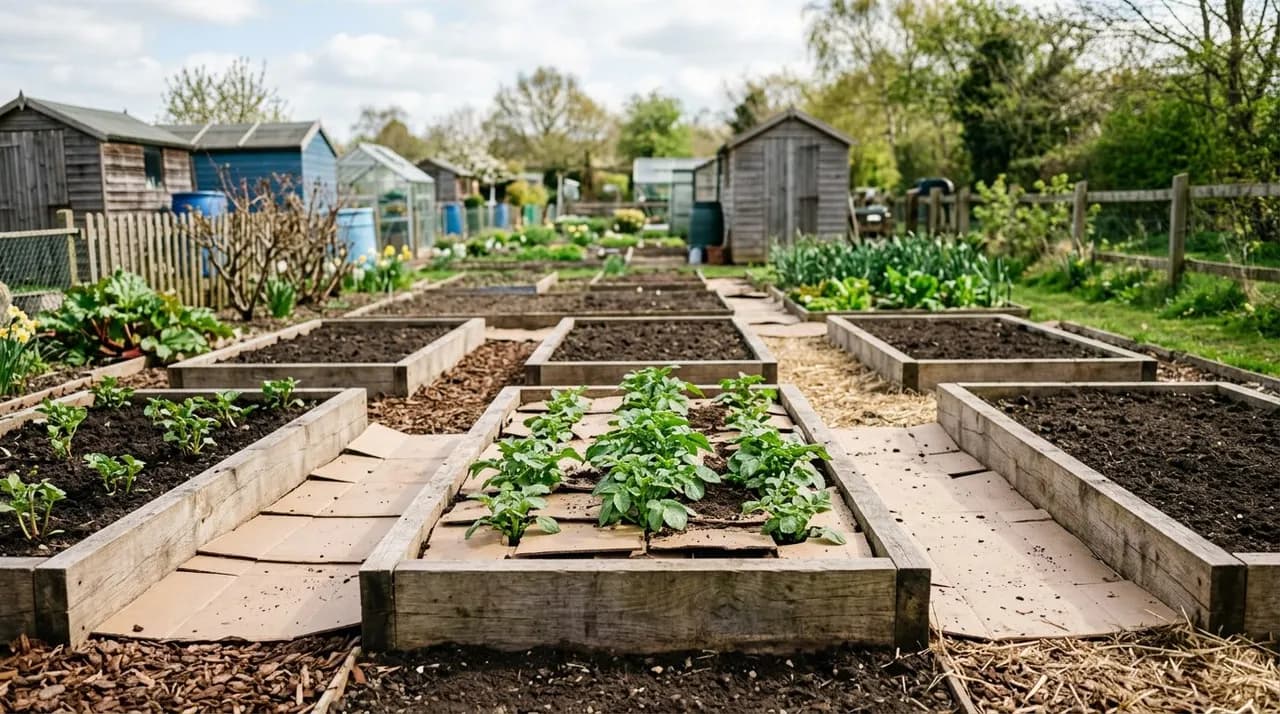
On the section you plan to cultivate immediately, use no-dig sheet mulching. Lay overlapping sheets of thick, unprinted cardboard directly over the cut weed stems, wetting it thoroughly with water. Spread a 10 cm to 15 cm (4 to 6 in) layer of well-rotted farmyard manure or garden compost directly over the cardboard. For deeper application techniques, see our guide on sheet mulching for soil moisture.
What are the best first-year crops for new allotment plots?
In your first growing season, focus on vigorous, low-maintenance vegetable varieties that produce heavy foliage to shade out remaining weed seeds while conditioning the soil:
1. Maincrop potatoes
Potatoes are the classic "plot-cleaning" crop for new ground. As potato tubers grow, their root systems break up compacted soil, while their dense foliage forms a continuous canopy that smothers weeds. Planting seed potatoes through holes cut into black plastic or under thick straw mulch makes harvesting clean and easy.
2. Courgettes and winter squashes
Courgettes (Cucurbita pepo) and sprawling winter squashes (like butternut and crown prince) produce massive, broad leaves that shade large areas of ground with minimal weeding required. Two or three courgette plants will provide steady weekly harvests throughout summer.
3. Runner beans and climbing French beans
Growing climbing beans up a simple bamboo cane wigwam occupies minimal ground space while producing abundant pods from July through October. As legumes, their root nodules fix atmospheric nitrogen, improving soil fertility for future crops.
4. Autumn garlic and onion sets
Planting onion sets and garlic cloves in October requires minimal ongoing weeding through winter and early spring, providing an early summer harvest that frees up bed space for autumn greens.
To plan your plot dimensions, paths, and bed arrangements efficiently, consult our detailed resource on allotment layout.
How do you establish soil fertility and crop rotation on new ground?
Building long-term soil health on reclaimed allotment land ensures consistent yields year after year without heavy reliance on bagged synthetic fertilisers:
- Apply organic matter generously: Heavily worked allotment soils frequently lack organic carbon and active earthworm populations. Top-dress newly cleared beds with 5 cm to 8 cm of well-rotted horse manure, mushroom compost, or home compost every autumn.
- Implement a simple four-year crop rotation: Divide your cultivated beds into four functional plant families to prevent soil-borne pests and fungal diseases from building up:
- Legumes and sweetcorn: Peas, runner beans, and broad beans that fix nitrogen.
- Brassicas: Cabbage, kale, broccoli, Brussels sprouts, and radishes (limed soil to prevent clubroot).
- Alliums and root crops: Onions, garlic, leeks, carrots, parsnips, and beetroot (unmanured ground to prevent root forking).
- Solanaceae and cucurbits: Potatoes, tomatoes, courgettes, and winter squashes.
How do you maintain weed control throughout the first season?
Weed management is a continuous discipline during the first twelve months of an allotment tenancy:
- Work section by section: Never uncover more soil than you can actively plant and manage. Keep unplanted zones securely covered under tarpaulins until you are ready to prepare beds.
- Hoe early on sunny mornings: Run a sharp Dutch hoe just beneath the soil surface on warm, sunny mornings to slice emerging annual weed seedlings at the root. The midday sun dries and kills the severed seedlings before they can re-root.
- Hand-dig deep taproots: Use a narrow garden fork to gently lever out deep taproots of dock (Rumex) and dandelions in active beds, extracting the entire taproot intact to prevent regrowth.
- Sow green manures: As soon as a bed finishes producing, sow quick-growing green manures like phacelia, buckwheat, or field beans to protect bare soil from weed invasion. Read cover crops for the home garden for seasonal sowing recommendations.
To understand startup equipment and annual rental expenses, explore our breakdown in how much does an allotment cost.