Key takeaways
- Vertical gardening increases yield per square foot by letting each plant occupy air instead of ground.
- Pole beans, cucumbers, and peas are classic climbers that thrive on trellises, reaching 6-10 feet tall.
- Malabar spinach offers a heat-tolerant leafy green alternative, growing well in temperatures above 75°F.
- Proper support structures, including trellises and cages, matter for supporting heavy fruit loads of climbing plants.
- Consistent watering and targeted fertilization are essential for vertical gardens, which can dry out faster than in-ground beds.
- Selecting compact or indeterminate varieties is key for successful vertical cultivation in limited spaces.
Quick answer: Vertical gardening significantly increases yield per square foot by allowing plants to grow upward, maximizing space, improving air circulation, and optimizing sunlight exposure, especially in urban or limited-space settings.
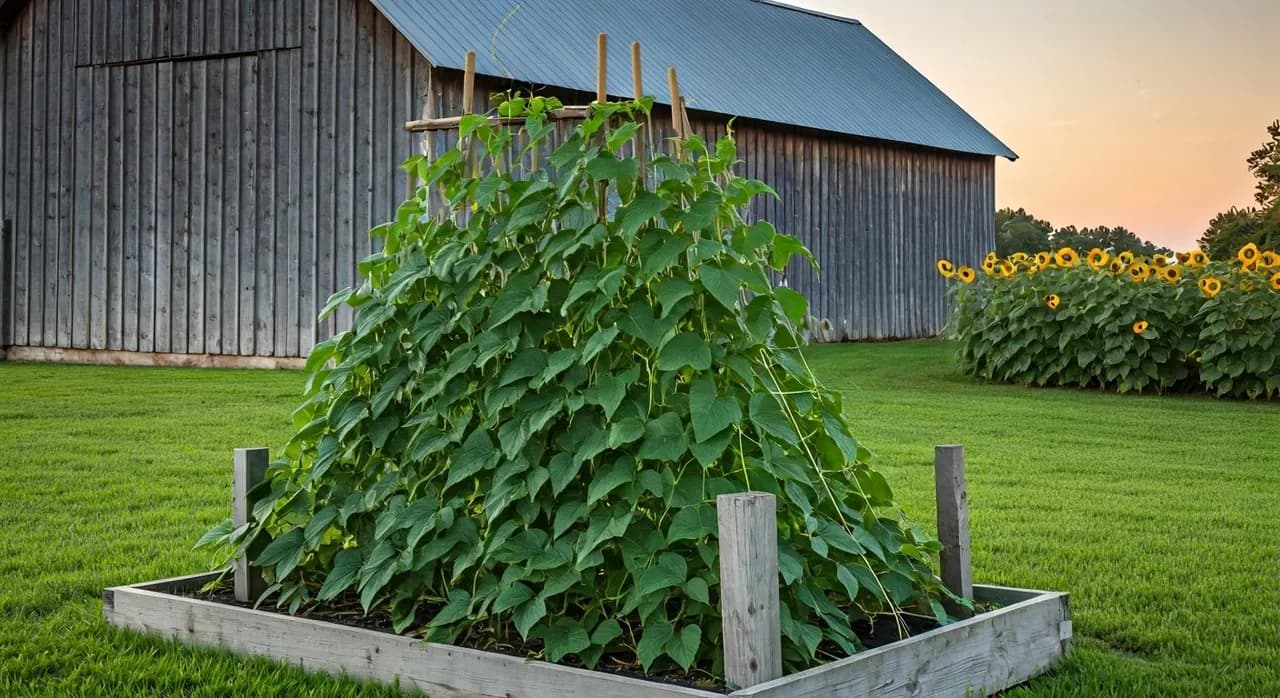
In many parts of the United States, from a small balcony in downtown Boston to a rooftop garden in Phoenix, space for growing vegetables is often at a premium. Traditional row gardening can demand a significant footprint, but vertical gardening offers a practical solution, allowing growers to produce a substantial harvest in a fraction of the area. For instance, a 4 ft by 4 ft raised bed can support a surprising amount of produce when plants are encouraged to grow upward, well beyond what the same footprint yields when the vines are left to sprawl.
This method works for suburban plots too, where maximizing yield from a 10 ft by 10 ft space is a goal. By selecting the right climbing vegetables and providing adequate support, you can transform a modest growing area into a productive food source. Vertical setups consistently outperform conventional beds on density and ease of harvest, especially for vining crops that naturally reach 6 feet or more.
the advantages of growing up: more food in less space
Vertical gardening is a strategic approach to maximizing agricultural output, particularly relevant in areas with limited ground space. Growing upward rather than outward lets a small footprint carry far more plant, which is the whole basis of the technique. For a gardener in a small backyard in Portland, Oregon, this could mean turning a 20 square foot patio into a productive food source that might otherwise require 50 square feet of ground. By growing plants upward, you can get several times more out of the same horizontal footprint.
optimizing light and air circulation
Beyond saving space, vertical gardening improves air circulation around plants, so foliage dries faster after rain or dew and fungal disease has less chance to establish than in dense ground planting. This is particularly useful in humid climates, such as those found across the southeastern US. Furthermore, plants growing vertically often receive more consistent sunlight exposure throughout the day, which supports better growth and potentially larger harvests. Trellised vines set fruit more reliably, since the leaves are less likely to shade developing fruit and pollinators can reach the flowers more easily. This method also keeps fruits off the ground, reducing spoilage and pest damage.
- Increases usable garden space by 2-3 times.
- Improves airflow, lowering fungal disease risk.
- Improves sunlight exposure for better fruit development.
- Keeps fruits clean and away from ground pests.
pole beans: a vertical staple for every garden
When considering vertical vegetables, pole beans are often the first plant that comes to mind, and for good reason. Unlike bush beans, which remain compact, pole bean varieties are indeterminate climbers, meaning they continue to grow and produce pods throughout the season until frost. They can reach impressive heights of 6 to 10 feet, making them ideal for trellises, poles, or fences. In a typical USDA zone 6 garden, like those found in much of Pennsylvania, pole beans planted in late spring will begin producing in about 60 to 70 days and can yield fresh beans for 6 to 8 weeks. For more detailed guidance on growing these productive plants, consult our article on how to grow green beans.
choosing the right pole bean varieties
Popular varieties like ‘Kentucky Wonder’ or ‘Blue Lake’ are excellent choices, producing abundant, tender pods. These plants require sturdy support from the moment they are about 6 inches tall. A simple teepee made from three 8-foot bamboo stakes can support 4 to 6 plants, yielding several pounds of beans weekly from a small footprint. Consistent harvesting every 2 to 3 days keeps the plant from setting seed and extends the productive season. Pole beans fix nitrogen through root nodules, but common beans are weak fixers and use most of what they fix for their own pods — the soil benefit comes mainly from turning in the vines and roots at the end of the season rather than from the crop itself.
- ‘Kentucky Wonder’ and ‘Blue Lake’ are reliable varieties.
- Requires sturdy support up to 10 feet tall.
- Harvest every 2-3 days for continuous production.
- Matures in 60-70 days, providing a long harvest window.
cucumbers: climbing for crispness and space saving
Cucumbers are another excellent candidate for vertical gardening, especially vining varieties. Left to sprawl on the ground, a single cucumber plant can easily take up 10 to 15 square feet of garden space. However, when trained vertically on a sturdy trellis, the same plant can produce an abundant harvest within a 2-foot by 2-foot footprint. This method keeps the fruit clean, reduces disease pressure by improving air circulation, and makes harvesting much simpler. For a gardener in USDA zone 5, like parts of Colorado, planting cucumbers after the last frost, typically in late May, will result in harvests starting in 50 to 70 days.
support systems for heavy cucumber yields
Most vining cucumber varieties, such as ‘Marketmore 76’ or ‘Straight Eight’, can produce vines 8 to 10 feet long. These plants benefit from robust support systems, such as cattle panel trellises or strong netting, which can easily bear the weight of multiple developing fruits. Each plant may require up to 1 gallon of water per week during peak fruiting, especially in hot summer conditions above 80°F. Ensuring consistent moisture helps prevent bitter fruits and encourages continuous production. Trellised cucumbers are easier to inspect for cucumber beetles, since the foliage is at eye level rather than sprawled on the ground.
- Vining cucumbers take up a fraction of the ground space when trellised.
- ‘Marketmore 76’ and ‘Straight Eight’ are popular climbing varieties.
- Requires 1 gallon of water per plant per week during fruiting.
- Mature in 50-70 days after planting.
peas: early season climbers for cool climates
Peas are a delightful early-season crop that thrives in cooler temperatures and is perfectly suited for vertical growth. Unlike many summer vegetables, peas prefer soil temperatures between 45°F and 75°F, making them an ideal choice for planting in early spring in regions like the Pacific Northwest or the upper Midwest. Varieties like ‘Sugar Snap’ or ‘Oregon Sugar Pod’ are excellent climbers, producing vines that can reach 4 to 6 feet tall. A 4-foot wide section of trellis can support 10 to 15 pea plants, yielding several pounds of sweet pods over a 3 to 4-week harvest period.
maximizing pea production with proper support
To get the most out of your pea plants, provide them with a support structure as soon as they emerge. Chicken wire, netting, or even small branches can serve as effective trellises for peas. Planting them in a double row about 6 inches apart, with the trellis in the middle, gets two rows of plants onto one support. Peas typically mature in 55 to 70 days, offering one of the earliest harvests of the gardening season. Once the plants stop producing in late spring or early summer, when temperatures consistently exceed 80°F, they can be removed and the space repurposed for heat-loving vertical crops like pole beans or cucumbers, giving the same footprint a second harvest.
- Peas prefer soil temperatures between 45°F and 75°F.
- ‘Sugar Snap’ and ‘Oregon Sugar Pod’ are good climbing varieties.
- Matures in 55-70 days for an early spring harvest.
- Can be followed by heat-loving crops for double yield.
malabar spinach: a heat-loving leafy green
For gardeners in warmer climates, or those looking for a leafy green that won’t bolt in summer heat, Malabar spinach (Basella alba) is an exceptional vertical choice. Unlike true spinach (Spinacia oleracea), which struggles in temperatures above 75°F, Malabar spinach thrives in hot, humid conditions, making it perfect for gardens in USDA zones 8-11, such as Florida or southern California. Its thick, succulent leaves and stems have a mild, slightly peppery flavor and can be used similarly to traditional spinach. This vigorous vine can easily reach 6 to 10 feet in a single growing season, providing a continuous harvest of greens when other leafy crops have long since withered. Be aware that it self-seeds heavily from its purple berries and has naturalized in parts of the Gulf South and Hawaii, so pick the berries before they drop if you garden in zone 9 or warmer. Like true spinach it contains oxalates, so it is best eaten cooked if you eat it in quantity.
cultivating malabar spinach for continuous harvest
Malabar spinach requires a sturdy trellis or support system, as its vines can become quite heavy. Planting seeds or starts in late spring, after all danger of frost has passed and soil temperatures are consistently above 65°F, will ensure rapid growth. You can begin harvesting leaves when the plant is about 8 to 12 inches tall, typically 50 to 70 days after planting. Pinching back the growing tips not only encourages bushier growth but also delays flowering, extending the harvest period by several weeks. Regular harvesting every 2 to 3 days from a single plant can yield enough greens for a small family throughout the summer, often producing 1 to 2 pounds of leaves per week from a 2-foot section of trellis.
- Thrives in temperatures above 75°F, ideal for hot climates.
- Vines can grow 6-10 feet in a season.
- Harvest leaves and tender stems every 2-3 days.
- Pinching tips promotes bushier growth and delays bolting.
other vertical contenders: tomatoes, squash, and small melons
While pole beans, cucumbers, peas, and Malabar spinach are excellent choices, many other vegetables can be successfully grown vertically. Indeterminate tomatoes, which continue to grow and produce fruit until frost, are prime candidates. Varieties like ‘Big Beef’ or ‘Sungold’ can reach 8 to 12 feet tall and require robust caging or staking to support their heavy fruit loads. A single indeterminate tomato plant can yield 15 to 20 pounds of fruit over a season when properly trellised, far more than a sprawling plant. For gardeners in USDA zone 6, planting in mid-May usually means harvests from July through September.
training vining squash and melons
Many vining squash and small melon varieties can also be trained vertically. While larger pumpkins and watermelons might be too heavy for most trellises without significant support, smaller-fruited varieties like ‘Delicata’ squash and ‘Sugar Baby’ watermelons take well to a trellis, running 6 to 8 feet. ‘Minnesota Midget’ cantaloupe is a compact short-vined type that stays around 3 to 4 feet, so it suits a low cage or a large pot rather than a full-height trellis. For fruits weighing more than 2 pounds, individual slings made from old pantyhose or fabric scraps can provide essential support, preventing them from breaking off the vine prematurely. Keeping fruit off the soil reduces contact with soil-dwelling pests and rot organisms, and lets the whole fruit color up evenly.
- Indeterminate tomatoes can yield 15-20 pounds per plant.
- ‘Delicata’ squash and ‘Sugar Baby’ melons are good vertical choices.
- Use slings for fruits over 2 pounds to prevent breakage.
- Vertical growth keeps fruit off the soil and away from ground-dwelling pests.
building your vertical support structures
The success of any vertical garden hinges on the quality and stability of its support structures. A flimsy trellis will collapse under the weight of a productive cucumber or tomato plant, especially after a heavy rain. For most vining vegetables, a structure that is at least 6 feet tall and anchored firmly into the ground or a heavy container is necessary. Materials can range from simple bamboo stakes and garden twine to more robust options like cattle panels, rebar, or custom-built wooden trellises. For a 10-foot section of garden, a cattle panel (typically 16 feet long and 50 inches high) bent into an arch can provide an exceptionally strong and durable support for multiple plants, costing around $30 to $50.
diy trellis options for various budgets
For those on a budget, a simple teepee made from three to four 8-foot bamboo stakes tied at the top can support several pole bean or pea plants. For heavier crops like indeterminate tomatoes or vining squash, a sturdy cage made from concrete reinforcing mesh (often 6 inches by 6 inches grid) cut to size and formed into a cylinder offers excellent support. Ensure any wooden structures are treated for outdoor use to last more than 3 to 5 seasons. Even a wooden-handle garden fork can be used to help prepare the soil for these supports. Always consider the mature size and weight of your plants when designing and installing supports; a mature cucumber vine can easily weigh 5 to 10 pounds with fruit.
- Supports should be at least 6 feet tall and firmly anchored.
- Cattle panels offer robust support for $30-$50 per panel.
- Bamboo teepees are a budget-friendly option for light climbers.
- Concrete reinforcing mesh makes strong, custom cages.
watering and fertilizing vertical gardens
Vertical gardens, especially those in containers or raised beds, often require more frequent watering than in-ground gardens due to faster drainage and increased air exposure. In hot, dry climates like parts of Arizona, a vertical container garden might need watering once or even twice a day when temperatures exceed 90°F. A good rule of thumb is to provide 1 to 2 inches of water per week, either through rainfall or irrigation, but always check the soil moisture by hand; it should feel consistently damp, not waterlogged or bone dry. Drip irrigation systems or soaker hoses are highly efficient for vertical setups, reducing water waste by up to 50% compared to overhead watering.
nutrient management for vertical growth
Because vertical plants are often grown in smaller soil volumes and are pushed for maximum production, consistent fertilization matters. A balanced organic fertilizer, such as a 5-10-10 or 4-4-4 granular product, applied every 3 to 4 weeks, can support vigorous growth and fruit development. For leafy greens like Malabar spinach, a fertilizer with a slightly higher nitrogen content, like a 10-5-5, can be beneficial. Some growers also use diluted liquid fertilizers, such as fish emulsion or compost tea, every 1 to 2 weeks. Always follow product instructions to avoid over-fertilization, which can burn plants or lead to excessive leafy growth at the expense of fruit production.
- Vertical gardens may need watering daily in hot climates.
- Aim for 1-2 inches of water per week.
- Drip irrigation can save 50% of water.
- Apply balanced organic fertilizer every 3-4 weeks.
Vertical Vegetable Comparison Chart
Vegetable | Typical Height | Days to Harvest | Support Needs | Climate Preference |
|---|---|---|---|---|
Pole Beans | 6-10 ft | 60-70 days | Trellis, poles, netting | Warm (60-85°F) |
Cucumbers (Vining) | 8-10 ft | 50-70 days | Sturdy trellis, netting | Warm (65-90°F) |
Peas (Climbing) | 4-6 ft | 55-70 days | Light trellis, chicken wire | Cool (45-75°F) |
Malabar Spinach | 6-10 ft | 50-70 days | Strong trellis, fence | Hot (75-95°F) |
Tomatoes (Indeterminate) | 8-12 ft | 70-90 days | Heavy-duty cage, stakes | Warm (65-85°F) |
Space Savings: Vertical gardening can let a small plot carry two to three times as many plants as the same ground area planted flat.
Yield Increase: Properly supported vertical plants, like indeterminate tomatoes, can yield 15-20 pounds of fruit per plant over a season, significantly boosting overall harvest from a small footprint.
Water Efficiency: Using drip irrigation in vertical gardens can reduce water consumption by up to 50% compared to traditional overhead watering methods, especially in arid regions like the Southwest.
Frequently asked questions
What are the best vegetables for vertical gardening?
The best vegetables for vertical gardening include pole beans, cucumbers, climbing peas, Malabar spinach, indeterminate tomatoes, and small vining squash or melons. These plants naturally climb or can be easily trained to grow upward, often reaching heights of 6 to 12 feet, significantly increasing yield per square foot.
How much space can I save with vertical gardening?
Vertical gardening can save a significant amount of horizontal space, often allowing you to grow 2 to 3 times more food in the same ground footprint. For example, a 4 ft by 4 ft area can become equivalent to a 12 ft by 4 ft area when plants are grown 6 feet high.
What kind of support structures do I need for vertical vegetables?
Support structures vary by plant, but common options include sturdy trellises (at least 6 feet tall), cages made from concrete reinforcing mesh, bamboo teepees, and netting. For heavier fruits like small melons, individual slings may be needed to support weights over 2 pounds.
Do vertical gardens require more watering?
Yes, vertical gardens, especially those in containers, often require more frequent watering due to faster drainage and increased exposure to air and sun. You might need to water daily in hot climates above 90°F, ensuring plants receive 1 to 2 inches of water per week.
Can I grow Malabar spinach in hot climates?
Absolutely. Malabar spinach thrives in hot, humid conditions, performing well in temperatures consistently above 75°F, unlike traditional spinach. It’s an excellent choice for summer leafy greens in USDA zones 8-11 and can grow vines 6 to 10 feet long.
What are the benefits of growing vegetables vertically?
Beyond space saving, vertical gardening offers several benefits: better air circulation dries foliage faster and lowers fungal disease pressure, fruits stay cleaner and are less prone to ground pests, and harvesting is often easier. It also allows for more consistent sunlight exposure, which supports better fruit set.
References
- Symposium on Protected Growing of Vegetables (1971). Symposium on Protected Growing of Vegetables.
- Growing Vegetables in Home Gardens (2021). Growing Vegetables in Home Gardens.
- Growing small-seeded vegetables (2018). Growing small-seeded vegetables.
- USDA Natural Resources Conservation Service (2024). USDA Natural Resources Conservation Service.