Key takeaways
- High temperatures above 90°F can cause significant blossom drop in tomatoes and cucurbits, reducing fruit set by over 50%.
- Morning watering is crucial, providing plants with needed moisture before the peak heat of the day and reducing evaporative stress.
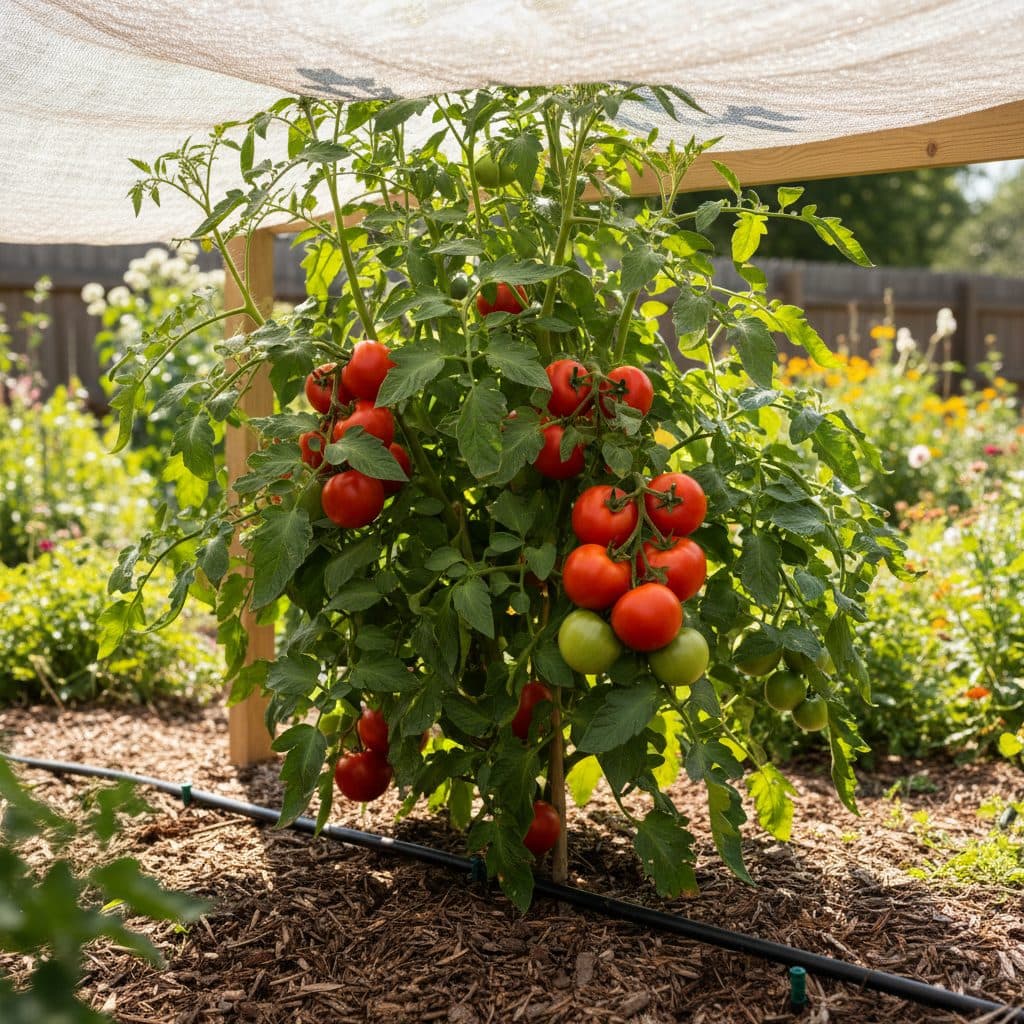
- Strategic shading, using materials that block 30-50% of sunlight, can lower canopy temperatures by 10-15°F during extreme heat.
- Misting plants in the early morning or late afternoon can cool foliage and improve humidity, but avoid midday misting to prevent scalding.
- Proper soil moisture management, using tools like a soil moisture meter, is vital to prevent drought stress which exacerbates heat damage.
- Adequate potassium and phosphorus, potentially from fermented soybean meal, supports plant resilience during heat stress and fruit development.
Quick answer: To protect tomato and cucurbit blossoms during a heatwave, implement Strategic morning watering, use 30-50% shade cloth to reduce canopy temperatures, and mist plants in the early morning or late afternoon. Ensure proper soil moisture and adequate potassium and phosphorus to enhance plant resilience.
In regions like the Central Valley of California or the humid plains of Oklahoma, summer heatwaves are a recurring challenge for growers. When temperatures consistently climb above 90°F, tender blossoms on plants like tomatoes and cucurbits (including cucumbers, squash, and melons) face significant stress. This stress can lead to blossom drop, poor pollination, and ultimately, a dramatically reduced harvest. For instance, a single week of temperatures over 95°F in USDA zone 7 can cut tomato yields by 40% or more.
Managing heat stress maintains productivity and prevents flower abortion. Practical methods including morning watering, shade cloth, and early-morning misting protect fruit-setting plants during prolonged high temperatures.
Understanding heat stress and blossom drop
When air temperatures rise above 90°F, many common garden plants, especially those in the Solanum lycopersicum family like tomatoes, begin to experience heat stress. This threshold can vary slightly by cultivar, but generally, sustained temperatures above this point, particularly when nighttime temperatures remain above 75°F, significantly impair plant physiology. Pollen viability, for example, can decrease by as much as 75% when temperatures exceed 95°F, directly impacting fruit set [2].
Cucurbits, such as zucchini and cucumbers, also suffer. While they often tolerate higher temperatures than tomatoes, extreme heat (above 100°F) can cause male and female flowers to abort, or produce sterile pollen. In Texas, for instance, a heatwave with daytime highs consistently above 105°F for three days can lead to a complete loss of early fruit set in some squash varieties. Understanding these specific temperature thresholds is the first step in effective mitigation.
The physiological impact of high temperatures
High temperatures accelerate plant respiration, consuming more energy than photosynthesis can produce, especially when accompanied by low humidity. This energy deficit weakens the plant, making it more susceptible to blossom drop. For a tomato plant, the optimal temperature range for pollen development and fertilization is between 65°F and 85°F. When temperatures consistently exceed 90°F, the anthers may not release pollen, or the pollen itself may be non-viable, leading to empty flowers [1].
- Reduced pollen viability: Temperatures above 95°F can sterilize up to 75% of pollen grains.
- Blossom abortion: Plants may drop flowers to conserve resources under stress.
- Poor fertilization: Stigmas can become unreceptive to pollen in extreme heat.
- Accelerated respiration: Plants burn through energy reserves faster than they can replenish them.
- Increased water demand: Transpiration rates skyrocket, leading to wilting if water is insufficient.
strategic morning watering
Watering in the morning is arguably the most critical practice during a heatwave, particularly for plants in arid regions like Arizona or the dry plains of Kansas. This timing allows the plant to absorb and distribute water throughout its system before the peak evaporative demand of the day. A well-hydrated plant is better equipped to manage transpiration and maintain turgor pressure, which is essential for healthy cell function and flower development. Aim to deliver 1-2 inches of water per week, adjusting based on soil type and plant needs. For example, sandy soils in Florida may require more frequent watering than clay soils in Ohio.
Using a soil moisture meter can provide precise data, ensuring you water adequately without over-saturating the soil. Check the moisture level 4-6 inches deep; if it feels dry, it’s time to water. In a typical raised bed in Georgia, a tomato plant might need 1-2 gallons of water every morning during a week-long heatwave with temperatures above 98°F.
Deep and consistent hydration
Deep watering encourages roots to grow deeper into the soil, accessing more consistent moisture reserves and making the plant more resilient to surface drying. Shallow, frequent watering can lead to a weak, shallow root system that is highly vulnerable to heat stress. For instance, a drip irrigation system delivering 0.5 gallons per hour directly to the root zone for 2-3 hours in the early morning can be far more effective than overhead sprinkling for 30 minutes. This method also minimizes water loss to evaporation, a significant factor when temperatures hit 100°F.
- Root development: Encourages deeper, more resilient root systems.
- Reduced evaporation: Water penetrates the soil before the sun can evaporate it.
- Optimal turgor: Ensures cells are full, preventing wilting and stress.
- Nutrient uptake: Water acts as a solvent, aiding nutrient transport.
- Soil temperature moderation: Moist soil heats up slower than dry soil, protecting roots.
Effective shading techniques
Shading is a direct and highly effective way to reduce plant stress during extreme heat. In places like the desert southwest, where summer temperatures regularly exceed 110°F, shade cloth is essential. The goal is to reduce the intensity of direct sunlight, thereby lowering the ambient temperature around the plant canopy by 10-15°F and decreasing leaf temperatures by up to 20°F. However, too much shade can reduce photosynthesis and fruit production, so selecting the right shade percentage is key. For most fruiting vegetables like tomatoes and peppers, a shade cloth that blocks 30-50% of sunlight is ideal [3].
Install shade cloth over a sturdy frame, ensuring it doesn’t touch the plants. This allows for good air circulation, which is vital for cooling. For a small garden bed in USDA zone 8, a 6 ft by 10 ft piece of 40% shade cloth can make a significant difference, often leading to a 25% increase in fruit set compared to unshaded plants during a prolonged heatwave. You can also use temporary structures or even plant taller, heat-tolerant crops to provide natural shade for smaller plants.
Choosing and installing shade cloth
When selecting shade cloth, consider the material (knitted polyethylene is durable and UV resistant) and the shade percentage. A 30% shade cloth is often sufficient for regions with moderate heat, while 50% may be necessary for areas experiencing extreme, prolonged heat above 100°F. Position the shade cloth to protect plants during the hottest part of the day, typically from 11 AM to 4 PM. In a large commercial farm in California, installing retractable shade systems can reduce water usage by 15% and increase yields of certain crops by 20% during summer months.
- Shade percentage: 30-50% blockage is generally optimal for fruiting plants.
- Air circulation: Ensure space between cloth and plants to prevent heat buildup.
- Timing: Deploy during peak heat hours, usually 11 AM to 4 PM.
- Material: Knitted polyethylene offers durability and UV resistance.
- Frame: Use a sturdy frame (PVC pipes or rebar) to support the cloth.
The role of misting
Misting can be a valuable tool for cooling plants and increasing localized humidity during a heatwave, especially in dry climates like Nevada or parts of Idaho. When water evaporates from leaf surfaces, it draws heat away from the plant, effectively lowering leaf temperature by several degrees Fahrenheit. This can be particularly beneficial for delicate blossoms, which are highly susceptible to desiccation and heat damage. However, timing is crucial: misting in the early morning (before 9 AM) or late afternoon (after 5 PM) is best. Misting during the intense midday sun can lead to water droplets acting as tiny magnifying glasses, potentially scorching leaves and causing more harm than good, especially if the water contains dissolved minerals.
For a small backyard garden in New Mexico, a fine mist nozzle attached to a garden hose can be used for 5-10 minutes per plant. In larger operations, overhead misting systems can be automated to release short bursts of mist for 2-3 minutes every hour during peak heat. Research from universities in California has shown that intermittent misting can reduce air temperature around plants by 5-8°F and increase relative humidity by 10-15% [4].
Best practices for misting
The key to effective misting is using a fine spray that evaporates quickly without leaving plants soaking wet for extended periods. This minimizes the risk of fungal diseases, which thrive in damp conditions. Focus the mist on the foliage and around the blossoms, avoiding direct saturation of the soil if it’s already adequately watered. Consider the wind direction; misting into a strong wind will result in significant water loss and minimal benefit. In a greenhouse setting, foggers can maintain humidity levels above 60% even when outside temperatures are over 100°F, protecting sensitive crops like passion fruit vines.
- Timing: Early morning or late afternoon to avoid scorching.
- Fine mist: Use nozzles that produce very small droplets for quick evaporation.
- Duration: Short bursts, 2-10 minutes, depending on conditions.
- Target: Focus on foliage and blossoms, not just the soil.
- Humidity boost: Increases localized humidity, benefiting pollen viability.
Nutritional support and soil health
Beyond water and shade, providing adequate nutrition is crucial for helping plants withstand heat stress. Plants under stress require readily available nutrients to maintain metabolic functions and repair cellular damage. Potassium (K) plays a vital role in regulating stomatal opening and closing, which directly impacts water use efficiency and heat tolerance. Phosphorus (P) is essential for energy transfer and root development, both critical during periods of stress. A balanced fertilizer with a good ratio of these elements, applied before a heatwave, improves plant resilience. For example, a tomato plant in a container in Florida might benefit from a 5-10-10 or 10-20-20 fertilizer blend.
Healthy soil, rich in organic matter, acts as a buffer against extreme temperatures and moisture fluctuations. Organic matter improves soil structure, increases water retention capacity by 20-30%, and provides a steady supply of nutrients. Incorporating compost or fermented soybean meal (which has an NPK of approximately 7-2-1) improves soil structure. In a study in Michigan, plots with 5% organic matter content showed 15% higher yields during dry, hot summers compared to plots with 2% organic matter [5].
Mulching for soil temperature regulation
Mulching is a simple yet highly effective strategy for regulating soil temperature and conserving moisture. A 3-4 inch layer of organic mulch (such as straw, wood chips, or shredded leaves) can reduce soil temperatures by 10-20°F on a hot day. This protects the delicate root systems from overheating and reduces evaporation from the soil surface by 30-50%, meaning less frequent watering is needed. In central Pennsylvania, applying a 4-inch layer of straw mulch around tomato plants can save up to 15 gallons of water per plant over a summer season.
- Potassium (K): Aids in water regulation and stomatal control.
- Phosphorus (P): Supports energy transfer and root growth.
- Organic matter: Improves water retention and nutrient availability.
- Mulch: Regulates soil temperature and conserves moisture.
- Balanced feeding: Provides essential nutrients for stress resilience.
Heatwave protection method comparison
Method | Primary benefit | Best time to apply | Estimated temp reduction |
|---|---|---|---|
Morning Watering | Hydration & Nutrient Uptake | Early Morning | N/A (prevents stress) |
Shading (30-50%) | Direct Heat Reduction | Peak Sun (11 AM – 4 PM) | 10-15°F (air), 20°F (leaf) |
Misting | Foliage Cooling & Humidity | Early Morning / Late Afternoon | 5-8°F (air), 10-15% RH increase |
Mulching | Soil Temperature & Moisture | Anytime (before heatwave) | 10-20°F (soil) |
Blossom Drop Risk: Temperatures consistently above 90°F can reduce fruit set in tomatoes by over 50% in USDA zone 7.
Shade Cloth Effect: A 40% shade cloth can lower canopy temperatures by 10-15°F, potentially increasing yields by 25%.
Frequently asked questions
How hot is too hot for tomato blossoms?
For most tomato varieties, sustained daytime temperatures above 90°F, especially when coupled with nighttime temperatures above 75°F, are too hot. This can reduce pollen viability by 75% and lead to significant blossom drop, impacting yields by 40% or more.
Can I water my plants in the middle of a hot day?
While it’s generally best to water in the morning, a small amount of emergency watering during a severe heatwave (above 100°F) can help prevent total wilting. However, avoid overhead watering at midday to prevent leaf scorch and ensure water reaches the roots, providing 1-2 gallons per plant.
What percentage shade cloth should I use for vegetables?
For most fruiting vegetables like tomatoes, peppers, and cucurbits, a shade cloth that blocks 30% to 50% of sunlight is recommended. This range reduces heat stress by 10-15°F while still allowing enough light for photosynthesis and fruit development.
How often should I mist my plants during a heatwave?
During a heatwave, misting can be done once in the early morning (before 9 AM) and once in the late afternoon (after 5 PM) for 5-10 minutes. Avoid midday misting to prevent leaf scorching, which can occur when temperatures exceed 95°F.
Does mulching really help with heat?
Yes, mulching is highly effective. A 3-4 inch layer of organic mulch can reduce soil temperatures by 10-20°F and decrease soil moisture evaporation by 30-50%, protecting roots and conserving water during periods of extreme heat.
What nutrients are most important for heat-stressed plants?
Potassium (K) and Phosphorus (P) are particularly important. Potassium helps plants regulate water use and stomatal function, while phosphorus supports energy transfer and root health. A balanced fertilizer like a 5-10-10 blend can be beneficial before a heatwave.
References
- Morning Blossoms Gathered at Dusk (2022). Morning Blossoms Gathered at Dusk.
- Vulnerable Subjects: (2022). Vulnerable Subjects:.
- Front Matter (2022). Front Matter.
- Snow (2022). Snow.
- Introductory Note (2022). Introductory Note.
- USDA Natural Resources Conservation Service (2024). USDA Natural Resources Conservation Service.