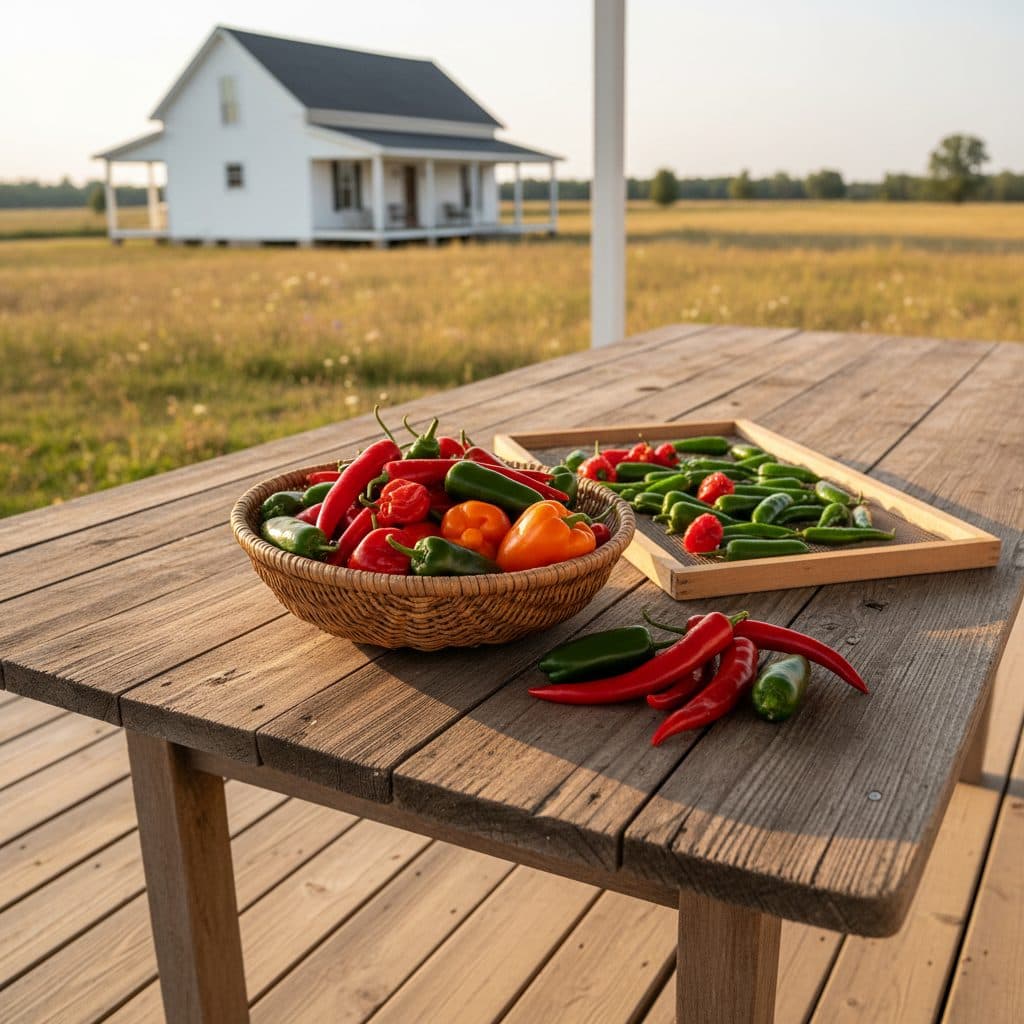
Key takeaways
- Proper drying at temperatures between 120°F and 140°F retains more capsaicin and color in peppers.
- Dehydrators offer the most consistent and energy-efficient drying for uniform results.
- Air drying is suitable for thin-walled peppers like cayenne in low-humidity environments below 60%.
- Powdering dried peppers in a spice grinder or blender creates a versatile, long-lasting condiment.
- Store powdered peppers in airtight containers in a cool, dark place to maintain potency for up to two years.
- Always wear gloves and eye protection when handling hot peppers to prevent skin and eye irritation.
Quick answer: Drying and powdering chili peppers extends their usability for up to two years by concentrating flavor and heat, and preventing spoilage. Optimal drying temperatures are between 120°F and 140°F to retain capsaicin and color.
For many growers in USDA zones 6 through 9, a successful pepper harvest means an abundance of cayenne, jalapeno, and paprika varieties by late summer. While fresh peppers offer intense flavor, their shelf life is limited to a few weeks in the refrigerator. Preserving this harvest allows you to use homegrown peppers year-round, and drying followed by powdering extends usability for up to two years.
This preservation technique reduces food waste from a heavy crop and concentrates the flavors and heat of your peppers. Whether you’re processing one pound or ten pounds of peppers, understanding the right drying conditions and storage practices ensures a high-quality product. For example, research indicates that specific drying temperatures can significantly impact the retention of beneficial compounds, with optimal results often found between 120°F and 140°F [2].
Why dry your homegrown peppers?
Drying homegrown chili peppers like cayenne, jalapeno, and paprika offers several compelling benefits beyond simple preservation. First, it significantly extends their shelf life from a few weeks to over twelve months, sometimes even two years, allowing you to enjoy your harvest long after the growing season ends in regions like the Pacific Northwest or the humid Southeast. Second, drying intensifies their flavor and heat, as the removal of water concentrates the capsaicin and other aromatic compounds. A study from 2014 noted that careful drying methods can help retain these bioactive compounds, which contribute to both flavor and health benefits [2].
Selecting the right peppers for drying
Not all peppers dry equally well. Thin-walled varieties, such as cayenne and many paprika types, are ideal for air drying due to their lower moisture content, often around 85% water. Thicker-walled peppers, like most jalapenos, benefit more from controlled drying methods like a dehydrator or oven to prevent spoilage and ensure even drying. Choosing peppers that are fully ripe and free from blemishes is crucial; one rotten pepper can compromise an entire batch. Aim to process your peppers within 24 hours of harvesting for the best quality and flavor retention.
- Select fully ripe, blemish-free peppers.
- Prioritize thin-walled varieties for air drying.
- Consider thicker-walled peppers for dehydrator use.
- Harvest peppers when their color is fully developed.
- Process peppers within one day of picking for optimal results.
Preparing peppers for drying
Proper preparation is a critical step in ensuring your dried peppers maintain their quality, color, and heat. Begin by washing your peppers thoroughly under cool water to remove any dirt or debris. For hot peppers like cayenne and jalapeno, wearing gloves is highly recommended to protect your skin from capsaicin, which can cause irritation for several hours. Some growers even wear eye protection, especially when handling a large quantity, such as 5 pounds or more.
Slicing and seeding for optimal drying
The way you slice your peppers depends on their thickness and your desired drying method. For thinner peppers like cayenne, you can often leave them whole or simply slice them lengthwise. Jalapenos, with their thicker walls, benefit from being sliced into 1/4 inch to 1/2 inch rings or halves to expose more surface area, which shortens drying time considerably. While removing seeds is optional (most of a pepper's capsaicin sits in the pale placental membrane the seeds cling to, so pulling the seeds takes some of that membrane with them), it can lead to a less bitter final product for some varieties. Leaving both in gives a noticeably hotter powder. Consider visiting how to grow peppers for more insights into managing pepper heat from seed to harvest.
- Wear gloves and eye protection when handling hot peppers.
- Wash peppers thoroughly to remove dirt.
- Slice thicker peppers into 1/4 to 1/2 inch pieces.
- Consider removing seeds for a milder powder.
- Leave seeds for maximum heat retention.
Drying methods: dehydrator, oven, and air
Choosing the right drying method is crucial for preserving the quality and flavor of your chili peppers. Each method has its advantages and is best suited for different types of peppers and climates. A study in 2024 on red chili peppers found optimal drying conditions in a hot air cabinet dryer at 140°F, achieving a moisture content of 8% in about 10 hours [5].
Dehydrator drying for consistency
A food dehydrator is often the most reliable method, offering consistent low heat and airflow. Arrange your prepared peppers in a single layer on the dehydrator trays, ensuring good air circulation around each piece. Set the temperature between 120°F and 140°F. Drying time can range from 8 to 24 hours, depending on the pepper’s thickness and moisture content. For instance, thin cayenne peppers might dry in 8-12 hours, while thicker jalapeno slices could take 18-24 hours. Check regularly until peppers are brittle and snap easily, indicating a moisture content below 10%. For more general information on food drying, explore dehydrating food.
Oven drying for convenience
If you don’t have a dehydrator, your oven can be used, though it requires more attention. Set your oven to its lowest temperature. Most home ovens bottom out near 170°F, hotter than ideal, so put an oven thermometer on the tray and check the peppers hourly. Prop the oven door open by 2 to 4 inches to allow moisture to escape. Arrange peppers on baking sheets lined with parchment paper. This method can take 6 to 12 hours, with constant monitoring to prevent scorching. Turn the peppers every 1-2 hours for even drying. This method consumes considerably more energy than a dehydrator; a home oven typically draws several times a dehydrator's wattage.
Air drying for traditionalists
Air drying is the simplest and most energy-efficient method, suitable for thin-walled peppers like cayenne in dry climates with humidity consistently below 60%. String peppers onto a strong thread using a needle, creating a ‘ristra’ or simply spreading them on screens in a well-ventilated area. This method can take 3 to 6 weeks, depending on humidity and temperature. Ensure good airflow and protect peppers from insects and direct sunlight, which can degrade color and flavor. This method is common in arid regions of the Southwest, where humidity levels can drop below 30% for extended periods.
- Dehydrators offer precise temperature control (120°F-140°F).
- Oven drying requires constant monitoring and door propping.
- Air drying works best for thin peppers in low-humidity environments.
- Drying times vary from 8 hours (dehydrator) to 6 weeks (air).
- Peppers are fully dry when brittle and snap cleanly.
Powdering and long-term storage
Once your peppers are thoroughly dried and brittle, they are ready for powdering. This step transforms your harvest into a versatile spice that can be used in countless dishes. Ensure the peppers are completely cool before grinding; warm peppers can release moisture and clump during processing. Grinding them into a fine powder also increases their surface area, which releases their flavor faster than coarse flakes do.
Grinding your dried peppers
A dedicated spice grinder or a clean coffee grinder works best for achieving a fine powder. For larger batches, a high-speed blender can also be effective, but you may need to process in smaller quantities, perhaps 1/2 cup at a time, to avoid overheating the motor and ensure a consistent grind. Pulse the grinder in short bursts, about 10-15 seconds at a time, to prevent the powder from clumping due to heat and static. If you’re processing very hot peppers, grind outdoors or under a range hood and wear an N95 mask; airborne capsaicin dust burns the airways and can set off prolonged coughing or an asthma attack. The goal is a consistent, fine powder, similar in texture to store-bought spices.
Storing your homemade chili powder
Proper storage is essential for maintaining the potency and color of your homemade chili powder. Store the powder in airtight glass jars or opaque containers in a cool, dark place, such as a pantry or cupboard. Exposure to light, heat, and air can degrade the capsaicin and color pigments over time, noticeably dulling flavor within a few months if stored improperly. While refrigeration isn’t strictly necessary, it can further extend shelf life, particularly in humid climates. When stored correctly, homemade chili powder can retain its quality for one to two years. Label your containers with the pepper type and date of processing to keep track of your inventory, especially if you have multiple varieties like *Capsicum annuum* or even *Capsicum frutescens* from your garden.
- Ensure peppers are completely cool before grinding.
- Use a spice grinder or high-speed blender for best results.
- Grind in short pulses to prevent clumping and overheating.
- Store powder in airtight, opaque containers.
- Keep containers in a cool, dark place for up to two years.
Safety and quality considerations
When working with chili peppers, especially hot varieties, safety should always be a top priority. Capsaicin, the compound responsible for the heat, can cause significant irritation to skin, eyes, and respiratory passages. Always wear food-grade gloves when handling fresh or dried hot peppers, and avoid touching your face. If you do get capsaicin on your skin, wash the area thoroughly with soap and water, or use milk to neutralize the burning sensation, which can last for 30 minutes or more.
Maintaining quality and preventing spoilage
The primary goal of drying is to reduce moisture content to a level that inhibits microbial growth. Peppers should be dried until they are brittle and snap cleanly, indicating a moisture content of 8% to 10% or less. If peppers are not dried sufficiently, they can develop mold during storage, rendering them unsafe for consumption. This is especially true in humid climates, such as those found in USDA zone 8. Regularly check your stored powders for any signs of clumping, discoloration, or off-odors, which might indicate moisture ingress or spoilage. Discard any powder that shows these signs to prevent potential health issues.
Maximizing flavor and color retention
To preserve the color and flavor of homemade chili powders, several practices help. Drying at lower temperatures (120°F-140°F) helps retain the carotenoids responsible for red and orange hues, as well as the volatile compounds that contribute to aroma and taste [2]. Storing the powdered peppers in opaque containers, away from direct light, is also crucial. Light exposure visibly fades the pigments over a few months. Grinding peppers just before use instead of storing them pre-ground for extended periods helps maintain freshness and aroma, though this is less practical for large batches.
- Always wear gloves when handling hot peppers.
- Ensure peppers are brittle dry (8-10% moisture) to prevent mold.
- Store powder in opaque, airtight containers.
- Check stored powder regularly for signs of spoilage.
- Drying at lower temperatures (120°F-140°F) preserves color and flavor.
Comparison of Chili Pepper Drying Methods
Method | Temperature Range | Typical Drying Time | Energy Efficiency | Best For |
|---|---|---|---|---|
Dehydrator | 120°F – 140°F | 8 – 24 hours | High | All pepper types, consistent results |
Oven | 120°F – 150°F (lowest setting) | 6 – 12 hours | Medium-Low | Thicker peppers, occasional use |
Air Drying | Ambient (60°F – 80°F) | 3 – 6 weeks | Very High (passive) | Thin-walled peppers, low humidity climates |
Capsaicin retention: Drying peppers at 140°F retains most of their capsaicin, giving a potent final product.
Moisture target: For safe, long-term storage, dried peppers should have a moisture content of 8% or less to prevent microbial growth [5].
Frequently asked questions
How can I tell if my peppers are completely dry?
Properly dried peppers should be brittle and snap easily when bent. They should not feel leathery or pliable. This indicates their moisture content is below 10%, which is essential for long-term storage without spoilage.
Is it safe to dry peppers in a regular oven?
Yes, you can dry peppers in a regular oven, but it requires more attention. Set your oven to its lowest temperature (most home ovens bottom out near 170°F, hotter than ideal) and prop the door open by 2-4 inches to allow moisture to escape. Turn the peppers every 1-2 hours to ensure even drying.
How long do homemade chili powders last?
When stored correctly in airtight, opaque containers in a cool, dark place, homemade chili powders can retain their potency and flavor for one to two years. After this period, their color and heat may start to diminish by 20-30%.
Do I need to remove seeds before drying and powdering?
Removing seeds is optional. The pale internal membrane holds most of a pepper's capsaicin and the seeds pick it up by contact, so leaving both in will result in a hotter powder. Removing them can lead to a milder product and sometimes a less bitter taste.
What is the best temperature for drying chili peppers?
Moderate drying temperatures preserve color and heat better than high ones. Temperatures above 150°F degrade color and aroma compounds more quickly.
References
- Red Hot Chili Peppers (2016). Red Hot Chili Peppers.
- Bioactive Compounds During Drying of Chili Peppers (2014). Bioactive Compounds During Drying of Chili Peppers.
- Intermittent Conductive Hydro-Drying of Cayenne Chili Paste: Effects of Intermittency, Temperature and Salt Concentration on Product Quality and Energy Efficien (2023). Intermittent Conductive Hydro-Drying of Cayenne Chili Paste: Effects of Intermittency, Temperature and Salt Concentration on Product Quality and Energy Efficien.
- PRICE VOLATILITY OF RED CHILI PEPPERS IN CENTRAL JAVA (2021). PRICE VOLATILITY OF RED CHILI PEPPERS IN CENTRAL JAVA.
- Investigation of optimal drying conditions of red chili peppers in a hot air cabinet dryer (2024). Investigation of optimal drying conditions of red chili peppers in a hot air cabinet dryer.