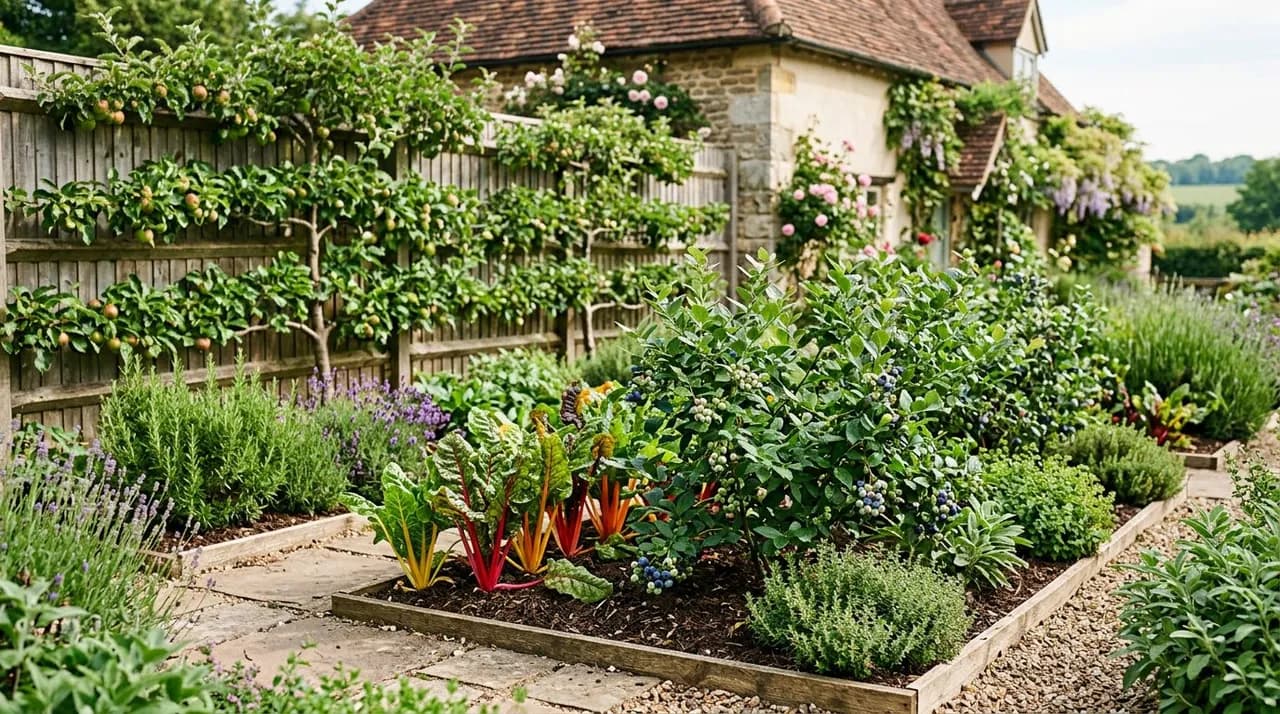
Key takeaways
- Edible landscaping (foodscaping) replaces purely decorative ornamentals with functional, food-bearing plants that maintain year-round aesthetic appeal.
- Integrate multi-functional plants: berry bushes offer spring flowers, summer fruit, and fiery fall foliage; fruit trees provide shade, blossom, and harvest.
- Design in structural layers from dwarf canopy fruit trees down to shrub hedges, perennial vegetable borders, and walkable herb ground covers.
- Navigate HOA and municipal rules by using structured beds, defined stone edging, and ornamental edible cultivars with colorful leaves and tidy habits.
- Group plants by water and sunlight requirements (hydrozoning) to reduce irrigation needs and support organic pest control naturally.
Quick answer: Edible landscaping integrates food-producing plants into ornamental home gardens by pairing attractive vegetables, berry shrubs, culinary herbs, and dwarf fruit trees with traditional decorative plantings. Focus on structured borders, colorful foliage, and multi-season visual interest to create a productive, beautiful yard.
For decades, modern residential landscaping has maintained a rigid separation between the decorative front yard and the productive backyard vegetable plot. Traditional front yards feature manicured turfgrass and non-productive shrubs, while edible crops remain hidden in raised boxes out of sight.
Edible landscaping, often called foodscaping, dismantles this artificial division. By substituting purely ornamental plants with attractive, high-yielding food crops, homeowners can transform standard suburban flower beds into abundant, ecologically diverse landscapes without sacrificing curb appeal.
A well-planned foodscape provides fresh seasonal produce, supports beneficial pollinators, reduces grocery expenditures, and creates a dynamic outdoor space that evolves through every season.
Principles of ornamental foodscape design
Creating an attractive edible landscape requires applying established aesthetic design principles to edible species:
+-----------------------------------------------------------------------+
|                    EDIBLE LANDSCAPING DESIGN LAYERS                   |
+-------------------+-------------------------------+-------------------+
| LAYER             | EDIBLE PLANT EXAMPLES         | ORNAMENTAL VALUE  |
+-------------------+-------------------------------+-------------------+
| Canopy / Tree     | Espalier Apple, Fig, Cherry   | Spring blooms     |
| Shrub / Hedge     | Blueberry, Serviceberry       | Fall red foliage  |
| Herbaceous Border | Tuscan Kale, Rainbow Chard    | Architectural form|
| Ground Cover      | Creeping Thyme, Alpine Berry  | Dense green carpet|
+-------------------+-------------------------------+-------------------+
1. Structure, symmetry, and defined edging
The single most important factor distinguishing a deliberate edible landscape from an untidy farm plot is clear structural framing. Use crisp hardscaping elements such as stone borders, brick edging, gravel paths, and formal wooden trellises to anchor the design. When beds have crisp borders, even sprawling vegetables look intentional and manicured.
2. Multi-season visual appeal
Select edible plants that provide visual interest across multiple seasons:
- Spring: Delicate white and pink blossoms on dwarf fruit trees, blueberries, and strawberries.
- Summer: Lush foliage, colorful fruits (peppers, tomatoes, berries), and bright pollinator flowers.
- Fall: Brilliant red, orange, and gold foliage on blueberry bushes, currants, and hazelnut shrubs.
- Winter: Striking structural silhouettes of espaliered fruit trees, evergreen rosemary hedges, and winter greens under cloches.
3. Hydrozoning and sun mapping
Group plants with similar water, soil, and sunlight requirements together into distinct hydrozones. Place drought-tolerant Mediterranean herbs (rosemary, thyme, oregano) in sunny, well-drained borders, while placing moisture-loving crops (leafy greens, berry bushes) near rainwater downspouts or dedicated irrigation zones. Learn more about water design in our guide on swales, berms, and water management.
Selecting the best edible plants for front yard aesthetics
Certain edible cultivars are prized for their architectural foliage, distinct colors, and compact growth habits:
Multi-functional berry shrubs
- Highbush Blueberries (Vaccinium corymbosum): Dependable landscape shrubs offering bell-shaped spring flowers, summer berries, and red autumn foliage. They make effective formal hedges when planted in acidic soil beds.
- Serviceberries (Amelanchier spp.): Small ornamental trees or large shrubs with early white flowers, sweet June berries reminiscent of blueberries, and bright fall color.
- Currants and Gooseberries (Ribes spp.): Compact bushes with deeply lobed foliage and jewel-like translucent fruit clusters that thrive in partial shade.
Architectural vegetables for flower borders
- Tuscan / Lacinato Kale (Brassica oleracea): Has upright, strap-like, blue-green puckered leaves that resemble palm fronds, adding vertical structure to ornamental beds.
- Bright Lights Swiss Chard (Beta vulgaris): Produces yellow, red, orange, and magenta stems beneath glossy dark green leaves, comparable to ornamental foliage plants.
- Globe Artichoke (Cynara cardunculus var. scolymus): An imposing architectural perennial with massive silver-grey, deeply serrated foliage and striking purple thistle blossoms if buds are left unharvested.
- Rainbow Peppers and Eggplants: Compact cultivars like ornamental chili peppers or patio eggplants produce glossy dark leaves and colorful pendant fruit.
Edible ground covers and path edgings
- Creeping Thyme (Thymus serpyllum): Creates a walkable, drought-hardy mat covered in pink flowers in early summer. Explore full installation techniques in our creeping thyme lawn guide.
- Alpine Strawberries (Fragaria vesca var. semperflorens, e.g. Alexandria): Clumping, runnerless selections that produce continuous sweet berries along walkway edges. Note that ordinary wild F. vesca does run, so buy a named alpine cultivar if you want it to stay put. For full ground options, see ground cover plants.
- Prostrate Rosemary (Salvia rosmarinus 'Prostratus'): Evergreen trailing sub-shrub with blue flowers that cascades gracefully over retaining walls and stone borders.
Designing structural focal points: espalier, arbors, and hedges
Vertical structures and trained woody crops maximize food yield in small yards while creating architectural elegance:
[ Espalier Fruit Tree on Wall ]       [ Cedar Arbor with Grapes ]
      |-- Horizontal Tier 3                  |-- Hanging Fruit Clusters
      |-- Horizontal Tier 2                  |-- Shaded Seating Nook
      |-- Horizontal Tier 1                  |-- Structural Pathway Arch
Espalier fruit trees
Espalier is the ancient horticultural practice of training fruit trees (apples, pears, figs, plums) flat against a wall, fence, or free-standing wire trellis. An espaliered tree occupies about 12 to 18 inches (30 to 45 cm) of horizontal bed depth, including clearance off the wall for airflow, while delivering a full harvest of premium fruit. The geometric lines of horizontal cordon or candelabra patterns provide clear visual structure year-round.
Productive arbors and pergolas
Replace non-productive climbing vines with vigorous table grapes, hardy kiwis (Actinidia arguta), or climbing beans. A wooden arbor arching over a front walkway or patio entrance creates dappled summer shade, fragrant spring flowers, and hanging clusters of edible fruit within arm's reach.
Privacy hedges that produce fruit
Instead of standard boxwood or privet hedges, plant dense rows of elderberry (Sambucus nigra), hazelnut (Corylus avellana), honeyberry (Lonicera caerulea), or bush cherries. These shrubs accept light pruning to maintain a tidy hedge form while providing privacy and seasonal crops.
Navigating HOA rules, local ordinances, and curb appeal
Many homeowners face Homeowners Association (HOA) covenants or municipal codes that regulate front yard appearance. You can cultivate a thriving edible landscape while remaining compliant:
- Review the Covenants: Check for specific restrictions regarding vegetable gardening in front yards, minimum turfgrass percentages, or prohibited plant lists.
- Emphasize Ornamental Edibles: Blend food plants into traditional flower beds instead of laying out agricultural rows. Interplant purple basil, chives, and rainbow chard directly among coneflowers, black-eyed Susans, and hostas.
- Maintain Crisp Maintenance Standards: Remove dying foliage promptly, harvest ripe fruit before it drops, and stake tall plants neatly. A well-mulched, weed-free bed with defined edges rarely attracts complaints.
- Integrate Living Ground Covers: Where turfgrass is discouraged or high water bills are an issue, replace lawn with low-growing polycultures as detailed in our guide to clover lawn and drought tolerant ground cover.
Soil health, companion planting, and integrated pest control
A successful edible landscape relies on soil biology and organic practices instead of synthetic chemicals:
Building soil with organic amendments
Incorporate aged compost and leaf mold into planting beds to build organic matter and soil microbial activity. Avoid synthetic fertilizers, which cause rapid, watery growth that attracts sap-sucking pests. For foundational soil advice, consult our overview of soil amendments demystified.
Companion planting for pest deterrence
Interplanting culinary herbs and flowering perennials creates a natural defense system:
- Aromatic Herbs (Thyme, Rosemary, Sage, Oregano): Emit strong volatile essential oils that mask the scent of vulnerable crops, confusing pest insects like cabbage moths and aphids.
- Tiny-flowered nectar plants (dill, fennel, and coriander, which are umbellifers, plus sweet alyssum, Lobularia maritima, a brassica with similar small flowers): Produce tiny, accessible flowers that provide nectar for beneficial predatory wasps, syrphid flies, and ladybugs.
- Alliums (garlic, chives) and society garlic (Tulbaghia violacea, a different genus with the same scent): Their strong scent can mask host-plant cues for aphids, and they add decorative globes of white or purple flowers. They will not prevent fungal disease; prevention comes from spacing, airflow, and resistant varieties.