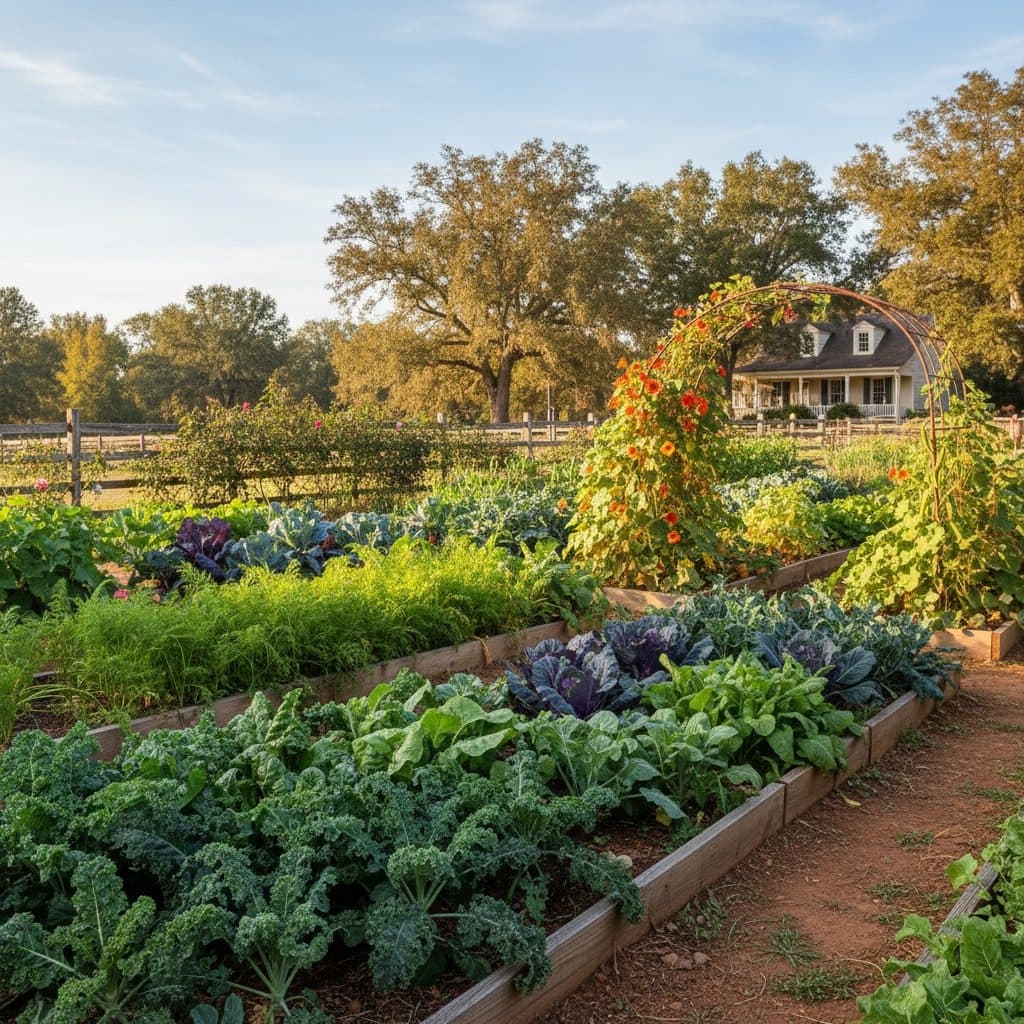
Key takeaways
- The Deep South and Gulf Coast, primarily USDA Zones 8 to 10, support a robust second growing season in the fall due to mild winters.
- Effective crop rotation is crucial for soil health, nutrient cycling, and disease prevention, especially with multiple harvests.
- Succession planting ensures continuous yields by staggering plantings of short-season crops every two to four weeks.
- A targeted USDA zone planting calendar helps time seed starting and transplanting for optimal fall crop development.
- Protecting fall crops from early cold snaps and pests is essential for maximizing yields, using methods like row covers and mulching.
Quick answer: Fall gardening in the Deep South and Gulf Coast leverages mild winters for a robust second growing season, primarily in USDA Zones 8-10. Success requires strategic crop rotation, succession planting, and a tailored planting calendar to maximize yields.
For growers across the Deep South and Gulf Coast, the approach of fall opens a productive second growing season. In regions like the Gulf Coast South, which includes parts of Alabama, Mississippi, Louisiana, and Texas, summer’s intense heat often makes growing many cool-season vegetables challenging. As temperatures drop from average summer highs of 90°F to autumn averages around 70°F, a wide array of crops thrives.
This unique climate, predominantly USDA Hardiness Zones 8 to 10, allows for an extended growing period that can last well into winter, sometimes offering an additional 60 to 90 days of cultivation compared to more northern climates. Understanding the regional conditions, from geological stability to varied soil compositions, helps maximize the fall harvest. This article covers crop rotation, succession planting techniques, and a planting calendar for Deep South fall gardens.
The unique climate of the Gulf Coast: more than just summer heat
The Deep South and Gulf Coast region is defined by its distinct climate, which presents both challenges and opportunities for growers. While summers are long and hot, with average daily temperatures often exceeding 85°F for several months, the fall and winter months are mild, with average low temperatures rarely dipping below 40°F in USDA Zone 9. This extended period of moderate weather makes it ideal for crops that struggle in summer’s intense heat and humidity. The Gulf Coast South region, encompassing areas of Alabama, Mississippi, Louisiana, and Texas, offers a distinct climate for fall gardening. Many parts of the Deep South and Gulf Coast are characterized by USDA Hardiness Zones 8 to 10, allowing for extended growing seasons.
understanding local conditions for fall success
Successful fall gardening here hinges on recognizing the specific microclimates and soil types within these zones. Soils across the region vary widely with local geology, drainage, and how much river or coastal sediment a site sits on. These soils can range from sandy loams to heavier clays, each requiring different amendments and watering strategies. For instance, sandy soils may need more frequent irrigation, sometimes 1 to 2 inches of water per week, while clay soils retain moisture longer. Knowing whether your beds are sandy, loamy, or heavy clay is what drives your watering and amendment plan. This foundational knowledge allows growers to select appropriate crops and cultivation methods, ensuring a productive second season. For enhancing soil health, consider incorporating living mulches and cover crops suited for your specific USDA zone.
- USDA Hardiness Zones 8 to 10 are dominant.
- Average fall temperatures range from 50°F to 75°F.
- Soil types vary significantly, from sand to clay.
- Extended growing window of 60 to 90 days in fall.
- High humidity is common, even in cooler months.
Planning your fall garden: crop rotation basics
Crop rotation is a foundation of sustainable gardening, especially when aiming for multiple harvests in a single year, as is possible in the Deep South. It involves planting different crops in a specific sequence in the same garden bed over successive seasons. This practice helps manage soil-borne diseases, reduce pest populations, and maintain soil fertility. For instance, planting a heavy feeder like corn after a nitrogen-fixing legume can meaningfully reduce the nitrogen you need to add. In the Central Gulf Coast, succession planting allows for multiple harvests, potentially yielding 2 to 3 crops from the same bed during the fall season.
designing a rotation strategy for your zone
A basic crop rotation strategy involves dividing your garden into three or four sections and rotating plant families. A common rotation might be: legumes (beans, peas), followed by leafy greens (lettuce, spinach), then root crops (carrots, radishes), and finally brassicas (cabbage, broccoli). For example, if you grew tomatoes (a heavy feeder) in a bed during the summer, you might follow with a legume like fall peas, which enrich the soil with nitrogen. Growing peas in the fall is an excellent choice for this region. This cycle helps prevent nutrient depletion and breaks the life cycles of pests and pathogens specific to certain plant families. Aim to rotate crops every season, or at least every year, to see real benefits in soil health and plant vigor.
- Rotate plant families, not just individual crops.
- Follow heavy feeders with nitrogen fixers.
- Avoid planting the same crop family in the same spot for at least three years.
- Incorporate cover crops during off-seasons to build soil organic matter.
- Track your plantings to ensure proper rotation.
Succession planting for continuous harvest
Succession planting maximizes garden space and yield by staggering plantings of the same or different crops throughout the growing season. In the Deep South’s extended fall, this technique can provide a continuous supply of fresh produce for months. For example, instead of planting all lettuce seeds at once, sow a small batch every two to three weeks. This ensures a steady supply of mature heads without a glut followed by scarcity, keeping a single bed producing longer than one large planting would.
timing your plantings in USDA zones 8-10
Successful succession planting in USDA Zones 8 to 10 requires understanding the “days to maturity” for each crop and your local frost dates. Most fall crops, such as radishes, mature in 25 to 30 days, while carrots take 60 to 75 days. Plan to sow quick-maturing crops like radishes, lettuce, and spinach every 2 to 3 weeks until about 4 to 6 weeks before your average first frost date. For longer-season crops like broccoli or cabbage, start seeds indoors 6 to 8 weeks before your target transplant date. For example, if your average first frost is December 1st in USDA Zone 9, you might transplant broccoli seedlings in early October. Consider crops like fall peas for a second planting, which can be harvested well into late fall. Peas are an excellent choice for a second fall crop, often yielding 2 to 3 harvests.
- Stagger plantings every 2-4 weeks for continuous harvest.
- Choose crops with varying days to maturity.
- Start long-season crops indoors 6-8 weeks before transplant.
- Know your average first frost date to time final plantings.
- Utilize quick-maturing crops like radishes and lettuce.
A USDA zone 8-10 planting calendar for fall
A well-structured planting calendar is your most valuable tool for fall gardening in the Deep South and Gulf Coast. It helps you synchronize your planting efforts with the region’s unique climate patterns, ensuring crops mature before any significant cold snaps. This calendar focuses on USDA Hardiness Zones 8 to 10, where the average first frost date can range from late November to late December, or even not at all in Zone 10. Fall planting can extend the harvest window by up to 90 days in USDA Zone 9, compared to single-season temperate climates.
key dates and crop selections
For growers in USDA Zone 8, target mid-August to early September for direct sowing beets and carrots, plus a final frost-tender crop of bush beans that must be picked before the first freeze. Spinach and lettuce can be sown every two weeks from early September through October. In USDA Zone 9, you have a longer window; direct sow these crops from late August through mid-October. Broccoli, cabbage, and cauliflower should be started indoors 6 to 8 weeks before your target transplant date, usually mid-September to early October for Zone 9. For example, if you plan to transplant broccoli on October 1st, start seeds around August 15th. In Zone 10, the fall season is even more forgiving, allowing for continuous planting of many greens and root crops from September through November. Always check your local extension office for specific frost date predictions, which can vary by 10 to 14 days year to year. For enhancing soil fertility in your fall beds, consider cover crops that are suitable for your specific zone.
- August: Start seeds for brassicas (broccoli, cabbage) indoors.
- September: Direct sow most leafy greens (lettuce, spinach, kale) and root crops (carrots, radishes).
- October: Continue succession planting of quick-maturing greens; plant fall peas.
- November: Plant onions, and garlic for a late-spring harvest (in Zones 9 and 10 choose softneck types or pre-chill hardneck cloves in the refrigerator, since winters there are often too mild to vernalize them); protect existing crops from cold.
- December: Harvest cold-hardy crops like collards and kale in Zones 9-10.
Protecting your fall crops from pests and early cold snaps
Even in the mild Deep South, fall gardens face challenges from both lingering pests and the occasional early cold snap. While summer’s intense pest pressure often subsides, cooler temperatures can bring new insect issues, such as aphids on brassicas or slugs on tender greens. An integrated pest management approach, including regular scouting and promoting beneficial insects, is necessary. For instance, an unchecked aphid colony on a row of brassicas builds fast; check the undersides of new leaves weekly and act while the numbers are still small. Additionally, unexpected temperature drops below 35°F can damage sensitive crops.
strategies for cold and pest management
To combat pests, regularly inspect your plants, especially the undersides of leaves. Hand-picking larger pests like cabbage worms can be effective for small gardens. For smaller insects, a strong spray of water can dislodge aphids, or consider applying insecticidal soap. To protect against cold, row covers are invaluable. A lightweight floating row cover can raise the temperature beneath it by 5°F to 10°F, safeguarding crops from light frosts. For more severe cold, a heavier fabric or adding a layer of straw mulch around plant bases can provide an additional 2°F to 4°F of protection. Ensure your soil has good drainage to prevent root rot in wetter, cooler conditions. For long-term soil health and protection, consider using living mulches in your garden beds.
- Monitor plants weekly for signs of pests.
- Use physical barriers like row covers for frost protection.
- Apply organic pest controls like insecticidal soap when necessary.
- Mulch around plants to insulate soil and retain moisture.
- Ensure good air circulation to prevent fungal diseases in humid conditions.
Summer vs. Fall Growing Conditions in the Deep South (USDA Zone 9)
Factor | Summer Season (June-August) | Fall Season (September-November) |
|---|---|---|
Average Daily High Temp | 88°F – 95°F | 68°F – 80°F |
Average Daily Low Temp | 70°F – 75°F | 48°F – 60°F |
Humidity Level | 75% – 90% | 60% – 80% |
Pest Pressure | High (e.g., hornworms, squash bugs) | Moderate (e.g., aphids, slugs) |
Suitable Crops | Tomatoes, peppers, okra, sweet potatoes | Lettuce, spinach, broccoli, carrots, peas |
Watering Needs | High (1.5-2 inches per week) | Moderate (1-1.5 inches per week) |
Extended Season: The Deep South’s mild fall weather in USDA Zones 8-10 can extend the growing season by an additional 60 to 90 days.
Crop Rotation Benefit: Implementing a 3-year crop rotation breaks the buildup of soil-borne diseases that specialize on a single plant family.
Succession Yields: Succession planting keeps a single garden bed producing across the whole fall season instead of in one flush.
Frequently asked questions
What are the best crops for a fall garden in the Deep South?
In USDA Zones 8-10, excellent fall crops include leafy greens like lettuce, spinach, kale, and collards, as well as root vegetables such as carrots, beets, and radishes. Brassicas like broccoli and cabbage also thrive, often yielding 2 to 3 harvests before winter.
When should I start planting for a fall garden in USDA Zone 9?
For USDA Zone 9, begin starting seeds indoors for crops like broccoli and cabbage in mid-August. Direct sow leafy greens and root crops from early September through mid-October, aiming to complete plantings at least 6 weeks before your average first frost date, typically in December.
How does crop rotation benefit my fall garden?
Crop rotation in your fall garden helps prevent the buildup of soil-borne diseases and pests specific to certain plant families. It also maintains soil fertility by cycling nutrients, for example, by following a heavy feeder with a nitrogen-fixing legume.
What is succession planting, and why is it important for the Gulf Coast?
Succession planting involves staggering plantings of crops every 2 to 4 weeks to maintain a continuous harvest instead of a single large yield. This is especially important in the Gulf Coast’s long fall season, allowing you to harvest fresh produce for an additional 60 to 90 days.
How can I protect my fall crops from unexpected cold snaps?
To protect fall crops from cold snaps below 40°F, use floating row covers, which can add 5°F to 10°F of warmth. Additionally, applying a 2 to 4 inch layer of organic mulch around the base of plants helps insulate the soil and roots, providing extra protection.
References
- United States, Gulf Coast South (2007). United States, Gulf Coast South.
- USDA Natural Resources Conservation Service (2024). USDA Natural Resources Conservation Service.