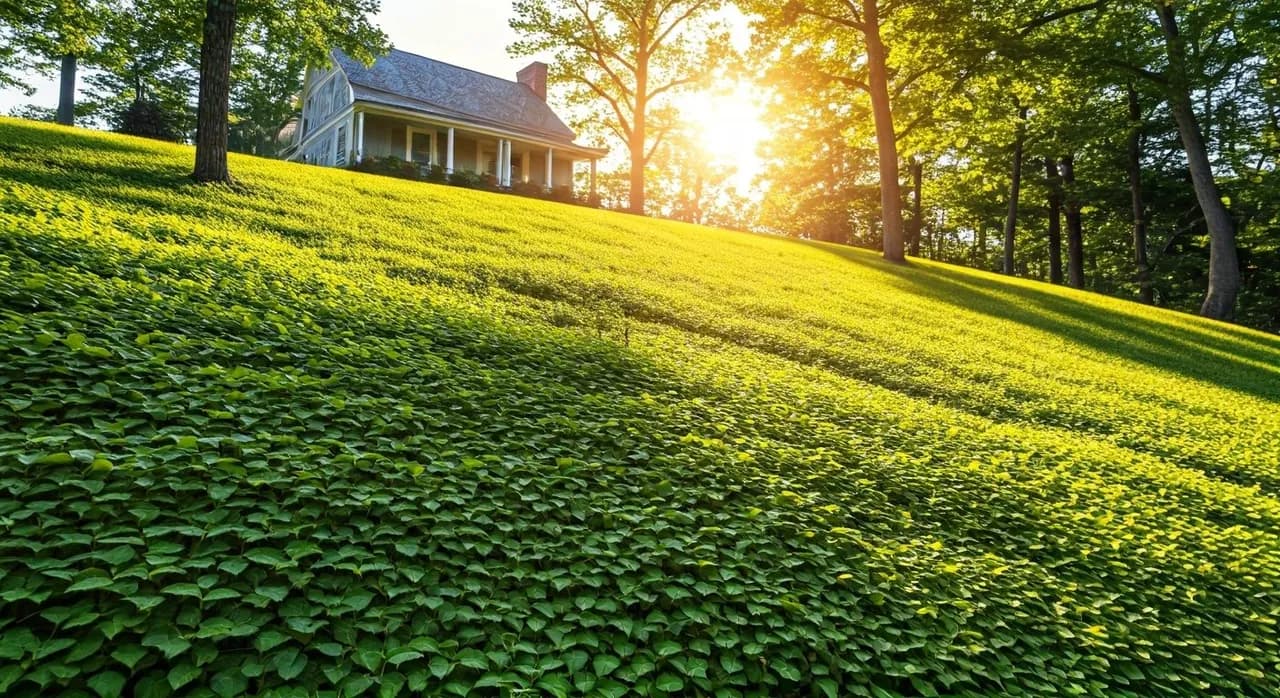
Key takeaways
- Groundcovers significantly reduce soil erosion and surface runoff on slopes, with vegetative cover reducing runoff by up to 30% [1].
- Selecting plants adapted to your specific USDA zone and site conditions (sun, soil, moisture) is crucial for successful establishment.
- Fast-spreading varieties like Creeping Juniper or Vinca minor can establish within one to two growing seasons, minimizing weed competition.
- Proper site preparation, including soil amendment and initial watering, boosts establishment rates in challenging areas.
- Groundcovers offer long-term benefits, including reduced mowing time, decreased need for herbicides, and improved soil health.
- Consider deer resistance and local invasive species lists when choosing groundcovers to ensure long-term landscape health.
Quick answer: Fast-spreading groundcovers reduce runoff by up to 30% and prevent soil erosion on slopes by forming a dense mat that stabilizes soil and suppresses weeds. They also significantly lower maintenance needs in challenging areas.
Across the United States, from the rolling hills of Pennsylvania to the arid landscapes of Arizona, many property owners grapple with challenging terrain. Steep slopes, narrow strips alongside driveways, or hard-to-reach areas under mature trees often present significant landscaping hurdles. These spots are difficult to mow or maintain and are prone to soil erosion and weed invasion. For instance, a 2011 study found that establishing vegetative groundcovers improves runoff water quality on steep slopes [1].
Fast-spreading groundcovers provide a practical alternative to repeated mowing or expensive retaining walls. These plants are specifically chosen for their ability to quickly colonize open ground, forming a dense mat that stabilizes soil, suppresses unwanted growth, and transforms neglected spaces into attractive, low-maintenance features. By selecting the right species for your USDA zone and site conditions, you can reduce maintenance significantly in these problem areas, while also improving the overall health of your landscape.
Understanding the challenges of slopes and narrow strips
Managing landscapes with significant topographic variation presents unique challenges for US growers. A steep slope, defined by the USDA Natural Resources Conservation Service as having a grade of 30% or more, can be a constant source of frustration [6]. These areas are notoriously difficult to mow safely, often requiring specialized equipment or risky manual labor. In addition to maintenance woes, slopes are highly susceptible to soil erosion, especially during heavy rainfall events common in regions like the Pacific Northwest or the Southeast, where annual precipitation can exceed 50 inches. This erosion depletes topsoil and washes sediment into nearby waterways, reducing water quality [1].
Hard-to-manage areas
Beyond slopes, many properties feature narrow strips of land that are impractical for traditional lawn care. These might include areas between a fence and a driveway, borders along a walkway, or small, irregularly shaped beds that are too tight for a lawnmower. A strip just 18 inches wide, for example, is often too narrow for efficient mowing, leading to neglected patches that become prime real estate for weeds. These overlooked zones can quickly detract from a property’s appearance and demand disproportionate maintenance effort. Addressing these areas effectively can significantly reduce overall yard work.
- steep embankments with a grade over 30%
- narrow planting beds less than 24 inches wide
- areas under large trees with dense shade
- slopes adjacent to waterways or storm drains
- uneven terrain difficult for machinery access
Benefits beyond aesthetics: why groundcovers work
Fast-spreading groundcovers offer a suite of functional benefits that extend far beyond simply looking good. One of their primary advantages is superior erosion control. The dense root systems of these plants bind soil particles together, preventing them from washing away during heavy rains or strong winds. Research indicates that establishing vegetative groundcovers can significantly reduce runoff water quality issues on steep slopes, decreasing sediment loss by 30% or more compared to bare soil [1]. This is particularly valuable in states like California, where seasonal wildfires expose vast areas to erosion risk.
Reducing maintenance and suppressing weeds
Beyond erosion, groundcovers are champions of low maintenance. Once established, they form a living mulch that shades the soil, dramatically reducing weed germination and growth. This means less time spent pulling weeds, often cutting weeding time significantly in treated areas. Consider the labor saved on a 500 square foot slope that previously required hours of weeding each month. Furthermore, these plants eliminate the need for regular mowing in difficult areas, saving fuel, equipment wear, and personal effort. Many varieties also require minimal supplemental watering once mature, especially in USDA zones 5-8, contributing to water conservation. For more on reducing maintenance, explore ground cover plants: the right choice for slopes, dry shade, and lawn-free yards.
- significant reduction in soil erosion and runoff
- effective suppression of weed growth
- elimination of mowing in difficult areas
- improved soil health and moisture retention
- enhanced habitat for beneficial insects and pollinators
Selecting the right fast-spreading groundcover for your region
Choosing the right groundcover matters for success, as plant performance varies by USDA zone, sun exposure, and soil type. For example, in the cooler climates of USDA zones 3-6, Creeping Juniper (Juniperus horizontalis) is an excellent choice for sunny, dry slopes, spreading up to 8 feet wide and providing year-round interest. Note that some juniper species can be toxic to livestock, particularly pregnant cattle. Its dense, mat-forming habit effectively controls erosion, and many varieties are deer resistant, a crucial factor in states like Michigan or Pennsylvania where deer populations are high. You can find more information on plant resistance at deer resistant plants: a selection guide that admits no plant is truly deer-proof.
Adaptable choices for diverse conditions
In shadier, moister conditions, particularly in USDA zones 4-8, Vinca minor (Periwinkle) establishes reliably. This evergreen groundcover spreads quickly, often covering an area rapidly within two years, and produces delicate blue or white flowers in spring. While it tolerates full shade, it performs best with some morning sun. For areas with more sun in warmer climates, such as USDA zones 7-9 in the Southeast, Sedum ‘Dragon’s Blood’ is a drought-tolerant succulent that spreads quickly, forming a colorful carpet. It requires minimal water once established, making it suitable for xeriscaping projects. Always check local invasive species lists before planting, as some fast-spreaders can become problematic in certain ecosystems.
- creeping juniper (Juniperus horizontalis) for sunny, dry slopes in zones 3-6
- vinca minor (Periwinkle) for shady to part-shade areas in zones 4-8
- sedum ‘dragon’s blood’ for sunny, well-drained spots in zones 4-9
- pachysandra terminalis (Japanese spurge) for dense shade in zones 4-8
- lamium maculatum (Spotted Deadnettle) for part-shade, moist conditions in zones 3-8
Establishing and caring for your groundcover investment
Successful establishment of groundcovers in challenging areas requires thoughtful preparation and initial care. Begin by clearing the site of all existing weeds and debris. For slopes, this might involve manual removal or careful herbicide application, ensuring minimal soil disturbance to prevent immediate erosion. Amend the soil with 2-4 inches of organic matter, such as compost, to improve drainage and fertility, especially in areas with poor soil quality. This step can increase establishment rates in the first year. For precise moisture readings, consider using a soil moisture meter to guide your watering efforts.
Planting and ongoing maintenance
When planting, space individual plants according to their mature spread rate, typically 12-18 inches apart for most fast-spreading varieties. Planting plugs or small containers can be more cost-effective for large areas, often costing less per square foot than larger plants. After planting, water thoroughly and consistently for the first 6-8 weeks, or until the plants show signs of active growth and establishment. This initial watering is crucial for root development. Once established, most fast-spreading groundcovers require minimal care, perhaps an annual feeding with a balanced fertilizer like fermented soybean meal organic fertilizer in spring, and occasional weeding for any persistent intruders. Regular monitoring during the first year can prevent small issues from becoming larger problems, ensuring a dense, healthy groundcover for years to come.
- thoroughly clear the planting area of weeds and debris
- amend soil with 2-4 inches of organic compost
- space plants 12-18 inches apart for optimal coverage
- water consistently for the first 6-8 weeks after planting
- apply a slow-release fertilizer annually in early spring
Comparison of popular fast-spreading groundcovers
Plant name | USDA Zones | Sun exposure | Mature spread | Deer resistance |
|---|---|---|---|---|
Creeping Juniper | 3-9 | Full Sun | 6-8 ft wide | High |
Vinca minor (Periwinkle) | 4-8 | Part Shade to Full Shade | 2-3 ft wide | Medium |
Sedum ‘Dragon’s Blood’ | 4-9 | Full Sun | 1-2 ft wide | High |
Pachysandra terminalis | 4-8 | Full Shade | 1-2 ft wide | Medium |
Lamium maculatum | 3-8 | Part Shade | 1-2 ft wide | Low |
Erosion Control: Vegetative groundcovers can reduce surface runoff by up to 30% on steep slopes, protecting soil and water quality [1].
Maintenance Savings: By eliminating mowing and significantly reducing weeding, groundcovers can cut landscape maintenance time significantly annually.
Frequently asked questions
How quickly do fast-spreading groundcovers establish?
Most fast-spreading groundcovers, such as Vinca minor or Creeping Juniper, can achieve significant coverage within one to two growing seasons, typically reaching significant coverage by the end of the second year after planting.
Do groundcovers really help with erosion on steep slopes?
Yes, they do. Studies confirm that establishing vegetative groundcovers improves runoff water quality on steep slopes, with some varieties reducing sediment loss by over 30% [1]. Their dense root systems bind soil effectively.
What’s the best way to prepare a steep slope for groundcover planting?
Start by clearing all existing weeds and debris. Then, amend the soil with 2-4 inches of organic compost to improve drainage and nutrient content, which can boost plant establishment rates by 20%.
Are there any fast-spreading groundcovers that are also deer resistant?
Many varieties offer good deer resistance. Creeping Juniper (Juniperus horizontalis) is a prime example, thriving in USDA zones 3-9 and typically left alone by deer, making it a reliable choice in areas with high deer populations.
How much water do groundcovers need after establishment?
Once established, many fast-spreading groundcovers are quite drought-tolerant and require minimal supplemental watering. For instance, Sedum varieties in USDA zones 7-9 may only need watering once every 2-3 weeks during dry spells.
Can groundcovers really reduce the need for mowing?
Absolutely. By planting groundcovers in areas that are difficult or dangerous to mow, such as slopes with a grade over 30% or narrow strips, you can eliminate the need for mowing in those specific zones, saving significant time and effort.
References
- Runoff water quality and vegetative establishment for groundcovers on steep slopes (2011). Runoff water quality and vegetative establishment for groundcovers on steep slopes.
- How Topographic Slopes Control Gravity-spreading in Salt-bearing Passive Margins (2021). How Topographic Slopes Control Gravity-spreading in Salt-bearing Passive Margins.
- How Topographic Slopes Control Gravity Spreading in Salt-bearing Passive Margins: Insights from Analogue Modelling (2021). How Topographic Slopes Control Gravity Spreading in Salt-bearing Passive Margins: Insights from Analogue Modelling.
- Formulation of fast dissolving oral strips containing Garcinia Mangostana husk extract (2023). Formulation of fast dissolving oral strips containing Garcinia Mangostana husk extract.
- How Topographic Slopes Control Gravity Spreading in Salt-bearing Passive Margins: Insights from Analogue Modelling (2021). How Topographic Slopes Control Gravity Spreading in Salt-bearing Passive Margins: Insights from Analogue Modelling.
- USDA Natural Resources Conservation Service (2024). USDA Natural Resources Conservation Service.